Table of Contents >> Show >> Hide
- Why Crowds Change A Place So Fast
- 30 Places That Often Stop Feeling Worth It Once The Crowds Take Over
- 1. Venice, Italy
- 2. Barcelona, Spain
- 3. Amsterdam, Netherlands
- 4. Athens’ Acropolis, Greece
- 5. Kyoto’s Gion District, Japan
- 6. The Mount Fuji Photo Spots Around Fujikawaguchiko, Japan
- 7. Bali, Indonesia
- 8. Machu Picchu, Peru
- 9. Dubrovnik Old Town, Croatia
- 10. Santorini, Greece
- 11. Trevi Fountain, Rome, Italy
- 12. Prague Old Town, Czech Republic
- 13. Lisbon’s Historic Core, Portugal
- 14. Palma de Mallorca, Spain
- 15. Ibiza Old Town And Hotspots, Spain
- 16. Positano And The Amalfi Coast, Italy
- 17. Cinque Terre, Italy
- 18. Hallstatt, Austria
- 19. Mykonos, Greece
- 20. Tulum, Mexico
- 21. Patong Beach, Phuket, Thailand
- 22. Lake Louise, Alberta, Canada
- 23. Zion National Park, Utah
- 24. Arches National Park, Utah
- 25. Glacier National Park, Montana
- 26. Yellowstone’s Old Faithful Corridor, Wyoming
- 27. Yosemite Valley, California
- 28. Antelope Canyon, Arizona
- 29. Horseshoe Bend, Arizona
- 30. Waikiki, Hawaii
- The Real Issue Is Not Travel. It Is Peak-Hour, Same-Place, Same-Photo Travel.
- What These Crowded Travel Experiences Actually Feel Like
- Conclusion
There was a time when a bucket-list destination meant wonder, surprise, and maybe one badly folded paper map. Now, in too many famous places, it means elbowing through selfie traffic, waiting in a line that appears to have been designed by a particularly vindictive theme-park architect, and wondering whether you came for the views or for an advanced lesson in public patience.
That is the real problem behind today’s overtourism conversation. It is not that these places suddenly became ugly or uninteresting. Quite the opposite. They are so beautiful, famous, or relentlessly viral that they are being loved a little too aggressively. Add cruise surges, social media pile-ons, cheap flights, short-term rentals, and some truly chaotic visitor behavior, and you get the modern travel curse: amazing places flattened into crowd-management exercises.
This list is not a dramatic decree that these destinations are forever ruined. It is a practical, slightly annoyed, and hopefully funny reality check. At peak times, these 30 places often feel less like dream trips and more like crowd-control case studies. If your goal is peace, authenticity, or even enough personal space to finish a thought, these are the spots that may no longer be worth visiting because of the crowds.
Why Crowds Change A Place So Fast
Crowding does more than make you wait longer for a photo. It changes the character of a place. Historic centers turn into outdoor corridors for people chasing the exact same shot. Beaches become loud, littered, and packed with rented loungers. Sacred or cultural sites start feeling like content factories. Natural landscapes get fenced, ticketed, or timed because too many people are trying to have their main-character moment at once.
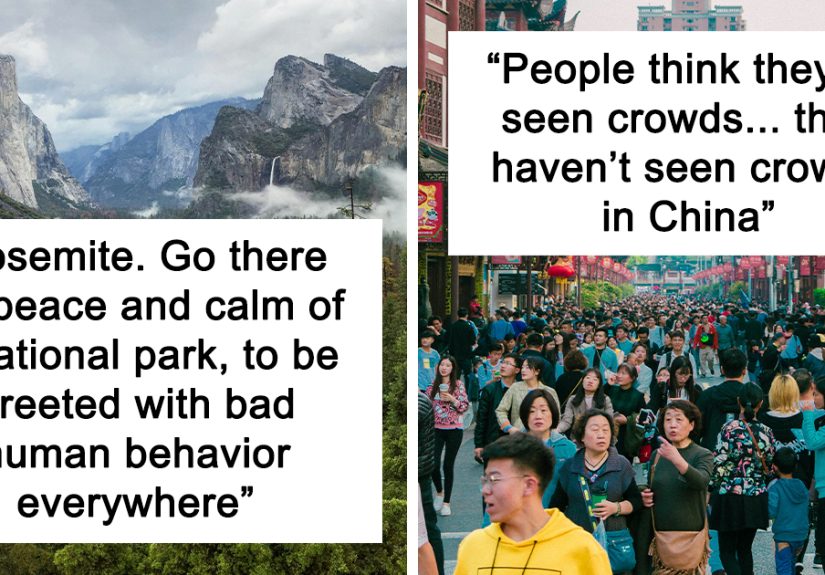
And then there is the behavior. The phrase “bad human behavior everywhere” hits because it feels painfully accurate in the most overrun spots. People block sidewalks, ignore local rules, climb where they should not climb, shout in places meant for reflection, and treat residents like background extras in their vacation montage. The destination suffers, locals get fed up, and travelers end up paying premium prices for a noticeably worse experience.
30 Places That Often Stop Feeling Worth It Once The Crowds Take Over
1. Venice, Italy
Venice is gorgeous, fragile, and routinely overwhelmed. At busy times, the city can feel less like a living place and more like a slow-moving pedestrian jam with canals. The magic disappears fast when every bridge is clogged and every narrow lane becomes a bottleneck.
2. Barcelona, Spain
Barcelona still has genius architecture, beaches, and energy, but in peak periods the tourist crush can be exhausting. Whole neighborhoods feel strained by visitor volume, and the tension between local life and mass tourism is impossible to miss.
3. Amsterdam, Netherlands
Amsterdam is charming until it starts feeling like a bachelor-party obstacle course. Between packed canals, bike-lane confusion, and old-town congestion, some parts of the city can feel more hectic than historic.
4. Athens’ Acropolis, Greece
Ancient wonder, modern queue. When the crowds surge, the Acropolis becomes a lesson in heat, timed entry, and slow uphill shuffling. It is hard to feel awe when you are mostly thinking about sunscreen and crowd flow.
5. Kyoto’s Gion District, Japan
Kyoto deserves reverence, not mob behavior. Yet certain famous streets have become magnets for intrusive photography and disrespectful conduct. What should feel atmospheric and culturally rich can instead feel overexposed and overhandled.
6. The Mount Fuji Photo Spots Around Fujikawaguchiko, Japan
When one photo angle becomes internet-famous, a normal neighborhood can turn into a full-blown tourism circus. That is exactly the problem here: people chasing the shot, blocking roads, ignoring boundaries, and overwhelming a place that was never built for that level of attention.
7. Bali, Indonesia
Bali still has beauty in abundance, but several hotspot areas now feel like overcrowding in tropical clothing. Traffic is relentless, beach clubs are packed, and spiritual calm gets drowned out by scooters, selfies, and bad vacation manners.
8. Machu Picchu, Peru
The site itself is astonishing. The experience around it can be surprisingly rigid and crowded. Ticketing, route controls, and visitor pressure make sense from a preservation standpoint, but they also remind you how close this place is to being loved to death.
9. Dubrovnik Old Town, Croatia
Dubrovnik is a medieval jewel, but cruise-day congestion can make it feel like a stone pressure cooker. When too many people arrive at once, the old city becomes a shoulder-to-shoulder shuffle instead of a historic escape.
10. Santorini, Greece
Santorini sunsets are famous for a reason. Unfortunately, so are the crowds gathering to watch them. If your idea of romance does not include competing for sidewalk space with a hundred phones in the air, this one can disappoint fast.
11. Trevi Fountain, Rome, Italy
The fountain is iconic. The experience of reaching it can feel like joining a human whirlpool. Everyone wants the same coin toss, the same photo, and the same dramatic entrance. The result is pure crowd fatigue.
12. Prague Old Town, Czech Republic
Prague is spectacular, but central hotspots can become a nonstop churn of tours, noise, and tourist-menu sameness. It is one of those cities where beauty survives, but serenity definitely does not.
13. Lisbon’s Historic Core, Portugal
Lisbon’s hills, trams, and viewpoints are lovely until everyone on earth appears to have the same itinerary. In the busiest areas, the city can feel compressed by rising tourism pressure and too many people chasing the exact same postcard corners.
14. Palma de Mallorca, Spain
Mallorca has depth beyond its busiest zones, but peak-season Palma can feel swamped. The city’s popularity has made it a flashpoint in the broader debate over whether tourism is improving daily life or bulldozing it.
15. Ibiza Old Town And Hotspots, Spain
Ibiza can still deliver beauty and fun, but the crowd mix is not always charming. In the most saturated parts, the island becomes more about volume than vibe.
16. Positano And The Amalfi Coast, Italy
Yes, it is stunning. It is also one of the clearest examples of a place where beauty and bottlenecks now travel together. Roads clog, ferries fill, viewpoints jam, and every staircase turns into a slow-motion parade.
17. Cinque Terre, Italy
Cinque Terre was not designed for today’s visitor load. The villages are tiny, the paths are limited, and the crowds can make the whole experience feel cramped instead of coastal and dreamy.
18. Hallstatt, Austria
Hallstatt is almost too photogenic for its own good. That is the problem. Social media turned a small lakeside village into a place where many visitors arrive for the image rather than the place itself.
19. Mykonos, Greece
Mykonos is stylish, glamorous, and often wildly overcrowded. When the island tips from lively to overstuffed, it starts to feel less like luxury and more like an expensive exercise in waiting.
20. Tulum, Mexico
Tulum used to sell itself as bohemian escape. In many corners, that dream has been replaced by traffic, inflated prices, influencer overload, and a beach-town atmosphere that can feel more curated than relaxed.
21. Patong Beach, Phuket, Thailand
For travelers craving quiet sea views, Patong is often the wrong answer. It is crowded, loud, commercialized, and frequently gives the impression that the beach is incidental to the chaos surrounding it.
22. Lake Louise, Alberta, Canada
Beautiful? Undeniably. Peaceful? Not once the parking lots fill and the shoreline starts looking like a luxury jacket advertisement with no gaps between the models.
23. Zion National Park, Utah
Zion’s popularity means planning systems, shuttle lines, and competition for the most famous routes. The cliffs are still awe-inspiring, but spontaneity is basically on vacation elsewhere.
24. Arches National Park, Utah
Arches is a masterpiece of geology, but heavy demand has made access itself part of the challenge. When a national park needs major visitor controls to preserve both resources and sanity, that tells you something.
25. Glacier National Park, Montana
Glacier remains breathtaking, yet summer crowding can make the experience feel heavily managed and tightly compressed. The landscape says wilderness; the logistics sometimes say “please take a number.”
26. Yellowstone’s Old Faithful Corridor, Wyoming
Yellowstone is huge, but certain headline attractions attract everyone at once. The result can be traffic, packed boardwalks, and the strange feeling that one of America’s wildest places is operating like a parking lot with geysers.
27. Yosemite Valley, California
Yosemite Valley is so iconic that many people arrive expecting transcendence and leave remembering traffic circles, crowded trailheads, and the hunt for parking. It is not the granite’s fault.
28. Antelope Canyon, Arizona
The canyon is undeniably gorgeous, but the tightly structured, high-demand experience can feel rushed and overprocessed. You may get the photo, but not necessarily the feeling of discovery.
29. Horseshoe Bend, Arizona
Horseshoe Bend is one of the great modern examples of a place becoming too famous for its own good. Many people show up for one viewpoint, one shot, and one quick dopamine hit, which means the visit can feel thin and crowded at the same time.
30. Waikiki, Hawaii
Waikiki is convenient and famous, but for many travelers it no longer delivers the fantasy suggested by the brochures. It can feel overbuilt, overbusy, and oddly disconnected from the slower, more beautiful Hawaii many people were hoping to find.
The Real Issue Is Not Travel. It Is Peak-Hour, Same-Place, Same-Photo Travel.
Here is the twist: many of these destinations are still worth seeing under the right conditions. Early mornings, shoulder seasons, alternate neighborhoods, less-famous islands, quieter entrances, and less obvious routes can still rescue the trip. The problem is not that the places lost their appeal. The problem is that the mass-market version of visiting them has become so standardized that it drains the life out of the experience.
That is why the smartest travelers are shifting from “Where is everyone going?” to “Where will I still feel something when I get there?” That single question may save you money, time, patience, and a deeply mediocre sunset photo taken from behind twelve raised iPhones.
What These Crowded Travel Experiences Actually Feel Like
Anyone who has walked into an overrun destination during peak season knows the emotional arc. First comes optimism. You tell yourself the crowd at the entrance is probably temporary. Then you notice the line for tickets, the second line for security, the third line for the shuttle, and the fourth line that no one can explain but everyone is standing in anyway because human beings are apparently very suggestible when ropes are involved.
Once inside, the place is still beautiful, which almost makes it worse. You can see why it became famous. The architecture is stunning, the water is absurdly blue, the cliffs are dramatic, the temple is genuinely moving. But there is a layer of friction over everything. A person stops dead in the middle of a walkway to record a video. Another backs up without looking because they are trying to fit an entire cathedral into a selfie. Someone else is climbing over a barrier because rules are for other people, obviously.
The weirdest part is how quickly the crowd changes your own behavior. Even calm people become tactical. You start scanning for gaps, plotting bathroom timing, and calculating whether the viewpoint is worth another twenty minutes of accidental shoulder contact. You become emotionally attached to random pieces of shade. You develop strong opinions about strollers in narrow alleyways. You find yourself silently judging matching tour-group hats.
Then there is the sensory overload. In theory you are visiting a world-famous destination. In practice you are listening to phone speakers, rolling luggage, shouted reunions, drone complaints, snack wrappers, and somebody nearby explaining loudly that this place looked “way bigger on TikTok.” The setting is memorable. So is the headache.
For locals, of course, this is not just a vacation inconvenience. It is rent pressure, noise, traffic, disappearing neighborhood businesses, and the slow conversion of real communities into tourism zones. That is why overtourism has become more than a travel buzzword. It is now a quality-of-life issue in many famous destinations, and visitors can feel that tension the minute they arrive.
None of this means people should stop traveling. It means travelers need better instincts. Go earlier. Stay longer. Pick the second-most-famous beach, not the first. Skip the viral photo corner. Learn the local rules. Spend money in places that still feel like they belong to the community. A trip gets better the second you stop treating a destination like a checklist item and start treating it like a place that existed before your camera roll and will, with luck, still exist after it.
Because the saddest version of travel is not missing out on a famous place. It is finally getting there and realizing the crowd is the thing you will remember most.
Conclusion
The places on this list are not failures. They are warnings. They show what happens when fame outruns capacity, when social media compresses millions of people into the same handful of “must-see” spots, and when bad tourist behavior makes everyone’s experience worse. If a destination now feels overpriced, overbooked, and overperformed, that does not mean travel is broken. It means our habits need updating. The future of better travel probably looks less viral, less rushed, and much more respectful.