Table of Contents >> Show >> Hide
- Why Canada Keeps Coming Back to the F-35
- The Procurement Saga: A Brief History of Repeated Déjà Vu
- So Did Canada Actually Change Its Mind?
- The Big Case for Sticking With the F-35
- The Case Against the F-35 Is Not Imaginary
- What About Alternatives Like the Gripen?
- What This Means for Canada’s Defense Future
- The Canadian Experience of F-35 Déjà Vu
- Conclusion
Note: This article is based on publicly available reporting and official information current as of March 22, 2026.
Canada and the F-35 have the kind of relationship usually reserved for couples who break up, reconcile, swear it is different this time, and then get spotted together at brunch three months later. For more than a decade, Ottawa has circled the same question: what aircraft should replace the country’s aging CF-18 fleet? And after all the U-turns, audits, reviews, campaign promises, strategic rethinks, and procurement drama thick enough to qualify as a second national weather system, the answer keeps drifting back to the same jet: Lockheed Martin’s F-35.
That is why the phrase “yet again” fits so neatly here. Canada first moved toward the F-35 years ago, stepped back amid controversy, reopened the competition, picked the aircraft again, signed a deal for 88 jets in 2023, and then launched another review in 2025 as tensions with Washington and questions about defense dependence surged. Yet by early 2026, the broad picture still looked familiar. The first tranche was committed, infrastructure work was continuing, and official planning still revolved around the F-35. In other words, Canada may keep rereading the menu, but it still seems to be ordering the same entrée.
Why Canada Keeps Coming Back to the F-35
At a basic level, the argument for the F-35 is not mysterious. Canada needs a modern fighter to replace a CF-18 fleet that has been stretched, upgraded, patched, and politely asked to keep working long past the point where most machines would be seeking retirement and a quiet lake house. The country also has unusually demanding requirements. It must patrol a massive airspace, support North American defense through NORAD, contribute to NATO operations, and be ready for a more contested Arctic and a less forgiving strategic environment.
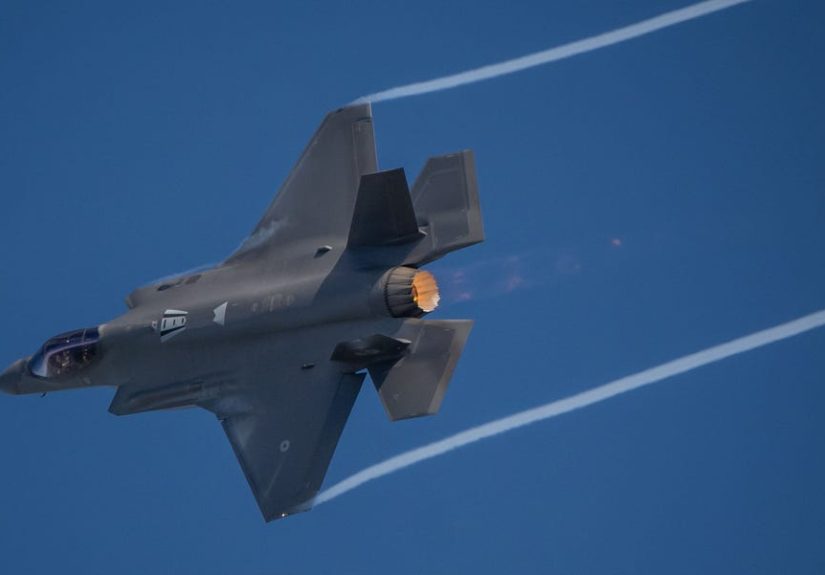
That mission profile pushes Ottawa toward an aircraft with stealth, sensor fusion, data-sharing capability, and deep interoperability with the United States and other allies. In plain English, the F-35 is not just a fast jet. It is a flying sensor-and-shooter network node, designed to work inside a larger allied system. For a country whose defense posture is tightly intertwined with the U.S. military and NATO, that matters. A lot.
The logic is especially strong when decision-makers think less about a clean procurement spreadsheet and more about actual operations. In a future crisis over the Arctic, North Atlantic, or broader NATO theater, Canada will not be fighting as a stylish lone wolf. It will be plugged into coalitions, command networks, intelligence feeds, and common logistics chains. The F-35 was built for that kind of warfare. That has helped the aircraft remain stubbornly attractive even when its politics become toxic.
The Procurement Saga: A Brief History of Repeated Déjà Vu
Canada’s fighter replacement story has dragged on so long that it practically qualifies for heritage status. Ottawa first announced plans in 2010 to buy 65 F-35s, but the move became a political and bureaucratic mess after criticism over costs, transparency, and sole-sourcing. Audits scorched the process. Political leaders distanced themselves. The file was reviewed, then reviewed again, then reviewed like it had personally offended the federal government.
Eventually, Canada reopened the competition and treated the next fighter decision as a formal contest instead of a foregone conclusion. That process led to the F-35 being selected again in 2022 as the preferred bidder, and in January 2023 Ottawa finalized a deal to procure 88 F-35A aircraft. At the time, that looked like the end of the saga.
Naturally, it was not the end of the saga.
In 2025, a new geopolitical twist reopened the debate. Prime Minister Mark Carney ordered a review of the F-35 acquisition amid concerns that Canada relied too heavily on the United States for defense and industrial support. Trade tensions with Washington sharpened the issue. Suddenly, the F-35 debate was no longer just about capability and cost. It was also about sovereignty, resilience, political leverage, and whether buying America’s most famous stealth fighter also meant buying too much dependence on America’s defense ecosystem.
So Did Canada Actually Change Its Mind?
Not exactly. And that is the key to understanding the current moment.
Ottawa did not publicly cancel the F-35 contract. Instead, it reviewed whether the deal, especially beyond the first 16 aircraft, still represented the best choice. That nuance matters. The government’s position was effectively: “We are not throwing the plane overboard, but we are looking very hard at the map.”
By the middle of 2025, officials were already signaling that Canada had made a legal commitment for the first 16 aircraft. Later reporting suggested defense officials made a strong case for sticking with the full 88-jet plan rather than splitting the fleet or pivoting to a European alternative. Even official Canadian planning documents published in 2026 continued to refer to infrastructure upgrades, training, and implementation work tied to the incoming F-35 fleet.
That is why the story now reads less like a dramatic reversal and more like a very Canadian version of hesitation: cautious, procedural, expensive, and carried out with many briefing notes. Ottawa reviewed the purchase, yes. But everything from base planning to delivery schedules still pointed toward the F-35 as the backbone of the future fleet.
The Big Case for Sticking With the F-35
1. Interoperability Is Not a Buzzword
Canada’s air force does not operate in a vacuum, and certainly not in a igloo-shaped one. Its fighters are part of a continental defense structure with the United States and a larger alliance system through NATO. The F-35 is already in service with a widening network of allied air forces, which makes training, tactics, software development, mission planning, sustainment, and operational integration easier over time.
If Canada chose a different aircraft for most or all of the remaining fleet, it would inherit new complexity precisely where complexity is least welcome: training pipelines, maintenance systems, spares, weapons integration, and coalition operations. That is why officials reportedly concluded there was little military logic in splitting the order. Mixed fleets can work, but they are not magic. They are usually two headaches in one hangar.
2. Threats Have Moved On
The world that produced the old CF-18 is not the world Canada faces now. Modern air defense networks are denser, sensor environments are harsher, and adversaries have improved dramatically. If Canada wants a fighter relevant through the 2030s and beyond, the argument for a fifth-generation aircraft is stronger than it was even a decade ago.
That does not mean every mission requires a stealth jet. It does mean that a country replacing an entire frontline fighter fleet has to think about the toughest missions, not just the easiest ones. A fighter that can credibly support NORAD, NATO, and high-end deterrence is more expensive up front, but it may also be less expensive than buying something cheaper now and regretting it later.
3. Canada Is Already Deep in the Program
One underrated point in this debate is how much sunk effort already exists around the F-35. Canada has been tied to the Joint Strike Fighter program for years as an industrial participant. More than 30 Canadian aerospace companies have F-35 contracts, and official briefing materials have said that each F-35 produced globally contains millions of dollars’ worth of Canadian-made components. That does not erase procurement concerns, but it does mean the relationship is not simply buyer-and-seller. It is also industrial and strategic.
Once infrastructure design, training plans, industrial participation, and delivery slots are in motion, switching paths becomes more painful. Canceling is not like returning a toaster. It is more like trying to redirect a freight train by waving politely from the station.
The Case Against the F-35 Is Not Imaginary
For all the strategic logic behind the aircraft, critics are not making things up. The F-35 program has real baggage, and some of it is heavy enough to need ground support equipment.
1. The Cost Keeps Growing
Canada’s auditor general found that the Future Fighter Capability Project had already grown from an estimated C$19 billion to C$27.7 billion by 2024, driven by foreign exchange pressures and rising infrastructure costs. And that figure did not even include all the elements needed for full operational capability, such as additional infrastructure and advanced weapons, which could add billions more.
That does not automatically make the purchase wrong, but it does make it politically combustible. Fighter aircraft are never cheap, but the F-35 has a special talent for turning sticker shock into a recurring event. Canada is not just buying jets; it is buying facilities, IT, software support, training, weapons, logistics, and a long tail of sustainment costs. The airplane may be stealthy, but the bill absolutely is not.
2. Schedule Risk Is Real
U.S. oversight bodies have repeatedly flagged issues with F-35 deliveries, modernization, and sustainment. GAO has warned about late deliveries, rising sustainment costs, and readiness shortfalls across the wider F-35 enterprise. Canada’s own watchdog also identified delays in key infrastructure, including fighter squadron facilities that were expected to be completed more than three years behind schedule.
That matters because a fighter transition is not just about when the aircraft are built. It is also about when the bases are ready, when the maintainers are trained, when the weapons are integrated, and when the old fleet can safely retire. In procurement, “the jets are coming” is only half the story. “Everything else works when they arrive” is the part that ruins sleep.
3. Dependence on the U.S. Supply Chain
The 2025 review did not emerge from nowhere. It was fueled by a broader concern that Canada may be too dependent on U.S. military technology and support. The dramatic “kill switch” rumors around the F-35 were publicly rejected by the Pentagon, and there is no evidence of a literal remote off button. But the bigger concern was always less cinematic and more practical: software updates, spare parts, logistics networks, and sustainment access are central to operating the jet effectively.
That means the sovereignty debate is not silly. It is just often framed badly. The question is not whether Washington can secretly press a red button and make the aircraft fall out of the sky like a movie villain. The real question is whether Canada is comfortable anchoring a critical military capability inside an American-led support ecosystem during a more volatile political era. Reasonable people can disagree on that. But it is a real question.
What About Alternatives Like the Gripen?
Saab’s Gripen has remained the most-discussed alternative, especially because it was the runner-up in Canada’s competition and because Saab has emphasized domestic industrial benefits, local production, and a “Made-in-Canada” pitch. In 2026, the company was still openly floating the possibility of a mixed fleet or broader industrial footprint in Canada.
That pitch has political appeal. It offers a more sovereignty-friendly story, promises jobs, and gives Canada a way to diversify its defense sourcing. But alternatives also bring trade-offs. Switching aircraft late in the process would impose new transition costs and could complicate operations with allies. Even some alternative jets rely on U.S.-linked components or support. In other words, escaping dependence altogether is harder than it sounds in a world where defense supply chains are deeply entangled.
And then there is the simplest question of all: is the alternative actually better for the missions Canada needs to perform? Critics of the F-35 have many valid complaints. Finding a clearly superior all-around substitute for Canada’s operational requirements is not one of them.
What This Means for Canada’s Defense Future
The deeper lesson from this long-running drama is not merely that Canada has trouble buying fighter jets, although it absolutely does. It is that modern defense procurement now sits at the crossroads of strategy, alliance politics, industrial policy, sovereignty concerns, and national identity. The F-35 debate became a proxy argument about almost everything: Canada’s role in NATO, its dependence on the United States, the future of Arctic defense, domestic aerospace jobs, and whether Ottawa can ever complete a major military purchase without making it feel like a 14-season prestige drama.
As of early 2026, the most realistic conclusion is that Canada has not really found a cleaner, cheaper, faster, less risky path away from the F-35. It has, however, found fresh reasons to be uncomfortable about the aircraft. That tension explains why the country appears to keep both reviewing the jet and building its future around it at the same time.
So yes, Canada agrees to buy the F-35 as its next fighter jet, yet again. Not because the path has been elegant. Not because the politics have been tidy. And certainly not because the spreadsheet has been calming. Canada keeps returning to the F-35 because every time the country revisits the question, the same hard reality waits at the end of the runway: for the missions Ottawa says it needs, the alliance system it operates in, and the time pressure created by aging CF-18s, the F-35 remains the least bad answer and, very possibly, still the best one.
The Canadian Experience of F-35 Déjà Vu
There is also a human side to this story that gets lost between cost tables and press releases. For many Canadians who follow defense issues, the F-35 debate has become an experience of political whiplash. One year the aircraft is the obvious future. The next year it is too controversial, too costly, too American, too risky, or too politically radioactive. Then a review lands, a competition closes, a new briefing appears, and the same jet is back at center stage, like a very expensive boomerang.
For members of the Royal Canadian Air Force, the experience is less theatrical and more practical. Fighter pilots, maintainers, planners, and base personnel do not live inside campaign slogans. They live inside timelines, training pipelines, infrastructure projects, spare parts chains, and operational commitments. From that perspective, endless uncertainty is not just annoying; it is operationally corrosive. Air forces cannot build a future fleet on vibes. They need aircraft, facilities, people, and schedules that line up in the real world.
For Canadian taxpayers, meanwhile, the F-35 saga has often felt like a civics lesson delivered by a runaway invoice. The numbers keep changing, the language keeps shifting, and every new development seems to come with the same awkward question: why does this still cost more than expected? Even people who accept the need for a new fighter fleet can reasonably wonder why the process has been so convoluted. The public experience of the F-35 file has been shaped by a persistent suspicion that even when the strategic case is solid, the procurement machinery is forever stepping on its own shoelaces.
There is an industrial experience too. Canadian aerospace firms involved in the F-35 supply chain have spent years building skills, contracts, and expectations around the program. For them, this is not merely a geopolitical abstraction. It is work, investment, hiring, and long-term planning. Every time Ottawa appears to reopen the fighter question, those companies are left reading the tea leaves alongside everyone else, except with payrolls and factory schedules on the line.
And then there is the broader national experience: the uneasy realization that defense procurement is no longer just about buying the best machine. It is about buying capability in a world where trade policy, strategic trust, software dependence, and industrial resilience all matter at once. That is why this debate has felt so emotionally overstuffed. Canada is not simply deciding what jet it likes best. It is deciding how comfortable it is being deeply integrated with U.S. defense systems while also wanting more room to act like a sovereign middle power with options.
That experience helps explain the strange tone of the entire F-35 saga. Canada sounds committed and uncertain at the same time because, in a sense, it is. The country needs a next-generation fighter. The F-35 still looks like the strongest operational answer. But the strategic environment around that answer has become less comfortable. The result is a national conversation full of hesitation, realism, irritation, and reluctant acceptance. Which, if we are being honest, may be the most Canadian fighter-jet procurement experience imaginable.
Conclusion
Canada’s F-35 story is no longer just a procurement decision. It is a case study in how modern democracies buy military capability while juggling alliance obligations, domestic politics, rising costs, industrial interests, and public skepticism. After years of reversals and re-evaluations, Ottawa still appears to be landing in the same place: the F-35 remains the aircraft most aligned with Canada’s high-end defense needs, even if it comes bundled with cost headaches and sovereignty anxieties.
The irony is almost poetic. Canada keeps reopening the file in search of a cleaner answer, and the file keeps answering back with the same jet. That does not make the concerns trivial. It just means that every alternative so far has looked less convincing once it meets the realities of NORAD, NATO, Arctic defense, and a rapidly aging CF-18 fleet. The result is a procurement saga that feels repetitive because, strategically speaking, it kind of is.