Table of Contents >> Show >> Hide
- Quick Snapshot: What You’re Getting
- What “Reversible” Actually Means (and Why It Matters)
- Dimensions, Fit, and “Will This Eat My Living Room?”
- Comfort: Sitting vs. Sleeping (Two Different Jobs)
- Storage: The Feature You’ll Use More Than You Think
- Materials, Durability, and Everyday Maintenance
- Assembly and Setup: What the First Hour Looks Like
- Styling Pep Gray: How to Make It Look Expensive (Without Being Annoying)
- Pros and Cons (The Honest Version)
- Who This Sectional Makes the Most Sense For
- Alternatives to Consider (If Your Needs Are Different)
- FAQ
- Real-Life Experiences With the Nordby Pep Gray Reversible Sectional
- Final Take
Some couches are “just a couch.” And some couches are basically a Swiss Army knife that happens to be upholstered.
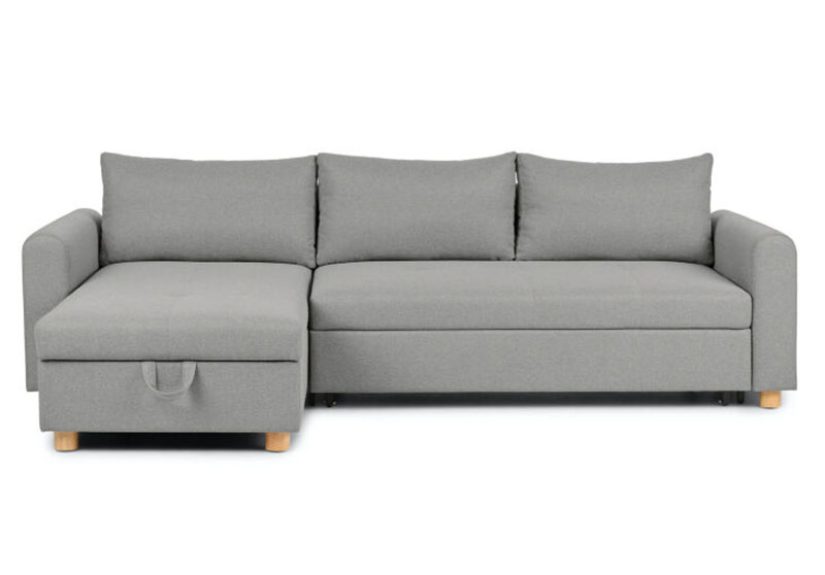
The Nordby Pep Gray Reversible Sectional is firmly in the second camp: it’s an L-shaped sectional that can swap
sides, hide your clutter, and turn into a legit sleeping setupwithout screaming, “I am furniture with secrets.”
If your living room doubles as a guest room, movie theater, snack stadium, and occasional workspace (no judgment),
this piece is designed for your kind of chaos.
Quick Snapshot: What You’re Getting
- Reversible chaise that can be configured on the left or right (hello, flexible floor plans).
- Built-in chaise storage for blankets, pillows, and the emotional baggage you’re not ready to unpack.
- Slide-out sleeper that expands into a wide lounging/sleeping surface.
- Neutral “Pep Gray” upholstery that plays nicely with most decor styles.
- Supportive, structured feel (more “holds its shape” than “sink-into-a-cloud”).
What “Reversible” Actually Means (and Why It Matters)
Reversible sectionals are the apartment-dwellers’ love language. Instead of committing to a permanent left-facing
or right-facing chaise, you can set the chaise on either side. That matters when you move, rearrange, or realize
your “brilliant layout” blocks the only outlet in the room. With a reversible chaise, you’re not buying a sofa for
one roomyou’re buying it for your next room, too.
Practical example: if your living room has a walkway on the left now, you can place the chaise on the right to keep
traffic flowing. If you later move to a space where the entry flips, you can switch the chaise and keep the same sofa.
It’s the rare grown-up purchase that actually expects your life to change.
Dimensions, Fit, and “Will This Eat My Living Room?”
This sectional lands in the “generous but not mansion-only” category. It’s wide enough to comfortably seat a group,
but it’s still within range for many standard living roomsespecially if you’re thoughtful about coffee table depth
and walking clearance.
Layout tips that prevent regret
- Leave a walkway: Aim for a clear path (think: you can pass with laundry baskets without turning sideways).
- Measure doorways and turns: Don’t just measure your front doormeasure hallways, corners, and stair landings.
- Plan “bed mode” space: If you’ll use the sleeper often, make sure the pull-out area won’t collide with a media console.
- Pick the chaise side based on daily life: Put the chaise where you actually lounge, not where you “think it looks nicer.”
If you’re furnishing a smaller space, this sectional can still workjust treat it like the anchor piece and keep
the rest of the room visually light: slimmer side tables, open-base coffee tables, and fewer chunky accent chairs.
Let the sectional be the “main character,” and the room won’t feel crowded.
Comfort: Sitting vs. Sleeping (Two Different Jobs)
A sleeper sectional has two assignments: be a good sofa and be a good bed. Those goals don’t always agree.
Plush cushions feel amazing for a nap but can lack support over time. Firmer cushions can feel a bit “structured”
at first, but they typically hold up better for everyday sittingand they can be a win when the sofa becomes a bed.
What to expect from the feel
- Supportive seating: Great if you like a couch that doesn’t swallow you whole.
- Better for upright lounging: Ideal for movie nights, conversation, and “I’ll just sit for five minutes.”
- Sleep surface feels flatter and roomier: When expanded, you get more sprawl space than a standard sofa seat depth.
Real-life example: if your friends crash after a game night, the sleeper feature is a lifesaver. But even if you
never host, “bed mode” can become your default for big-screen marathonsbecause suddenly the living room turns into
a giant lounge platform. It’s basically legal indoor camping, minus the terrible floor sleeping.
Storage: The Feature You’ll Use More Than You Think
Chaise storage is one of those “sounds nice” features that becomes “how did I live without this?”
It’s the perfect home for throw blankets, extra sheets, seasonal pillows, board games, and anything else that tends
to migrate into visible piles when life gets busy.
The best part: storage reduces the number of random bins you need around the room. So your space can look calmer
even if your schedule is not.
Materials, Durability, and Everyday Maintenance
Pep Gray is a neutral upholstery choice that’s intentionally “low drama.” It doesn’t dominate the room, it hides
minor wear better than bright colors, and it adapts to style changes over time. The fabric is designed for regular
livingthink sitting, lounging, pets hopping up, and the occasional “oops, popcorn.”
Care habits that keep it looking sharp
- Vacuum regularly: Especially in the seams and under cushions where crumbs set up camp.
- Spot clean quickly: The faster you act, the less a spill becomes a “permanent design feature.”
- Rotate and fluff cushions: Helps maintain shape and even out wear in favorite spots.
- Use a throw strategically: Not as decormore like “seatbelt for upholstery” in high-use areas.
If you have pets, a simple routine helps a lot: keep a lint roller nearby, vacuum weekly, and treat the chaise
storage like your “pet gear drawer” (toys, blankets, grooming tools). Your future self will thank you.
Assembly and Setup: What the First Hour Looks Like
Expect a straightforward setup experience. Most people find assembly manageable with basic effortespecially if you
have a second person to help maneuver pieces. The general vibe is “attach what needs attaching, place it where you
want it, and then immediately sit down like you’ve earned it.”
Pro setup tips
- Protect your floors: Lay down a rug or blanket while assembling to avoid scuffs.
- Open boxes near the final location: Carrying large pieces twice is a rookie mistake.
- Test the sleeper motion early: Do a quick open/close before the room is fully staged.
- Keep the hardware together: Nothing humbles a person faster than losing one small part.
Styling Pep Gray: How to Make It Look Expensive (Without Being Annoying)
Pep Gray is the neutral that won’t pick fights with your decor. It pairs beautifully with warm wood tones, black
metal accents, and creamy textiles. Want modern? Add clean-lined tables and a bold rug. Want cozy? Layer textured
throws and chunky pillows. Want “I definitely have my life together”? Add two matching lamps and pretend you planned it.
Easy style formulas
- Scandinavian calm: light wood + off-white textiles + one muted accent color (sage, clay, navy).
- Modern contrast: black accents + graphic rug + structured pillows (no fringe required).
- Warm and cozy: caramel leather accents + knit throw + soft lighting (the “stay awhile” look).
Pros and Cons (The Honest Version)
Pros
- Flexible layout: Reversible chaise adapts to different rooms and moves.
- Built-in storage: Makes small spaces feel bigger by reducing clutter.
- Guest-ready: Sleeper feature turns your living room into a backup bedroom.
- Neutral color: Pep Gray works across styles and hides everyday wear well.
- Supportive feel: Great for people who prefer structure over sink-in softness.
Cons
- Not a “cloud couch”: If you want ultra-plush, this may feel firm at first.
- Bedding fit can be tricky: Some sleeper sizes work better with flexible/stretchy sheets or dedicated sets.
- Needs space to convert: Like any sleeper, you’ll want clearance for the pull-out zone.
Who This Sectional Makes the Most Sense For
- Small-space hosts: You want guests to sleep well without dedicating a whole room to a bed.
- People who rearrange: Reversible chaise = fewer “why did I buy a left-facing sectional?” moments.
- Families who need storage: The chaise compartment is basically a living-room survival tool.
- Support-lovers: You like a sofa that stays in shape and feels stable.
Alternatives to Consider (If Your Needs Are Different)
If you love the concept but want a different feel, focus on these decision points:
plushness, mattress style, depth, and customization.
Some sleeper sectionals prioritize ultra-soft lounging; others prioritize a more mattress-like sleep experience.
If you’re using the sleeper every week, prioritize the sleep surface. If it’s mostly for occasional guests, prioritize
how it feels as a sofa.
- Want softer, sinkier seating? Look for deeper seats and softer cushion fills (often more “lounge-first”).
- Need heavy customization? Consider made-to-order brands with fabric and configuration options.
- Sleeping is the main mission? Prioritize thicker mattress designs and mechanisms built for frequent use.
FAQ
Is the chaise truly reversible?
Yesthis style is designed so you can configure the chaise on either side, which helps it adapt to different layouts.
Can two adults sleep on it?
In sleeper mode, the surface is designed to accommodate overnight guests, and many households use it for two-adult
movie nights and occasional shared sleepovers.
Does standard bedding fit?
Some sleeper sectionals work best with flexible sheets, dedicated bedding sets, or clever layering (like a fitted
sheet plus a throw-friendly top layer). If you want perfection, measure the sleep surface and choose bedding accordingly.
Is it good for pets?
Neutral, tightly woven fabrics tend to be more forgiving for everyday pet life. Combine routine vacuuming with quick
spot cleaning and you’ll keep it looking fresh.
Real-Life Experiences With the Nordby Pep Gray Reversible Sectional
In everyday homes, this sectional often becomes the “default landing zone”the place people end up even when they
swear they’re only walking through the room. Owners who prioritize flexibility love that the chaise can switch sides
when they rearrange furniture or move. It’s the kind of feature you don’t brag about at parties, but you will
mention it to friends the moment they complain about being stuck with a left-facing sectional in a right-facing life.
One common pattern: the chaise storage turns into a living room command center. Week one, it’s “just extra blankets.”
Week three, it’s blankets, a spare pillow, the nice throw you don’t want the dog sitting on, and the board game you
pretend you play monthly. People who like tidy spaces say it helps the room look calmer because fewer items need to
live out in the open. And if you’re in a smaller apartment, the storage can replace a whole extra piece of furniture,
which is basically the equivalent of finding bonus square footage.
The sleeper function tends to get used in two ways: “guest mode” and “goblin mode.” Guest mode is straightforward
friends or family stay over, and you convert the sofa into a sleeping setup that feels more intentional than a
saggy air mattress that wheezes at 2 a.m. Goblin mode is when you pull it out for yourself because you want maximum
sprawl for a movie marathon, a rainy-day nap, or the classic “I’m not going to bed yet, but I’m also not staying upright.”
Plenty of people end up using the expanded surface more often than they expected because it’s simply fun to lounge on.
Comfort feedback usually clusters around one theme: it leans supportive. That’s great for people who want a sofa that
holds its shape and doesn’t feel like quicksand. It can feel firm if you’re expecting a cloud couch, but many folks
find that firmness becomes a benefit once the sleeper setup is involvedespecially for adults who prefer a flatter,
more stable sleeping surface. A practical workaround that shows up in real homes: adding a mattress topper or thick
padded blanket when guests stay over. It’s an easy upgrade that can make a “good” sleep feel “surprisingly great.”
Style-wise, Pep Gray is a crowd-pleaser because it doesn’t demand a matching color scheme. In real rooms, people pair
it with warm wood coffee tables, black metal floor lamps, and textured rugs to keep the space from feeling too flat.
A few bold pillows go a long waythink rust, forest green, navy, or even a patterned lumbar pillow that looks “designer”
but was actually bought at 11:47 p.m. during an online scrolling spiral.
The most relatable experience? The day it arrives, you swear you’ll keep it pristine. Then someone eats pizza on it.
Then the dog claims the chaise. Then you realize the whole point of a hardworking sectional is to be lived on.
With basic carevacuuming, quick spot cleaning, rotating cushionspeople generally treat it like a practical,
good-looking workhorse: not precious, not disposable, just reliably there for everyday life.
Final Take
If you want a sectional that adapts to your space, hides your mess, and turns into a guest-ready sleep zone, the
Nordby Pep Gray Reversible Sectional checks the right boxes. It’s especially strong for small-space living and
flexible layoutsless “fluffy lounge cloud,” more “clean-lined, functional, and ready for real life.”
And honestly? A couch that helps you host, relax, and store your blankets without adding visual clutter is the kind
of adult upgrade that feels suspiciously like having it together.