Table of Contents >> Show >> Hide
- What Car Flipping Really Is (and What It Isn’t)
- How Beginners Actually Make Money Flipping Cars
- Start With Numbers: The Profit Formula You’ll Use Every Time
- Choosing the Right Cars to Flip as a Beginner
- Where to Find Flip Candidates (Without Losing Your Mind)
- How to Evaluate a Used Car Like a Flipper (Not a Dreamer)
- Legal and Paperwork Basics (Because Jail Is a Bad Business Model)
- Repairs: What’s Worth Fixing for Profit (and What Usually Isn’t)
- Pricing Your Flip: Don’t GuessBracket the Market
- How to Sell Your Car Fast (Without Sounding Like a Cartoon Villain)
- Taxes and Tracking: Treat It Like a Business (Even If It’s “Just a Side Thing”)
- Beginner Mistakes (So You Can Skip the Expensive Lessons)
- Real-World Beginner Experiences (): What People Usually Learn the Hard Way
- Conclusion
- SEO Tags
“Car flipping” sounds like an extreme sport (and honestly, if you’re actually flipping cars, please stop and call a professional).
What we’re talking about here is buying a used car at the right price, improving it responsibly, and reselling it for a profit.
Done well, it’s part research project, part light wrenching (or heavy cleaning), and part learning how humans negotiate when money is involved.
This guide breaks down the whole processfinding good candidates, estimating true costs, avoiding legal landmines, and selling confidently.
If you’re under 18, a quick reality check: in many places you can’t legally sign certain contracts or title documents on your own, and you’ll likely need a parent/guardian involved.
That’s not a deal-breaker; it just means your “team” includes an adult.
What Car Flipping Really Is (and What It Isn’t)
A beginner-friendly flip is usually a clean, common car that needs “retail polish,” not a rescue mission.
The goal is to add value in ways buyers can see and trustmaintenance, safety fixes, documentation, and honest presentation.
A good flip is:
- Predictable: common parts, common problems, common buyers.
- Legal and transparent: proper title transfer, accurate disclosures, no sketchy shortcuts.
- Value-focused: you fix what matters, not what looks cool on a YouTube montage.
A bad flip is:
- “Cheap for a reason”: missing title, flood history, major engine/transmission symptoms, or mystery warning lights.
- Built on wishful thinking: “It just needs a sensor” (famous last words).
- Legally risky: skipping paperwork, misrepresenting condition, or operating like a dealer without following state rules.
How Beginners Actually Make Money Flipping Cars
Your profit comes from the gap between what you pay (including fees and repairs) and what a buyer will realistically pay in your market.
Beginners often do best with three “value levers”:
1) Buying right (the biggest lever)
If you overpay, you can’t “repair” your way into profit. Buying right usually means:
shopping patiently, understanding fair market prices, and walking away fast when the numbers don’t work.
2) Fixing smart (not fixing everything)
The best beginner repairs are high-impact and low-drama: tires (if needed), brakes, battery, fluids, a proper detail,
replacing worn wipers, fixing obvious bulbs, and addressing small leaks or easy sensors with confirmed diagnoses.
Avoid cosmetic rabbit holes that don’t increase buyer confidence.
3) Selling clean (presentation + trust)
Most buyers don’t pay extra for your “passion project.” They pay extra for a clean, well-documented, problem-free experience.
Clean photos, a truthful listing, maintenance receipts, and a smooth test drive can be worth more than a fancy aftermarket add-on.
Start With Numbers: The Profit Formula You’ll Use Every Time
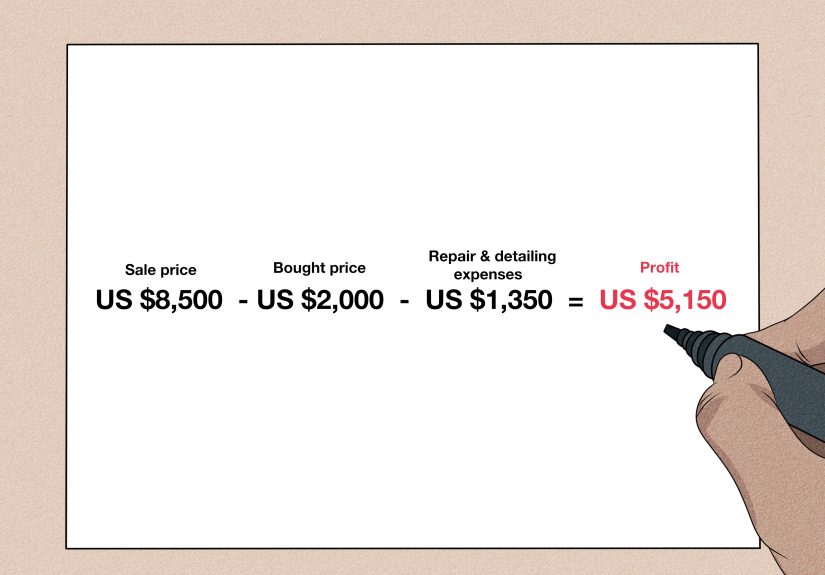
Use a simple framework before you ever schedule a meet-up:
A realistic beginner example
Say you find a commuter sedan with good service history but ugly cosmetics:
Is $690 worth it? Sometimes yesespecially if you’re learning and the risk is low.
But it also teaches a key lesson: small profit flips require tight buying discipline and fast turnaround.
Choosing the Right Cars to Flip as a Beginner
The “Beginner Sweet Spot” checklist
- High demand: common commuter cars, small SUVs, reliable brands and models.
- Clean title: avoid salvage/rebuilt/flood brands until you have experience and strong documentation.
- Simple drivetrains: fewer complicated systems usually means fewer surprise bills.
- Good maintenance story: receipts beat “Trust me, I changed the oil.”
- Moderate miles with proof: mileage isn’t automatically bad; neglected mileage is.
Cars that often punish beginners
- Luxury bargains: cheap purchase, expensive parts, picky buyers.
- Flood-risk areas with weird smells: moisture can become electrical chaos later.
- “No title yet” listings: paperwork problems can become your paperwork problem.
- Heavily modified cars: fewer buyers, more unknowns.
Where to Find Flip Candidates (Without Losing Your Mind)
Beginners usually start with private-party marketplaces and local listings because the pricing can be better than dealer retail.
Auctions can work, but they also concentrate riskespecially if you can’t test drive or inspect thoroughly.
Common sourcing options
- Private-party listings: potential bargains, but you must verify everything.
- Local independent dealers: higher prices, sometimes easier paperwork.
- Trade-in opportunities: friends/family or community leads where history is known.
- Auctions: potentially lower prices, often higher uncertainty.
Your advantage isn’t “secret sources.” It’s process: consistent screening, disciplined numbers, and walking away when something feels off.
How to Evaluate a Used Car Like a Flipper (Not a Dreamer)
Step 1: Screen the listing before you even message
- Does the price make sense for the year/miles/trim?
- Any red flags: “needs TLC,” “mechanic special,” “lost title,” “won’t start,” “runs rough.”
- Do photos show mismatched panels, water stains, warning lights, or missing airbags?
Step 2: Run the VIN and check safety items
A VIN check can help confirm basics and reduce surprises. Also check for open recalls.
If a vehicle has unresolved safety recalls, factor time and hassle into your plan.
Step 3: Use a vehicle history report wisely
History reports can include accidents, title brands, service records, and other eventsbut no report is perfect.
For extra protection against title fraud and branded titles, many buyers use NMVTIS-based reports as a data point.
Consider comparing sources when something feels inconsistent.
Step 4: Inspect the car (or pay for a pre-purchase inspection)
If you’re not confident, paying a mechanic for a pre-purchase inspection can be the best “repair” you ever buy.
You’re not spending moneyyou’re buying information.
Basic inspection areas beginners should never skip
- Cold start behavior: listen for rough idle, loud knocks, smoke, or hesitation.
- Dash lights: check that warning lights aren’t “mysteriously” off.
- Fluids: oil level/condition, coolant condition, signs of leaks underneath.
- Tires and brakes: uneven wear can hint at suspension/alignment issues.
- Test drive: straight-line stability, braking feel, transmission shifts, odd noises.
- Smells + moisture: musty odors, wet carpets, foggy lights can hint at leaks or flood exposure.
Legal and Paperwork Basics (Because Jail Is a Bad Business Model)
Flipping is not just mechanical; it’s paperwork-heavy.
Most states have rules about title transfer, odometer disclosures, and how many cars you can sell before you’re treated like a dealer.
Requirements vary by stateso treat your DMV website as your final authority.
Title transfer: match the seller to the title
The name on the title should match the seller. If it doesn’t, you may be stepping into “title jumping” territory (and a headache).
Some DMVs explicitly warn that if the seller isn’t the titled owner, you may need additional documentation like a bill of sale signed by both parties.
Odometer disclosure is not optional
Odometer fraud is a federal crime. When ownership transfers, the seller typically must provide a mileage disclosure on the title (with some exemptions based on vehicle age and rules).
If mileage is inaccurate or unknown, it must be disclosed properly.
Dealer licensing and “curbstoning”
Many states restrict unlicensed “in the business” selling. Even if you’re a small-time flipper, selling multiple vehicles in a year can trigger dealer licensing requirements.
Some states publish clear consumer warnings about “curbstoning” (unlicensed selling posing as private sales).
If you plan to do this regularly, research your state’s threshold and requirements.
Repairs: What’s Worth Fixing for Profit (and What Usually Isn’t)
High-ROI fixes that help buyers say “yes”
- Safety items: brakes, tires, wipers, lights.
- Maintenance basics: oil change, filters, battery, addressing confirmed leaks.
- Professional cleaning: deep interior clean and odor removal can change perceived value fast.
- Simple cosmetics: touch-up on small chips, restoring cloudy headlights (when done correctly).
Usually low-ROI for beginners
- Major drivetrain work: engine/transmission rebuilds can erase profit quickly.
- “Performance upgrades”: narrower buyer pool, more suspicion.
- Expensive paint/bodywork: unless you bought extremely low and the market supports it.
Pricing Your Flip: Don’t GuessBracket the Market
Pricing is where many beginners either leave money on the table or sit on a car for weeks.
Use multiple valuation sources and real local listings to create a price range.
Remember: “listed” prices aren’t “sold” prices, but they’re still useful for understanding competition.
A practical pricing method
- Check a valuation tool for a baseline (private party vs. trade-in vs. retail).
- Search local listings for the same year/make/model/trim and similar miles.
- Adjust for condition and story: clean title, maintenance records, tires/brakes, accidents, number of owners.
- Set a target price and a firm walk-away minimum.
How to Sell Your Car Fast (Without Sounding Like a Cartoon Villain)
Your listing should do three things
- Reduce uncertainty: clear photos, clean description, maintenance details.
- Answer questions upfront: title status, mileage, known issues, recent repairs.
- Make it easy to say yes: flexible meeting times, test drive plan, documents ready.
Photo checklist (yes, it matters)
- Exterior: all angles, close-ups of any flaws (honesty builds trust).
- Interior: seats, dashboard (with car on), odometer, trunk.
- Under-hood: basic engine bay shot.
- Tires: tread shots if they’re in good shape.
- Documents: a photo of receipts (with personal info hidden) can help.
Safe payment and scam awareness
Car-selling scams are real. Be cautious with overpayment schemes, fake checks, and “buyer” stories that require you to refund money.
A simple rule: if payment gets complicated, the deal is probably not your deal.
Taxes and Tracking: Treat It Like a Business (Even If It’s “Just a Side Thing”)
Keep records from day one: purchase documents, repair receipts, mileage, dates, fees, and how you were paid.
If you do this repeatedly for profit, you may be operating a business for tax purposes.
The IRS distinguishes hobbies from businesses based on multiple factors, including profit motive and how you operate.
Also note: if you use payment apps/platforms, you may receive tax forms like a 1099-K and still need to report taxable income appropriately.
Beginner recordkeeping basics
- One folder per car (digital is fine): listing screenshots, title/bill of sale, receipts.
- A simple spreadsheet: all-in cost, days held, sale price, profit.
- Photos before/after: helpful for marketing and documentation.
Beginner Mistakes (So You Can Skip the Expensive Lessons)
Mistake #1: Buying a “project” when you needed a “product”
A flip should become a car someone wants to buy this month, not a long-term restoration you’ll “finish someday.”
Mistake #2: Underestimating time
The longer you hold a car, the more you pay in insurance, storage hassles, and opportunity cost.
Fast flips usually come from buying right and doing limited, high-impact work.
Mistake #3: Skipping the inspection
The cheapest inspection is often the one you didn’t do. If you can’t confidently evaluate a car, get help.
Mistake #4: Getting “creative” with disclosures
Don’t. It’s unethical, it’s risky, and it’s the fastest way to turn a side hustle into a legal problem.
Real-World Beginner Experiences (): What People Usually Learn the Hard Way
Beginners tend to imagine car flipping like a highlight reel: buy cheap, spray some tire shine, sell for a huge profit, ride into the sunset.
Real life is less cinematic and more “Why is the check engine light back?”but it’s also totally doable if you treat it like a skill.
Here are a few common beginner experiences (composite examples) that show what actually happens.
Experience #1: The “Too Good to Be True” Deal
A first-timer spots a car priced way below market. The seller is friendly, the photos are flattering, and the description says,
“Runs great, just don’t drive it far because my cousin borrowed it once and it got… emotional.”
The beginner buys it quickly, proud of their “steal.”
Then the first full test drive reveals overheating at idle, a sweet coolant smell, and a radiator fan that occasionally spins like it’s doing you a favor.
The lesson: deals are cheap for a reason, and “quick buys” usually become “slow regrets.”
After a proper diagnosis, the beginner either eats the repair cost or sells at a loss with honest disclosure.
Either way, they come away with a new superpower: walking away.
Experience #2: The Boring Car That Prints the Best Profit
Another beginner buys the least exciting car imaginable: a common commuter sedan in a neutral color with a stack of maintenance receipts.
It’s not cool. Nobody’s posting it on a poster. But it starts every time and doesn’t act haunted.
The beginner spends a weekend doing a deep clean, replaces worn wiper blades, fixes a headlight bulb, and puts fresh tires on the front.
They take clean photos in good daylight and write a simple, truthful listing: what it is, what was done, what’s included.
It sells quicklynot because it’s thrilling, but because buyers trust it.
The lesson: boring flips are often the best flips, especially when you’re learning.
Experience #3: The “I’ll Just Add Mods” Trap
A beginner buys a sporty car and decides it needs aftermarket wheels, tinted lights, and a loud exhaust “to attract buyers.”
It attracts… a smaller pool of buyers, mostly people who negotiate aggressively and ask if it’s been “driven hard.”
Meanwhile, the beginner learns that modifications rarely return full value, and sometimes reduce it.
The lesson: the fastest way to increase resale value is usually maintenance, cleanliness, and documentationnot turning the car into a personality.
Experience #4: The Paperwork Wake-Up Call
Many beginners discover that paperwork is the real boss fight.
Titles must be correct, names must match, and disclosures matter.
One messy title situation can freeze your money for weeks.
The lesson: treat paperwork like part of the “mechanical condition” of the dealbecause if the title isn’t right, the car isn’t right.
Conclusion
Car flipping for beginners is less about luck and more about systems: buy right, inspect carefully, fix smart, sell honestly, and track everything.
The first few flips won’t make you a fortunebut they can teach you how to make consistently better decisions.
Start small, stay legal, and remember: the best profit is the profit you keep after avoiding a disaster.