Table of Contents >> Show >> Hide
- What Happened: The “Free Lawn Mow” Blow-Up
- Why This Triggers People So Hard
- Jealousy: Normal Emotion, Terrible Decision-Maker
- Is Mowing an Ex’s Lawn Ever Reasonable?
- The Lawn Mow Litmus Test: 7 Questions That Clarify Everything
- How Couples Can Talk About This Without Setting the Yard on Fire
- Practical Scripts (Because “Just Communicate” Is Not Helpful)
- When “Ballistic” Is a Sign of Something Bigger
- What a “Healthy Middle” Looks Like
- Conclusion: It’s Not About the LawnIt’s About the Line
- Extra : Real-World Experiences People Recognize in the “Free Lawn Mow” Fight
Some couples argue about money. Some argue about chores. And somebless their suburban heartsgo to war over a lawnmower and a patch of grass that’s been minding its business since the Eisenhower administration.
This story (pulled straight from the internet’s favorite genre: “relationship drama with suspiciously specific details”) hits a nerve because it’s not really about mowing. It’s about boundaries, trust, and the emotionally complicated fact that an “ex” can be both “the person who once had your whole heart” and “the person who still texts you about a broken sprinkler head.”
If you’re here for the tea, we’ve got it. If you’re here for the takeaway, we’ve got that tooserved with a side of practical scripts and a gentle reminder that jealousy is an emotion, not a job title.
What Happened: The “Free Lawn Mow” Blow-Up
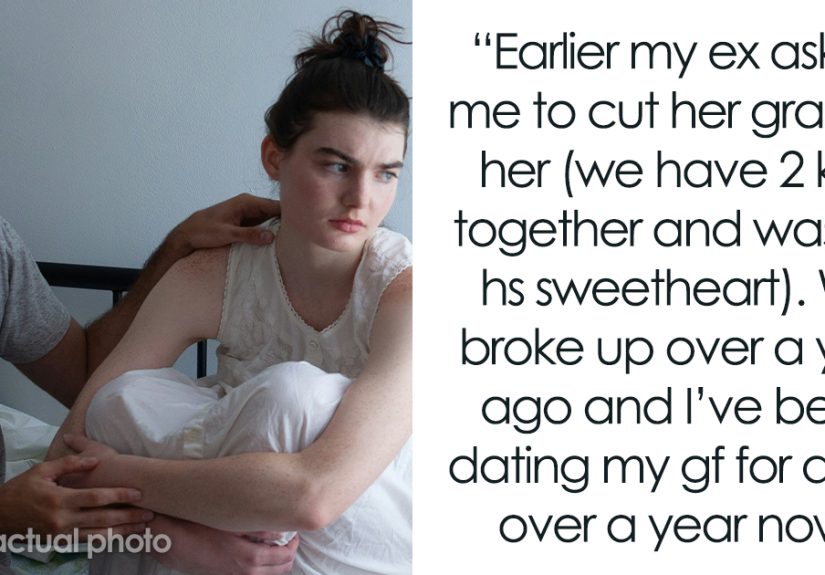
Here’s the situation in plain English:
- A man’s ex is his high school sweetheart (the kind of phrase that can make a current partner’s eye twitch).
- The ex asks him to mow her lawn. Not “help me move a couch,” not “can you watch the dog,” but “please come to my property and do a chore that requires you to be physically present.”
- He agreesapparently for free (or “free-ish,” depending on how you count favors, kid-related exchanges, or that game someone promised to buy).
- The current girlfriend finds out and goes ballistic.
On the surface, it’s a classic: “Why are you doing boyfriend chores for someone who used to be your girlfriend?” But underneath, it’s a more modern problem: How do you maintain a functional connection to an ex without accidentally torching your current relationship?
Why This Triggers People So Hard
Most partners aren’t upset because grass got cut. They’re upset because the situation can feel like a bundle of threats:
1) The “High School Sweetheart” Effect
That label carries mythology. It suggests first love, nostalgia, “the one that got away,” and a playlist of songs you probably shouldn’t play while driving at night. Even if none of that is true, a current partner may imagine it isand emotions don’t fact-check before they show up.
2) The “Intimacy of Doing Favors”
Favors aren’t neutral. They can signal closeness, loyalty, and access. When you do something practical for an exespecially something physical like home maintenanceit can look (from the outside) like you’re still “the person they call” when life happens.
3) The “Boundary Fog” Problem
Many people are fine with polite co-existence with exes. The confusion starts when nobody can answer this question clearly: “What role does this ex have in your life now?” If the role is vague, everything feels suspiciouseven if nothing is actually happening.
Jealousy: Normal Emotion, Terrible Decision-Maker
Jealousy isn’t rare. It’s a common human response to perceived threatsespecially when an ex is involved. The key issue is how jealousy gets handled.
Healthy jealousy sounds like: “Hey, this brought up insecurity for me. Can we talk about what boundaries make us both feel safe?”
Unhealthy jealousy sounds like: “You can’t do that, you can’t talk to her, you can’t have friends, and if you do, I’ll punish you with a three-day silent treatment and a dramatic sigh you can hear from the garage.”
Why it matters: when jealousy shifts into controlmonitoring, isolation, threats, constant accusationsthat’s no longer “being protective.” That’s a relationship problem with sharper edges.
Is Mowing an Ex’s Lawn Ever Reasonable?
It depends. (Yes, we know “it depends” is the most annoying answer. But it’s also the truest.) Here are the contexts where helping an ex can be reasonableand where it tends to go off the rails.
Reasonable-ish Scenarios
- Co-parenting logistics: If you share a child, you may still share emergencies, schedules, and occasional “please help” moments. Stability for the kid matters.
- Safety or short-term crisis: An ex recovering from surgery, a dangerous situation, or a genuine one-time emergency.
- Clear history + clear boundaries: The relationship is firmly over, communication is respectful, and your current partner knows what’s happening (no secrecy, no weird vibes).
Red-Flag Scenarios
- It’s frequent and undefined: You’re basically the ex’s unpaid handyman on retainer.
- It’s secretive: You “forgot to mention it” because you knew it would cause conflict.
- It feels emotionally intimate: Long late-night chats, reminiscing, inside jokes, flirting, or “nobody understands me like you.”
- Your current partner is consistently dismissed: They’re told they’re “crazy” for having feelings instead of being invited into a mature conversation.
The Lawn Mow Litmus Test: 7 Questions That Clarify Everything
If you want to know whether “mowing the ex’s lawn” is harmless or relationship gasoline, run it through these questions:
- What’s the purpose? Kid-related stability, a one-time favor, or ongoing support?
- How often does this happen? Once a year or every time her trash cans look heavy?
- Was it disclosed early? Transparency builds trust; secrecy drains it.
- Is there a fair exchange? Not “payment” like a billjust whether the arrangement is balanced and appropriate.
- Would you do this for a non-ex? If the answer is “no,” ask why.
- Does it respect your current relationship? Including time, tone, and emotional boundaries.
- Does your partner feel heard? Not obeyedheard. Big difference.
How Couples Can Talk About This Without Setting the Yard on Fire
The fastest way to turn a manageable issue into a breakup is to argue like you’re trying to win a courtroom drama. Instead, try a structure that actually works in real life:
Step 1: Name the Feeling (Without обвинение)
Try: “I felt anxious when I saw the texts, because it made me worry about your connection with her.”
Avoid: “You’re basically dating her again, Lawn Boy.”
Step 2: Ask for Meaning Before Making Assumptions
Try: “Help me understand what this favor means to you and what your boundaries are with her.”
Step 3: Agree on a Boundary That Protects the Relationship
Boundaries aren’t about controlling someone; they’re about defining what keeps both people secure. Examples:
- No favors that require being alone at the ex’s houseunless discussed first.
- Keep communication child-focused (if co-parenting).
- Major requests from the ex get a quick heads-up (“FYI, she asked; here’s what I’m thinking”).
- Time limits (“I can help once, but I’m not becoming the weekly maintenance plan”).
Practical Scripts (Because “Just Communicate” Is Not Helpful)
If You’re the Boyfriend
Script: “I get why this hits a nerve. I should’ve talked to you before I agreed. I’m not trying to blur lines with my ex. Going forward, I’ll check in with you about favors like this, and I want us to set clear boundaries together.”
If You’re the Girlfriend
Script: “I’m not trying to control you. I’m trying to feel secure. When you do partner-type favors for your ex, it makes me worry there’s still a ‘special access’ there. Can we agree on what’s appropriate so I’m not stuck guessing?”
If You Share a Child With the Ex
Script: “For co-parenting reasons, I’ll keep communication respectful and practical. I’m committed to you, and I’m also committed to keeping things stable for our kid. Let’s define what’s okay and what’s not.”
When “Ballistic” Is a Sign of Something Bigger
Sometimes the lawn is just the lawn. Other times, it’s the final straw in a stack of trust issues:
- There’s a pattern of secrecy or “trickle truth.”
- The ex keeps testing boundaries and the boyfriend keeps passing the tests.
- The girlfriend has past betrayal trauma that never got addressed.
- One partner uses jealousy to justify control (phone checks, isolation, threats).
If reactions include intimidation, fear, or ongoing controlling behaviors, that’s not “passion.” That’s a red flag. Healthy relationships can handle discomfort without turning it into punishment.
What a “Healthy Middle” Looks Like
There’s a mature compromise available hereone that doesn’t require anyone to pretend feelings don’t exist:
- Respect the current relationship: No secret favors. No blurred lines. No “you’re crazy.”
- Respect real-life complexity: Exes can stay in orbit, especially with kids involved.
- Build trust with consistency: Transparency, follow-through, and shared boundaries beat constant reassurance.
- Keep it business-like: When dealing with an ex, clarity is kindness.
Conclusion: It’s Not About the LawnIt’s About the Line
“Mowing the ex’s lawn” is a perfect metaphor for modern relationships: it’s small enough to seem silly, but loaded enough to expose everything underneathtrust, boundaries, attachment, insecurity, and expectations nobody agreed on out loud.
If you’re the one doing the favor, your job isn’t to prove your partner is irrationalit’s to make your priorities unmistakable. If you’re the one feeling threatened, your job isn’t to explodeit’s to name what you need, clearly and respectfully, and see whether your partner can meet you there.
Because the goal isn’t to win the argument. The goal is to protect the relationshipwithout turning every lawn-related request into a season finale.
Extra : Real-World Experiences People Recognize in the “Free Lawn Mow” Fight
Even if you’ve never pushed a mower in your life, you’ve probably lived some version of this scenario. Not the grass partthe emotional math part. Here are common experiences people report when an ex shows up with a “small favor,” and how it tends to play out in real relationships.
Experience #1: “It’s Just a Favor” (Until It’s Not)
A lot of people start with good intentions: “We’re adults. We’re friendly. We can help each other.” Then the favors stack uplawn today, “quick fix” tomorrow, “can you swing by” next week. The current partner isn’t upset about any single request; they’re upset that the ex has a VIP pass to your time and labor. The lesson couples learn the hard way: one-off favors need expiration dates, or they become unofficial relationship roles.
Experience #2: The “Nostalgia Threat”
High school sweethearts can trigger a specific kind of insecurity because the story feels romantic, even if the reality was two teenagers arguing about prom photos. People commonly describe feeling like they’re competing with a “memory version” of the exan idealized highlight reel. Couples who navigate this well do something surprisingly simple: they talk openly about the past without dramatizing it, and the person with the history reassures through consistency, not speeches.
Experience #3: Co-Parenting Complications
When kids are involved, exes don’t vanish; they become colleagues in the world’s messiest startup. People often share that what helps most is treating co-parenting communication like a calendar invite: practical, respectful, minimal emotion. If a favor benefits the child (or prevents chaos that will spill into the child’s life), it may be worth consideringbut with clear boundaries and transparency to the current partner.
Experience #4: The “Secrecy Spiral”
Many couples describe the same turning point: the favor itself wasn’t the main issueit was finding out after the fact. “I didn’t tell you because you’d freak out” is gasoline on trust. It teaches the other person, “I can’t rely on you to be honest when it’s uncomfortable.” The better move is early disclosure: not to ask permission like a child, but to act like a partner.
Experience #5: When the Reaction Is the Red Flag
Some people recognize an uncomfortable truth: jealousy can become a cover for control. They’ve experienced partners who demanded access to phones, accused them constantly, or tried to isolate them from friends and family. In those cases, the “lawn fight” is just the latest excuse. The takeaway: boundaries should protect both peoplenot shrink one person’s life down to “approved contacts only.”
In the end, these experiences point to one consistent theme: relationships don’t fall apart because of grass. They fall apart because expectations stay unspoken, boundaries stay blurry, and emotions get handled like a grenade instead of a conversation.