Table of Contents >> Show >> Hide
- Why Everyone Falls for the Foraged Holiday Look
- Before You Forage, Do the Boring Smart Thing First
- What to Gather for a Gorgeous Foraged Holiday
- How to Style a Foraged Holiday at Home
- How to Keep Holiday Greenery Looking Fresh
- Safety, Because Festive Is Better Than Flammable
- Pets, Kids, and Plants That Should Not Be Snack Samples
- The Real Beauty of a Foraged Holiday
- Personal Notes From a Foraged Holiday Season
Every year, holiday decorating splits into two camps. Camp One says, “More glitter!” Camp Two says, “What if we just put a branch in a crock and called it Scandinavian?” Lately, Camp Two has been winning hearts, mantels, and front porches. That is the magic of the foraged holiday: it feels thoughtful, warm, a little woodsy, a little elegant, and just messy enough to suggest you are naturally stylish instead of aggressively shopping.
A foraged holiday is not about dragging home half the forest like an overachieving squirrel. It is about using natural materials with restraint and personality: evergreen sprigs, pinecones, red-twig dogwood, seed pods, winter branches, dried orange slices, magnolia leaves, berry stems, and other seasonal finds that make a home feel layered and alive. The look lands somewhere between cozy farmhouse, old-money botanical, and “I definitely know how to tie ribbon better than I actually do.”
What makes this style especially appealing is that it checks several boxes at once. It is budget-friendly. It feels timeless instead of trendy in a one-December-only sort of way. It can be rustic, minimal, traditional, or modern depending on how you arrange it. And unlike a box of plastic decor that has to live in your attic until next winter, much of it can be composted, reused, or simply returned to the earth when the season is over.
Why Everyone Falls for the Foraged Holiday Look
The appeal starts with texture. Holiday greenery has a way of softening a room immediately. Pine and cedar bring movement. Magnolia leaves add gloss and structure. Bare branches create height. Dried orange slices catch the light like little stained-glass windows, which is a very fancy effect for something that began life as produce. Even a simple bundle of clippings in a vase can make a space feel festive without screaming for attention like a six-foot inflatable snowman who has seen things.
There is also an emotional reason this style keeps coming back. A foraged holiday feels personal. It reflects where you live, what grows near you, and how you want your home to feel. In New England, that may mean evergreens, red berries, and birch. In milder climates, it might lean into eucalyptus, rosemary, olive branches, citrus, or seed pods. The point is not to copy one perfect image. The point is to create a holiday atmosphere that feels grounded, local, and unforced.
That is why natural holiday decor works so well across design styles. In a modern home, a single asymmetrical swag can look sculptural and chic. In a traditional house, layered garlands and wreaths feel classic. In a smaller apartment, a bowl of pinecones, clipped greens in bud vases, and a string of dried citrus can do all the heavy lifting without taking over the room.
Before You Forage, Do the Boring Smart Thing First
Now for the part that is less romantic but far more useful: not everything growing outdoors is yours to clip. A truly good foraged holiday begins with permission. If you are cutting from your own property, wonderful. If you are collecting from a friend’s yard, ask first. If you are on public land, do not assume holiday spirit equals automatic harvesting rights. Rules vary by land manager, and some forests limit what can be taken, where it can be cut, and how much is allowed.
That matters for two reasons. First, legality. Second, stewardship. Good foraging is not a holiday free-for-all. It means taking only what you will actually use, skipping fragile or protected areas, and harvesting in a way that does not strip a plant bare. The prettiest wreath in town loses a lot of charm if it came from the decorating equivalent of a smash-and-grab.
It also helps to think like an editor instead of a collector. You rarely need armloads of material. A few beautiful branches with lichen, a cluster of pinecones, several evergreen cuttings, and one bag of dried citrus often go farther than a giant pile of random stuff that looked exciting in the yard and confusing in your dining room.
What to Gather for a Gorgeous Foraged Holiday
The stars of a foraged holiday are usually greenery, branches, cones, and natural accents. Evergreen boughs are the workhorses. They bring scent, softness, and instant seasonal recognition. Cedar drapes beautifully. Pine feels classic. Spruce has strong structure. Magnolia leaves are excellent for contrast, especially when the brown undersides are visible. If your goal is a wreath, swag, garland, or centerpiece, these are your main characters.
Then come the supporting players: pinecones, acorns, seed pods, curly twigs, dogwood stems, grasses, holly-like textures, and berries that are used decoratively rather than casually tossed onto a cheese board because they “look festive.” That last part matters. Unless you are absolutely certain a plant is edible and safe, treat it as decor, not garnish.
Dried citrus deserves its own applause. Orange slices have become a holiday favorite because they add color, fragrance, and a handmade look without much effort. They work on wreaths, garlands, trees, mantels, gifts, and table settings. They also pair beautifully with bay leaves, cinnamon sticks, ribbon, or popcorn garlands if you like a slightly nostalgic look. Done well, they feel old-fashioned in the best way, like your house smells faintly of oranges, evergreen, and competence.
How to Style a Foraged Holiday at Home
The Front Door
If you want the biggest payoff for the least effort, start outside. A wreath or swag made from mixed greenery instantly sets the tone. This is also where asymmetry shines. A full perfectly round wreath is lovely, but an off-center cluster of greens, ribbon, cones, and citrus can feel fresher and more modern. For a rustic house, keep it loose and natural. For a more formal entry, tighten the shape and repeat materials for symmetry.
Branches in outdoor urns are another easy win. Tall dogwood stems, evergreen cuttings, and pinecones can turn a bare porch into something magazine-worthy in under an hour. The trick is scale. If the doorway is large, go generous. Tiny arrangements near a grand entry tend to look less “designer” and more “forgot to finish.”
The Table
Foraged holiday tables are often at their best when they are low, loose, and a little imperfect. A long runner of greenery, scattered cones, and dried orange slices is enough to create mood without blocking conversation. Add taper candles only if they are placed safely and generously away from greens. Flameless candles are even better if you prefer your centerpiece not to flirt with disaster.
Leaves and magnolia foliage also make charming place cards. A handwritten name on a leaf tucked into a napkin fold feels thoughtful and surprisingly polished. It is one of those little details that guests remember because it feels personal, not purchased in a panic on December 23.
The Mantel
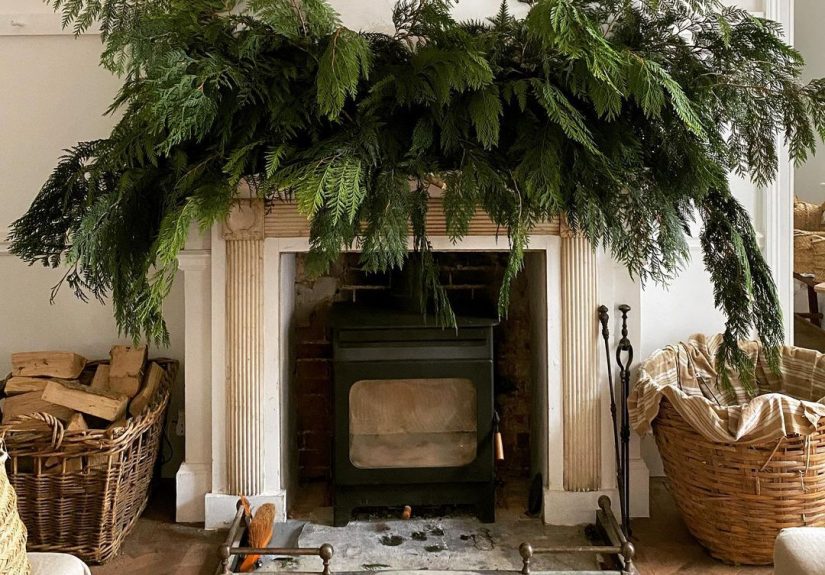
The mantel is where a foraged holiday can lean dramatic. Instead of packing every inch with decor, let the greenery move. An asymmetrical garland with cedar, pine, and a few magnolia stems feels lush without becoming bulky. Tuck in ribbon, dried citrus, or a handful of cones. If you mix fresh and faux stems, you can stretch your materials and make the whole thing feel fuller without your wallet filing a complaint.
The Kitchen and Everyday Corners
The best holiday homes are not only decorated in the “company rooms.” Tuck clipped sprigs into bud vases on windowsills. Add a few dried orange slices to a simple garland near open shelving. Use a bowl of pinecones on the counter. Tie rosemary or cedar around cloth napkins for a dinner gathering. These smaller touches make the house feel intentionally festive rather than concentrated in one overachieving corner.
How to Keep Holiday Greenery Looking Fresh
Fresh greens are gorgeous, but they are not immortal. Indoors, they last longer when kept away from heating vents, fireplaces, radiators, and strong direct sunlight. Cool rooms help. So does moisture. If branches are displayed in water, refresh it regularly. If you are bringing in a fresh tree or large cut boughs, hydration matters more than most people realize.
For trees, freshness starts early. A fresh cut at the base and a well-watered stand make a major difference. Holiday greenery in general holds up better when it begins fresh and stays cool. Translation: your pine swag does not want to roast beside the fireplace like it is auditioning to become kindling.
Dried materials are lower maintenance, which is one reason they are so popular. Dried orange slices, for example, can be made at home by slicing them evenly and drying them slowly in a low oven until they are no longer tacky. Once they are ready, they can be strung into garlands, wired onto wreaths, or scattered around a centerpiece for color and scent.
Safety, Because Festive Is Better Than Flammable
Natural Christmas decor is beautiful, but it does come with common-sense rules. Fresh greenery eventually dries out. Dried greenery is even more combustible. So keep greens away from open flames, overloaded outlets, hot bulbs, and fireplaces. Do not weave live greens right into a candle arrangement and assume holiday magic will handle the rest.
Use lights carefully, especially if you are decorating heavily. Avoid overloading outlets or connecting too many incandescent strands. Check cords before using them. Turn lights off before bed. And if you love candlelight, flameless candles are the easiest way to keep the cozy atmosphere while removing the “surprise emergency” portion of the evening.
If you have a fireplace, keep boughs, paper, ribbons, and garlands well clear of the opening. Never toss dried greens into the fire for a picturesque last hurrah. When dry, they burn fast. Very fast. Faster than your aunt can say, “Was that supposed to happen?”
Pets, Kids, and Plants That Should Not Be Snack Samples
A foraged holiday should also be practical for the household you actually have. If pets or small children live with you, be careful with plant choices and placement. Holly and mistletoe may look iconic, but they are not ideal decorations for curious mouths. Some broadleaf evergreens and berries can also be toxic if eaten. Secure arrangements, keep tempting stems out of reach, and do not assume “natural” means harmless.
This is another reason simple can be smart. A restrained arrangement placed intentionally is often safer and prettier than greenery scattered everywhere. It also keeps your home from looking like a very tasteful woodland creature moved in without paying rent.
The Real Beauty of a Foraged Holiday
The real charm of this style is not that it is free, though that certainly helps. It is that it slows you down. You notice texture. You notice seasonality. You notice the red of bare twigs against a gray afternoon, the scent of cedar when the heat clicks on, the way dried orange slices glow at dusk. The decor feels less like holiday clutter and more like an atmosphere.
It also invites creativity over consumption. You do not need matching bins of brand-new decorations every year. You need a few good materials, a little editing, and enough confidence to let natural shapes do the work. The result feels lived-in, generous, and quietly beautiful. In other words, exactly what most people want the holidays to feel like.
Personal Notes From a Foraged Holiday Season
My favorite foraged holiday moment never begins in a store. It begins outside, usually on a cold afternoon when the light is already slipping away and the yard looks undecided about whether it wants to be beautiful or just bare. That is the funny thing about this style: at first glance, winter looks stingy. Then you start paying attention. A crooked branch is suddenly sculptural. Pinecones become tiny pieces of architecture. A clipped cedar sprig smells like every December memory at once.
One year I filled a vase with tall branches that had a little lichen on them, mostly because they were free and I was feeling financially festive. I expected them to look temporary, like a placeholder until I bought “real” decorations. Instead, they became the thing everyone noticed first. In the evening, with a lamp nearby, the shadows stretched across the wall and made the whole room feel bigger, calmer, and far more expensive than it had any right to.
Another year I went all in on dried orange slices. I lined trays, sliced fruit, and turned my kitchen into a tiny citrus factory. By the end, the house smelled incredible, my fingers were sticky, and I felt absurdly proud of something that was basically fruit jerky for decor. But once those slices were strung onto garland with ribbon and tucked among greens, I understood the obsession. They caught the light in the late afternoon and looked almost jewel-like. They made even the oldest faux garland look intentional, as if I had planned an aesthetic instead of staging a seasonal rescue mission.
The best part, though, is the mood shift. A foraged holiday changes the way a home feels because it changes the way you move through it. You stop rushing past every surface and start noticing where a small bowl of pinecones would soften a hard corner. You tuck a sprig into the bathroom. You tie greenery to the backs of dining chairs. You clip rosemary for the table and suddenly dinner on a random Tuesday feels a little ceremonial, a little kinder.
There is something deeply satisfying about creating beauty from what is already around you. It feels less like decorating and more like collaborating with the season. The house does not become perfect, and honestly that is part of the charm. A branch leans a little left. One orange slice dries darker than the rest. The bow is never quite as symmetrical as you imagined. Somehow all of that makes it better. It looks human. It looks gathered. It looks loved.
That is why this obsession sticks. A foraged holiday is not just a style choice. It is a way of celebrating with more attention and less excess. It says the season does not need to be louder to be memorable. Sometimes it just needs cedar on the mantel, citrus on the tree, a few beautiful branches by the door, and a room that smells faintly like winter and warmth. That kind of holiday does not shout. It glows.