Table of Contents >> Show >> Hide
- What Happened in the Doorbell Prank Case?
- Why This Story Hit a Nerve
- When “Just a Prank” Stops Being a Defense
- The Bigger Problem: Doorbell Pranks Are Getting More Dangerous
- Why Parents Cannot Laugh This Off
- What the Victim’s Perspective Teaches Us
- How to Talk About Pranks Without Sounding Like a Lecture Machine
- Conclusion: The Real Shock Was Not the Masks
- Additional Experiences Related to This Topic
- SEO Tags
Every neighborhood has its usual nighttime soundtrack: a dog barking at nothing, a car door slamming two houses over, and someone’s motion light acting like it just saw a ghost. But every now and then, a front porch camera captures something that turns ordinary suburban life into the opening scene of a thriller. That is exactly why this disturbing doorbell prank story caught so much attention. At first, it looked like a terrifying attempted break-in involving masked teens. Then came the twist nobody saw coming: the people behind the masks were not strangers at all.
What makes this story so compelling is not just the surprise ending. It is what the incident reveals about prank culture, social media attention, parenting, and the very thin line between “just a joke” and “this could end in disaster.” The masks made it creepy. The threats made it serious. And the family connection made it downright surreal. In a world where people record everything, upload anything, and explain poor judgment with a shrug and a laugh emoji, this case landed like a cold splash of water.
Here is what happened, why it rattled so many people, and what it says about the current state of so-called harmless teen pranks that no longer feel harmless at all.
What Happened in the Doorbell Prank Case?
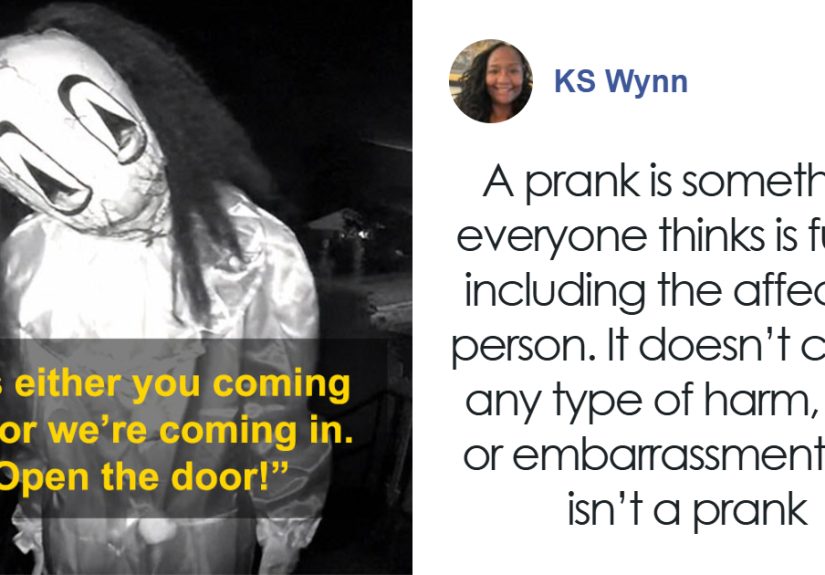
The real-life case that inspired this headline unfolded in Alexandria, Virginia, where residents reported a deeply unsettling late-night encounter at a home. Doorbell camera footage showed masked teens at the front door, creating the impression of a possible home invasion rather than a goofy Halloween stunt. According to public reporting, the group wore spooky masks, banged on the door, made threatening statements, and escalated the fear by moving around the property. For the people inside the home, this was not a prank. It felt like danger had shown up wearing a costume.
Police initially treated the event as an attempted burglary. That alone tells you how badly the “joke” landed. Law enforcement spent significant time investigating the incident, gathering video, chasing leads, and figuring out who was responsible. Then came the twist that turned the story from scary to astonishing: the masked teens were related to the victims. Authorities later said the stunt had been organized as a family prank, with adults allegedly nearby and at least one person filming. Yes, really. This was not just teenage bad judgment running loose in the dark. Adults were reportedly helping steer the clown car.
The victims, by all accounts, did not know this was a prank when it happened. That detail matters more than anything. A prank only “works” in the minds of the people staging it. For the people on the receiving end, fear is still fear, adrenaline is still adrenaline, and the possibility of a tragic misunderstanding is very real.
Why This Story Hit a Nerve
It looked like a threat, not a joke
There is a huge difference between ringing a bell and running away versus showing up masked at night, making threatening comments, and moving around someone’s property. One belongs to the long, annoying history of ding-dong ditch. The other starts looking like a criminal act with Halloween branding. In this case, the visual details mattered. Masks, nighttime, aggressive behavior, and doorbell footage created the exact conditions that make homeowners panic.
The victim’s fear was completely rational
One of the easiest mistakes in prank culture is treating the victim’s reaction like part of the entertainment package. It is not. If a person sees masked figures outside their home after dark and hears statements that sound threatening, their fear is not an overreaction. It is a normal human response. This is one reason the Alexandria story resonated so widely. Most people watching the footage could instantly picture themselves doing the same thing: locking the door, calling family, calling police, and wondering whether things were about to get much worse.
The family connection made it even more disturbing
There is something especially unsettling about learning the people who terrified you were not random intruders but relatives. Instead of relief, the reveal creates a second shock. The first shock is fear. The second is betrayal. It changes the emotional logic of the story. A stranger acting dangerously is frightening. Family members acting dangerously for laughs is confusing, painful, and almost absurd in the worst way.
When “Just a Prank” Stops Being a Defense
Modern prank culture is addicted to the phrase “it was just a joke,” as if those five words are a legal shield, a moral eraser, and a personality transplant all at once. They are not. Intent matters, but impact matters too. The pranksters in stories like this may believe their goal was laughter, not harm. But once a prank creates real fear, property damage, police involvement, or the possibility of a violent response, the “just kidding” defense starts sounding very flimsy.
That is exactly why police in the Alexandria case reportedly described the event as a serious moral failure. It was not because everyone forgot how humor works. It was because the choices involved were reckless. The setup appears to have included masks, threats, nighttime intimidation, and filming. That is not ordinary teasing. That is theater built out of someone else’s terror.
The bigger lesson is simple: if your prank depends on the target believing they might be in danger, you are no longer operating in harmless-comedy territory. You have wandered into the land of consequences, where nobody wins and everybody suddenly needs a lawyer, a therapist, or both.
The Bigger Problem: Doorbell Pranks Are Getting More Dangerous
The Alexandria case did not happen in a vacuum. Across the United States, reports have shown that doorbell pranks, door-kicking challenges, and social-media-fueled knock-and-run stunts have been escalating. What used to be childish mischief now sometimes involves masks, pounding on doors, filming strangers, and posting the reactions online for views. The old prank got a smartphone, an audience, and a terrible sense of boundaries.
That shift matters because the environment has changed too. More people have security cameras. More people are on edge. More people assume the worst when someone bangs on the door late at night. Law enforcement agencies and local stations have repeatedly warned that aggressive doorbell pranks can be mistaken for attempted break-ins. That means what starts as “content” can trigger fear, confrontation, arrests, or violence within seconds.
Sadly, there are real examples behind those warnings. In Texas, an 11-year-old boy died after a doorbell-ringing prank turned into a shooting. In Virginia, a high school senior was killed after he and friends were allegedly filming prank content. In California, a man was convicted after chasing teens who had played a doorbell prank, a confrontation that ended in deadly consequences. In Delaware, even a law enforcement officer ended up pleading guilty in a case tied to assaults on teens over a doorbell prank. These incidents are different in detail, but they all point to the same uncomfortable truth: a prank at someone’s front door can spiral fast.
No, that does not mean every homeowner is a danger or every teenager with a dumb idea is headed for a crime headline. It means the margin for error is now frighteningly small. When fear, weapons, adrenaline, and social-media stupidity enter the same zip code, the outcome is not usually funny.
Why Parents Cannot Laugh This Off
Adults set the tone
One of the most striking details in the Alexandria case was the reported involvement of adults. That transforms the story. Teenagers do reckless things. Nobody is shocked by that. What stings is the idea that grown-ups were not stopping the behavior but allegedly helping stage it. If adults frame intimidation as entertainment, teenagers learn the wrong lesson twice: first that the prank is acceptable, and second that consequences are someone else’s problem.
Homeowner fear is not hypothetical
Parents need to understand that kids do not experience the front porch the way a homeowner does. To a teenager, ringing a bell and hiding behind a bush might feel silly. To the person inside the house, it may feel like harassment, trespassing, or the first step in a burglary. Add darkness, masks, loud banging, or repeated visits, and the risk multiplies. That gap in perception is where trouble starts.
Internet logic is terrible real-life logic
Online, the worst prank videos are often rewarded with views, duets, reposts, and comment sections full of laughing faces. Offline, the same behavior can lead to criminal charges, community outrage, and genuine trauma. A teenager who watches a viral prank clip sees a punchline. A homeowner sees suspicious people on private property. Parents who do not spell out that difference are leaving their kids to learn it the hard way.
What the Victim’s Perspective Teaches Us
The victim’s experience is the moral center of this whole story. It reminds us that you do not need physical injury for an event to be deeply upsetting. Being frightened in your own home changes the atmosphere of that home. The porch camera becomes less of a gadget and more of a witness. The front door stops feeling routine. A knock after dark suddenly carries extra weight. And when the people responsible turn out to be connected to you, the emotional whiplash gets even worse.
That is why stories like this spread so widely. They tap into a universal vulnerability. Everyone wants to believe home is the one place where you do not have to audition for a survival instinct. A prank that invades that feeling tends to land badly, and it should.
How to Talk About Pranks Without Sounding Like a Lecture Machine
There is a practical takeaway here for families, schools, and communities. The answer is not to act like every goofy teen idea is the downfall of civilization. Teenagers have always done silly things. The answer is to be specific about which kinds of pranks cross the line and why.
A useful rule is this: if the prank involves fear, trespassing, threats, property damage, disguises meant to hide identity, or filming strangers without consent, it is not “classic harmless fun.” It is risk wrapped in bad judgment. Another good rule: if the joke only works because the target thinks they are in danger, scrap it. Find another hobby. Learn guitar. Bake cookies. Alphabetize your chaos. Anything else.
It also helps to ask one brutally simple question: how would this look on a police report? If the answer is “honestly, not great,” then the idea probably belongs in the trash with the cheap mask and the half-battery flashlight.
Conclusion: The Real Shock Was Not the Masks
The disturbing doorbell prank in Alexandria became national conversation material because it combined three things people cannot ignore: fear, family, and awful judgment. The masks were creepy, sure. But the most shocking turn was not the costumes. It was the revelation that the people behind them were known to the victims and that adults were reportedly involved in staging the whole thing.
That twist is what transformed the story from a scary local incident into a broader warning about prank culture in America. Too many people still treat frightening someone as entertainment, especially when a camera is rolling. But the modern front porch is not a stage. It is the threshold of someone’s safety, privacy, and peace of mind. Once a prank stomps across that line, the laugh tends to disappear.
And that is the real lesson. Not every prank is harmless. Not every “joke” deserves a second chance. And when the whole thing ends with police, panic, and a family saying, “Wait, that was you?” the comedy defense collapses faster than a dollar-store mask in the rain.
Additional Experiences Related to This Topic
Stories like this resonate because so many people have their own version of a front-door scare, even if it never made the news. Ask enough homeowners, renters, parents, or even college students living off campus, and you will hear the same pattern: somebody bangs on the door too late at night, someone checks the camera, everyone gets tense, and the mood in the house changes instantly. Sometimes it turns out to be a lost delivery driver. Sometimes it is neighborhood kids showing off. Sometimes it is worse. But in the moment, nobody knows which version they are living through.
One common experience is the delayed reaction. At first, the person inside the house tries to be reasonable. Maybe it is a mistake. Maybe someone is at the wrong address. Maybe there is a perfectly normal explanation that does not involve weird masks and terrible decision-making. Then the knocking continues. Maybe there is shouting. Maybe the person at the door starts tugging a gate or moving toward the side yard. That is when calm logic usually exits the building and survival mode clocks in for the night shift.
Parents often describe the fear differently. It is not just “What is happening at my door?” It becomes “Are my kids safe upstairs?” “Should I call the police?” “Should I turn on all the lights?” “Should I say something through the door or stay quiet?” In those few minutes, the mind races through a ridiculous number of scenarios. That is why prank defenders sound so detached when they later say everyone was overreacting. The people inside were not watching a video clip. They were living inside uncertainty.
Teenagers who have outgrown these stunts often say the same thing afterward: they did not think about the person on the other side of the door. They thought about the laugh, the dare, the rush, and maybe the video. They did not think about an elderly homeowner, a family with young children, a person living alone, or someone who had already been the victim of a break-in before. That blind spot is a huge part of the problem. Pranks like this are often powered by imagination in the wrong direction. The prankster imagines the reaction shot, not the emotional cost.
Neighbors feel it too. Once one house gets targeted, the whole street starts talking. People check cameras. Group chats light up. Someone says they saw kids in hoodies running down the block. Another person says they heard pounding on a back gate last weekend too. Even if nothing else happens, a single disturbing prank can leave a neighborhood feeling jittery for days. That is a steep price to pay for a joke that was never very funny to begin with.
The most telling experience, though, is what happens afterward. People start changing routines. Porch lights stay on longer. Cameras get upgraded. Kids are told not to answer the door. Adults become more suspicious. Trust shrinks a little. That is the piece prank culture rarely talks about. The damage is not always broken property or criminal charges. Sometimes it is the quiet erosion of a person’s sense of ease at home. And once that happens, the prank is not a prank anymore. It is a memory people wish they did not have.