Table of Contents >> Show >> Hide
- The Short Answer: Not Every Potted Plant Belongs Indoors
- Which Potted Plants Usually Need to Come Inside for Winter?
- Which Potted Plants Can Stay Outside?
- Why Containers Make Winter Harder on Plants
- Three Smart Ways to Overwinter Potted Plants
- How to Bring Potted Plants Inside Without Inviting Trouble
- Common Winter Mistakes Gardeners Make
- A Gardener’s Winter Decision Checklist
- What Gardeners Often Experience the Hard Way
- Final Thoughts
- SEO Tags
Note: This article is based on real horticultural guidance synthesized from reputable U.S. gardening and extension sources, rewritten in a fresh, reader-friendly style for web publishing.
Every fall, gardeners perform the same slightly dramatic ritual: we stare at the forecast, clutch a mug of coffee, and whisper to our patio plants, “You’re either coming inside, or you’re on your own, kid.” It feels like a simple question, but it is not. Do potted plants really need to come inside for winter? The honest answer is wonderfully annoying: some do, some absolutely do not, and some only need a little winter protection instead of a full move into your living room.
That is because container plants live by different rules than plants growing in the ground. In a garden bed, roots are insulated by the earth. In a pot, roots are sitting in what is basically a decorative lunchbox exposed to cold air on all sides. So while a plant may be technically hardy in your USDA zone, it can still struggle in a container once the temperature drops and the potting mix freezes solid.
If you want the simplest answer possible, here it is: tender tropical plants, houseplants, and frost-sensitive annuals usually need to come inside before cold weather arrives; hardy perennials, shrubs, and evergreens may be able to stay outside if they are well-suited to your climate and properly protected. The rest comes down to knowing what kind of plant you have, how cold your winters are, and whether you are aiming to keep the plant actively growing, dormant, or merely alive enough to avoid turning into botanical soup.
The Short Answer: Not Every Potted Plant Belongs Indoors
A lot of gardeners assume all potted plants must come indoors for winter. That sounds caring, but it is not always correct. In fact, some plants actually need a cold dormant period to rest, reset, and bloom well the following season. For those plants, a warm living room in January is not a spa day. It is confusion with central heating.
So the real question is not, “Should all potted plants come inside?” The real question is:
- Is this plant tropical or cold-hardy?
- Is it grown as a houseplant, annual, perennial, shrub, or edible?
- What is my winter climate and hardiness zone?
- Am I trying to keep this plant growing, or just help it survive until spring?
Once you answer those, your winter plant strategy becomes much clearer.
Which Potted Plants Usually Need to Come Inside for Winter?
Tropical Plants and Summered-Outside Houseplants
This is the biggest group that needs indoor shelter. If you moved your monstera, pothos, snake plant, philodendron, fiddle-leaf fig, peace lily, or other houseplants outside for summer, they should come back in before chilly nights settle in. The same goes for tropical patio stars like hibiscus, mandevilla, bougainvillea, palms, coleus, and many elephant ears, depending on how you plan to overwinter them.
Why? Because most tropical plants are not built for cold nights, much less frost. Many start showing stress when nighttime temperatures dip into the 40s. Some especially tender plants prefer to come in even earlier, while nights are still hovering in the low-to-mid 50s. If you wait until the first hard freeze, you may not be rescuing a plant so much as escorting a casualty indoors.
Frost-Sensitive Annuals
Many container annuals look fabulous in fall right up until one icy night turns them into limp green linguine. Begonias, impatiens, sweet potato vine, and other tender annuals often need frost protection if you want to extend their season. Some can be moved indoors temporarily during cold snaps. Others are better treated as seasonal beauties that had a good run and deserve a dignified compost farewell.
Tender Herbs and Edibles
Some potted herbs can be brought indoors for winter harvest, but success depends on light. Basil, for example, hates cold and should come inside before temperatures fall too far, though it often sulks indoors without enough sun. Rosemary is a classic overwintering challenge: beloved, aromatic, and frequently dramatic. It may survive indoors in bright light with good airflow and careful watering, but it does not always make spring looking thrilled about the arrangement.
Peppers, citrus, and other warm-season edible plants can also be overwintered inside or in a protected space if you have strong light, patience, and a tolerance for indoor plant shuffling.
Which Potted Plants Can Stay Outside?
Hardy Perennials, Shrubs, and Evergreens
Here is where things get more encouraging. Many hardy perennials and woody plants can stay outdoors in winter if they are truly suited to your region and their roots get enough protection. Think ornamental grasses, certain conifers, sedges, heuchera, lavender in the right climate, hardy herbs, and cold-tolerant shrubs.
But container growing changes the math. A plant that is hardy to your zone in the ground may not be quite as hardy in a pot because the roots are more exposed. That is why many gardeners follow a practical rule: if you want to leave a perennial outdoors in a container, choose one rated about two USDA zones colder than your own. In other words, if you garden in Zone 7, a plant hardy to Zone 5 stands a better chance of surviving winter in a pot than one merely hardy to Zone 7.
Cool-Season Container Plantings
Some containers are meant to ride through colder weather beautifully. Pansies, violas, ornamental kale, certain evergreens, and cold-hardy herbs can continue to provide color and texture well into winter, especially in milder climates. These are the overachievers of the container world: still smiling in chilly weather while your summer annuals are filing for emotional leave.
Why Containers Make Winter Harder on Plants
If you remember only one thing from this article, let it be this: the pot is often the problem, not the plant. Roots in the ground benefit from insulation, stable temperatures, and surrounding soil that buffers extreme cold. Roots in containers are exposed on every side and can freeze more quickly. Small pots are even riskier because they contain less soil volume and dry out faster.
The material of the container matters too. Some ceramic and terra-cotta pots can crack during freeze-thaw cycles if they stay wet. Dark pots can also warm up during sunny winter days and cool sharply at night, which creates temperature swings plants do not love.
So when gardeners say a plant “isn’t winter hardy,” sometimes what they really mean is that the plant isn’t winter happy in that pot, in that exposure, with that amount of root protection.
Three Smart Ways to Overwinter Potted Plants
1. Bring Them Indoors as Active Houseplants
This works best for tropicals and true houseplants. If the plant is meant to keep growing through winter, bring it into a bright indoor space before cold damage starts. A sunny window, supplemental grow light, and steady temperatures can keep many plants going until spring.
Once indoors, expect slower growth. Winter light is weaker, indoor air is drier, and your plant will likely need less water and little to no fertilizer. In other words, do not love it to death. A plant in December is not trying to win a bodybuilding competition.
2. Store Them Dormant in a Cool Protected Space
This method is ideal for many hardy perennials and some tender plants that can rest through winter. An unheated garage, shed, enclosed porch, root cellar, or cool basement often works well. The goal is cold enough to maintain dormancy, but not so cold that the roots freeze solid. This is also a classic way to overwinter geraniums, some tropicals, and dormant bulbs or tubers.
In dormant storage, light matters less, watering becomes occasional, and the root zone should stay barely moist rather than soggy. Think “supportive roommate,” not “rainforest simulation.”
3. Leave Them Outside With Protection
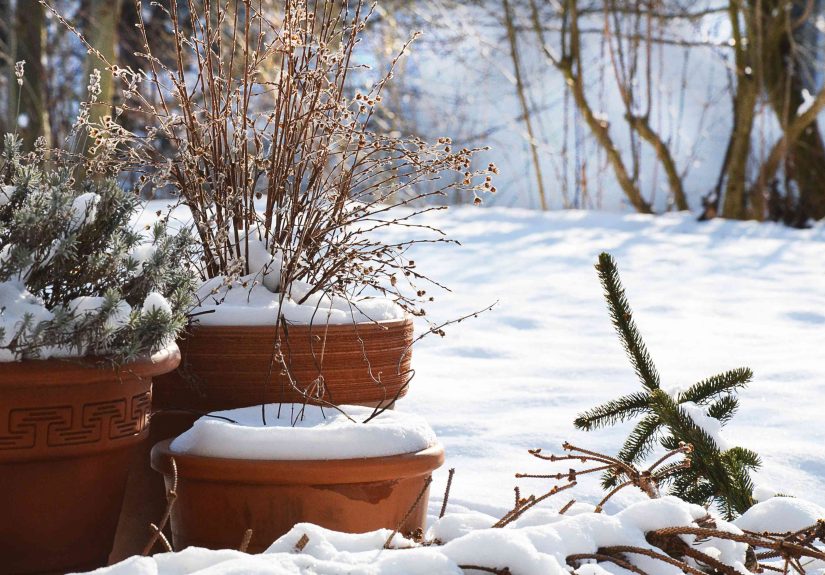
Some container plants can remain outdoors if you reduce their exposure. You can group pots together in a sheltered location, place them against a wall out of the wind, mulch around the pots, wrap containers with burlap or insulating material, or sink the pots into the ground for the winter. In very cold climates, burying or heeling in containers can be one of the most reliable solutions because the surrounding soil helps insulate the root ball.
This option is especially useful when a plant needs winter chill but does not need the full drama of open exposure on a windy patio in January.
How to Bring Potted Plants Inside Without Inviting Trouble
Moving plants indoors is not just a matter of grabbing the pot and hoping for the best. If you do that, you may also be bringing in aphids, mealybugs, scale, spider mites, fungus gnats, ants, and at least one mystery creature that appears after midnight.
Step 1: Inspect for Pests
Check the leaves, stems, leaf undersides, pot rims, saucers, and potting mix. Wash plants off with a hose if needed. Remove damaged foliage. If pests are present, treat before the plant comes inside. Then isolate new arrivals from your other houseplants for a few weeks so you do not accidentally turn one problem into a full indoor pest convention.
Step 2: Acclimate Them to Lower Light
Plants that spent summer outdoors in bright conditions need time to adjust. Start by moving them into shade for a week or so, then bring them indoors gradually if you can. This helps reduce leaf drop and transplant-style drama.
Step 3: Clean the Pots
Wipe down or wash the outside of containers before they cross your threshold. It is good hygiene, it looks better in the house, and it may remove hitchhiking pests or eggs. Also, your floors will appreciate not receiving half the patio.
Step 4: Adjust Watering and Fertilizer
Once plants are inside, reduce watering according to the plant’s needs and the speed at which the soil dries. Do not keep the potting mix constantly wet. Most plants need less fertilizer in winter, and many need none at all until active growth resumes in spring.
Step 5: Mind Humidity and Drafts
Indoor heat can dry out tropical plants fast. Grouping plants, using a humidifier, or setting pots on pebble trays can help raise humidity around them. Keep plants away from heat vents, radiators, and icy windowpanes. A tropical plant placed between a furnace vent and a drafty window is basically being asked to survive a weather argument.
Common Winter Mistakes Gardeners Make
- Waiting too long: One surprise frost can end the conversation.
- Bringing in pests: Outdoor bugs do not need an invitation.
- Overwatering indoors: This is one of the fastest routes to root rot.
- Over-fertilizing in winter: Slow growth means plants need less, not more.
- Assuming hardy in-ground means hardy in pots: Containers offer less insulation.
- Ignoring light: A “bright room” for humans is often dim for plants.
A Gardener’s Winter Decision Checklist
Before winter hits, ask yourself these quick questions:
- Is the plant tropical, tender, or frost-sensitive?
- Does it normally live indoors for part of the year?
- Is it truly hardy in my area, and even hardier than my zone if left in a pot?
- Can I provide bright light indoors, or would cool dormancy be a better option?
- Do I have a garage, shed, basement, or protected outdoor spot for overwintering?
- Is this plant valuable enough to fuss over, or am I okay replacing it next spring?
That last question matters more than people admit. Sometimes the best gardening decision is practical, not sentimental. Not every half-dead coleus needs to become a winter houseguest.
What Gardeners Often Experience the Hard Way
One of the most common winter lessons starts with confidence. In early fall, a gardener looks at a healthy patio full of potted plants and thinks, “I have time.” The days still feel warm. The afternoon sun is lovely. The forecast says the first frost is only a possibility. So the plants stay outside one more week, then another, then one more night because surely the weather person is being dramatic again. By morning, the basil is blackened, the coleus is drooping like a canceled party balloon, and the hibiscus looks personally offended. That is usually the moment gardeners learn that cold damage does not care how attached you are.
Another classic experience happens after the rescue mission. The plants come indoors, everyone feels heroic, and then the leaf drop begins. Suddenly there are yellow leaves on the floor, a sticky spot on the windowsill, and a suspicious cloud of tiny flying insects rising from the rosemary. This is where winter gardening becomes part horticulture and part detective work. Many gardeners discover that the move indoors is not the hard part. The hard part is helping plants adjust to lower light, drier air, less frequent watering, and a completely new rhythm.
Then there is the overwatering phase, also known as “I love you and therefore I must drown you.” Because the plant is indoors where you can see it constantly, it is easy to fuss. A droopy leaf gets extra water. A slow-growing plant gets fertilizer. A quiet dormant geranium gets treated like it should be performing. Experienced gardeners eventually learn that winter care is often about restraint. Plants resting in winter usually want less attention, not more. They need steady conditions, not a motivational speech and a gallon of water every three days.
There are also small victories that make the whole process worth it. A hibiscus that blooms in January feels a little magical. A pot of chives on a bright windowsill can make a cold morning feel useful. A geranium that survives cool storage and wakes up in spring gives you the deeply satisfying feeling that you outsmarted both winter and the garden center price tag.
Over time, most gardeners develop a personal system. The prized tropicals come inside early. Hardy pots get grouped and protected. A few plants are allowed to go dormant in the garage. A few annuals are thanked for their service and sent to the compost pile with dignity. And that, really, is the heart of good winter plant care: not dragging every single pot indoors, but matching each plant to the kind of winter survival plan it actually needs.
Final Thoughts
So, do potted plants really need to come inside for winter? Some absolutely do. Some absolutely do not. And a surprising number simply need the right kind of protection. The trick is knowing your plant, your climate, and your goal. If it is tropical, bring it in before the cold arrives. If it is hardy, focus on protecting the roots. If it needs dormancy, do not force it to spend winter pretending it is still July.
A smart gardener does not treat every container plant the same. A smart gardener reads the weather, knows the plant tag, respects the root system, and accepts that winter care is less about panic and more about planning. And maybe, just maybe, labels the pots before hauling them around next year. Future you will be grateful.