Table of Contents >> Show >> Hide
- Why Technology and Scale Matter More Than Ever
- The New Engine Room: Data, Cloud, and Platform Thinking
- Where Technology Is Reshaping Asset Management Fastest
- AI in Asset Management: Useful, Powerful, and Not Magic
- Technology Without Operating Discipline Is Expensive Theater
- Private Markets, ETFs, and Whole-Portfolio Thinking
- What Separates Leaders from Laggards
- Composite Examples of Technology at Scale
- Experience from the Field: What Scaling Technology in Asset Management Really Feels Like
- Conclusion
Asset management has always loved a good story. For years, the story was about star portfolio managers, market timing, product launches, and the magical phrase “strong long-term performance.” That story still matters, of course. Nobody wants a fund manager whose best idea is panic. But the industry’s real plot twist is happening behind the curtain: technology and scale have become central to how modern asset managers compete, grow, and stay profitable.
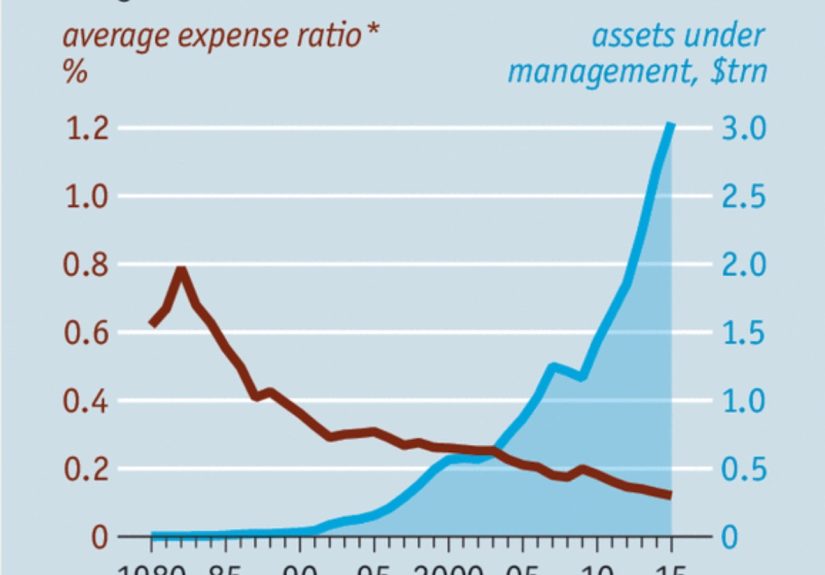
In plain English, this means the firms winning today are not just the ones with smart investors. They are the ones with smart systems. They can move data faster, automate routine work, connect public and private markets more cleanly, manage risk in real time, and give clients answers before those clients have time to send a second email that begins with “Just checking in…” In a business where fees are under pressure and clients expect seamless digital experiences, scale is no longer a bragging right. It is an operating requirement.
That shift has changed almost everything. Technology is no longer the department that gets blamed when a dashboard breaks five minutes before a board meeting. It is now tied directly to distribution, reporting, compliance, investment research, product development, and client experience. The question is no longer whether technology matters in asset management. The question is whether a firm can build enough scale around the right technology to turn complexity into an advantage instead of a permanent migraine.
Why Technology and Scale Matter More Than Ever
Asset management firms are under pressure from every direction at once. Fees remain tight. Passive products keep forcing active managers to prove their value. Private markets are growing but bring operational headaches. Clients want better reporting, faster service, and more personalized portfolios. Regulators expect better controls, especially around cybersecurity, data privacy, disclosures, and governance. At the same time, investment teams want richer data, sharper analytics, and tools that actually help rather than adding twelve extra clicks to every task.
That combination makes scale more complicated than it used to be. In the past, scale often meant growing assets under management, spreading costs across more products, and negotiating lower vendor rates. Today, scale is also digital. It means building platforms that support multiple products, jurisdictions, teams, and client segments without collapsing into a swamp of exceptions, custom workflows, and spreadsheet archaeology.
In other words, large size alone is not enough. A bloated firm with fragmented systems is not truly scaled. It is just expensive in more countries.
Scale Is Now Operational, Not Just Financial
One of the biggest misunderstandings in asset management is the idea that scale naturally follows growth. It does not. Growth often creates more complexity first. More products mean more data sources. More investors mean more reporting requirements. More distribution channels mean more content, more servicing needs, and more compliance checks. Without the right operating model, growth turns into a very sophisticated traffic jam.
That is why the strongest firms increasingly focus on reusable infrastructure. They standardize data definitions, create common workflows, and build platforms that can support multiple investment teams instead of reinventing the wheel every time someone launches a “next-generation multi-asset income innovation opportunity strategy.” Asset managers do love long product names. Technology is what keeps those long names from producing equally long bottlenecks.
The New Engine Room: Data, Cloud, and Platform Thinking
At the heart of modern asset management is data. Market data, security data, client data, private asset data, ESG-related inputs, risk data, operational data, performance data, and compliance data all need to flow across the organization with accuracy and speed. When that data is fragmented, every team starts building its own workaround. Research has one version of the truth, operations has another, distribution has a third, and compliance is left wondering whether any of them should be trusted.
That is why unified data platforms have become such a big deal. A strong data foundation helps firms avoid duplicate processes, reduce reconciliation headaches, and improve decision-making. Portfolio managers get cleaner inputs. Operations teams waste less time correcting records. Client teams can produce more consistent reporting. Senior leadership gains a clearer view of profitability, risk, and capacity across the business. Not glamorous, perhaps, but neither is replacing a flat tire on the highway, and both are important.
Cloud Adoption Makes Scale More Elastic
Cloud technology has also changed the economics of scale. Instead of relying only on rigid legacy infrastructure, firms can use cloud-based environments to expand storage, computing power, and analytic capabilities more flexibly. That matters when strategies become more data-intensive and when firms want to test new models, launch digital tools faster, or support global teams working across regions and time zones.
Cloud does not solve every problem. It can absolutely create new ones when migration is rushed, governance is weak, or architecture becomes a messy patchwork of old and new systems. But when done well, cloud adoption supports faster development, stronger resilience, and more adaptable technology spending. In a business that often hates surprises unless they come with alpha attached, that flexibility matters.
Where Technology Is Reshaping Asset Management Fastest
1. Investment Research and Portfolio Construction
Technology is changing how investment teams gather signals, analyze risk, and test ideas. Advanced analytics, machine learning tools, and broader datasets can help managers process more information than traditional research workflows allow. That does not mean algorithms are replacing judgment. It means judgment now has better ammunition.
For example, firms can combine traditional financial metrics with alternative data, news flow analysis, macro indicators, and scenario testing to identify patterns or risks earlier. In systematic strategies, this may sharpen factor construction or improve signal validation. In discretionary strategies, it can help analysts prioritize research and stress-test views more effectively. The goal is not to worship the model. The goal is to reduce blind spots and improve repeatability.
2. Operations, Compliance, and Risk
This is where technology often delivers the quickest value. Manual reconciliations, trade exceptions, onboarding checks, regulatory monitoring, and reporting workflows are exactly the kind of processes that automation can improve. Firms that standardize and automate these areas often reduce errors, speed up cycle times, and free up people for higher-value work.
Risk management also benefits from better technology. Real-time or near-real-time monitoring gives firms a stronger grip on exposures, liquidity conditions, counterparty risk, and valuation issues. That becomes even more important in private markets, multi-asset portfolios, and global businesses where complexity is not a side effect. It is the business model.
3. Client Reporting and Personalization
Clients increasingly expect digital service that feels modern, clear, and responsive. They want timely portfolio information, understandable reporting, and experiences tailored to their needs. Technology helps asset managers move from static reporting cycles to more dynamic, client-friendly communication.
This does not mean turning every client portal into a confetti cannon of widgets and flashy charts. It means using data, workflow tools, and content systems to deliver relevant insight faster. Better personalization can improve retention, support distribution teams, and make a firm look less like a stack of PDFs held together by optimism.
AI in Asset Management: Useful, Powerful, and Not Magic
Artificial intelligence has become one of the most discussed topics in asset management, and for good reason. AI can support document processing, research summarization, anomaly detection, coding productivity, knowledge management, client service workflows, and elements of forecasting or optimization. Used thoughtfully, it can improve productivity and accelerate insight generation.
Still, this is not a fairy tale. AI is not a substitute for governance, expertise, or common sense. Models can hallucinate. Data can be biased, thin, stale, or simply wrong. Outputs may look polished while quietly missing context that matters a great deal in investing and compliance. The firms gaining the most from AI are usually the ones treating it as a capability to be governed, tested, and integrated into a broader operating model, not as a shiny object to impress the board for fifteen minutes.
Where AI Actually Helps
In practical terms, AI is most promising when it reduces friction. It can summarize research, organize internal knowledge, flag unusual patterns in data, support client servicing, and automate pieces of reporting or document review. In investment functions, it may help analysts cover more information efficiently. In operations, it can reduce manual effort tied to document-heavy processes. In distribution, it can support content creation, segmentation, and responsiveness.
The catch is that AI only scales well when the underlying data, controls, and accountability are strong. If a firm has weak data lineage, messy governance, and fragmented workflows, adding AI is a bit like installing a jet engine on a shopping cart. It will move, yes. Whether it should is another question entirely.
Technology Without Operating Discipline Is Expensive Theater
One of the biggest lessons in asset management is that technology projects fail when firms treat them as software purchases instead of operating-model transformations. Buying tools is easy. Changing workflows, roles, incentives, and governance is much harder. That is why so many projects look excellent on presentation slides and oddly exhausted in real life.
Successful firms tend to standardize wherever they can. They define core processes, reduce unnecessary customizations, assign clear accountability, and build around value streams rather than organizational silos. They also know where not to customize. That restraint is underrated. Every “special case” may feel reasonable in isolation, but enough of them can turn a scalable platform into a digital junk drawer.
Partnerships and Managed Services
Another major trend is the use of external technology partners, managed services, and specialized platforms. Asset managers do not need to build every capability from scratch. In fact, doing so may be the slowest way to modernize. The more practical approach is often to focus internal resources on areas that create differentiation while using trusted partners for infrastructure, servicing, data operations, or workflow support where scale matters more than novelty.
This does not reduce the importance of internal capabilities. Quite the opposite. Firms still need strong architecture, vendor oversight, cybersecurity, and decision-making discipline. But the old fantasy that every firm should build a fully bespoke empire of systems is fading. Good technology leadership is increasingly about orchestration, not just construction.
Private Markets, ETFs, and Whole-Portfolio Thinking
Technology and scale are becoming even more important because the investable universe is changing. The growth of ETFs, model portfolios, private markets, semi-liquid structures, and cross-asset solutions is forcing firms to manage more complexity across the full portfolio. Public and private exposures must increasingly be viewed together. Risk, liquidity, valuation, reporting, and client communication all become harder when these worlds remain disconnected.
This is one reason whole-portfolio thinking is gaining momentum. Firms want better visibility across holdings, stronger data frameworks, and technology that can support consistent oversight even when the assets themselves differ dramatically. Private markets, in particular, require more robust data handling and operational controls because information is less standardized and processes are often more manual. Technology helps close that gap.
As private assets become more widely distributed and ETF innovation continues, asset managers will need infrastructure that supports access without sacrificing transparency or control. Investors increasingly expect institutional-grade capability with retail-level ease. Yes, they want sophistication. They also want it to load quickly.
What Separates Leaders from Laggards
The firms leading in technology and scale usually share a few habits. First, they treat data as strategic infrastructure, not as an afterthought buried under operational paperwork. Second, they align technology decisions with business goals rather than chasing trends. Third, they simplify processes before automating them. Fourth, they invest in governance, cybersecurity, and resilience as part of modernization, not as sad little footnotes added later. Fifth, they build talent models that combine investment knowledge, engineering capability, and business fluency.
Most importantly, leaders understand that scale is not about doing more of everything. It is about doing the right things repeatedly, reliably, and profitably. That sounds obvious. In practice, it is rare enough to be a competitive edge.
Composite Examples of Technology at Scale
Consider a global asset manager trying to support active funds, ETFs, and private market vehicles across several regions. If each region maintains separate data standards and reporting workflows, the firm spends enormous energy reconciling information instead of using it. After consolidating onto a common operating model and a shared data architecture, the firm can speed product launches, improve client reporting, and reduce duplicated effort. Same business, less chaos.
Now consider a mid-sized specialist manager facing fee pressure. It may not have the budget to engineer every system internally. By standardizing workflows, using managed services in non-differentiating areas, and investing selectively in data and analytics, the firm can scale more intelligently. It does not need to be the biggest player. It needs to be operationally sharper than firms still stuck in legacy routines.
Or think about an alternatives platform serving both institutional and private wealth clients. The challenge is not just finding investment opportunities. It is building the digital rails to support onboarding, documentation, performance reporting, liquidity communication, and portfolio visibility. Technology is what makes that expansion possible. Without it, growth stalls under the weight of its own paperwork.
Experience from the Field: What Scaling Technology in Asset Management Really Feels Like
Across the industry, the lived experience of scaling technology in asset management is far less glamorous than the keynote version, but much more useful. Teams usually begin with a noble goal: better data, faster reporting, cleaner workflows, and a platform that can support growth without requiring twelve emergency meetings per week. Everyone agrees this is sensible. Then reality arrives carrying three legacy systems, five “temporary” spreadsheets from 2018, and a regulatory deadline that suddenly feels personal.
The first experience many firms report is that bad complexity hides in ordinary places. It is not always the trading engine or the risk model that causes the biggest headaches. Sometimes it is a tiny process in client onboarding, fee billing, or document management that has been patched so many times nobody remembers why it works. Technology projects often expose these weak points all at once. That can be frustrating, but it is also valuable. You cannot scale what you have not mapped honestly.
Another common experience is the battle between standardization and local preference. Every team believes its workflow is unique for excellent reasons. Sometimes that is true. Often it is only partly true. Firms that scale well learn how to separate real competitive differentiation from institutional habit. That requires diplomacy, patience, and occasionally the emotional stamina of a kindergarten teacher explaining why everyone cannot have a completely different set of rules.
There is also the human side of modernization. Portfolio managers want tools that make them faster, not tools that feel like homework. Operations teams want automation, but they also want confidence that exceptions will be visible and controllable. Compliance officers want innovation without mystery. Senior executives want returns on technology spending that can be explained in plain English. The most successful transformations usually happen when leaders acknowledge that technology is not just a systems change. It is a trust change. People have to believe the new way of working is better, safer, and worth the disruption.
Then comes the moment many firms quietly admit: clean data is harder than expected. Very few organizations start with perfect lineage, consistent definitions, and seamless integrations. Most have duplicates, gaps, stale fields, ownership confusion, and at least one critical process powered by a file someone swears is “temporary” even though it is old enough to have opinions. Scaling technology means confronting those realities without turning the project into an endless cleanup exercise. Progress usually comes from prioritizing high-value data domains first and improving governance as the platform matures.
Finally, firms that have been through this journey often say the same thing: scale does not feel like a dramatic finish line. It feels like fewer fires, faster answers, more transparency, and better decisions. It is the quiet ability to launch a product without panic, answer a client request without assembling a search party, and adapt to new regulation without rebuilding the house. That may not sound romantic, but in asset management, operational calm is a beautiful thing.
Conclusion
Technology and scale are redefining asset management from the inside out. The firms best positioned for the future are not simply gathering more assets. They are building better engines for growth: stronger data foundations, more disciplined operating models, scalable partnerships, sharper analytics, and smarter ways to serve clients across a more complex investment landscape.
In this environment, technology is not a side project and scale is not a vanity metric. Together, they shape how efficiently a firm can operate, how confidently it can innovate, and how well it can deliver value to investors. Asset management will always be about performance, trust, and judgment. But increasingly, the firms that deliver those things best will be the ones with technology strong enough to support them at scale.