Table of Contents >> Show >> Hide
- The Short Answer: Yes to Bones, No to Confirmed “That Kind” of Canon
- Why People Ask This Question in the First Place
- TMNT Canon Is About Brotherhood, Not Adult Romance
- The Biology Angle: Real Turtles Are Built Differently
- Do the Ninja Turtles Have Human Anatomy?
- Why the “Teenage” Part Matters
- What About Female Turtle Characters?
- The Shell Problem: Why Realistic Logistics Get Weird Fast
- So, Do The Teenage Mutant Ninja Turtles Bone?
- Why This Question Actually Reveals Something Smart About Fandom
- 500-Word Experience Section: Thinking About This Question as a Fan
- Conclusion
Let’s address the pizza box in the room: “Do The Teenage Mutant Ninja Turtles bone?” is one of those internet questions that sounds like it escaped from a sleepover, sprinted through a comic shop, and crashed headfirst into a biology textbook. It is silly, weird, oddly searchable, andlike many questions involving mutant reptiles raised by a martial-arts rat in a New York sewermore complicated than it first appears.
The cleanest answer is this: if you mean “do the Teenage Mutant Ninja Turtles have bones?” then yes, absolutely. In fact, turtles are practically overachievers in the bone department because their shells are made partly from fused bones, ribs, and vertebrae. If you mean the slang version of “bone,” the canon answer is no: the main Teenage Mutant Ninja Turtles stories do not confirm or focus on adult intimacy for Leonardo, Raphael, Donatello, or Michelangelo. And because they are usually portrayed as teenagers, the most responsible answer is to keep the conversation canon-based, biology-light, and safely out of weird sewer territory.
So yes, this article will answer the question. No, it will not turn into a cursed fan forum at 2:00 a.m. We are going to talk TMNT canon, turtle anatomy, character design, fan curiosity, and why the franchise wisely spends more time on brotherhood, heroism, pizza, and ninjutsu than on private mutant reptile logistics.
The Short Answer: Yes to Bones, No to Confirmed “That Kind” of Canon
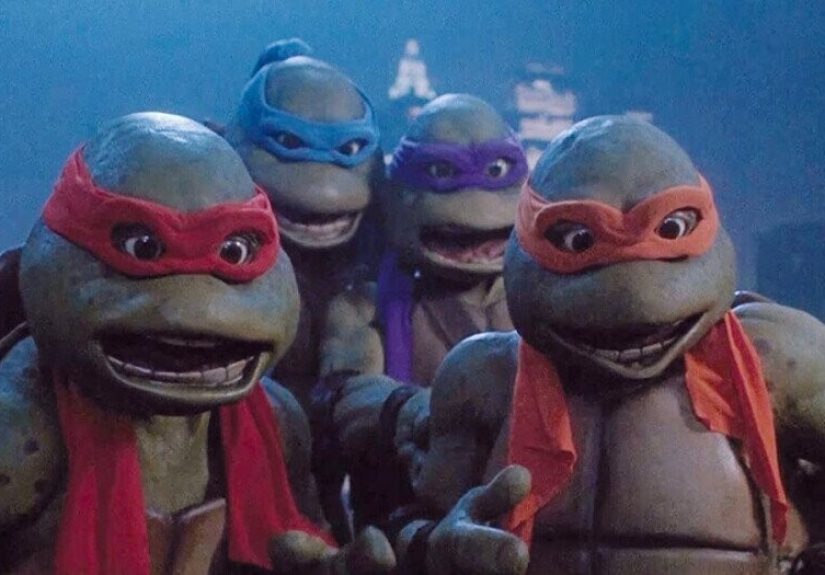
The Teenage Mutant Ninja Turtles are fictional humanoid turtles: Leonardo, Raphael, Donatello, and Michelangelo. Across the franchise, they are usually presented as four teenage brothers trained in ninjutsu by Master Splinter. Their stories are built around teamwork, identity, family, comedy, action, and the eternal mystery of how four sewer teens afford so much pizza.
From a body-design perspective, the Turtles clearly have skeletons. They stand upright, move like athletes, fight like trained martial artists, and survive impacts that would turn a normal turtle into a very sad museum exhibit. Their shells also imply bone structure, because real turtle shells are not removable backpacks. A turtle shell is part of the animal’s body, connected to the skeleton. The top portion, called the carapace, and the lower portion, called the plastron, are made from bone and cartilage, often covered by keratin scutes.
So the anatomy pun is easy: the Ninja Turtles definitely “bone” in the sense that they have bones. They are walking, talking, crime-fighting bone-and-shell machines with masks. Donatello could probably explain it better, but he would also build a PowerPoint and accidentally invent a laser pointer that opens a portal.
Why People Ask This Question in the First Place
Internet culture loves taking innocent childhood franchises and asking questions no toy commercial was prepared to answer. The Teenage Mutant Ninja Turtles are especially vulnerable to this because they sit at the intersection of three things: animal biology, superhero mutation, and decades of fan speculation.
They are not just turtles. They are mutant turtles. They are not just mutant turtles. They are teenage mutant turtles. They are not just teenage mutant turtles. They are ninja teenage mutant turtles with distinct personalities, catchphrases, weapons, and emotional arcs. That is a lot of ingredients in the soup, and eventually someone online was going to stir the pot with a very awkward spoon.
There is also a genuine worldbuilding question hiding under the joke. Fans wonder how mutation affects anatomy. Do the Turtles work like humans? Like turtles? Like something entirely new? Are their shells biological armor, clothing-adjacent, or skeletal? How do they grow? Are they still reptiles? The franchise rarely pauses to answer these questions because the target audience is usually more interested in Shredder getting kicked into a wall.
TMNT Canon Is About Brotherhood, Not Adult Romance
The core Teenage Mutant Ninja Turtles formula has remained surprisingly durable since Kevin Eastman and Peter Laird created the characters in the 1980s. Four brothers live outside normal society, train under Splinter, fight enemies, protect New York, and argue like siblings over leadership, gadgets, attitude, and pizza toppings. That emotional engine matters more than anatomy.
Romance appears occasionally in TMNT media, but it is usually mild, comedic, or secondary. Some versions have shown crushes, awkward admiration, or character pairings around the edges. The 2012 animated series famously leaned into Donatello having a crush on April O’Neil. Mutant Mayhem also emphasizes the “teenage” side of the Turtles, showing them wanting acceptance, friendship, and a more normal life outside the sewer.
But none of that means the franchise confirms explicit adult relationships for the main four Turtles. It does not. TMNT is, at its heart, an action-adventure family franchise. Its romantic moments are usually about comedy, character growth, or teen awkwardnessnot mature detail. That is a smart creative choice. The Turtles are more fun when they are saving the city than when the story stops to ask questions that make everyone at the lunch table stare into the distance.
The Biology Angle: Real Turtles Are Built Differently
Real turtles are reptiles, and reptiles reproduce biologically in ways that are well documented by science. Turtles lay eggs, and different species have different nesting behaviors, clutch sizes, and reproductive timelines. But the Teenage Mutant Ninja Turtles are not ordinary turtles. They are fictional mutants whose bodies are designed for storytelling first and zoology second.
Still, real turtle anatomy helps explain why the “do they have bones?” part of the question is genuinely interesting. A turtle’s shell is not like a helmet or a backpack. It is integrated into the skeleton. The ribs and backbone are involved in the shell structure, which makes turtles one of the most unusual body plans among vertebrates.
That means Leonardo’s shell is not something he could take off after a long patrol. Raphael cannot hang his shell on a coat rack while complaining about Foot Clan traffic. Michelangelo cannot customize his shell like a skateboard deck unless the franchise decides mutant biology works by cartoon ruleswhich, to be fair, it often does. The shell is him. The shell is body. The shell is bone. Somewhere, a biology teacher just whispered, “Cowabunga.”
Do the Ninja Turtles Have Human Anatomy?
This is where the answer becomes simple: canon does not give a full anatomical manual, and it does not need to. The Turtles are anthropomorphic characters. They walk upright, speak, use tools, practice martial arts, wear masks and belts, and show humanlike emotions. At the same time, they keep turtle traits: shells, green skin, reptilian faces, and species-inspired designs in certain versions.
In Rise of the Teenage Mutant Ninja Turtles, the brothers are even associated with different turtle species: Raphael as a snapping turtle, Leonardo as a red-eared slider, Donatello as a softshell turtle, and Michelangelo as a box turtle. This shows how flexible TMNT design can be. The franchise is not trying to make one perfect biological diagram. It is using turtle traits to support personality, silhouette, and storytelling.
So no, there is no reliable canon reason to assume the Turtles have complete human anatomy. There is also no need to invent details. They are mutant cartoon/comic heroes. Their bodies work exactly as much as the story requires: enough to leap across rooftops, get bonked by robots, eat alarming amounts of cheese, and still show up for the next episode.
Why the “Teenage” Part Matters
The word “Teenage” is not decorative. It is right there in the title, wearing a bandana and holding nunchucks. Most major versions frame Leonardo, Raphael, Donatello, and Michelangelo as adolescents or teen-coded characters. That matters because discussions about explicit intimacy are not appropriate for teen characters. The safer and more accurate approach is to focus on what the stories actually explore: crushes, belonging, insecurity, rivalry, confidence, identity, and friendship.
In other words, TMNT has plenty of teen themes without needing adult content. Leo wants to be a good leader. Raph struggles with anger and loyalty. Donnie wants to solve every problem with technology, which is relatable to anyone who has ever tried to fix Wi-Fi by glaring at it. Mikey wants joy, connection, snacks, and possibly a world where pizza counts as a vegetable.
Their teen status also explains why modern versions such as Mutant Mayhem focus so strongly on social acceptance. The Turtles want to be seen as normal. They want friends. They want to belong. That is much more emotionally meaningful than turning the franchise into a biology Q&A that nobody asked Splinter to supervise.
What About Female Turtle Characters?
TMNT history includes female turtle characters such as Venus de Milo and Jennika, depending on the continuity. Venus appeared in Ninja Turtles: The Next Mutation, while Jennika became a major character in the IDW comics. Their existence sometimes fuels fan questions about whether the Turtles can have romantic futures or families.
Again, the important word is “continuity.” TMNT is not one single timeline with one single answer. It is a multiverse of comics, cartoons, movies, games, and reboots. A detail that exists in one version may not apply to another. Jennika’s IDW story, for example, does not automatically rewrite the biology or romantic canon of the 1987 cartoon, the 2003 series, the 2012 Nickelodeon series, Rise, or Mutant Mayhem.
That is part of the fun. TMNT canon is like a pizza with many toppings: some people want classic pepperoni, some want pineapple, and some want a dramatic IDW continuity chart that requires three bookmarks and emotional support.
The Shell Problem: Why Realistic Logistics Get Weird Fast
When fans ask whether the Ninja Turtles could do human things, the shell creates immediate logistical chaos. Real turtle shells are rigid, protective structures. They shape movement, posture, and anatomy. The TMNT designs simplify those issues because the characters need to be expressive action heroes.
That is why the Turtles can flip, spin, crouch, climb, and fight in ways that would make real-world biomechanics wave a tiny white flag. Their designs are symbolic and functional for animation, comics, toys, and games. They need to look like turtles, but they also need to punch robots, hug friends, ride skateboards, and fit on lunchboxes.
The best way to understand TMNT anatomy is not as “real turtle plus human body equals exact science.” It is “comic-book mutation creates heroic turtle brothers with enough recognizable biology to sell the idea.” That is not a weakness. That is the genre doing its job.
So, Do The Teenage Mutant Ninja Turtles Bone?
Here is the final breakdown:
1. Do they have bones?
Yes. They are turtle-based vertebrate mutants, and turtles have skeletons. Their shells are also connected to skeletal structures. So on the literal anatomy question, the answer is a loud, shell-backed yes.
2. Are their shells made of bone?
Based on real turtle anatomy, yes, turtle shells include bone and cartilage, with the upper shell and lower shell forming protective structures connected to the body. TMNT designs exaggerate this, but the biological inspiration is real.
3. Is adult intimacy confirmed in canon?
No. The franchise does not confirm explicit adult relationships for the main four Teenage Mutant Ninja Turtles. Their stories focus on family, action, identity, comedy, heroism, and growing up.
4. Should the question be treated carefully?
Yes. Because the Turtles are commonly portrayed as teenagers, it is best to keep discussion non-graphic and focused on canon, storytelling, and biology.
Why This Question Actually Reveals Something Smart About Fandom
Under the joke, fans are really asking how fictional worlds work. That is not dumb. It is one of the reasons pop culture remains interesting decades after a franchise begins. People do not just watch TMNT; they test its rules. They wonder what mutation means, how the characters age, whether they can live normal lives, and what “normal” even means for four sewer-raised reptile ninjas.
The Teenage Mutant Ninja Turtles endure because they are flexible. They can be gritty black-and-white comic heroes, goofy Saturday morning icons, anime-adjacent action stars, CGI teens, movie leads, video game brawlers, and collectible figures on a shelf guarded by someone who insists they are “for display only.” Each version answers different questions and ignores others.
That flexibility lets fans debate absurd topics without breaking the franchise. The Turtles are ridiculous by design, but they are also emotionally sturdy. You can laugh at the premise and still care when the brothers argue, fail, grow, and protect each other.
500-Word Experience Section: Thinking About This Question as a Fan
Anyone who has spent time around TMNT fans knows that the strangest questions often come from genuine affection. You start by asking which Turtle is the best fighter. Then you ask which version of Shredder is the scariest. Then someone asks whether Splinter files taxes. Before long, the room is debating mutant anatomy with the seriousness of a courtroom drama, except everyone is holding pizza.
The experience of thinking about “Do The Teenage Mutant Ninja Turtles bone?” is really the experience of growing up with a franchise and realizing that childhood stories become funnier when adult logic wanders in wearing muddy shoes. As kids, many viewers accepted the premise instantly: four turtles, some ooze, a rat sensei, ninjas, pizza, done. No further questions, your honor. The brain simply stamped “awesome” on the file and moved on.
Later, fans revisit the same stories and notice the delightful nonsense. How does their sewer home have electricity? Who pays for the equipment? Does Donatello steal Wi-Fi from nearby apartments? How does Michelangelo digest that much dairy? Why is New York constantly one science experiment away from becoming a monster parade? These questions are not attacks on TMNT. They are part of loving it.
The “bone” question works the same way. It is a joke, but it opens the door to a better appreciation of character design. The Turtles look simple at first: green skin, colored masks, shells, weapons. But those choices carry a lot of storytelling weight. Leonardo’s posture sells discipline. Raphael’s heavier build often communicates intensity. Donatello’s gear tells us he is the technician before he even speaks. Michelangelo’s expressions make him feel loose, funny, and open-hearted.
Then there is the shell. As a kid, the shell is just cool armor. As an older fan, you realize the shell is doing enormous visual work. It reminds you they are not human. It protects them. It makes their silhouettes instantly recognizable. It also creates funny practical questions the franchise wisely ignores because stopping an action scene to discuss shell mobility would be like pausing a car chase to review insurance paperwork.
Fan conversations about TMNT are best when they balance humor with respect for the material. Yes, the premise is absurd. Yes, the title sounds like someone assembled it from refrigerator magnets. But the core idea has lasted for decades because it speaks to something real: feeling different, finding family, learning discipline, and becoming brave enough to step out of hiding.
That is why the safest answer to the headline is also the most satisfying one. Do the Teenage Mutant Ninja Turtles bone? Literally, yesthey have bones, and turtle shells are biologically fascinating. Canonically, in the adult slang sense, no confirmed answer exists, and the franchise does not need one. Emotionally, the Turtles are about bonds, not “bones.” Family bonds. Brotherly bonds. City-saving bonds. The kind of bonds that survive monsters, villains, reboots, toy lines, and the occasional internet question that makes Master Splinter close his eyes and breathe deeply.
Conclusion
The Teenage Mutant Ninja Turtles are fictional mutant heroes, not biology homework with elbow pads. Real turtle anatomy confirms that turtles have bones and shells connected to their skeletons, which makes the literal version of the question easy to answer. But TMNT canon does not confirm explicit adult relationships for Leonardo, Raphael, Donatello, or Michelangelo, and because they are most often portrayed as teenagers, that is exactly where the responsible discussion should stop.
The better takeaway is that TMNT remains endlessly discussable because it combines a goofy premise with surprisingly strong emotional themes. The Turtles are funny, strange, heroic, and oddly timeless. They do not need overexplained anatomy to be compelling. They just need each other, a city to protect, and enough pizza to make a nutritionist faint politely.