Table of Contents >> Show >> Hide
- Why This Easy Persimmon Quick Bread Recipe Works
- Ingredients for Persimmon Bread
- How to Prepare Persimmons for Baking
- Easy Persimmon Quick Bread Recipe: Step-by-Step
- How to Tell When Persimmon Bread Is Done
- What It Tastes Like
- Tips for the Best Persimmon Quick Bread
- Flavor Variations
- How to Store and Freeze It
- Serving Ideas
- Common Mistakes to Avoid
- Frequently Asked Questions
- Why This Recipe Deserves a Spot in Your Fall Baking Lineup
- Kitchen Experiences and Real-Life Persimmon Bread Moments
There are two kinds of people in fall: the ones who sprint toward pumpkin everything, and the ones who quietly grab a bag of persimmons and bake something that makes the whole kitchen smell like a cinnamon-sweater convention. This easy persimmon quick bread recipe is for the second group. Or for the first group who are ready to branch out and discover that persimmon bread is soft, warmly spiced, richly fruity, and just different enough to make people ask, “Wait, what is in this?” before reaching for a second slice.
If you have never baked with persimmons before, do not worry. This loaf is not a fussy baking project with dramatic mood swings. It is a true quick bread, which means no yeast, no kneading, and no need to have a philosophical debate with dough. You stir, pour, bake, and then attempt to let it cool before cutting into it like a civilized person. The reward is a moist loaf with a tender crumb, cozy spice, and a flavor that lands somewhere between honeyed apricot, pumpkin bread, and old-fashioned spice cake.
The biggest trick is choosing the right fruit. For the best persimmon quick bread, very ripe Hachiya persimmons are the gold standard because they turn soft, jammy, and easy to purée. If your persimmons still feel like baseballs, they are not ready. You want them soft enough to look slightly dramatic and feel almost jelly-like inside. That squishy stage is exactly what makes this loaf sweet, smooth, and deeply flavorful.
Why This Easy Persimmon Quick Bread Recipe Works
A good quick bread needs balance. Too much fruit purée and the center can turn gummy. Too little and the loaf tastes like regular spice bread wearing an orange costume. This recipe keeps the proportions simple: enough persimmon pulp for moisture and flavor, enough flour for structure, a modest amount of sugar for sweetness, and warm spices that support the fruit instead of elbowing it out of the spotlight.
It is also flexible. You can keep it plain, fold in chopped walnuts or pecans, add raisins if you enjoy a little old-school charm, or finish it with coarse sugar for a delicate crackly top. It works for breakfast, snack time, and dessert, which means it earns its space on the counter.
Ingredients for Persimmon Bread
Dry Ingredients
- 2 cups all-purpose flour
- 1 teaspoon baking soda
- 1/2 teaspoon baking powder
- 1/2 teaspoon fine salt
- 1 1/2 teaspoons ground cinnamon
- 1/4 teaspoon ground nutmeg
- 1/4 teaspoon ground ginger
Wet Ingredients
- 1 cup very ripe Hachiya persimmon pulp
- 2 large eggs
- 3/4 cup packed light brown sugar
- 1/4 cup granulated sugar
- 1/2 cup neutral oil or melted unsalted butter
- 1 teaspoon vanilla extract
Optional Mix-Ins
- 1/2 to 3/4 cup chopped walnuts or pecans
- 1/3 cup raisins or dried cranberries
- 1 tablespoon coarse sugar for the top
How to Prepare Persimmons for Baking
To make persimmon pulp, wash the fruit, remove the leafy tops, and scoop out the flesh from very ripe Hachiya persimmons. Mash it with a fork or blend it briefly until smooth. If it looks like sunset-colored pudding, you are doing it right. If it looks sliceable, it probably needs more time on the counter.
Could you use Fuyu persimmons? Technically yes, but they behave differently. Fuyus are firmer and better for slicing, snacking, and salads. For this loaf, Hachiya is easier and more reliable because it becomes naturally soft and purée-friendly. Since the title here is easy, we are choosing the fruit that is least likely to start a fight.
Easy Persimmon Quick Bread Recipe: Step-by-Step
- Preheat your oven to 350°F. Grease a 9×5-inch loaf pan and line it with parchment paper if you want easier removal.
- In a medium bowl, whisk together the flour, baking soda, baking powder, salt, cinnamon, nutmeg, and ginger.
- In a large bowl, whisk the eggs, brown sugar, granulated sugar, oil, vanilla, and persimmon pulp until smooth.
- Add the dry ingredients to the wet ingredients. Stir gently just until no dry streaks remain. Do not overmix. Quick bread batter likes a light touch, not a wrestling match.
- Fold in nuts or dried fruit if using.
- Pour the batter into the prepared loaf pan and smooth the top. Sprinkle with coarse sugar if you want a bakery-style finish.
- Bake for 50 to 60 minutes, or until a toothpick inserted in the center comes out with a few moist crumbs but no wet batter.
- Let the loaf cool in the pan for 10 to 15 minutes, then transfer it to a wire rack to cool completely.
How to Tell When Persimmon Bread Is Done
Quick breads can be sneaky. The top looks done, the kitchen smells amazing, and then the center decides it would rather remain pudding. To avoid that heartbreak, check for a few signs. The loaf should be golden brown, the top should spring back lightly when pressed, and a toothpick should come out mostly clean. If you use an instant-read thermometer, the center should be around 190°F.
If the top is browning too quickly before the middle is done, tent it loosely with foil and keep baking. That is not failure. That is strategy.
What It Tastes Like
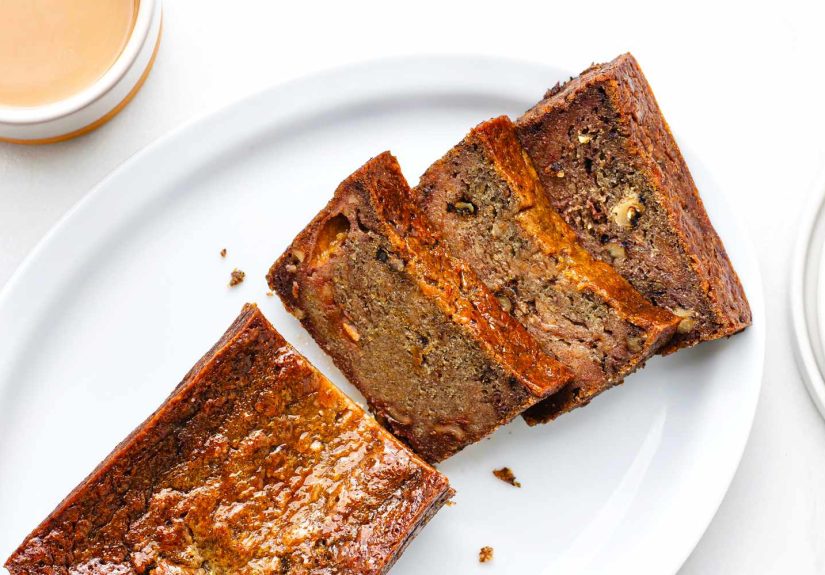
This easy persimmon quick bread recipe is moist but not heavy, sweet but not cake-level sweet, and gently spiced rather than aggressively holiday-scented. The persimmon brings a mellow fruit flavor with a soft honeyed note, while the cinnamon and nutmeg make it feel like peak fall. Walnuts add crunch, raisins add chew, and butter or oil keeps the crumb tender.
It is the kind of loaf that tastes excellent plain, but somehow tastes even better toasted the next day with a little salted butter. If you add cream cheese, no one will stop you. In fact, some people may applaud.
Tips for the Best Persimmon Quick Bread
Use very ripe fruit
This is the most important rule. Underripe Hachiya persimmons are intensely astringent and can taste chalky or unpleasant. Let them ripen fully until soft.
Do not overmix the batter
Once the flour goes in, stir just until combined. Overmixing can make the loaf dense or tough.
Measure the pulp, not the number of fruits
Persimmons vary wildly in size. One baker’s “three persimmons” can be another baker’s “why is this pan overflowing?” Measure one cup of pulp for consistent results.
Let it cool before slicing
Warm quick bread is delicious, but slicing too soon can make the loaf seem gummy. Cooling helps the crumb set properly.
Toast leftover slices
Persimmon bread toasts beautifully. The edges crisp up, the sugars caramelize lightly, and breakfast suddenly feels suspiciously fancy.
Flavor Variations
Persimmon Walnut Bread
Add 3/4 cup chopped walnuts for a classic, slightly rustic loaf with texture in every bite.
Persimmon Cranberry Bread
Fold in 1/3 to 1/2 cup dried cranberries for tart pops that cut through the sweetness.
Orange-Spiced Persimmon Bread
Add 1 tablespoon orange zest to brighten the fruit flavor and make the loaf smell like a holiday candle, but edible.
Persimmon Pecan Streusel Loaf
Top the batter with a quick streusel made from brown sugar, flour, butter, and chopped pecans for a more dessert-like finish.
How to Store and Freeze It
Once fully cooled, wrap the loaf tightly and keep it at room temperature for up to 3 days. For longer storage, refrigerate it for up to 1 week, though the texture is best at room temperature or gently warmed. You can also freeze the whole loaf or individual slices for up to 3 months. Wrap well, then place in a freezer-safe bag or container.
Freezing slices is the move if you like surprise future happiness. Pull one out, toast it, and suddenly a random Tuesday feels organized and impressive.
Serving Ideas
- Serve warm with salted butter
- Top with cream cheese for a rich breakfast spread
- Pair with black coffee or chai
- Toast and drizzle with a little honey
- Turn thick slices into a cozy dessert with whipped cream
Common Mistakes to Avoid
Using underripe persimmons: This is how good intentions become regret.
Adding too much pulp: Extra fruit sounds wholesome, but it can weigh the loaf down.
Skipping the pan prep: A stuck loaf is a sad loaf.
Cutting it hot: Patience is annoying, but it pays off here.
Frequently Asked Questions
Can I make muffins instead of a loaf?
Yes. Divide the batter into a lined muffin pan and bake at 350°F for about 20 to 25 minutes, checking early.
Can I make this recipe less sweet?
Yes. You can reduce the total sugar slightly, especially if your persimmons are very sweet, but keep enough for moisture and structure.
Can I use whole wheat flour?
You can swap in up to half whole wheat flour for a heartier texture. A full swap may make the loaf denser.
Is persimmon bread similar to pumpkin bread?
They are cousins, not twins. Persimmon bread is usually fruitier and silkier, with a distinct floral-honey note that pumpkin does not have.
Why This Recipe Deserves a Spot in Your Fall Baking Lineup
Persimmon bread is one of those old-school seasonal recipes that feels both special and practical. It uses ripe fruit beautifully, it is easy to mix by hand, and it fills the house with the kind of smell that makes people appear in the kitchen asking what is baking. In an era of overcomplicated desserts that require six bowls and emotional resilience, a good quick bread feels refreshingly reasonable.
This easy persimmon quick bread recipe also gives you something a little less expected than banana bread or pumpkin loaf. It is familiar enough to be comforting and unique enough to be memorable. That is a rare combo, and frankly, your loaf pan deserves a little excitement.
Kitchen Experiences and Real-Life Persimmon Bread Moments
One of the best things about baking persimmon bread is that it usually begins with fruit that looks too soft to be useful for anything else. A very ripe Hachiya persimmon is not exactly glamorous. It slumps. It squishes. It makes you question your produce-buying decisions for a moment. Then you scoop out the pulp, whisk it into the batter, and suddenly that overripe fruit becomes the reason the loaf is so tender and flavorful. That transformation is part of the charm. Persimmon bread feels like a small kitchen victory, the kind that turns “I should use these up” into “I should absolutely make this again.”
It is also a recipe that tends to create strong reactions from people who have never tried persimmons in baked goods. At first, there is curiosity. Then there is the first bite. Then comes the narrowing of the eyes, followed by the classic line: “This is really good. What is this?” That moment is one of the true pleasures of baking something slightly unfamiliar. Persimmon quick bread does not shout for attention the way a frosted cake does. It wins people over quietly, one soft, fragrant slice at a time.
There is a very specific experience that happens when this loaf is in the oven. Somewhere around the halfway mark, the house starts smelling like brown sugar, warm spice, and fruit. It has the cozy confidence of pumpkin bread, but with a deeper, more interesting aroma. If you are baking on a chilly afternoon, this is the point where the kitchen starts to feel like the best room in the house. People hover. Pets become suspiciously attentive. You begin checking the oven window more often than necessary, as though eye contact will make the loaf bake faster.
Another real-life truth about persimmon bread is that it often tastes even better the next day. Fresh from the oven, it is lovely. After a night wrapped on the counter, the flavors settle in, the crumb softens beautifully, and the spices round out. Toasted the next morning, it becomes even more appealing. The edges crisp lightly, the interior stays soft, and butter melts into every little pocket. This is the kind of breakfast that makes ordinary mornings feel strangely competent.
Persimmon bread also has a habit of becoming a sharing recipe. You make one loaf for yourself, then realize it travels well, slices neatly, and feels seasonal without being cliché. It is the kind of thing you bring to a neighbor, a holiday brunch, a school event, or a friend who “doesn’t really bake” but definitely knows how to accept baked goods. It feels thoughtful, a little uncommon, and homemade in the best way. And because it is a quick bread, it does not ask for hours of effort in return.
That may be the real reason this recipe sticks with people. It is easy enough for a weekday, special enough for guests, and comforting enough to make again every fall. It takes a fruit that can confuse beginners and turns it into something deeply familiar: a simple loaf, a warm oven, a good smell in the kitchen, and a slice worth coming back for.