Table of Contents >> Show >> Hide
- Project Snapshot
- Supplies and Tools
- Choose Your Build: Stuffed Pillow or Removable Cover
- The Heart Pillow Pattern
- Prep Your Fabric (So Your Heart Doesn’t Pucker Like It’s Nervous)
- Plan Your Embroidery Design
- Transfer the Pattern to Fabric
- Stitch the Embroidery (The Fun Part)
- Cut and Prepare the Pillow Pieces
- Sew the Heart Pillow (Stuffed Version)
- Optional: Add a Zipper (For a Removable Square Pillow Cover Featuring a Heart Panel)
- Optional: Envelope-Back Closure (Also for a Square Cover)
- Finishing Touches That Make It Look Boutique
- Troubleshooting (Because Thread Has Opinions)
- Care and Washing
- FAQ
- Maker Experiences (500+ Words of Real-World Lessons and “Oops” Moments)
- SEO Tags
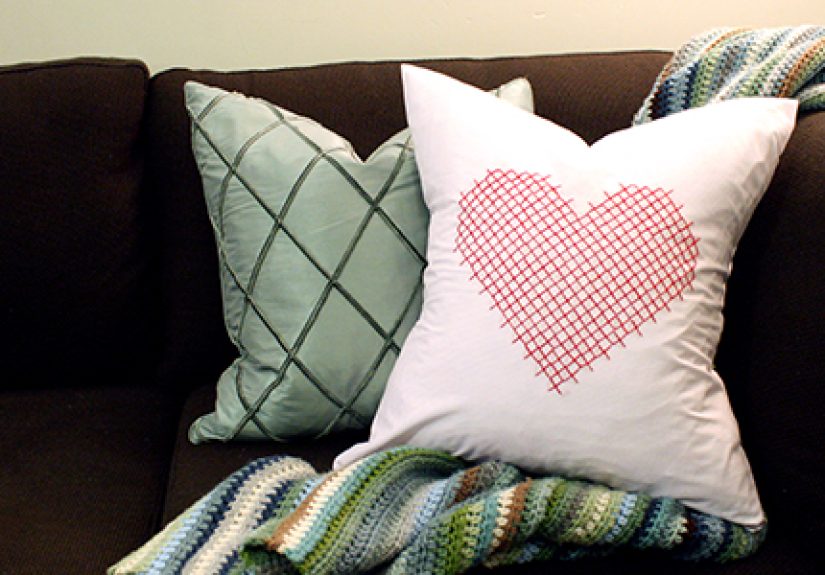
If a throw pillow and a love note had a crafty baby, it would be an embroidered heart pillow.
It’s cozy, customizable, and just dramatic enough to make your couch look like it has its life together.
This guide walks you through a beginner-friendly (but still impressively “I totally meant to do that”) project:
drafting a heart pillow pattern, stitching a simple embroidery design, and sewing the pillow as either
a stuffed heart or a removable cover.
Project Snapshot
- Skill level: Confident beginner (you can absolutely do this with patience and snacks)
- Time: 2–6 hours depending on embroidery detail (and how often you stop to admire it)
- Finished size: Choose your ownthis tutorial includes a medium pattern plus a sizing formula
- Best for: Valentine’s Day decor, wedding gifts, nursery pillows, “thinking of you” surprises, and stash-busting
Supplies and Tools
Fabric + Pillow Basics
- Fabric: quilting cotton, linen, cotton canvas, or cotton twill (two 1/2-yard cuts is plenty for most sizes)
- Backing (optional): a second fabric for the back, or muslin lining if your fabric is light
- Stuffing: polyester fiberfill, down-alternative fill, or a pillow form (for covers)
- Interfacing/stabilizer: lightweight fusible interfacing or tear-away/wash-away stabilizer (highly recommended)
- Thread: all-purpose sewing thread to match your fabric
Embroidery Tools
- Embroidery floss: 6-strand cotton floss in 2–4 colors (outline + accents)
- Embroidery needle: crewel/embroidery needles (a couple sizes is helpful)
- Embroidery hoop: 6″–8″ hoop works for most heart-front designs
- Transfer tools: washable fabric pen/pencil, tracing paper, or tissue-paper transfer method
- Scissors: small sharp embroidery scissors + fabric scissors
Sewing Tools
- Measuring tape or ruler
- Paper for the pattern (printer paper taped together, kraft paper, or pattern paper)
- Pins or clips
- Iron + ironing board
- Sewing machine (or hand-sewing needle if you’re going fully slow-craft)
- Optional: invisible zipper (12″–18″) or envelope-back closure pieces
Choose Your Build: Stuffed Pillow or Removable Cover
Before you cut fabric, decide how you want this heart to live its best life:
- Option A: Stuffed heart pillow (sewn closed) classic, puffy, and quick. Great for gifts.
- Option B: Removable cover with an invisible zipper washable and polished (also: zipper confidence boost).
- Option C: Removable envelope-back cover no zipper, less fuss, still washable.
If you’re brand-new to zippers, envelope backs are the cozy sweatpants of pillow construction: forgiving and reliable.
The Heart Pillow Pattern
Pick a Size (and Use This Simple Formula)
Choose your finished width (how wide the heart is at its widest point).
Then draft your pattern using these guidelines:
- Finished width: 12″–16″ is a sweet spot for throw pillows.
- Add seam allowance: +1″ total (that’s 1/2″ seam allowance on both sides).
- Pattern width = finished width + 1″
- Pattern height: usually about the same as width, or slightly taller (add 0″–2″ depending on your preferred heart shape).
Draft a Heart Pattern in 3 Minutes (No Fancy Geometry Required)
- Fold your paper in half vertically.
- On the folded edge, mark the top center of the heart (where the dip will be).
- Sketch half a heart: a rounded top curve, then taper to a point near the bottom of the fold.
- Cut on your line while the paper is still folded.
- Unfold to reveal a symmetrical heart. Congratulations: you are now a pattern designer.
Pro tip: Make a quick “test heart” from scrap fabric (muslin or an old sheet). If it looks too round, sharpen the bottom point.
If it looks too pointy, widen the lower curve. Hearts are emotionally complex like that.
Printable Heart Outline (SVG Pattern)
Below is a clean heart outline you can copy into a simple HTML file and print. For best results, print at 100% scale.
Use it as a template, then add your preferred seam allowance around it if needed.
How to add seam allowance: Trace the heart onto new paper, then draw a second line 1/2″ outside the first line all the way around.
That outer line is your cutting line.
Prep Your Fabric (So Your Heart Doesn’t Pucker Like It’s Nervous)
- Prewash and dry your fabric if you plan to wash the finished pillow (highly recommended for removable covers).
- Press fabric flatwrinkles can throw off transfer lines and stitch tension.
- Stabilize the embroidery area:
- For hand embroidery: fuse lightweight interfacing to the wrong side, or baste a tear-away stabilizer behind the area.
- For machine embroidery: use stabilizer slightly larger than your hoop and keep fabric taut (not stretched).
Plan Your Embroidery Design
You can embroider anything on a heart pillow: initials, florals, a tiny banner that says “BE MINE,” or even a snack-themed love note
(“YOU ARE MY FAVORITE CHIP” is oddly heartfelt).
Three Easy Design Ideas (That Look Way Harder Than They Are)
- Monogram + wreath: a single initial in the center, surrounded by lazy-daisy flowers or leafy stem stitch.
- Conversation-heart phrases: short words in block letters (“XOXO,” “HUGS,” “YAY”).
- Outline + sparkles: outline the heart shape with a bold stitch, then add stars or French knots like confetti.
Transfer the Pattern to Fabric
Method 1: Light + Washable Pen (Best for Light Fabrics)
- Tape your pattern to a bright window or use a light box.
- Place fabric over it and trace lightly with a washable fabric pen.
- Test your marker on a scrap first (future-you will be grateful).
Method 2: Tissue Paper + Tacking Stitches (Great for Dark Fabrics)
This method is delightfully old-school and very reliable:
- Trace your design onto thin tissue paper.
- Pin or hold the tissue on top of the fabric in the exact position you want.
- Use small running stitches to sew along every line of the design (no knotskeep it removable).
- Gently tear away the tissue, then pick out any remaining bits with tweezers as you stitch.
Stitch the Embroidery (The Fun Part)
Thread and Needle Setup
- Thread length: keep it around 18″ to reduce fraying and tangles.
- Separate floss: pull one strand at a time, then recombine (2 strands for outlines is a common “just right”).
- Needle sizing: embroidery needle sizing runs “backwards” in many needle families (smaller number often means a larger needle).
Beginner-Friendly Stitches That Shine on Pillows
- Back stitch: clean outlines, lettering, and borders.
- Stem stitch: smooth curves for vines and script.
- Satin stitch: solid fills (small hearts inside your big heart = adorable).
- Chain stitch: decorative outlines with a soft, rope-like texture.
- French knots: dots, flower centers, and tiny “sparkles.”
Embroidery Order (So It Looks Neat)
- Stitch large outlines first (heart border, banner, main shapes).
- Add lettering or medium elements (leaves, petals, small motifs).
- Finish with details (knots, tiny accents, highlights).
Design example: Outline the heart in chain stitch using 3 strands of floss, then add a monogram in back stitch with 2 strands,
then sprinkle French knots in a contrasting color. It reads “handmade heirloom,” not “I panicked and chose chaos.”
Cut and Prepare the Pillow Pieces
For a Stuffed Heart Pillow (Sewn Closed)
- Trace your heart pattern (including seam allowance) onto fabric twice.
- Cut two heart shapes: one embroidered front, one back.
- Optional but smart: cut two matching hearts from muslin as a lining to protect stitches and reduce show-through.
For a Removable Cover (Zipper or Envelope)
Removable covers are easiest when your pillow form is a simple shape (like a square). But you can still do a heart cover.
The main difference is you’ll add an opening method along one edgeusually a gentle curve near the side of the heart.
If that sounds fiddly, here’s a very practical compromise:
- Make a stuffed heart pillow (the cute shape).
- Add a removable “sham-style” cover in a square or lumbar size that features your heart embroidery panel on the front.
That gives you washability and a crisp, professional finishwithout wrestling a zipper into a curved heart edge like it owes you money.
Sew the Heart Pillow (Stuffed Version)
- Place pieces right sides together (front and back). Pin or clip around the edges.
- Stitch around the heart with a 1/2″ seam allowance, leaving a 3″–4″ opening along one side curve.
- Clip curves: snip small notches along rounded areas (don’t cut your stitches). This helps the heart turn smoothly.
- Turn right side out through the opening. Use a blunt tool to gently shape the point.
- Press carefully (especially around embroideryuse a pressing cloth and press from the back if possible).
- Stuff evenly: add small handfuls, pushing stuffing into the lobes and point first.
- Close the opening with a ladder stitch (invisible hand stitch).
Stuffing Tip: Keep Embroidery Looking Crisp
If you overstuff the center, embroidery can look stretched or “puffed” in a way that hides stitch definition.
Aim for firm edges and a slightly flatter face where the embroidery lives.
Optional: Add a Zipper (For a Removable Square Pillow Cover Featuring a Heart Panel)
If you’d rather have washability and simplicity, make a square pillow cover and feature your embroidered heart as a front panel.
Here’s the basic roadmap:
- Choose pillow form size: 12″ x 12″, 14″ x 14″, 16″ x 16″, etc.
- Cut fabric: add 1″ to the pillow form measurement (for 1/2″ seams).
- Use an invisible zipper about the length of one side, or up to 2″ shorter.
- Press the zipper before installing for a smoother sew.
- Sew zipper in, then stitch remaining sides, clip corners, turn, press, and insert pillow form.
Optional: Envelope-Back Closure (Also for a Square Cover)
Envelope backs are beginner-friendly and fast:
- Cut one front square (your pillow size + 1″).
- Cut two back rectangles that overlap in the center (each about 2/3 the width of the pillow).
- Hem the overlapping edges, then layer backs over the front and stitch around.
- Turn, press, insert pillow form, and enjoy your zipper-free peace.
Finishing Touches That Make It Look Boutique
- Piping: adds structure and makes the shape pop.
- Mini tassel at the heart point: cute, slightly dramatic, and totally optional.
- Contrast backing: solid front + playful back print = “designer” vibes.
- Hidden message: stitch a tiny word on the back like “love,” “home,” or “snack.”
Troubleshooting (Because Thread Has Opinions)
Problem: Fabric puckers around stitches
- Add stabilizer or interfacing behind the embroidery area.
- Keep hoop tension taut but not stretched.
- Use fewer strands for dense areas and avoid pulling stitches too tight.
Problem: Floss tangles constantly
- Shorten your working length.
- Separate strands one at a time and recombine.
- Let the needle dangle occasionally to untwist the thread.
Problem: Heart point looks weird and lumpy
- Trim seam allowance slightly at the point (without cutting stitches).
- Turn gently with a blunt tool.
- Stuff the point with tiny bits first, then fill the body.
Care and Washing
- Removable cover: wash cold, gentle cycle, air dry or low heat.
- Stuffed pillow: spot clean when possible; if fully washable, use a gentle cycle and dry thoroughly.
- Pressing: press from the back with a cloth to protect raised stitches.
FAQ
Can I machine embroider the heart panel?
Yes. Use the right stabilizer for your fabric, mark centerlines for placement, and hoop so fabric is taut (not stretched).
Machine embroidery is fast and consistenthand embroidery is slower but delightfully personal.
What floss colors look best?
High contrast reads well: cream fabric + red/pink thread, navy fabric + white thread, blush fabric + burgundy thread.
For modern palettes, try terracotta + sage, or charcoal + dusty rose.
What if I want a perfectly plump heart?
Stuff firmly at the edges and lobes, then add fill to the center gradually. If the embroidery starts to look stretched,
back off and aim for “supported” rather than “overstuffed marshmallow.”
Maker Experiences (500+ Words of Real-World Lessons and “Oops” Moments)
Makers tend to agree on one thing: an embroidered heart pillow is the kind of project that looks simple… right up until
thread tangles into a tiny knot that somehow contains the emotional weight of your entire week. The good news is that
most “problems” in this project aren’t disastersthey’re just the craft version of taking a wrong turn and finding a better
coffee shop.
One common experience is the Puckering Mystery. A lot of stitchers start on soft quilting cotton, hoop it,
and happily outline a heartonly to pop the hoop off and realize the fabric now resembles a wrinkled potato chip. This isn’t
a sign you’re bad at embroidery; it’s a sign your fabric needed backup. Adding lightweight interfacing or a stabilizer behind
the stitching area almost always calms things down. Many makers also notice that puckering gets worse when they pull stitches
tightly to “make them neat.” Counterintuitive truth: neat stitches often come from gentle tension, not aggressive yanking.
Then there’s the classic Floss Drama. Beginners often cut a long piece of thread because it feels efficientless stopping,
fewer rethreads. In practice, a long thread gets handled more, which can make it fuzzy and more prone to tangles. The “aha” moment many
people report is switching to shorter lengths and separating floss strands one at a time. Suddenly the thread behaves like it’s in therapy:
calmer, smoother, and less likely to spiral.
Another real-world lesson shows up at stuffing time: the fluff factor. A heart pillow can go from charming to oddly bulbous
in about three handfuls of fiberfill. People who make embroidered pillows often notice that overstuffing pushes the embroidery forward,
slightly distorting lines and making satin stitch areas look stretched. The fix is simple: start with small tufts, pack the edges first,
and keep the face of the pillow a bit flatter so the embroidery remains crisp. Some makers even prefer a flatter insert style (especially
when embroidery is the star), and they’ll add just a touch more fill around the perimeter to keep the outline looking smooth and intentional.
If you choose a removable cover with a zipper, you may meet the Zipper That Fought Back. It’s not personal; zippers are just
picky. Many sewists swear by pressing the zipper tape before sewing and basting first if they’re nervous. The payoff is real: once you’ve
done one zipper pillow cover, you suddenly feel capable of sewing approximately anything… including your confidence back together after a
long day.
Finally, there’s the best experience of all: the unexpected heirloom effect. Makers regularly share that these pillows
especially ones with initials, dates, or small messagesbecome the kind of object people keep. A heart pillow made for a wedding becomes
a couch staple. One stitched for a baby shower gets saved in a memory box. Even a silly one (“YOU’RE MY JAM”) ends up being weirdly meaningful.
The magic is that embroidery records time: every stitch is proof you showed up, slowed down, and made something with care. And honestly?
That’s a pretty solid love languagewhether it’s for someone else or for your own home.