Table of Contents >> Show >> Hide
- Butter 101: What You’re Actually Melting
- Pick the Right Butter-Melting Method (So Butter Doesn’t Pick a Fight)
- Method 1: How to Melt Butter in the Microwave (Fast, If You Don’t Get Cocky)
- Method 2: How to Melt Butter on the Stove (The Control-Freak-Friendly Way)
- Method 3: Double Boiler (Bain-Marie) for the Gentlest Melt
- “Melted” Doesn’t Always Mean “Hot”: The Baking Butter Trap
- Level-Up Butter Melts: Browned Butter, Clarified Butter, and Beurre Monté
- Common Butter-Melting Problems (and How to Fix Them)
- Measuring Melted Butter Without Guessing
- Storage and Food Safety: What to Do With Leftover Melted Butter
- Conclusion: Melt Butter Like You Meant It
- Extra: Real-World Butter-Melting Experiences (So You Don’t Learn the Hard Way)
Butter is magical. It turns plain vegetables into “oh wow,” makes cookies taste like childhood,
and somehow convinces us that a little extra is basically a vitamin. But butter is also a tiny drama queen:
melt it too fast and it spits in your microwave, scorch it and it tastes like regret, and if you overheat it
while trying to make a sauce, it can separate like it just saw your credit card bill.
The good news: melting butter is easy when you match the method to the job.
In this guide, you’ll learn exactly how to melt butter cleanly and safelywhether you need a quick drizzle,
a gentle melt for baking, a nutty browned butter moment, or a high-heat clarified butter upgrade.
Butter 101: What You’re Actually Melting
Butter isn’t just “fat that tastes great.” It’s an emulsionmostly butterfat, plus water and milk solids.
That’s why it behaves differently depending on how you heat it. As butter warms up, it softens, then melts into
a glossy liquid, and if you keep going, the water can steam off and the milk solids can brown (or burn).
Quick temperature reality check
Butter melts at surprisingly low temperatures (around body-warm). That’s why a stick left near the stove starts
looking suspiciously shiny. This also explains why microwaves can send butter from “almost melted” to “butter geyser”
in seconds: it doesn’t take much heat to cross the finish line.
Pick the Right Butter-Melting Method (So Butter Doesn’t Pick a Fight)
There isn’t one “best way” to melt butterthere’s the best way for what you’re doing.
Use this cheat sheet to choose the method that matches your recipe and your patience level.
| Method | Best For | Why You’ll Like It | Watch Out For |
|---|---|---|---|
| Microwave | Small amounts, fast baking prep | Fastest, minimal cleanup | Splatter + overheating in hotspots |
| Stovetop saucepan | More control, larger amounts | Even heat, easy to stop early | Can brown if heat is too high |
| Double boiler (bain-marie) | Gentle melts, sauces, delicate tasks | Low risk of scorching | Takes longer; don’t let bowl touch water |
| Browned butter route | Cookies, cakes, sauces, “wow” flavor | Nuttier, caramel-like depth | Can burn fast at the end |
| Clarified butter / ghee | High-heat sautéing, searing, frying | Higher smoke point, cleaner flavor | Extra step; strain carefully |
Method 1: How to Melt Butter in the Microwave (Fast, If You Don’t Get Cocky)
Microwaves heat unevenly. Butter melts quickly. Together, they create either convenience or chaos.
The secret is using short bursts and letting residual heat do the final work.
Step-by-step (the no-splatter approach)
- Cut the butter into pieces. Smaller chunks melt more evenly than a whole stick.
- Use a microwave-safe bowl (glass or ceramic is great). Give the butter some space.
- Cover it. Use a paper towel, a microwave-safe plate, or even the butter wrapper as a quick shield.
- Microwave in short intervals (think 10 seconds at a time). Use lower power if your microwave runs hot.
- Stir between bursts. Stirring releases steam and helps unmelted bits finish melting without extra heat.
- Stop early. When it’s mostly melted, let it sit for 20–30 seconds and stir again. Residual heat is your friend.
Microwave tips that save your sanity
- Choose a bigger bowl than you think you need. Headspace helps prevent splatter.
- Don’t chase “fully melted” with more time. Butter keeps melting after the microwave stops.
- If you need melted butter for baking, cool it slightly. Hot butter can scramble eggs or melt chocolate chips in a batter before you’re ready.
Method 2: How to Melt Butter on the Stove (The Control-Freak-Friendly Way)
If the microwave is a scooter, the stovetop is a car with good brakes. You get control, even heat, and fewer surprises.
This is ideal for melting multiple sticks, making a roux, starting a sauce, or melting butter for brushing on bread or pastry.
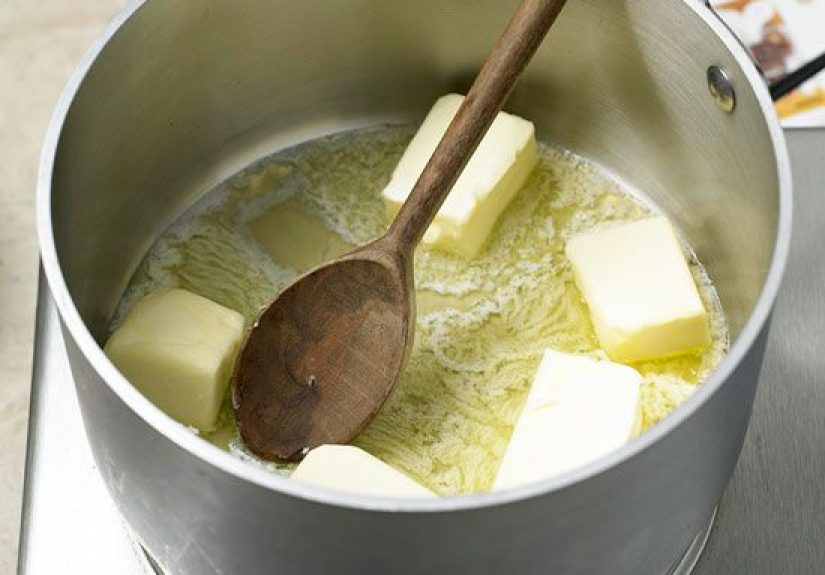
Step-by-step (gentle stovetop melt)
- Use a small, light-colored saucepan if possible. It helps you see what’s happening.
- Set the heat to low. Low means low. Butter doesn’t need a pep talk.
- Add sliced butter and stir or swirl the pan occasionally.
- Remove from heat when it’s almost melted. Let the last pieces melt from the pan’s heat.
Why low heat matters
On higher heat, the water in butter can start bubbling aggressively, and the milk solids can toast on the bottom.
Sometimes that’s exactly what you want (hello, browned butter). But when you just need plain melted butter,
low heat keeps the flavor sweet and clean.
Method 3: Double Boiler (Bain-Marie) for the Gentlest Melt
A double boiler uses steam heat to melt butter slowly and evenly. It’s fantastic when you want
zero browning, extra insurance against scorching, or you’re multitasking and don’t want butter to go rogue.
How to set up a double boiler without owning one
- Fill a saucepan with 1–2 inches of water and bring it to a gentle simmer (not a raging boil).
- Set a heat-safe bowl on top so it fits snugly but doesn’t touch the water.
- Add butter to the bowl and stir occasionally until melted.
Best uses
- Melted butter for delicate sauces
- Keeping butter warm while you cook (without browning)
- Melting butter alongside chocolate (when you want gentle heat control)
“Melted” Doesn’t Always Mean “Hot”: The Baking Butter Trap
Many baking recipes say “melted butter,” but they often mean melted and cooledstill liquid,
not scorching. If you pour hot butter into a mixing bowl with eggs, it can partially cook them. If you mix hot butter
with sugar, it can change how the batter behaves. And if chocolate is involved, hot butter can melt it early and mess with texture.
A good rule: melt the butter, then let it cool until it’s warm but comfortable to touch on the outside of the bowl.
If you’re unsure, give it a few minutes and stircooling happens faster than you think.
Level-Up Butter Melts: Browned Butter, Clarified Butter, and Beurre Monté
How to make browned butter (aka beurre noisette)
Browned butter is what happens when you melt butter and keep going just long enough for the milk solids to toast.
The aroma shifts from “butter” to “toasty, nutty, almost caramel.” It can make cookies taste deeper, sauces taste richer,
and your kitchen smell like you know what you’re doing.
- Cut butter into even pieces so it melts and cooks uniformly.
- Place in a light-colored pan over medium heat.
- Stir or swirl frequently as it melts. It will foam as water cooks off.
- Watch closely once the foam subsidesyou’ll see golden flecks forming at the bottom.
- When it smells nutty and the color turns amber, remove from heat immediately.
- Pour into a heat-safe bowl right away to stop carryover cooking (the pan stays hot).
Baking note: Browning reduces water content, which can slightly change texture.
Some bakers compensate by adding a spoonful or two of water (or using a bit more butter), depending on the recipe.
If you’re experimenting, start with recipes that already call for browned butter.
How to clarify butter (and why it’s worth it)
Clarified butter is butter with the water and milk solids removed, leaving pure butterfat.
Translation: it tolerates higher heat and is less likely to burn during sautéing or searing.
It’s also great for dipping seafood or drizzling over vegetables when you want a “clean” buttery taste.
- Melt unsalted butter slowly over low heat until fully liquid.
- Skim off the foam on top (that’s mostly milk proteins).
- Let it sit briefly so the milk solids settle to the bottom.
- Carefully pour the clear golden butterfat into a clean container, leaving the solids behind.
If you keep cooking clarified butter longer until the solids toast before straining, you’re drifting into ghee,
which has an even deeper, nuttier flavor.
Beurre monté: melted butter that stays creamy (a sauce trick)
Regular melted butter can separate because butter is an emulsion. Beurre monté is a technique that keeps
melted butter emulsified and silky. It’s a restaurant-level move that’s surprisingly doable at homeperfect for glazing vegetables,
spooning over fish, or gently poaching seafood.
- Warm a few tablespoons of water or stock until it’s hot (a gentle simmer is plenty).
- Lower the heat so it’s hot but not boiling aggressively.
- Whisk in cold butter a piece at a time, letting each piece melt before adding more.
- Keep it warm and stabledon’t let it get too hot or it can “break.”
Common Butter-Melting Problems (and How to Fix Them)
Problem: “My butter exploded in the microwave.”
This usually happens because butter overheats in a hotspot, the water turns to steam, and pressure builds fast.
Fix it next time by lowering power, using shorter bursts, stirring, and covering the bowl.
If you’re melting a full stick, cutting it up first dramatically reduces drama.
Problem: “It separated. Is it ruined?”
For most baking: separated melted butter is still totally usable. For sauces: you may want it emulsified.
Try whisking in a teaspoon of warm water and stirring vigorously, or convert it into a beurre monté approach next time.
Problem: “The milk solids browned, but I didn’t want browned butter.”
You probably used heat that was too high or a pan that was too hot. Keep heat low, stir, and remove early.
If you see brown specks and don’t want the flavor, you can strain the butter through a fine mesh sieve,
but know the taste may still be slightly toasted.
Problem: “My browned butter went from perfect to burnt instantly.”
Browned butter has a very short “golden window” near the end. Use a light-colored pan, keep stirring,
and pull it off heat when it’s amber and nuttynot when it’s dark brown and smoking.
And always pour it into a bowl immediately to prevent carryover burning.
Measuring Melted Butter Without Guessing
For baking accuracy, the simplest move is to measure butter before melting.
In the U.S., butter sticks are conveniently marked by tablespoons, and many recipes list amounts in tablespoons, cups, or sticks.
If you melt first and then measure by volume, you can introduce small inconsistencies (especially if some water evaporates or you brown it).
When precision matterslike cookies, cakes, or laminated doughconsider weighing the butter before melting.
Storage and Food Safety: What to Do With Leftover Melted Butter
If you melted extra butter (it happensno judgment), you can cool it and refrigerate it in a sealed container.
Use it later for sautéing, popcorn, brushing toast, or whisking into sauces.
For butter storage in general, many cooks keep a small amount at room temperature for convenience,
but quality and safety guidance varies by source and conditions (kitchen temperature matters).
A practical best practice: keep most butter refrigerated and only leave out what you’ll use soon.
When in doubt, follow the “keep refrigerated” label and your trusted food-safety guidance.
Conclusion: Melt Butter Like You Meant It
Melting butter isn’t hardit’s just a little too easy to do fast and sloppy.
Use short microwave bursts and a cover to avoid splatter, low stovetop heat for control, and a double boiler when you want the gentlest melt.
When you’re ready to show off, brown it for nutty depth, clarify it for high heat, or emulsify it into beurre monté for a glossy, restaurant-style finish.
Once you understand that butter is an emulsion with water and milk solids, everything clicks:
foam is moisture leaving, browned flecks are toasted solids, and “stop early” is the secret to melted butter that behaves.
Now go forthand may your microwave stay butter-splosion-free.
Extra: Real-World Butter-Melting Experiences (So You Don’t Learn the Hard Way)
Let’s talk about the “experience” partbecause melted butter is one of those kitchen skills you only truly master after a few
slightly sticky life lessons. If you’ve never cleaned butter mist off the inside of a microwave door, congratulations on your peaceful existence.
For the rest of us, here are practical, real-kitchen scenarios that teach you more than any measuring spoon ever could.
First: the classic microwave overconfidence moment. A home cook needs melted butter for brownies. The recipe says “melted,”
and the brain translates that to “blast it for 45 seconds and forget it.” The butter melts, the water inside turns to steam,
and suddenly your microwave looks like it hosted a dairy-themed confetti cannon. The fix you learn (forever) is that butter likes
short bursts and residual heat. You stop early, stir, and let the last chunk melt quietly like a well-behaved ingredient.
Second: the “why does my cookie dough look oily?” mystery. Many bakers discover that piping-hot melted butter can change dough texture fast.
Pouring hot butter into sugar can create a slick mixture that behaves differently than cooled melted butterespecially if you add eggs right after.
The lesson: melted butter for baking often means “melted, then cooled until warm.” This one small pause can be the difference between chewy cookies
and cookies that spread into one giant, delicious but suspiciously flat pancake.
Third: browned butter’s dramatic finale. You start with gentle bubbling and a foamy top. You smell something amazing.
You glance away for two seconds to check a text, and suddenly the butter goes from golden to “campfire.” The lesson you learn is that browned butter
is a sprint at the end. Use a light pan, keep stirring, and the moment it turns amber and nutty, you pour it out of the hot pan immediately.
That simple transfer is basically an emergency brake.
Fourth: the “I need high heat, but butter keeps burning” problemusually discovered while searing scallops or browning chicken.
The lesson here is that regular butter’s milk solids can scorch, so you either combine butter with a higher smoke-point fat,
or you switch to clarified butter or ghee when you need serious heat. You still get buttery flavor, but with fewer burnt bits and fewer kitchen regrets.
Fifth: sauce heartbreak. You melt butter, whisk it into something, and it separates into an oily layer with sad little curds of milk solids.
The experience-based fix is learning emulsions: either whisk in butter slowly, keep temperatures gentle, or use a beurre monté approach when you want
a stable, glossy butter sauce. It’s not about “more whisking” (though whisking helps). It’s about not overheating the emulsion in the first place.
Finally: the convenience trap. Keeping butter out on the counter is tempting because spreading cold butter is basically a bread crime.
The lived reality for many kitchens is compromise: keep a small amount out for quick use, store the rest properly, and pay attention to temperature,
odors, and how fast you go through it. Butter absorbs smells like it’s collecting souvenirs, so covering it matters.
These experiences add up to one big truth: butter rewards gentleness and attention.
Once you treat melting butter like a quick technique (not a mindless step), your cooking gets more consistent, your baking gets more predictable,
and your microwave stays a little more dignified.