Table of Contents >> Show >> Hide
- What Cardio Load Was Supposed to Do
- So What Was the Actual Problem?
- What Fitbit Is Changing
- Why This Fix Actually Matters
- What Still Needs Improvement
- Who Benefits Most From the New Approach?
- How to Use Cardio Load Without Letting It Use You
- Conclusion
- Experiences Related to “Fitbit Is Finally Fixing Its Cardio Load Problem”
- SEO Tags
Fitbit’s Cardio Load feature always had a smart idea hiding inside it: stop obsessing over raw step counts and start paying attention to the actual strain your workouts put on your body. In theory, that is a big upgrade. Ten thousand steps is nice, but ten thousand slow steps and a brutal hill workout are not exactly the same thing. Your heart knows that, even if your old-school pedometer does not.
The problem was never the concept. The problem was the vibe. For many users, Cardio Load felt like a stern little wrist-based manager who clocked in every morning, judged your effort by bedtime, and then acted like your body, schedule, and responsibilities should all politely reset at midnight. That is not how training works. It is definitely not how adult life works.
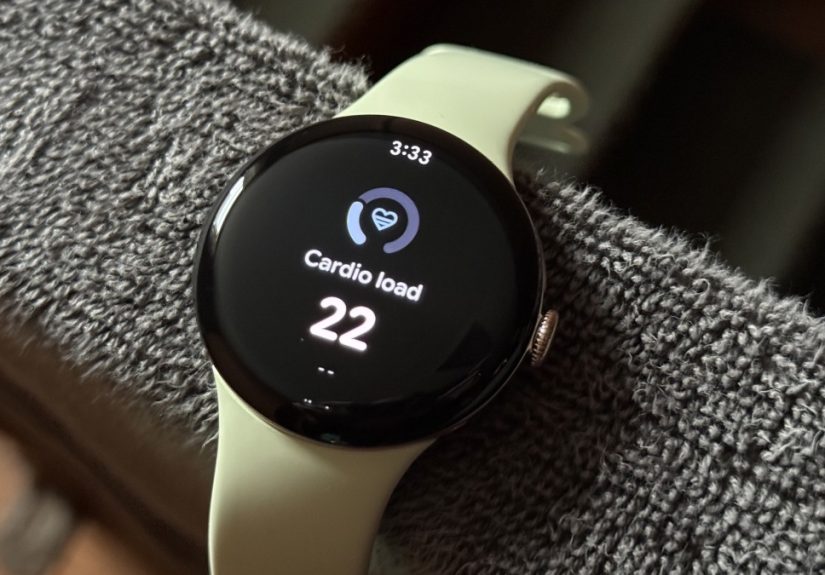
Now Fitbit is finally moving in a better direction. By shifting Cardio Load from a rigid daily target to a more flexible weekly target inside the newer Fitbit app experience, Google is addressing the biggest weakness in the feature. It is a practical fix, not a flashy one. But honestly, practical is exactly what Cardio Load needed.
What Cardio Load Was Supposed to Do
At its core, Cardio Load is Fitbit’s way of measuring how hard your cardiovascular system is working. It is not just counting whether you moved. It is trying to estimate the training stress of that movement by looking at things like heart rate, effort, and duration. That is much closer to how serious fitness platforms think about training than a simple calorie burn number or a generic move ring.
That part deserves credit. Fitbit wanted to give users something more useful than “good job, you stood up a few times.” Cardio Load aimed to answer a more interesting question: How much stress did your body actually absorb today?
For runners, cyclists, HIIT fans, and anyone trying to improve cardio fitness, that is a genuinely valuable metric. It can help you avoid two classic mistakes: doing too little to make progress, or doing too much and cooking yourself like an overconfident Thanksgiving turkey.
Fitbit paired that idea with a target load recommendation, which was meant to guide how much activity you should aim for. Again, on paper, this is excellent. Most people do not need more guilt. They need better guardrails.
So What Was the Actual Problem?
Daily targets made the feature feel twitchy
The biggest issue was the daily framing. Training stress is not really a one-day game. It is a trend game. A hard workout on Tuesday can be a great idea or a terrible idea depending on what happened on Monday, what is planned for Thursday, and whether your sleep has been a disaster because your neighbor apparently started a drum career at 1 a.m.
When Fitbit treated Cardio Load like a daily target to hit, the feature could feel oddly strict. Miss a day because of travel, work, illness, or a much-needed rest day, and the app could make it seem like you had fallen off the wagon. Crush a tough session one day, and the next day’s messaging might still feel confusing, because the system was trying to interpret a rolling training picture through a daily lens.
It was smarter than steps, but not always smarter in practice
Many users liked the ambition behind Cardio Load but found the experience harder to trust than simpler metrics. That is because the logic behind the score is a little abstract. People understand minutes walked, miles run, and even calories burned, even if those are imperfect. Cardio Load asks users to trust an algorithmic training score that is less intuitive at first glance.
That can work if the recommendations feel consistent. It can backfire if the target seems to swing around or if the app labels you as undertraining or overtraining in ways that do not match how your body actually feels. When that happens, the feature starts to feel less like coaching and more like a moody horoscope for your heart.
Casual users and structured athletes were lumped together
Another weakness was audience fit. Cardio Load makes the most sense for people who are training with some regularity. If you are building running volume, cycling several times a week, or using recovery metrics to shape your workouts, load guidance is useful. But for casual users who mainly want a health tracker, the daily target could feel overly intense for no good reason.
Fitbit was trying to serve both the everyday wellness crowd and the more training-focused crowd with the same framing. That is a hard balancing act. A weekly approach gives both groups more breathing room.
What Fitbit Is Changing
The target is now weekly, not daily
This is the big fix. Instead of asking users to land in the right range every single day, Fitbit’s newer app experience focuses on a personalized weekly cardio target. That is a much better match for real life and for real training.
Weekly targets are less noisy. They smooth out the weirdness that comes from one hard session, one rest day, one low-energy day, or one packed work schedule. They also reduce the feeling that you somehow “failed” because you did not hit an ideal number on a random Wednesday when your inbox was on fire and your dinner came out of a vending machine.
In other words, Fitbit is finally letting the metric breathe.
The app now highlights progress instead of pressure
The redesigned Fitbit experience also helps because it presents your data in a more trend-friendly way. That matters. Fitness metrics are not just about math; they are about interpretation. A score can be technically accurate and still feel useless if it is shown without context.
By organizing things around clearer tabs and more digestible progress views, Fitbit is making Cardio Load easier to understand as part of a bigger picture. That shift matters more than it sounds. A training metric should help you make decisions, not leave you squinting at your phone like you are trying to decode a tax form.
Coaching is becoming more contextual
Fitbit’s broader app changes also point to a more adaptive coaching model. Instead of simply saying “hit this number today,” the platform is moving toward guidance that can factor in your goals, recent activity, sleep, and schedule. That does not mean it becomes magically perfect. It does mean the experience is slowly evolving from a static metric into a more flexible training companion.
That is the right direction. Fitness guidance should account for context. Your watch should understand the difference between “I skipped a workout because I was lazy” and “I skipped a workout because I spent six hours in an airport and ate pretzels for dinner.” Both are human experiences. Only one deserves a guilt trip.
Why This Fix Actually Matters
It matches how training load is meant to work
Training load is most useful when viewed over time. Coaches, endurance athletes, and recovery-focused platforms all care about trends, consistency, and balance. A weekly target is not just more forgiving. It is more meaningful.
If you do a hard interval day, an easy recovery day, a long workout, and a rest day, that can be an excellent week. A daily target can make that pattern look uneven. A weekly target makes it look like what it is: normal training.
It is better for recovery
One of the hidden dangers of daily targets is psychological. Even when a platform says rest is important, people are still tempted to chase the number because the number is right there, glaring at them like a disappointed gym teacher. Weekly framing lowers that pressure. It makes it easier to say, “Today is light on purpose,” without feeling like you are falling behind.
That is healthier, and not just physically. A good fitness tool should promote consistency, not compulsiveness.
It makes Fitbit more competitive
Fitbit has been trying to move beyond basic activity tracking for years. Cardio Load was part of that push, and a necessary one. People now expect wearables to offer recovery insights, training guidance, and some level of personalization. But if those features feel clunky or frustrating, users start looking elsewhere.
Fixing Cardio Load does not suddenly make Fitbit the undisputed king of performance training. Garmin fans are not throwing their watches into the sea. But it does make Fitbit’s fitness story more coherent, especially for users who want better guidance without needing a full-on endurance nerd dashboard.
What Still Needs Improvement
Let’s not pretend this fix solves everything. Cardio Load is getting smarter, but there are still a few rough edges.
The feature still needs trust
Even with a weekly target, Fitbit still has to convince users that the score is worth following. That means clearer explanations, steadier recommendations, and fewer moments where the app seems oddly out of sync with how a person actually feels.
Advanced users may still want more detail
Fitbit is usually strongest when it translates health data into something approachable. That is great for mainstream users. But athletes who want richer raw data, deeper training analytics, or more control may still find the platform a little too simplified.
Some of the broader app overhaul is still maturing
The newer Fitbit experience is promising, but it is still an evolving one. Some pieces feel polished, while others still feel like they are being assembled mid-flight. That does not make the weekly Cardio Load shift any less smart. It just means the full experience is still a work in progress.
Who Benefits Most From the New Approach?
The users who will feel the biggest improvement are the ones whose training naturally varies across the week. That includes runners who stack hard and easy days, parents who squeeze workouts between real life obligations, gym-goers with unpredictable schedules, and casual athletes who want useful guidance without being micromanaged by a number every night.
If that sounds like a very large chunk of humanity, congratulations: it is.
The weekly model also makes Cardio Load more approachable for beginners. A newcomer does not need to “win” every day. They need momentum. Weekly progress encourages momentum. Daily perfection usually encourages burnout.
How to Use Cardio Load Without Letting It Use You
Treat it as guidance, not gospel
Cardio Load is a helpful signal, not a divine command. If your score says one thing and your body says another, listen to your body first.
Look at trends, not one-off spikes
A single low day or high day is rarely the whole story. Weekly framing helps, but the smartest users will still focus on patterns rather than panic over any single workout.
Pair it with sleep and readiness
Load without recovery context is only half a story. If your sleep has been messy and your energy is flat, forcing the number may not be the flex you think it is.
Keep your actual goal in mind
Are you trying to improve cardio fitness, maintain general health, train for an event, or just stop feeling winded on stairs? Cardio Load makes more sense when it is attached to a real goal, not just the urge to close another digital ring.
Conclusion
Fitbit did not have a bad idea with Cardio Load. It had a good idea wrapped in a slightly annoying daily experience. By shifting the feature toward a weekly target, the company is finally fixing the part that felt off for so many users. The result is a system that makes more sense for real training, real recovery, and real life.
That is the key point. Fitness is not built in perfect 24-hour chunks. It is built through patterns, consistency, and adaptation. A smartwatch that understands that is more useful than one that just nags you harder.
So yes, Fitbit is finally fixing its Cardio Load problem. Not by throwing the feature away, but by making it behave more like a coach and less like a hall monitor. Frankly, that is exactly the kind of glow-up this metric needed.
Experiences Related to “Fitbit Is Finally Fixing Its Cardio Load Problem”
If you have used Fitbit long enough, you can probably picture the old Cardio Load experience in your head. You wake up feeling pretty decent, check your stats, and suddenly discover that your wrist has assigned you homework. Not a suggestion. Homework. Maybe you did a long walk yesterday and strength training the day before, and yet the app still seemed strangely dramatic about what should happen today. For a lot of people, that created an odd relationship with the metric. It was interesting, but also kind of exhausting.
One common experience was the “accidental guilt day.” You had work meetings, errands, family obligations, and maybe a body that simply wanted a break. But because the metric was framed daily, the app could make a perfectly normal lighter day feel like some kind of personal failure. That is not a small thing. Fitness tools shape behavior, but they also shape mood. A feature that constantly implies you are behind can turn healthy motivation into low-grade annoyance.
Then there was the opposite experience: the overachiever day. You would do a genuinely hard session, feel accomplished, maybe even a little heroic, and then later wonder whether the app fully understood what you just did. Some users loved the idea that Fitbit was measuring actual cardiovascular effort instead of just counting steps, but they still felt the feedback was oddly rigid. Real workouts do not always fit neatly into a daily reward loop. Sometimes a hard day is supposed to be hard because tomorrow is supposed to be easy.
The move to weekly Cardio Load changes that emotional rhythm in a surprisingly important way. Instead of waking up each day to a mini performance review, users can think more like planners and less like defendants. A missed workout is no longer the end of the world because the week is still alive. A heavy session can actually count as part of a broader rhythm instead of becoming a weird one-day spike that throws off the tone of the app.
That makes the Fitbit experience feel more adult. It feels better for the runner who trains three or four days a week, the parent who can only exercise when life allows it, the office worker who stacks most activity on weekends, and the beginner who is just trying to build momentum without feeling constantly judged by a tiny screen.
There is also something psychologically healthier about the new approach. Weekly goals encourage flexibility and consistency, which is what most people actually need. The old setup could encourage score-chasing. The newer one has a better chance of encouraging balance. And balance is what keeps people going long after the January motivation fog has lifted.
So the lived experience around this change is pretty simple: Cardio Load is becoming less irritating and more useful. That may not sound glamorous, but in the world of wearable fitness tech, that is a meaningful upgrade. Sometimes the best improvement is not a flashy new feature. Sometimes it is just finally making the existing feature act like it understands how human beings really live.