Table of Contents >> Show >> Hide
- What Is a Large Plain Skullcap?
- Why the Large Plain Skullcap Style Works So Well
- Best Places to Use a Large Plain Skullcap
- How to Size and Hang It Correctly
- Bulbs, Brightness, and Color Temperature
- Styling Ideas for a Large Plain Skullcap
- Pros and Possible Drawbacks
- Buying Checklist Before You Commit
- What It Feels Like to Live With a Large Plain Skullcap
- Final Thoughts
If you have never heard the phrase Large Plain Skullcap before, congratulations: you are normal. It sounds a little like a Victorian hat, a little like a botanical specimen, and a lot like something your great-aunt would whisper about at a flea market. In reality, Large Plain Skullcap is a distinctive porcelain pendant light style with a quietly elegant silhouette, a handmade look, and the kind of charm that makes a kitchen feel more thoughtful without trying too hard.
That is exactly why this fixture has become so appealing to homeowners, designers, and anyone who wants lighting that feels warm, sculptural, and just a tiny bit smug in the best possible way. It is not flashy. It is not shouting for attention. It simply hangs there looking beautifully composed, casting useful light, and making the rest of the room look like it has its life together.
In this guide, we will break down what a Large Plain Skullcap is, why the style works, where it looks best, how to size and hang it properly, and what kind of bulb and finish choices help it shine. Then, because good lighting is about living rather than just looking, we will end with a longer experiential section on what it actually feels like to use a light like this in everyday life.
What Is a Large Plain Skullcap?
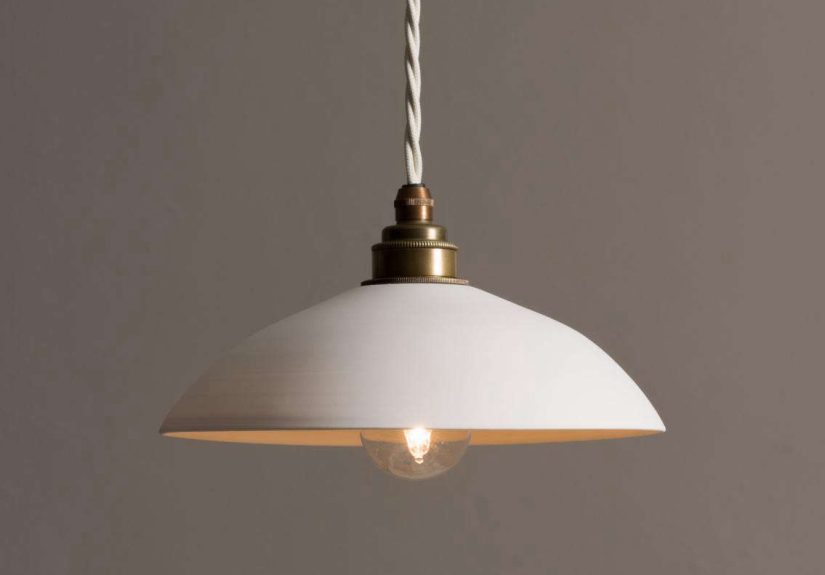
A Large Plain Skullcap is a handcrafted porcelain pendant light defined by a low, rounded, slightly domed shade with a clean profile. In the best-known version of this fixture, the shade is made from unglazed white porcelain and paired with aged brass hardware and a fabric-covered cord. The result is simple but not boring, traditional but not fussy, and refined without drifting into “please don’t touch anything” territory.
The beauty of the design comes from restraint. There are no loud patterns, no oversized metal cages, and no look-at-me industrial theatrics. The word plain in the name is actually part of the appeal. It means the form, surface, and light quality do the heavy lifting. And thankfully, they are more than capable of carrying the room.
Because the porcelain is unglazed, the surface has a soft, chalky, matte character that feels warmer and more handmade than glossy ceramic or polished metal. Brass fittings add a little visual gravity and a touch of old-world polish. Together, those materials land in a sweet spot between classic kitchen lighting and modern organic design.
Why the Large Plain Skullcap Style Works So Well
It softens a room without making it sleepy
Some pendant lights are all edge and attitude. Others are so delicate they disappear. The Large Plain Skullcap sits right in the middle. Its rounded silhouette softens the lines of cabinetry, counters, and tile, but it still has enough presence to anchor an island, prep area, or breakfast nook.
It blends decoration with task lighting
One of the smartest things about this shape is that it can perform as both decorative lighting and task lighting. Designers regularly recommend pendant lights over islands because they help define zones, add personality, and direct light where people actually work. A Large Plain Skullcap does all three without looking like it is auditioning for a reality show about kitchen renovations.
It makes layered lighting easier
Great kitchens use layers: ambient lighting for overall brightness, task lighting for work areas, accent lighting for architectural details, and decorative lighting for personality. A Large Plain Skullcap fits neatly into that strategy. It can work over an island, sink, or dining corner while recessed lights, under-cabinet strips, or sconces handle the rest of the room. That layered approach prevents the classic mistake of relying on one heroic ceiling fixture to solve every lighting problem. One light cannot do it all. Even superheroes need backup.
It plays nicely with many design styles
This fixture is surprisingly adaptable. It looks at home in English-inspired kitchens, modern farmhouse interiors, transitional spaces, organic minimalist homes, and even more contemporary rooms that need a little softness. Because the shape is restrained and the material palette is neutral, it does not bully the rest of your design choices.
Best Places to Use a Large Plain Skullcap
Over a kitchen island
This is the obvious star placement, and for good reason. Pendant lights above an island provide direct illumination for prepping, serving, homework, coffee-making, and those late-night “I’m just checking the fridge” moments that somehow become a full snack event.
A Large Plain Skullcap works especially well over islands because the shade is visually calm. If you install two or three in a row, the effect feels orderly and architectural rather than busy. If your kitchen already has strong materials such as veined stone, dramatic wood grain, or colorful cabinetry, this kind of quiet fixture can keep the room balanced.
Above a breakfast table or banquette
In a dining nook, the Large Plain Skullcap creates an intimate pool of light without feeling too formal. It gives the table its own visual identity, which is useful in open-plan homes where the kitchen, dining, and living zones all blend together. It also flatters a room in a way that giant overhead glare never does. Nobody looks their best under harsh lighting. Not you, not your pancakes, not even your artisanal fruit bowl.
In a hallway, mudroom, or pantry-adjacent zone
Because the fixture is sculptural but compact-looking, it can also work in transition spaces. A single Large Plain Skullcap can make a hallway feel more intentional, elevate a mudroom, or add charm to a back kitchen or scullery-style prep area. In these spaces, it reads as a design choice rather than an afterthought.
How to Size and Hang It Correctly
Even a beautiful pendant can look wrong if it is hung at the wrong height or spaced badly. This is where many otherwise lovely kitchens go off the rails. The fixture itself is innocent. The install plan is the problem.
Height above counters and tables
For most kitchen islands and tables, a practical rule is to hang pendants about 28 to 36 inches above the countertop or tabletop. That range usually keeps the fixture low enough to feel connected to the surface but high enough to preserve sightlines and avoid forehead diplomacy.
If the ceiling is higher than standard, you can increase the hanging length slightly so the fixture still feels visually tied to the island or table. Over dining surfaces, many designers also like the bottom of the fixture around 30 to 36 inches above the table, depending on room scale and desired mood.
Spacing between multiple pendants
If you are using two or three Large Plain Skullcaps over an island, keep enough breathing room between them. A common guideline is roughly 24 to 36 inches between fixtures, depending on the island length and fixture width. Too close, and the lights look crowded. Too far apart, and they look like they had an argument and are no longer speaking.
As a design principle, you also want the pendants centered over the island rather than over the room itself. The island is the target. The ceiling is merely the messenger.
Distance from the island edges
When laying out pendants, keep them slightly in from the ends of the island so the composition feels centered and intentional. Leaving some margin near each end helps the lights feel balanced rather than stretched to the corners. This is one of those tiny details that nobody notices directly but everyone feels subconsciously.
Bulbs, Brightness, and Color Temperature
The wrong bulb can ruin the mood of a great fixture faster than bad caulk ruins a nice backsplash. For a Large Plain Skullcap, the sweet spot is usually a warm LED bulb in the 2700K to 3000K range. That gives you a soft, inviting glow that works beautifully with porcelain, brass, wood, painted cabinets, and natural stone.
Color temperature matters more than many people realize. Lower Kelvin numbers feel warmer and cozier. Higher Kelvin numbers read cooler and brighter. In residential kitchens, overly cool light can make the room feel sterile or commercial. A warm white bulb generally keeps the space comfortable while still being useful for real work.
Brightness should be chosen by lumens, not just by old wattage habits. If the pendant is part of a layered lighting plan, it does not need to behave like a stadium spotlight. Let recessed lighting or under-cabinet lighting handle broad illumination, while the pendant adds focused light and atmosphere.
A dimmable LED is a particularly smart choice. Dimmers let you raise the light when you are chopping vegetables and lower it when you are hosting dinner, answering emails, or standing in the kitchen eating leftover pasta directly from the container because life is complicated. LEDs also use far less energy and last much longer than incandescent bulbs, which makes them the practical adult choice, even if they are less romantic than the phrase “vintage filament.”
Styling Ideas for a Large Plain Skullcap
Modern farmhouse without the clichés
If you love warm wood, creamy paint colors, unlacquered brass, and natural textures, this fixture can support that look without tipping into themed décor. Pair it with shaker cabinets, honed stone, and understated hardware for a kitchen that feels welcoming but not rehearsed.
Classic-meets-contemporary kitchens
One of the best uses of a Large Plain Skullcap is in a kitchen that mixes traditional details with cleaner modern lines. Think slab backsplash, simple stools, plain-front lower cabinets, and a softer pendant overhead. The contrast keeps the room from feeling either too rustic or too cold.
Organic minimalism
In a quieter, more minimal interior, the matte porcelain surface becomes the star. Use it with pale oak, limewash tones, off-white walls, and restrained styling. The effect is calm, tactile, and far more interesting than a generic black cone pendant that looks like it came free with every renovation in America.
Pros and Possible Drawbacks
Pros: The style is timeless, the materials feel elevated, the shape is flexible, and the fixture supports both beauty and function. It works in many room types and plays well with layered lighting plans. The porcelain surface brings softness that metal or glass fixtures do not always deliver.
Possible drawbacks: Unglazed porcelain can show dust more readily than glossy finishes, so occasional cleaning helps. Handmade fixtures may also have subtle variation, which is a feature for some buyers and a surprise for others. Finally, if your space needs extremely high-output lighting from a single fixture, this type of pendant is better as part of a broader lighting plan than as a lone savior.
Buying Checklist Before You Commit
Before ordering a Large Plain Skullcap, confirm the finish works with your hardware, check that the cord length suits your ceiling height, and make sure the fixture is compatible with your bulb base and dimmer setup. Think about whether you want one pendant as a focal point or multiple pendants for rhythm and symmetry. Most importantly, picture the light in context. Good fixtures do not just match a mood board; they support how a room is actually used.
What It Feels Like to Live With a Large Plain Skullcap
Living with a Large Plain Skullcap is a little like living with a very well-dressed, very useful friend. It does not dominate every conversation, but once it is there, the room feels more complete. In the morning, the light tends to read as calm rather than sharp. If you use a warm bulb, the porcelain softens the brightness so the kitchen feels awake without being aggressive. That matters more than people admit. There is a big difference between “good morning” lighting and “you are now entering a dental lab” lighting.
During the day, especially in a kitchen with natural light, the fixture still earns its keep. Because the shade has a sculptural form and a matte finish, it remains visually interesting even when it is switched off. That is one of the quiet advantages of this style. Many fixtures only look good when illuminated. A Large Plain Skullcap still contributes shape, texture, and a sense of craftsmanship in daylight. It helps a room feel layered, finished, and intentional, even while you are doing something glamorous like sorting mail or pretending that wiping the counter counts as deep cleaning.
In the evening, the experience gets better. This is where the combination of porcelain, warm light, and a dimmer really starts to show off. The fixture can create a smaller, gentler zone inside a larger room. Over an island, it turns that surface into a place for conversation, serving, and lingering. Over a breakfast table, it makes takeout feel slightly more civilized. The light does not need to be dramatic to be memorable. Sometimes the nicest lighting is the kind that simply makes people want to stay in the room a little longer.
There is also a practical pleasure to this fixture that should not be overlooked. Because the shape is simple, it is easy to pair with other materials already in the room. You do not find yourself redecorating around it every six months. It works with brass, nickel, painted wood, stone, and even more modern elements without complaining. That flexibility makes it easier to live with over time. Trendy lights can be exciting at first and exhausting later. This one tends to age more gracefully, which is exactly what you want from something hardwired into your ceiling.
Then there is the emotional side, which sounds dramatic until you have lived under bad lighting for a while. A good pendant changes the way a room feels when you walk into it. The Large Plain Skullcap has a grounded, handmade quality that makes a kitchen feel less generic and more personal. It suggests care. It suggests that somebody paid attention. And in a room filled with hard surfaces and practical tasks, that small touch of softness goes a long way. No, a pendant light will not fix your entire life. But it may make your coffee routine prettier, your kitchen more flattering, and your home just a little easier to love. Honestly, that is not a bad job description for a ceiling light.
Final Thoughts
The Large Plain Skullcap succeeds because it does not try to do too much. It offers shape, warmth, craftsmanship, and practical illumination in one restrained package. It works best when treated as part of a layered lighting plan and when paired with warm bulbs, thoughtful spacing, and a room that appreciates texture over flash.
If your goal is a kitchen or dining space that feels timeless, relaxed, and quietly elevated, this is the kind of pendant worth serious attention. It is proof that good design does not always arrive with a trumpet blast. Sometimes it just arrives in porcelain, hangs gracefully over the island, and makes everything beneath it look better.