Table of Contents >> Show >> Hide
- Why the Greek Alphabet Still Matters
- Greek Alphabet Basics Before You Take a Quiz
- How a Greek Alphabet Quiz Helps You Learn Faster
- Mini Greek Alphabet Quiz
- Best Ways to Memorize Greek Letters Without Melting Down
- Common Mistakes on a Greek Alphabet Quiz
- Why Greek Letters Show Up Everywhere
- Final Thoughts
- Experiences Related to a Greek Alphabet Quiz
If you came here looking for a simple way to learn the Greek alphabet without feeling like you accidentally enrolled in a semester-long classics course, good news: you are in the right place. A Greek alphabet quiz sounds innocent enough until you meet the usual suspectstheta, xi, psi, and that sneaky final sigma that changes shape at the end of a word. Still, once you understand the pattern behind the letters, the whole system becomes far less intimidating and a lot more fun.
The Greek alphabet matters for more than language lovers. It shows up in history, philosophy, theology, math, science, engineering, fraternities and sororities, and even the random homework problem that suddenly drops a lowercase lambda into your evening like it owns the place. Learning it through a quiz format works because the alphabet is highly structured: there are 24 letters, recognizable names, predictable order, and a few memorable trouble spots. In other words, it is built for practice.
Why the Greek Alphabet Still Matters
The Greek alphabet is one of the most influential writing systems in history. It grew out of an earlier Phoenician model, but what made Greek especially important was the clearer representation of vowel sounds. That detail may sound nerdy, but it was a big deal. It helped create a writing system that was more flexible and easier to read for Greek speakers, and it shaped later alphabets in Europe. So when you study the Greek alphabet, you are not just memorizing symbols. You are learning a piece of the family tree behind written language in the West.
Today, Greek letters live a double life. In language study, they are actual letters. In STEM fields, they moonlight as symbols for angles, density, wavelength, standard deviation, torque, angular velocity, and enough other concepts to make your calculator nervous. That is why a Greek alphabet quiz is useful even for people who never plan to read ancient texts. You may never translate Homer, but you will probably meet pi, sigma, delta, or omega again.
Greek Alphabet Basics Before You Take a Quiz
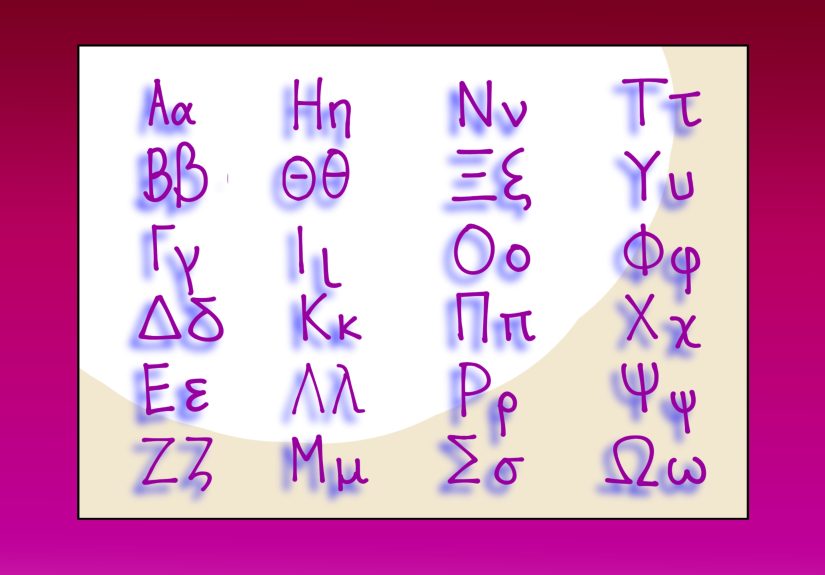
Before you jump into quiz mode, get the lay of the land. The Greek alphabet has 24 letters, each with uppercase and lowercase forms. Some look friendly because they resemble Roman letters. Others look like they were designed specifically to test your patience. A few are easy to confuse at first, especially when you are moving quickly.
| Uppercase | Lowercase | Name | Quick Memory Cue |
|---|---|---|---|
| Α | α | Alpha | Starts the alphabet, like A |
| Β | β | Beta | Looks familiar, but do not let it get smug |
| Γ | γ | Gamma | Uppercase looks like an angle |
| Δ | δ | Delta | Triangle energy |
| Ε | ε | Epsilon | A short e sound in many learning charts |
| Ζ | ζ | Zeta | The zigzag cousin |
| Η | η | Eta | Looks like H, is not H, classic trap |
| Θ | θ | Theta | Circle with a stripe, often an angle |
| Ι | ι | Iota | Tiny letter, huge phrase: not one iota |
| Κ | κ | Kappa | K with a Greek passport |
| Λ | λ | Lambda | Looks like a camping tent |
| Μ | μ | Mu | Common in science and statistics |
| Ν | ν | Nu | Looks simple, sounds new |
| Ξ | ξ | Xi | The one everybody squints at first |
| Ο | ο | Omicron | The small o |
| Π | π | Pi | The celebrity letter |
| Ρ | ρ | Rho | Looks like P, sounds like a trick question |
| Σ | σ / ς | Sigma | Two lowercase forms; final sigma appears at word endings |
| Τ | τ | Tau | Straightforward, for once |
| Υ | υ | Upsilon | Looks familiar, behaves differently |
| Φ | φ | Phi | Popular in philosophy and physics |
| Χ | χ | Chi | Looks like X, not pronounced like ordinary X |
| Ψ | ψ | Psi | A three-pronged brain teaser |
| Ω | ω | Omega | The grand finale, the big o |
The Letters That Usually Cause the Most Drama
Eta and heta-looking mistakes happen because uppercase eta looks like a Roman H. Rho gets confused with P. Xi and psi tend to become visual static if you try to memorize them too fast. Sigma deserves its own warning label because it has two lowercase forms: σ inside a word and ς at the end. This is where many quiz scores go to take a little nap.
Pronunciation can also be tricky because learning charts often simplify the sounds for English speakers, while ancient and modern Greek pronunciation traditions can differ. For quiz purposes, most beginner materials focus first on letter recognition, names, order, and basic transliteration. That is smart. You do not need to solve every pronunciation debate on day one. You just need to stop mistaking rho for a rebellious P.
How a Greek Alphabet Quiz Helps You Learn Faster
A good Greek alphabet quiz does more than ask, “What letter is this?” It trains your brain in layers. First, you recognize the symbol. Then you recall the name. Then you connect the name to sound and, eventually, to usage. That is why the best quiz approach mixes several types of questions:
- Symbol to name: What is λ? Answer: lambda.
- Name to symbol: Which letter is theta? Answer: Θ or θ.
- Uppercase to lowercase: Match Σ with σ and ς.
- Order questions: Which comes after mu? Answer: nu.
- Usage questions: Which Greek letter commonly represents summation? Answer: uppercase sigma, Σ.
This mix works because it stops passive recognition. Seeing a chart is helpful. Retrieving the answer without looking is what actually builds memory. It is the difference between nodding confidently at a gym membership and actually going to the gym. One feels productive; the other changes your life.
Mini Greek Alphabet Quiz
Here is a quick practice round you can use in a classroom, blog post, or self-test session:
- What is the first letter of the Greek alphabet?
- Which Greek letter is written as π?
- What is the lowercase form of Omega?
- Which letter often appears in equations for wavelength?
- Which letter has a special final lowercase form?
- What is the name of Ψ?
- Which comes after theta?
- What is the Greek letter that looks like a triangle?
- Which letter is commonly used for angular velocity?
- What is the name of ξ?
Answers
- Alpha
- Pi
- ω
- Lambda
- Sigma
- Psi
- Iota
- Delta
- Omega
- Xi
Notice what this quiz is doing. It is not just drilling random facts. It rotates between order, form, name, and practical use. That variety keeps your memory from becoming too narrow. If you only study letter charts, you may recognize the alphabet visually but freeze when someone asks you to write it from memory. A quiz fixes that problem fast.
Best Ways to Memorize Greek Letters Without Melting Down
The smartest study methods are surprisingly low-tech. Start by splitting the alphabet into groups of six. Twenty-four letters sounds like a lot until you realize it is just four smaller chunks. Practice uppercase and lowercase together rather than learning them as separate universes. Write the letters by hand, say the names out loud, and test yourself in both directions: symbol to name and name to symbol.
Another strong method is transliteration practice. If you see a Greek word or name and try to sound it out letter by letter, your recall gets stronger because the letters stop being abstract shapes. This is why many instructors have students copy names, match Greek spellings to English equivalents, or read short words aloud. You are not just memorizing symbols. You are making them usable.
Context also helps. Connect letters to fields where they commonly appear. Sigma can remind you of summation. Delta can remind you of change or difference. Lambda can remind you of wavelength. Rho may bring up density. Phi can suggest phase or the golden ratio, depending on context. Once a letter has a job, it becomes easier to remember.
Common Mistakes on a Greek Alphabet Quiz
The most common mistake is assuming that a familiar-looking letter has the same sound or identity as its Roman cousin. That works sometimes, but not always. Another mistake is ignoring lowercase forms because uppercase feels easier at first. In real study, lowercase matters a lot. A third mistake is memorizing in order only. Order is useful, but quizzes often shuffle letters. If your brain only knows the alphabet as a song-like chain, random recognition will still feel hard.
There is also the classic overconfidence issue. You look at the chart once, think, “Yes, yes, I know pi, omega, and that one that looks like a pretzel,” and then the quiz arrives and suddenly xi has become modern art. The cure is retrieval practice. Close the chart. Write what you know. Check the misses. Repeat. It is not glamorous, but it works.
Why Greek Letters Show Up Everywhere
Part of the appeal of learning Greek letters is that they unlock a surprising amount of academic vocabulary. In science and engineering, Greek letters help label quantities efficiently because they are visually distinct from the Roman alphabet. In math, they often stand for constants, variables, functions, and operations. In language study, they lead into roots that shaped thousands of English words. In historical and literary study, they open the door to inscriptions, manuscripts, and classical texts.
That bigger picture makes a Greek alphabet quiz more than a classroom exercise. It is a small gateway skill. Once you know the letters, textbooks feel less intimidating, formulas look less alien, and references that once seemed cryptic begin to make sense. It is one of those rare study tasks where a modest amount of effort pays off in several different subjects.
Final Thoughts
A Greek alphabet quiz is one of the easiest ways to turn a confusing chart into knowledge you can actually use. The trick is not raw memorization alone. It is repeated recognition, naming, writing, and using the letters in context. Learn the 24 letters in chunks, watch out for the look-alikes, give special attention to sigma, rho, xi, and psi, and keep testing yourself in short rounds. Do that consistently, and the Greek alphabet stops looking like a code and starts feeling like a toolkit.
And honestly, that is when the fun begins. Because once you can spot lambda, sigma, theta, and omega without blinking, you start noticing them everywhere. On whiteboards. In textbooks. In software. In lecture slides. In random internet arguments about physics. Suddenly the alphabet is no longer exotic. It is just useful. Also slightly dramatic. But useful.
Experiences Related to a Greek Alphabet Quiz
The first experience many learners have with a Greek alphabet quiz is mild overconfidence followed by immediate humility. The chart looks manageable. Twenty-four letters? That is fewer than English. How hard could it be? Then the quiz begins, and the brain starts making unhelpful executive decisions. Eta is mistaken for H. Rho becomes P. Xi looks familiar right up until you need to name it. At that moment, the learner realizes the Greek alphabet is not hard in a scary way; it is hard in a “wow, my eyeballs have betrayed me” way.
A second common experience is the breakthrough that happens when the letters stop being isolated symbols and start becoming characters with personalities. Lambda becomes the tent-shaped one. Theta becomes the striped circle. Omega becomes the dramatic last letter that arrives like it expects theme music. Once learners create those mental hooks, quiz performance improves fast. What felt like chaos begins to sort itself into patterns.
Students in language classes often describe a third experience: the power of writing by hand. Looking at a Greek alphabet chart is helpful, but copying the letters changes everything. The hand teaches the eye. After writing alpha, beta, gamma, and delta several times, the letters feel less like foreign symbols and more like forms the brain can predict. Even people studying Greek only because of theology, classics, or philosophy often say that handwriting practice is where the alphabet finally clicks.
Science and math students usually have a different path. They do not meet the Greek alphabet as a language first. They meet it as a swarm of symbols in equations. For them, a Greek alphabet quiz can feel strangely satisfying because it explains years of low-level confusion. The student who already knows that sigma means summation or that lambda can mark wavelength suddenly gets the missing layer: these are not random symbols chosen by a mischievous textbook editor. They are letters from a real alphabet with names, order, and history.
Another memorable experience is the first time learners notice Greek letters outside the quiz itself. They see phi in a diagram, theta in trigonometry, rho in physics, or omega in a game title, and they recognize it instantly. That moment feels small, but it is powerful. Recognition creates momentum. A person who notices Greek letters in the wild starts feeling like the quiz was not just an academic task. It was a practical upgrade.
There is also the oddly comforting experience of realizing that confusion is normal. Nearly everyone mixes up a few letters at first. Nearly everyone forgets the order somewhere around mu, nu, and xi. Nearly everyone needs an extra minute with psi. That shared struggle makes the learning process feel human rather than embarrassing. The Greek alphabet quiz is less like a trap and more like a rite of passage. A slightly nerdy rite of passage, sure, but still.
In the end, the most common experience is simple: repetition wins. Learners who quiz themselves in short sessions, review mistakes without drama, and keep practicing usually improve faster than they expect. One day the alphabet looks impossible. A week later it looks familiar. Soon after that, it starts to feel oddly friendly. That is the quiet magic of a good Greek alphabet quiz. It takes something that seems ancient, distant, and intimidating, and turns it into something you can recognize, pronounce, and actually enjoy.