Table of Contents >> Show >> Hide
- Why Boil Sweet Potatoes?
- What You’ll Need
- Choosing Sweet Potatoes for Boiling
- Step-by-Step: How to Boil Sweet Potatoes (3 Reliable Methods)
- How Long to Boil Sweet Potatoes?
- How to Tell When They’re Done (Without Guessing)
- Pro Tips for Better Boiled Sweet Potatoes
- Common Mistakes (and How to Fix Them)
- What to Do With Boiled Sweet Potatoes
- Storage and Make-Ahead Tips
- FAQ: Boiling Sweet Potatoes
- Conclusion
- Real-World Experiences: What Boiling Sweet Potatoes Is Actually Like
- SEO Tags
Boiling sweet potatoes doesn’t get the same spotlight as roasting (because roasting brings drama, caramelization, and those crispy edges that make you question
your loyalty to other side dishes). But boiled sweet potatoes are the quiet overachievers of the kitchen: fast, foolproof, and ridiculously useful for meal prep,
mashing, soups, pies, and weeknight “please feed me something warm” moments.
The best part? You don’t need fancy gear. You need a pot, water, salt, and a tiny bit of attentionlike a houseplant, but tastier. Let’s boil sweet potatoes the
right way so they come out tender (not waterlogged), evenly cooked (not hard in the middle), and ready for whatever delicious plan you have next.
Why Boil Sweet Potatoes?
It’s fast, flexible, and great for meal prep
Boiled sweet potatoes cook evenly, especially when cut into uniform chunks. That makes them perfect for mashed sweet potatoes, purees, quick weeknight sides,
and batch cooking. Boil a pot on Sunday, and you’ve got the base for bowls, salads, tacos, and soups all week.
They’re naturally sweet (and play well with savory)
Sweet potatoes bring their own sweetness, so you can keep things simple (salt + butter) or go savory (garlic, herbs, chili crisp, smoked paprika). Boiling gives
you a clean, neutral canvas: you can dress them up without fighting intense roasted flavors.
Nutrition bonus: gentle cooking, easy pairing
Sweet potatoes are known for beta-carotene (which your body can convert to vitamin A), plus fiber and potassium. Boiled sweet potatoes also tend to be easy on the
stomach and simple to combine with proteins and healthy fats for a balanced meal.
What You’ll Need
Ingredients
- Sweet potatoes (any variety)
- Water
- Kosher salt (or table salt)
- Optional: bay leaf, garlic clove, rosemary sprig (for lightly infused potatoes)
Tools
- Large pot or Dutch oven
- Knife + cutting board (if cubing)
- Colander
- Fork or paring knife (for doneness checks)
Choosing Sweet Potatoes for Boiling
Most grocery stores label orange-fleshed sweet potatoes as “yams” sometimes (plot twist: they’re usually still sweet potatoes). Any type will boil fine, but
different varieties behave a little differently:
- Orange-fleshed (often labeled “yam”): moist, creamy, and mash-friendly. Great for purees and casseroles.
- White- or pale-fleshed: a bit drier and firmer; holds shape well in cubes for salads and bowls.
- Purple-fleshed: firmer texture; fun color; great for cubes and plated sides.
Step-by-Step: How to Boil Sweet Potatoes (3 Reliable Methods)
Method 1: Boil Whole Sweet Potatoes (best for easy peeling + fluffy interiors)
- Scrub well. Rinse and scrub the skins under cool water. (You don’t want “earthy notes.” You want “delicious.”)
-
Start in cold water. Place whole sweet potatoes in a pot and add cold water to cover by about 1 inch.
This helps them cook more evenly from outside to center. - Salt the water. Add a generous pinch of salt. This seasons the potato lightly and improves flavor.
-
Bring to a boil, then simmer. Bring the pot to a boil over high heat, then reduce to a steady simmer.
A violent boil can bang the potatoes around and encourage uneven texture. - Cook until fork-tender. They’re done when a fork or knife slides in with little resistance.
-
Drain and steam-dry. Drain in a colander. For the best texture, return the potatoes to the warm pot (off heat) for 1–2 minutes to let excess
moisture evaporate. - Peel if desired. Once cool enough to handle, the skin often slips off easily.
Method 2: Boil Peeled & Cubed Sweet Potatoes (best for speed and meal prep)
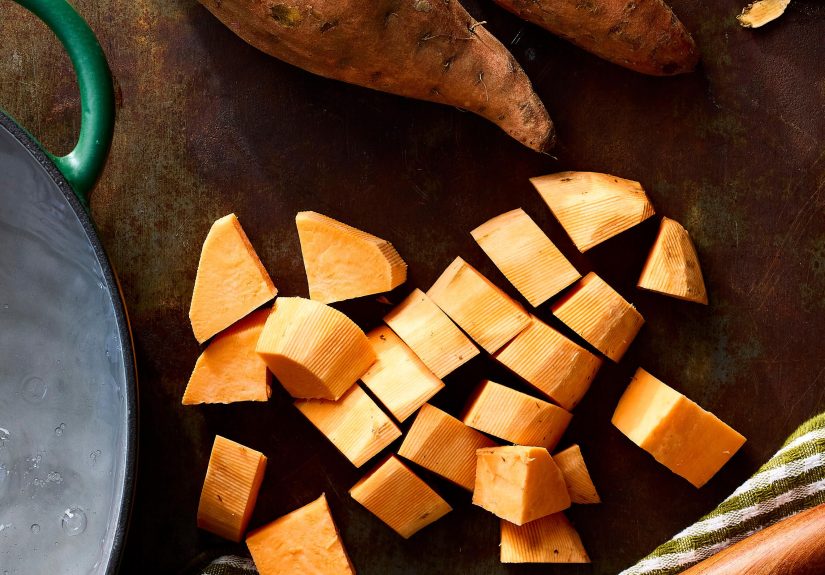
- Peel (optional) and cut evenly. Aim for 1-inch cubes for quick, even cooking.
- Cover with cold water. Put cubes in a pot and cover with cold water by about 1 inch.
- Salt the water. Add salt (and optional aromatics like a bay leaf).
- Boil, then simmer. Bring to a boil, then reduce to a lively simmer.
- Cook until just tender. Fork-tender is the goal, not “falling apart into sweet potato soup.”
- Drain well. Drain and let them sit in the colander for a minute. Moisture is the enemy of good mash and crisping.
Method 3: Boil Slices or Wedges (best for quick sides and fast mashing)
Slice into 1/2-inch rounds (“coins”) or wedges. Cook like cubes, but start checking early. Slices cook quickly and can go from tender to mushy if ignored.
How Long to Boil Sweet Potatoes?
Timing depends on size, shape, and how aggressively your water is simmering. Use time ranges as a guide, then trust the doneness test (fork/knife slides in
easily). Here’s a practical cheat sheet:
| Cut/Size | Approx. Time After Reaching a Simmer | Best For |
|---|---|---|
| 1/2-inch slices | 8–12 minutes | Quick sides, fast mash base |
| 1-inch cubes | 10–15 minutes | Meal prep, bowls, soups |
| 2-inch chunks | 18–25 minutes | Chunky mash, pies |
| Whole (small/medium) | 25–40 minutes | Easy peeling, fluffy interior |
| Whole (large) | 35–50 minutes | Big batches, puree |
How to Tell When They’re Done (Without Guessing)
- Fork test: A fork should slide in with minimal resistance.
- Knife test: A paring knife should glide into the center easily.
- Texture clue: The surface will look slightly softened, and cubes may show rounded edges.
If you’re boiling for a recipe where the sweet potatoes will cook again (like casseroles or skillet finishing), stop when they’re just shy of fully tender.
You can always cook longer; you can’t un-mush a sweet potato. (If you can, please teach the rest of us.)
Pro Tips for Better Boiled Sweet Potatoes
1) Start with cold water for even cooking
Dropping sweet potatoes into already-boiling water can cook the outside faster than the inside, especially for large pieces. Starting in cold water helps the
temperature rise more gradually, which encourages even doneness.
2) Salt the water (yes, even for sweet potatoes)
Salt makes boiled sweet potatoes taste more like themselvessweeter, richer, and less flat. Think of it like turning on the lights in a room. Same room. Better
experience.
3) Simmer, don’t rage-boil
A steady simmer cooks gently and prevents pieces from breaking up. You want tender sweet potatoes, not sweet potato confetti.
4) Drain well, then steam-dry
After draining, let them sit briefly so excess water evaporates. For mash, return them to the warm pot for a minute or two (off heat) to drive off moisture.
This small step makes a big difference in flavor concentration and texture.
5) Skin on vs. peeled: choose based on the end goal
- Keep skins on if you want easier handling, less nutrient loss, and simpler peeling after cooking.
- Peel first if you’re making a super-smooth puree or want cleaner-looking cubes for salads.
Common Mistakes (and How to Fix Them)
Mistake: They’re watery and bland
Fix: Salt the water, simmer gently, and drain thoroughly. If you’re mashing, steam-dry in the pot before adding butter or milk.
Mistake: The outside is mushy but the center is firm
Fix: Cut into even sizes and start in cold water. For whole potatoes, choose similar sizes or cook the big ones separately.
Mistake: They fell apart
Fix: Lower the heat to a simmer and start checking earlier. Sweet potatoes can go from “perfect” to “puree” faster than your favorite streaming show’s intro.
What to Do With Boiled Sweet Potatoes
Once you’ve got perfectly tender boiled sweet potatoes, you’re basically holding a week’s worth of good decisions.
Fast ideas (minimal effort, maximum payoff)
- Classic mash: Mash with butter, salt, pepper, and a splash of milk. Add cinnamon if you’re feeling cozy.
- Savory mash: Stir in garlic, olive oil, smoked paprika, and chopped chives.
- Soup base: Blend with broth, sautéed onion, and a pinch of curry powder.
- Meal-prep cubes: Toss with olive oil, lemon, salt, and herbs; add to grain bowls with chicken or chickpeas.
- Quick skillet finish: Pat cubes dry, then sear in a pan with a little oil until lightly browned.
Storage and Make-Ahead Tips
Storing raw sweet potatoes
Keep raw sweet potatoes in a cool, dry, dark place with airflow (a pantry is perfect). Avoid the refrigeratorcold can mess with texture and flavor. Don’t wash
them until you’re ready to cook.
Storing boiled sweet potatoes
- Fridge: Cool completely, then store in an airtight container for several days.
- Freezer: Freeze mashed sweet potatoes or well-drained cubes in freezer-safe bags/containers. Thaw overnight in the fridge.
FAQ: Boiling Sweet Potatoes
Should I peel sweet potatoes before boiling?
Either works. For whole sweet potatoes, boiling with the skin on often makes peeling easier later and can help reduce nutrient loss. For cubes, peeling first
gives a smoother look and a more uniform texture.
Do I need to add anything to the water besides salt?
Salt is the big one. Aromatics (bay leaf, garlic) add subtle flavor, but sweet potatoes mostly shine when you season them after cooking with butter, olive oil,
herbs, spices, or citrus.
Can I boil sweet potatoes ahead of time?
Absolutely. Boil, cool, and refrigerate. Reheat gently (microwave, steamer basket, or a quick simmer). For the best texture, reheat cubes with a little steam
rather than drowning them in water again.
Are “yams” the same thing?
In many U.S. grocery stores, “yams” are usually orange-fleshed sweet potatoes. True yams are a different tuber altogether. If it looks like a sweet potato, cooks
like a sweet potato, and makes you happy like a sweet potato… you’re probably boiling a sweet potato.
Conclusion
Boiling sweet potatoes is one of those simple kitchen skills that pays off constantly. Start in cold, salted water, simmer until fork-tender, drain well, and
steam-dry for the best texture. From there, you can mash, blend, cube, crisp, or stash them for laterbecause future-you deserves nice things (like lunch that
isn’t a sad granola bar).
Real-World Experiences: What Boiling Sweet Potatoes Is Actually Like
If you’ve ever boiled sweet potatoes and thought, “Why do mine taste like damp orange wallpaper?”you’re not alone. A lot of the real-life experience comes down
to two things nobody tells you loudly enough: water control and timing confidence.
First, let’s talk water. In everyday kitchens, people often treat boiling like a swimming pool situation: more water must be better, right? Not really. You only
need enough water to cover the sweet potatoes by about an inch. Too much water takes longer to heat and can encourage you to overcook because you’re waiting for
“something to happen.” The “something” should be a steady simmer and a fork testnot a bubbling cauldron that sounds like it’s auditioning for a villain movie.
Then there’s the moment of truth: checking doneness. Many home cooks are polite to their potatoes. They poke once, meet a little resistance, and think, “I’ll give
it five more minutes… just to be safe.” Five minutes later, the sweet potato is collapsing emotionally and physically. The trick is to start checking earlier than
you think you should, especially with slices and cubes. When the fork slides in easily, you’re done. Not “almost done.” Done. Cooking continues a bit from
residual heat, and if you’re making mash or puree, the final texture will smooth out anyway.
Another very real experience: uneven pieces = uneven results. It’s tempting to hack sweet potatoes into whatever shapes your knife feels like
making on a Tuesday. But if half your cubes are 1 inch and the other half are “surprise boulders,” you’ll pull some out too early or cook others into mush.
Uniform cuts aren’t chef fussinessthey’re your shortcut to consistency. When you nail this, boiling becomes almost boring (in the best way).
Flavor is the other big “aha.” People assume sweet potatoes don’t need salt because they’re sweet. But in practice, unsalted boiled sweet potatoes can taste flat,
like someone turned the volume down on your dinner. Salt in the water helps, and seasoning after cooking helps even more. A classic move is butter + salt + black
pepper, but you can go in so many directions: chili flakes and lime, maple and cinnamon, garlic and rosemary, tahini and lemon, or even a little hot sauce if you
want a side dish that wakes you up.
And here’s the meal-prep reality: boiled sweet potatoes are a refrigerator MVP. Once you’ve boiled a batch, your week gets easier. Toss cubes into salads, add
them to grain bowls, mash them into a quick soup, or warm them up with a protein and a pile of greens. If you want them to feel less “boiled,” pat them dry and
give them a quick sear in a skillet. That tiny bit of browning delivers a roasted-adjacent vibe without turning on the oven.
Finally, there’s the emotional experience: boiled sweet potatoes are humble and forgiving. You don’t need perfect techniquejust a couple of smart habits. Start
in cold water, simmer gently, check early, drain well, and season with intention. Do that, and you’ll stop thinking of boiled sweet potatoes as “the thing I do
when I’m in a hurry” and start thinking of them as “the thing that makes dinner easier and still tastes great.” That’s the kind of kitchen magic we can all get
behind.