Table of Contents >> Show >> Hide
- Why Some Artists Get Seen Faster Than Others
- The 14 Steps to Get Noticed on DeviantArt
- Step 1: Choose a recognizable creative lane
- Step 2: Make your profile look like you mean business
- Step 3: Organize your gallery like a mini museum
- Step 4: Lead with your strongest work
- Step 5: Write titles and descriptions people can actually use
- Step 6: Use tags strategically, not like confetti
- Step 7: Post consistently enough to be remembered
- Step 8: Mix finished work with process, journals, and updates
- Step 9: Join groups, challenges, and community events
- Step 10: Leave comments that sound like a person, not a vending machine
- Step 11: Study what gets traction in your niche
- Step 12: Cross-promote your work outside DeviantArt
- Step 13: Make your work easy to understand and accessible
- Step 14: Be professional, ethical, and patient
- Mistakes That Keep Great Art Invisible
- Final Thoughts
- Experience: What Artists Usually Learn After a Few Months on DeviantArt
- SEO Tags
Getting noticed on DeviantArt is not just about posting beautiful art and hoping the internet fairy leaves a pile of watchers on your doorstep. It is more like opening a tiny digital gallery in a very busy city. If your work is strong but your profile is messy, your tags are vague, and your gallery looks like a laundry basket of random uploads, even great art can disappear into the scroll.
The good news is that visibility on DeviantArt is not magic. It is a mix of presentation, discoverability, consistency, and community. Artists who grow tend to do a few simple things very well: they make their profile easy to understand, organize their work clearly, use relevant tags, share regularly, and talk to other humans like actual humans. Revolutionary, I know.
If you want more eyes on your work, more favorites, more comments, and more watchers who stick around, these 14 steps will help you build momentum without turning your page into a desperate billboard. Let us get into it.
Why Some Artists Get Seen Faster Than Others
On DeviantArt, discoverability usually grows when three things happen at once. First, your art has a recognizable identity. Second, your page makes a strong first impression. Third, your activity tells the platform and the community that you are present, active, and worth following. In other words, talent matters, but packaging matters too.
Think of DeviantArt as part portfolio, part social platform, and part community hub. The artists who stand out usually do not just post art. They tell a story with their gallery, captions, profile, and interactions. They make it easy for someone to arrive, understand their style, enjoy the work, and click Watch without having to solve a mystery first.
The 14 Steps to Get Noticed on DeviantArt
Step 1: Choose a recognizable creative lane
You do not need to trap yourself in one style forever, but you do need a clear thread running through your work. Maybe you are the artist who creates moody fantasy portraits, cute creature designs, graphic fan art, dreamy photography, or sharp black-and-white ink sketches. A consistent creative lane helps viewers remember you.
If your gallery jumps from watercolor flowers to sci-fi mechs to meme edits to blurry lunch photos, people may enjoy one piece but forget who made it. A recognizable artistic identity creates memory. Memory creates return visitors. Return visitors become watchers.
A good test is this: if someone saw six of your pieces in a row with your username removed, would they sense a style, mood, subject preference, or point of view? If the answer is yes, you are building a brand instead of tossing art into the void and saluting.
Step 2: Make your profile look like you mean business
Your DeviantArt profile is your storefront. When a visitor lands on it, they should immediately understand who you are, what you make, and why they should stay. Fill out your bio with a short, clear introduction. Mention your main mediums, favorite themes, or what kind of art people can expect from you.
Keep the bio warm and human. Something like, “I make fantasy character art, creature concepts, and the occasional dramatic moon because apparently I cannot resist glowing objects,” does more work than a blank page or a bio that says only “hi.”
Use a good avatar, clean header art, social links if relevant, and any profile sections that help showcase your best work. If commissions are open, say so clearly. If you take requests only on special occasions, say that too. Clarity beats mystery every single time.
Step 3: Organize your gallery like a mini museum
A chaotic gallery can make even strong artwork feel smaller. Organize your deviations into folders or sub-galleries by theme, medium, fandom, subject, or project series. This makes browsing easier and helps visitors binge your work in the best possible way.
For example, instead of dumping everything into one giant stream, you could create folders like Original Characters, Fan Art, Sketchbook, Tutorials, or Photography. Give galleries descriptions when that adds context, and use cover images that make each section look intentional.
People are more likely to follow when your page feels curated. Mess says, “I upload things.” Structure says, “I am building something here.”
Step 4: Lead with your strongest work
Your best art should not be buried on page seven like a hidden side quest. Feature the pieces that represent your current skill level and style. When someone clicks your page, they should meet your highlights first, not your ancient “I drew this at 2 a.m. with one eye open” era.
This does not mean you must delete older work. It means you should spotlight the art that sells your identity best. If a piece gets strong engagement, matches your niche, or shows clear technical skill, move it where people will notice it quickly.
A strong first nine pieces can do more for your growth than fifty average uploads. Quality attracts attention. Focus keeps it.
Step 5: Write titles and descriptions people can actually use
Many artists upload incredible work and then title it something like “Untitled 47” or “idk lol.” That is a missed opportunity. A clear title helps people understand the work, and a useful description adds context, personality, and search value.
Good titles are specific. Instead of “Sketch,” try “Cyberpunk Alley Character Sketch” or “Autumn Fox Spirit Portrait.” Your description can include the medium, inspiration, process, story behind the piece, or a short note inviting conversation.
For example: “Created in Procreate over three evenings. I wanted this character to feel like a calm villain who would absolutely ruin your week but look elegant doing it.” That kind of caption adds charm, gives context, and sounds like a real person made the art, which is always encouraging.
Step 6: Use tags strategically, not like confetti
Tags matter on DeviantArt. Use them to describe what the art actually is, not what you vaguely hope the universe will make of it. Add relevant tags for subject, medium, style, mood, fandom, technique, and setting when appropriate.
If you post a digital painting of a dragon queen in a storm, your tags might include things like fantasy, dragon, digitalart, characterdesign, storm, and portrait. If it is fan art, include the character or fandom name. If it is a tutorial or speedpaint, tag that too.
The key is relevance. Do not tag “anime” on a realistic wildlife painting just because anime gets traffic. Wrong tags might get a quick accidental click, but they do not build the right audience. Relevant tags help the right people find you, and those people are far more likely to favorite, comment, and watch.
Step 7: Post consistently enough to be remembered
You do not need to post daily unless that schedule genuinely fits your life and sanity. You do need to post often enough that people remember you exist. Consistency creates familiarity, and familiarity builds trust.
A realistic rhythm might be one polished piece a week, two smaller sketches plus one finished piece, or a regular cycle of art, WIP, and journal update. Pick a cadence you can actually sustain without turning your hobby into a hostage situation.
If you have access to scheduling tools, use them. Planning ahead can keep your page active during busy weeks and helps you avoid vanishing for a month, then returning with six uploads in one night like a caffeinated raccoon.
Step 8: Mix finished work with process, journals, and updates
People do not only follow finished art. They also follow artists. That means your process matters. Share work-in-progress posts, journals, status updates, polls, or short reflections on what you are making and why.
A finished piece shows skill. A process post shows personality. A journal shows thought. A poll invites interaction. Together, they make your page feel alive rather than static.
If you are working on a series, tell people. If you are choosing between two character designs, ask your watchers which one they prefer. If you tried a new brush set and it changed your life, or at least your shadows, say so. Conversation creates connection.
Step 9: Join groups, challenges, and community events
One of the fastest ways to get noticed on DeviantArt is to stop acting like DeviantArt is only a storage locker for your art files. Join relevant groups, take part in community prompts, and submit work to themed events when they fit your niche.
Groups can help your art appear in front of people who already care about the subject or style you create. Challenges and prompt-based events also give you a reason to post with context, which can attract viewers who are browsing that topic.
The trick is alignment. Join groups that match your work. If you create fantasy creatures, go where fantasy creature fans live. If you make elegant portrait photography, spend time in the communities that appreciate that style. Relevance beats random exposure.
Step 10: Leave comments that sound like a person, not a vending machine
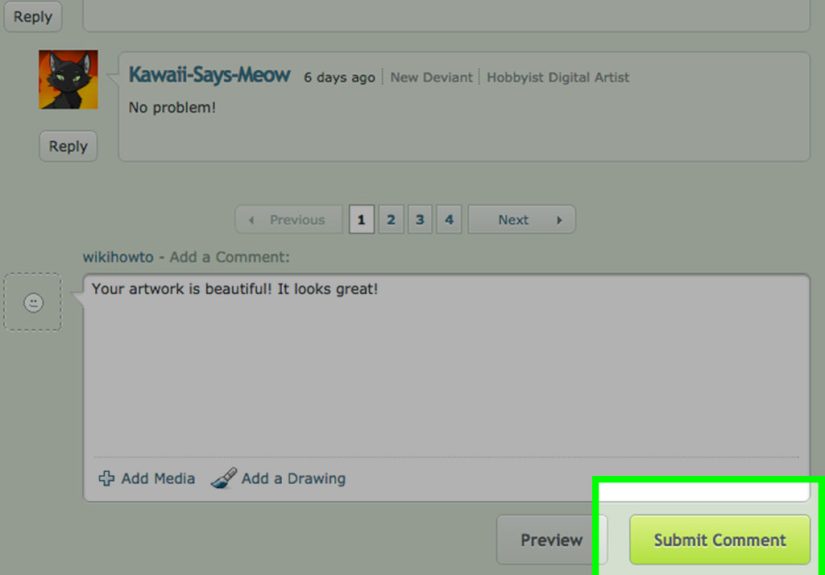
If you want community attention, be part of the community. Comment on other artists’ work in a thoughtful way. Not “cool,” not “nice,” not “pls watch back,” and definitely not the digital equivalent of tossing a business card at someone’s forehead.
Say what caught your eye. Mention the lighting, expression, color story, composition, concept, or emotional effect. A good comment could be, “The way you handled the rim light makes the character feel almost cinematic. The cool background tones really make the face pop.”
That kind of response starts relationships. Artists remember generous, observant commenters. Over time, that can bring visits back to your page naturally. Also, reply when people comment on your own work. If someone takes time to engage with you, meet them halfway.
Step 11: Study what gets traction in your niche
Do not copy successful artists, but absolutely study them. Look at creators in your corner of DeviantArt and pay attention to patterns. What subjects get strong responses? How do they title their work? What kind of descriptions do they use? Are they posting mostly polished art, quick sketches, tutorials, or series-based content?
You are not trying to become a clone. You are learning audience language. If certain presentation choices repeatedly help artists get noticed, that is useful information, not cheating. Borrow structure, not identity.
Also review your own top-performing deviations. Find the common thread. Maybe your viewers love dramatic lighting, expressive faces, or fantasy costume design more than your abstract experiments. That does not mean you must stop experimenting. It means you now know what the audience is responding to most strongly.
Step 12: Cross-promote your work outside DeviantArt
If you already use Instagram, X, Pinterest, Tumblr, YouTube, or a personal portfolio site, send people toward your DeviantArt page when it makes sense. A DeviantArt gallery can work as a deeper archive of your art, your process, and your community presence.
When you cross-promote, do not just paste a link and flee the scene. Give people a reason to click. Try something like, “Posted the full character sheet and alternate color version on my DeviantArt,” or “I shared the full process notes and close-up details there.”
This approach works especially well if your DeviantArt page offers more depth than your other channels. Treat every platform like a doorway, not a duplicate.
Step 13: Make your work easy to understand and accessible
Accessibility and clarity are underrated growth tools. Use readable text in journal posts, break up long descriptions, and write in plain language when explaining your art. If you maintain a portfolio outside DeviantArt, use descriptive image text, strong keywords, and clear project descriptions there too.
Inside DeviantArt, clarity still matters. A visitor should be able to tell what they are looking at, what kind of artist you are, and where to go next. Confused visitors bounce. Comfortable visitors browse.
Better usability does not make art less artistic. It just makes your talent easier to enjoy. That is a win, not a compromise.
Step 14: Be professional, ethical, and patient
Visibility built on trust lasts longer than visibility built on gimmicks. Credit other artists properly, respect permissions, use required labels accurately, and avoid anything that makes your profile look careless or spammy. People remember professionalism.
Also, be patient. On art platforms, traction often looks slow until it suddenly looks obvious. A month of steady posting and smart community engagement can create more long-term momentum than one lucky viral piece followed by silence.
Think in layers: better profile, stronger presentation, cleaner tags, steady output, warmer interaction. These stack. Over time, they make your page easier to find, easier to follow, and much harder to forget.
Mistakes That Keep Great Art Invisible
- Uploading excellent work with weak or vague titles.
- Using random tags instead of relevant ones.
- Leaving the profile bio blank.
- Posting ten times in one week and then disappearing for two months.
- Ignoring comments from people who liked the work enough to respond.
- Keeping the best pieces buried under older, weaker uploads.
- Treating DeviantArt like cloud storage instead of a creative community.
If any of these sound familiar, do not panic. Most artists have done at least three of them, and some have done all seven before breakfast. The fix is not dramatic. It is just deliberate.
Final Thoughts
If you want to get noticed on DeviantArt, focus less on tricks and more on signals. Send a clear signal about who you are. Send a clear signal about what you make. Send a clear signal that you are active, engaged, and worth following.
The artists who grow are often not the loudest. They are the clearest. Their pages are organized. Their tags make sense. Their comments are thoughtful. Their work feels intentional. Their audience understands what they are about and comes back for more.
So no, you do not need to become an exhausting self-marketing machine. You just need to make it easier for the right people to find your art, enjoy your art, and remember your name. That is how you get noticed on DeviantArt without losing the joy that made you post there in the first place.
Experience: What Artists Usually Learn After a Few Months on DeviantArt
One of the most common experiences artists talk about is the surprising moment when they realize their “best” work is not always the work that gets the strongest response. An artist may spend twenty hours polishing a highly detailed illustration, only to watch a simpler sketch sheet get more comments because it feels more personal, more relatable, or easier to engage with. That experience often teaches an important lesson: people are not only responding to polish. They are responding to connection.
Another common experience is discovering that profile cleanup can improve results faster than expected. Many artists spend months trying to grow with better art alone, then finally update their bio, organize their folders, replace an outdated avatar, feature stronger work, and suddenly their page feels more credible. The art did not magically become different overnight. The presentation changed. That often makes the difference between “someone clicked once” and “someone clicked Watch.”
There is also the classic tag lesson. A lot of artists start out either barely using tags or using too many weak ones. Then they begin tagging with more care, focusing on subject, medium, style, fandom, mood, and topic, and they notice the right audience showing up more often. Not a stampede, not a fireworks display, but a steady improvement in relevant traffic. That experience is valuable because it proves discoverability is not random. Small adjustments can change who finds the work.
Many creators also learn that community effort compounds. Thoughtful comments, participation in groups, challenge entries, and journal posts do not always create instant spikes, but they build familiarity. Over time, the same names start appearing again. A commenter becomes a watcher. A watcher shares a piece. Another artist invites them to a group. Growth starts looking less like one huge event and more like a trail of small doors opening one after another.
Perhaps the biggest experience-related insight is that momentum feels awkward before it feels natural. In the beginning, updating your page, writing better descriptions, responding to comments, and posting regularly can feel like extra work piled on top of making art. But after a while, it becomes part of the creative rhythm. Instead of asking, “Why is no one seeing my work?” artists start asking smarter questions: “Which pieces attract the right audience?” “What makes people comment?” “What kind of gallery experience am I creating?” That shift is powerful.
And maybe the most reassuring lesson of all is this: growth on DeviantArt is rarely about becoming louder than everyone else. It is about becoming clearer, more consistent, and more memorable. Artists who learn that usually stop chasing attention in a frantic way and start building it in a sustainable one. Ironically, that is often when the attention arrives.