Table of Contents >> Show >> Hide
- What a Radon Mitigation System Actually Does
- Before You Install Anything, Do These Four Things First
- Materials and Components You Will Usually Need
- How To Install Radon Mitigation in a Basement or Slab Home
- Step 1: Plan the Pipe Route
- Step 2: Choose the Suction Point
- Step 3: Drill Through the Slab
- Step 4: Create the Suction Pit
- Step 5: Install the Vertical Pipe
- Step 6: Seal the Easy Air Leaks
- Step 7: Mount the Radon Fan in the Right Place
- Step 8: Vent the System Above the Roofline
- Step 9: Wire the Fan Properly
- Step 10: Add a Manometer, Alarm, and Labels
- Step 11: Test After Installation
- How Installation Changes in a Crawl Space
- What About Sumps, Drain Tile, and Block Walls?
- Common Mistakes That Make Radon Systems Underperform
- How To Maintain a Radon Mitigation System
- Should You Install It Yourself?
- Real-World Experiences With Installing Radon Mitigation
- Final Thoughts
- SEO Tags
If you have ever looked at a radon test result and felt your stomach do a tiny backflip, welcome to the club. Radon is one of those home hazards that sounds oddly polite for something so rude. You cannot see it, smell it, or glare at it until it leaves. But if your test result comes back high, a properly installed radon mitigation system can make your home a whole lot safer.
The good news is that radon mitigation is not magic. It is a building-science solution with a clear goal: collect radon gas before it enters your living space and vent it safely outdoors. The even better news is that the core design is surprisingly straightforward. The not-so-fun news is that the details matter a lot. Pipe placement matters. Fan placement matters. Roof discharge matters. Sealing matters. Testing after installation absolutely matters.
This guide walks through how to install radon mitigation the right way, what system type usually works best, what changes in a crawl space versus a basement, and which mistakes turn a “helpful home project” into an expensive PVC sculpture.
What a Radon Mitigation System Actually Does
In most homes, the standard solution is active soil depressurization, often called sub-slab depressurization. Translation: a suction point is created beneath the slab or foundation, PVC pipe carries the soil gas upward, and a specialized fan pulls radon from beneath the house and discharges it outside above the roofline.
The basic idea is wonderfully unglamorous. Instead of letting radon drift through cracks, cold joints, utility penetrations, sump openings, or porous concrete into your basement or first floor, the system gives that gas an easier path to follow. Radon is lazy. Your mitigation system should be smarter.
Depending on the house, the system may be built as:
- Sub-slab suction: the most common option for basements and slab-on-grade homes.
- Drain-tile or sump suction: useful when the home already has drain tile or a sump pit that can serve as a suction point.
- Sub-membrane suction: the go-to method for crawl spaces with exposed earth.
- Block-wall suction: sometimes added when hollow block walls are acting like sneaky radon highways.
Before You Install Anything, Do These Four Things First
1. Confirm That You Actually Need Mitigation
Do not install a system based on vibes. Install it based on testing. If your radon level is at or above the action level, or if your results are in that gray zone where reducing levels still makes sense, mitigation is worth serious attention. A short-term test can flag a problem quickly, but a long-term test gives a better picture of year-round exposure.
2. Figure Out Your Foundation Type
This changes everything. A basement with a concrete slab is not treated the same way as a crawl space with exposed soil. A slab-on-grade home without a basement may still be a good candidate for suction through the slab. A home with a sump basket or perimeter drain tile might allow a cleaner installation route.
3. Check Local Rules
Many states regulate radon work. Some require licensed or certified mitigation professionals. Others may require electrical work, roof penetrations, or exterior modifications to meet code. Even if you are handy enough to build a canoe out of old fence boards, this is still the moment to check local requirements before you start drilling heroic holes in your slab.
4. Be Honest About DIY vs. Hiring a Professional
Homeowners can learn the process, but radon mitigation is one of those jobs where “close enough” is not a compliment. A poorly designed system can underperform, create backdrafting or moisture issues, leak radon into the wrong place, or simply look like a plumbing experiment gone rogue. If you are unsure about diagnostics, fan sizing, roof venting, or electrical work, bring in a qualified radon mitigator. At the very least, involve a licensed electrician when required.
Materials and Components You Will Usually Need
The exact parts vary by house, but a typical active sub-slab system includes:
- Schedule 40 PVC pipe and fittings
- A radon fan rated for mitigation, not a random duct fan from the internet’s bargain basement
- PVC primer and cement
- Core drill or hammer drill with appropriate bits
- Sealant for cracks, slab penetrations, and sump covers
- A sealed sump lid if the sump is part of the system
- Pipe supports and straps
- A U-tube manometer or other performance indicator
- An active alarm or notification monitor, depending on local standards or installer practice
- Electrical connection on a non-switched circuit, hardwired or plugged as allowed by code
- Labels identifying the system
For crawl spaces, add heavy plastic sheeting for the membrane, fastening materials, and sealant to secure the membrane up the walls and around piers.
How To Install Radon Mitigation in a Basement or Slab Home
Step 1: Plan the Pipe Route
The best system is not only effective. It is also buildable. Start by choosing a pipe route that gets from the slab to the roof with as few awkward turns as possible. Interior routing often looks cleaner and protects the pipe from temperature swings, but exterior routing is sometimes easier in finished homes. Either way, plan for accessibility, appearance, and performance.
Look for a route that avoids major framing, finished spaces you do not want to disturb, and places where the pipe would become a permanent conversation starter in the worst possible way.
Step 2: Choose the Suction Point
A suction point is the place where the pipe connects to the soil or aggregate beneath the slab. In many homes, one suction point is enough. In others, especially large homes or homes with low-permeability fill under the slab, multiple suction points may be needed.
Good locations are often near the center of the slab, close to an unfinished mechanical area, or near existing sump or drain systems if those features can be used safely. Diagnostics performed by pros can help confirm whether one suction point will create enough pressure field extension under the slab.
Step 3: Drill Through the Slab
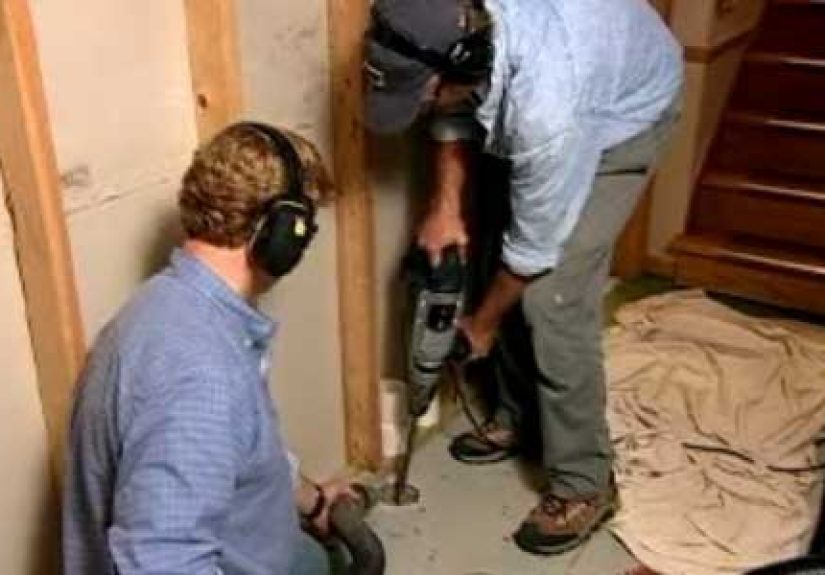
Once the location is chosen, core drill or hammer drill an opening large enough for the pipe. This is where the project stops being theoretical and becomes very dusty. Protect the space, wear proper safety gear, and confirm you are not drilling into buried utilities, radiant tubing, or something else that would ruin your afternoon.
Step 4: Create the Suction Pit
After drilling through the slab, remove soil or gravel beneath the opening to create a small suction pit. This pit allows air movement under the slab so the fan can draw soil gas effectively. Think of it as creating a little breathing room beneath the floor. Too small, and airflow can be weak. Too sloppy, and you have just made a basement mess with no medals awarded.
Step 5: Install the Vertical Pipe
Insert the PVC pipe into the slab opening and seal the penetration. Then continue routing the pipe upward through the house, attic, garage, or exterior path you planned earlier. Keep runs as direct as practical. Every unnecessary bend adds resistance and makes the fan work harder.
Support the pipe properly. A pipe that rattles, sags, or looks like it is rethinking its life choices is not a finished installation.
Step 6: Seal the Easy Air Leaks
Sealing alone is usually not enough to fix radon, but it helps the active system perform better. Seal visible slab cracks, utility penetrations, gaps around pipe entries, and openings connected to the sub-slab area. If the home has a sump pit, use a sealed lid designed to maintain function while limiting air leakage.
The goal is not to make the basement hermetically sealed like a moon base. It is to reduce unwanted air pathways so the suction system pulls from beneath the slab instead of from the room.
Step 7: Mount the Radon Fan in the Right Place
This step matters more than many homeowners realize. The fan should be installed in an unconditioned, non-livable location such as an attic, outside the building, or a garage that is not beneath living space. Do not place the fan in a basement, crawl space, or other area where a leak could dump concentrated radon back into occupied space.
Mount the fan in the vertical run of the pipe when possible, follow manufacturer orientation requirements, and use proper couplings or flexible connectors where appropriate. This is a mitigation fan, not a decorative accessory. Give it a secure, code-compliant home.
Step 8: Vent the System Above the Roofline
The discharge point should terminate above the roof, not under an eave, not in the attic, and definitely not at ground level because “it seemed easier.” The exhaust must be routed where the gas can dilute safely outdoors without being drawn back into windows, doors, or other openings.
Yes, roof penetration is a hassle. No, venting into the attic is not a clever shortcut. That is just a creative way to move the problem.
Step 9: Wire the Fan Properly
Provide electrical power according to code and manufacturer requirements. Many systems use a dedicated or non-switched outlet or are hardwired. This is not the moment for an extension cord and optimism. If you are not qualified to do electrical work, hire an electrician.
Step 10: Add a Manometer, Alarm, and Labels
A U-tube manometer gives a quick visual confirmation that the fan is creating suction. Many systems also include an active monitor or alarm to indicate fan failure. Label the system clearly so future owners, contractors, or curious tinkerers know it is a radon reduction system and not a weird abandoned plumbing idea from 2009.
Step 11: Test After Installation
The install is not finished when the glue dries. It is finished when a follow-up radon test shows the system is doing its job. Post-mitigation testing verifies whether the design, fan, and suction point are actually reducing radon to a lower and safer level. Without this step, you are guessing. And radon is not a topic that rewards guessing.
How Installation Changes in a Crawl Space
If your home has a crawl space with exposed soil, the standard approach is usually sub-membrane depressurization. Instead of relying on the slab, you cover the earth floor with a heavy plastic membrane, extend it up the walls, seal seams and edges, and run a vent pipe beneath the membrane. The fan then draws soil gas from under that sealed layer and exhausts it outdoors.
This method works best when the membrane is sealed carefully around piers, columns, and penetrations. A loose or poorly sealed membrane can turn an effective system into a fluttering disappointment. In crawl spaces, moisture control often improves too, which is a nice bonus in the same way that finding cash in an old coat is a nice bonus.
What About Sumps, Drain Tile, and Block Walls?
If the home has an existing drain tile system or sump, those features may be incorporated into the mitigation design. A sealed sump lid can allow the pit to remain functional while serving as a suction point. Homes with hollow block foundation walls may also benefit from wall depressurization, especially when those cavities are communicating with the soil and the sub-slab area.
These systems can work very well, but they also demand careful design. This is where professional diagnostics are especially valuable, because the best suction point is not always the most obvious one.
Common Mistakes That Make Radon Systems Underperform
- Putting the fan in the basement: bad idea, unsafe location, instant red flag.
- Venting into the attic: congratulations, you have now created indoor radon for a different room.
- Skipping post-install testing: a system that looks right can still perform poorly.
- Using too many pipe bends: airflow hates unnecessary drama.
- Ignoring crawl-space sealing details: one flappy edge can hurt performance.
- Forgetting aesthetics: ugly routing is not a safety issue, but it can haunt resale photos forever.
- Trying to solve everything with crack sealant alone: sealing helps, but it is rarely the whole fix.
How To Maintain a Radon Mitigation System
Radon systems are not high-maintenance, but they are not “install and forget forever” either. Check the manometer or monitor periodically to make sure the fan is running. Listen for unusual fan noise. Inspect visible pipe joints and the sump lid if applicable. Re-test after major renovations, foundation work, or changes that affect air movement. Even a good system deserves the occasional check-in.
If the fan fails, replace it with the correct radon-rated fan, not a generic substitute. The system was designed around airflow and suction characteristics, and random replacements can throw off performance.
Should You Install It Yourself?
That depends on your skill level, local rules, and tolerance for risk. A capable homeowner can understand how radon mitigation works. But understanding the concept and executing a compliant, effective, safe installation are not always the same thing. The more complicated the foundation, the more finished the home, and the more code-sensitive the electrical or roof work, the stronger the case for hiring a qualified professional.
A smart middle ground is to learn enough to understand the design, get multiple bids, ask better questions, and evaluate whether the proposed system makes sense. That way, even if you hire the job out, you are still the informed adult in the room.
Real-World Experiences With Installing Radon Mitigation
In real homes, radon mitigation rarely unfolds like a neat diagram in a brochure. It usually starts with a mildly alarming test result, followed by a lot of basement staring. Homeowners squint at slabs, point at sump pits, and ask some version of, “So the pipe goes… where, exactly?” That is normal. Radon work is one part science, one part construction, and one part interior-design compromise.
One common experience is surprise at how small the actual suction point can look compared with how much good it can do. People expect a giant trench or an industrial contraption. Instead, the finished system is often a modest PVC run, a fan tucked out of the way, and a gauge on the pipe. The visual simplicity can make homeowners suspicious at first. Then the follow-up test comes back dramatically lower, and suddenly the humble white pipe is treated like a family hero.
Another very common experience is learning that each house has a personality. A home with clean aggregate under the slab may cooperate beautifully with one suction point and a clean pipe route. Another house, built with denser fill or a more complicated footprint, may need diagnostics, extra sealing, or even multiple suction points. This is why seasoned mitigators spend so much time evaluating the building before cutting and gluing. They are not stalling. They are trying not to install a beautiful system that performs like a sleepy straw.
Crawl spaces bring their own adventures. Homeowners often discover that “installing a membrane” sounds easier than “crawling around under a house while taping, fastening, sealing, and trying not to snag plastic on every sharp thing ever created.” The good result, though, is that a properly sealed crawl-space system can improve not only radon levels, but also that damp, earthy funk that makes a crawl space smell like a forgotten pirate tunnel.
Many people are also surprised by the emotional side of the project. Once a mitigation system is installed, there is usually a little waiting period before post-install testing. That wait can make people weirdly attached to the manometer. They check it every time they pass by. They explain it to guests. They become the kind of person who says, “See that pressure differential? Beautiful.” Homeownership changes us all in mysterious ways.
Installers, for their part, often say the best projects are the ones where homeowners understand the goal. A good radon system is not about making the basement prettier, although neat routing helps. It is not about having the loudest fan or the tallest pipe. It is about creating dependable negative pressure under the home and giving radon a path outdoors that is safer than the one it was taking into your breathing space.
The happiest ending is usually boring in the best way: the pipe is secure, the fan is quiet, the discharge is properly placed, the test results are lower, and life moves on. That is the dream. Radon mitigation is one of those rare home projects where boring is spectacular.
Final Thoughts
If you are wondering how to install radon mitigation, the short answer is this: test first, choose the right system for the foundation, create an effective suction path, place the fan in a safe location, vent above the roofline, label and monitor the system, and always confirm the result with a post-install radon test. That is the formula.
The longer answer is that successful radon mitigation is about details, not shortcuts. Done correctly, it is one of the most practical health-focused upgrades you can make to a home. Done carelessly, it is a pipe-shaped lesson in why building science has standards.
So yes, install radon mitigation. Just install it like you mean it.