Table of Contents >> Show >> Hide
- What You Need to Make a Chest in Minecraft
- Minecraft Chest Recipe
- How to Make a Chest in Minecraft Step by Step
- What Does a Chest Do in Minecraft?
- How to Make a Double Chest
- Best Places to Put a Chest
- Common Beginner Mistakes When Making a Chest
- Chest vs. Barrel vs. Ender Chest
- Useful Items You Can Make With or Around a Chest
- Practical Example: Your First Survival-Day Chest
- Why the Minecraft Chest Is Still Essential
- Player Experiences: What “Making a Chest in Minecraft” Actually Feels Like
- Conclusion
- SEO Tags
If you have spent more than ten minutes in Minecraft, you already know the truth: your inventory fills up faster than your courage disappears when you hear a creeper hiss behind you. One minute you are proudly collecting wood, seeds, cobblestone, raw iron, and suspicious amounts of dirt. The next minute, your pockets are so full you are throwing away perfectly good resources just to pick up a flower. That is where the humble chest comes in.
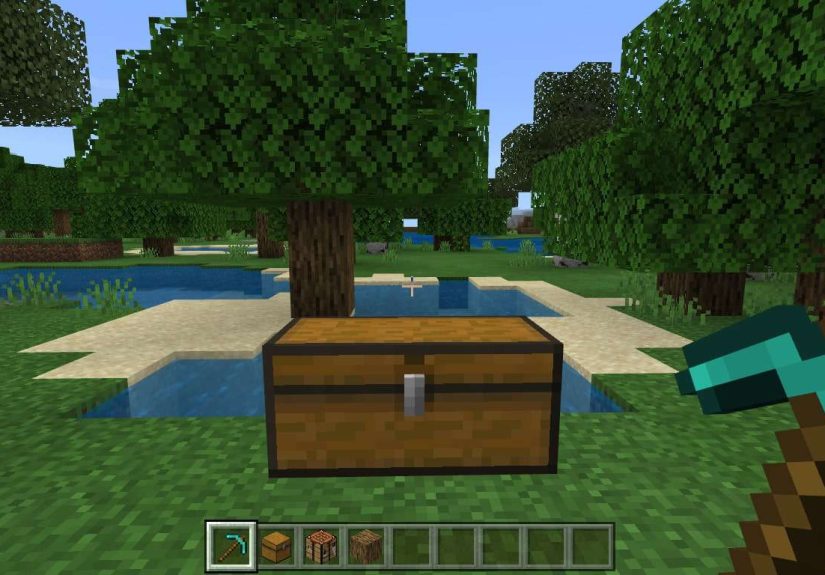
Learning how to make a chest in Minecraft is one of the first truly useful survival skills in the game. It is simple, cheap, and wildly important. A chest gives you a place to store tools, food, ore, extra blocks, and all the random stuff you swear you will organize “later.” Whether you are brand-new to the game or returning after a long break, a chest is still one of the smartest early-game items you can craft.
In this guide, you will learn the exact Minecraft chest recipe, how to craft one step by step, where to place it, how double chests work, and which storage upgrades make sense once your base starts looking like a wooden warehouse with commitment issues. We will also cover common beginner mistakes, practical examples, and real gameplay experiences that make this little storage box one of the game’s biggest quality-of-life upgrades.
What You Need to Make a Chest in Minecraft
The recipe is delightfully simple. To craft a standard chest in Minecraft, you need:
- 8 wooden planks
- 1 crafting table
That is it. No iron, no redstone, no magical moon dust, and thankfully no fighting skeletons for rare drops. Just wood and a crafting table. This is one reason chests are such an essential early-game item: you can make one almost immediately after spawning into a world.
Wooden planks come from logs. Punch or chop down trees, turn the logs into planks, and you are halfway there. Since one log becomes four planks, you only need a few logs to gather enough materials for both a crafting table and a chest. In practical terms, collecting three logs is usually enough to get started comfortably.
Minecraft Chest Recipe
The chest recipe in Minecraft uses a 3×3 crafting grid, which means you cannot make it from your tiny personal 2×2 inventory crafting area. You must first place and open a crafting table.
Inside the crafting table, arrange the 8 wooden planks around the outside edge of the grid and leave the center square empty.
Think of it like building a little wooden square with a hole in the middle. Minecraft apparently respects negative space.
Chest Crafting Pattern
Once the pattern is correct, the chest will appear in the result box. Drag it into your inventory, and congratulations: you now own one of the most important blocks in the game.
How to Make a Chest in Minecraft Step by Step
Step 1: Gather wood
Start by punching or chopping down trees. Oak, birch, spruce, jungle, acacia, dark oak, mangrove, cherry, bamboo-derived wood options, and other wood types all help you get planks for basic crafting tasks. Early on, the exact tree type is less important than speed. Grab what is nearby and keep moving.
Step 2: Turn logs into wooden planks
Open your inventory and place logs into the crafting area. Each log turns into four planks. You need at least 12 planks total if you are starting from scratch: 4 for the crafting table and 8 for the chest.
Step 3: Craft a crafting table
Place 4 planks into the 2×2 grid in your inventory to create a crafting table. Put the crafting table on the ground and open it.
Step 4: Craft the chest
Put 8 planks around the outer edge of the 3×3 crafting grid, leaving the middle slot empty. Move the crafted chest into your inventory.
Step 5: Place the chest
Set the chest down wherever you want to store items. Open it and start unloading your inventory like a traveler emptying luggage after a very strange vacation.
What Does a Chest Do in Minecraft?
A regular chest stores items. That sounds obvious, but in Minecraft, storage is survival. Chests let you hang on to resources you cannot use yet, organize materials for later builds, and keep backup tools nearby when your current pickaxe decides it has done enough labor for one lifetime.
A standard chest holds 27 inventory slots. If you place a second standard chest directly beside it, the two combine into a double chest with 54 slots. That is a major space upgrade and often the point where a starter shack begins evolving into an actual base.
Chests are useful for storing:
- Wood, stone, and building blocks
- Food and farming supplies
- Coal, iron, gold, and other ores
- Tools, weapons, and armor
- Mob drops and crafting ingredients
- “I have no idea what this is for yet, but I refuse to throw it away” items
How to Make a Double Chest
If one chest feels helpful, two feel civilized. To make a double chest, craft or place two standard chests next to each other. They automatically merge into one larger storage container.
Double chests are ideal for categories that multiply quickly, such as cobblestone, dirt, wood, ores, and food. Once your base grows, most players start sorting chests by theme. You know you are getting serious when you label one “Stone Stuff” and suddenly feel like a warehouse manager.
One small tip: give yourself room around your chest wall. A cramped storage room sounds charming until you are opening the wrong box 17 times in a row while trying to find iron ingots.
Best Places to Put a Chest
The best chest location depends on your stage of the game.
In a starter house
Place your first chest near your crafting table and furnace. This creates a tiny survival workstation where you can cook food, store resources, and make tools without pacing around your base like a confused intern.
Near a mine entrance
If you are strip mining or cave diving, keeping a chest near the entrance is smart. You can dump extra cobblestone, stash ores, and keep the good stuff safe before heading deeper underground.
Inside a storage room
Once you have a permanent base, dedicate a room or wall to storage. Organized chests save time, reduce clutter, and make you feel like you absolutely have your life together, even if there is lava in the basement for some reason.
Common Beginner Mistakes When Making a Chest
Trying to craft it without a crafting table
This is the most common mistake. A chest needs a 3×3 grid, so it will not craft in your inventory crafting space.
Using the wrong pattern
The center slot must stay empty. If you fill all nine slots with planks, you do not get a chest. You get disappointment.
Not making a chest early enough
Many beginners hold off because they want to keep exploring. Then their inventory fills up, their tools break, and they end up tossing useful items on the ground. Crafting a chest early is one of the easiest ways to make survival mode less chaotic.
Poor placement
If your chest is buried in a corner, blocked by other blocks, or hidden in the world’s most awkward basement, using it becomes annoying fast. Convenience matters. Place it where you naturally return during your routine.
Chest vs. Barrel vs. Ender Chest
If you keep playing, you will discover that Minecraft has more than one way to store loot. Here is how the standard chest compares to other useful storage options.
Chest
The basic, reliable option. Easy to craft, expandable into double chests, and perfect for early and mid-game storage.
Barrel
A barrel works a lot like a chest, but it has one practical advantage: it can still be opened even if there is a solid block above it. That makes it great for compact builds and tight storage walls.
Ender Chest
An Ender Chest is the premium storage upgrade. Anything you place inside it can be accessed from any other Ender Chest in any dimension. It is excellent for valuable loot, emergency supplies, and long-distance adventuring. Think of it as cloud storage, except the cloud is purple and slightly ominous.
Useful Items You Can Make With or Around a Chest
Trapped Chest
A trapped chest looks similar to a normal chest but can interact with redstone. It is useful for traps, alarms, and multiplayer mischief. If your friend says, “Open that chest, nothing weird will happen,” absolutely assume something weird will happen.
Hopper
A hopper uses a chest in its recipe and allows items to move automatically between containers. This is where your humble starter storage system begins its transformation into a proper automated sorting empire.
Chest Boat
Exploring by water becomes much better when you can bring storage with you. A boat with chest lets you transport items while traveling rivers, oceans, and coastlines. It is especially helpful when gathering resources far from home.
Shulker Box
Much later in the game, a Shulker Box becomes the dream storage solution. It offers chest-like space but keeps its contents when broken and picked up. In other words, it is the suitcase every Minecraft player wishes they had earlier.
Practical Example: Your First Survival-Day Chest
Imagine you spawn into a new world. You collect three logs, turn them into planks, make a crafting table, craft a wooden pickaxe, and grab some stone. Before long, you also have seeds, apples, raw meat, flowers, dirt, sticks, and way too much cobblestone. Your inventory is now a junk drawer with legs.
If you make a chest at this point, your whole run becomes smoother. You can store food for later, save extra materials, keep backup tools ready, and stop making bad decisions just because your hotbar is crowded. That first chest often marks the moment a new world stops feeling temporary and starts feeling like home.
Why the Minecraft Chest Is Still Essential
Minecraft has changed a lot over the years. New biomes, mobs, blocks, mechanics, and storage-adjacent features have all expanded the game. But the regular chest still matters because it solves a simple, constant problem: players collect more stuff than they can carry.
That is why the chest remains one of the most important crafting recipes in Minecraft. It is cheap, practical, beginner-friendly, and useful from your first day all the way to massive late-game bases. Whether you are building a cozy cabin, an underground bunker, a redstone factory, or a castle with suspiciously poor budgeting, you will need storage.
And that storage usually starts with one little wooden chest.
Player Experiences: What “Making a Chest in Minecraft” Actually Feels Like
For many players, crafting a chest in Minecraft is not just another recipe. It is the first moment the game starts to feel manageable. Before that, survival mode is a scramble. You punch trees, make tools, grab food, dig a little too deep, and somehow end up carrying feathers, seeds, rotten flesh, sugar cane, and six types of blocks you did not mean to collect. The chest changes that rhythm immediately. You put it down, open it, and suddenly the chaos has a home.
A lot of early Minecraft memories revolve around that first chest. It usually sits in a tiny dirt hut, a half-finished wooden house, or a cave with exactly one torch and too much optimism. It is not fancy. It is often surrounded by mismatched blocks and poor interior design choices. But it feels important. That chest means your world has a center now. You can leave things behind, go exploring, and come back to a place that feels like yours.
There is also something surprisingly satisfying about the way a chest changes decision-making. Players become bolder once they have storage. You are more willing to mine longer, gather more resources, or travel farther because you know your best items do not all have to live in your backpack at once. Even a single chest makes the game feel less like survival panic and more like actual progress.
Then comes the next stage: organization. Or at least the dream of organization. Most players begin with good intentions. One chest for blocks, one for food, one for tools, one for ores. Clean, logical, elegant. Ten in-game days later, one chest contains bread, string, iron boots, kelp, redstone dust, and a single egg for reasons nobody can explain. This is also a classic Minecraft experience. The chest is useful even when your sorting system is held together by hope.
In multiplayer worlds, chests tell stories too. Shared storage rooms become social spaces. One player labels everything perfectly, another throws random items into any open slot, and a third somehow keeps hiding diamonds in the vegetable chest like a raccoon with trust issues. The humble chest becomes part of the group dynamic.
Even late in the game, after players unlock better storage systems, the regular chest keeps its charm. It reminds people of first nights, early mistakes, and the moment the game stopped feeling overwhelming. That is why learning how to make a chest in Minecraft matters so much. It is not just about storage space. It is about turning scattered survival into a real base, a real routine, and a real adventure.
Conclusion
If you were wondering how to make a chest in Minecraft, the answer is wonderfully simple: use 8 wooden planks in a crafting table and leave the center slot empty. That small recipe gives you one of the most useful blocks in the entire game.
A chest helps you store resources, protect your progress, organize your base, and make survival much easier from the very beginning. It can grow into a double chest, connect to hoppers, evolve into more advanced storage systems, and serve as the foundation for a smarter, less cluttered world. In short, if Minecraft is about creativity and survival, the chest is where both of those things stop tripping over loose cobblestone.
Make one early. Make several later. Then pretend you will keep them organized forever.