Table of Contents >> Show >> Hide
- Serial Killers vs. Everyday Crime: What’s the Real Risk?
- Mindset First: Be Alert, Not Afraid
- Everyday Habits That Make You a Harder Target
- Home Security: Don’t Make It Easy to Get In
- Online and Social Media: Stop Oversharing with Strangers
- Red Flags: When a Person, Not a Place, Is the Problem
- What to Do If You Think You’re Being Targeted or Stalked
- If an Attack Happens: Principles to Remember
- Planning Ahead: Classes, Tools, and Support
- Real-World Experiences: How People Used These Strategies
- Final Thoughts: You Deserve to Feel Safe and Live Fully
Let’s start with the good news: the odds that you’ll ever cross paths with an actual serial killer are extremely low. The bad news? The skills that would help you avoid one are the same skills that help you avoid far more common dangers like assault, stalking, or robbery. So this isn’t really a “panic about serial killers” guide – it’s a practical, slightly sassy crash course in not making life easy for violent criminals of any kind.
In other words, you’re not preparing for a true crime documentary. You’re learning everyday personal safety, situational awareness, and self-defense basics so you can live your life with confidence, not fear.
Serial Killers vs. Everyday Crime: What’s the Real Risk?
Movies make it seem like serial killers are lurking around every corner. In reality, serial homicide is rare and usually makes headlines precisely because it’s unusual. Most violent crime involves people who already know each other – family members, partners, acquaintances – or crimes of opportunity like robbery or assault in isolated areas.
That doesn’t mean you should ignore your safety. It means you should focus less on sensational scenarios and more on the behaviors that any dangerous person might use: isolating you, earning your trust too quickly, ignoring your boundaries, or pushing you into situations where you feel trapped. If someone happens to be a serial offender, the red flags often show up long before a worst-case situation.
Mindset First: Be Alert, Not Afraid
The most important “weapon” you have isn’t pepper spray or a self-defense move – it’s your brain. Safety experts call it situational awareness: paying enough attention to your surroundings that someone with bad intentions has a hard time surprising you.
- Trade tunnel vision for “soft focus.” Instead of staring at your phone, lift your head, casually scan your environment, and notice people, exits, and anything that feels off.
- Listen to your instincts. If something or someone feels wrong and you can’t quite explain why, treat that feeling as information, not an overreaction.
- Adopt the “I matter” mindset. You are not being rude by protecting your boundaries, leaving early, or saying “no.” You’re being alive and still available for brunch tomorrow.
Serial offenders and opportunistic criminals tend to look for distracted, compliant, or isolated targets. Simply looking alert, moving with purpose, and making brief eye contact can make you a less appealing choice.
Everyday Habits That Make You a Harder Target
You don’t need to turn your life into a spy movie. Small, boring habits make you much safer over time, whether you’re worried about serial killers or just garden-variety creeps.
1. Smart street smarts
- Stay in well-lit, busy areas whenever possible, especially at night.
- Avoid walking with noise-canceling headphones or staring at your phone the whole time.
- Walk with confidence: shoulders back, eyes up, steady pace. You’re sending the message, “I see you, and I have options.”
- Keep one hand relatively free. If you’re carrying a bag, use a crossbody style and avoid juggling five shopping bags plus a latte plus your phone.
2. Car and parking lot safety
- Park in well-lit, populated areas near building entrances when you can.
- Have your keys in your hand before you get to your car so you’re not digging around while distracted.
- Look into the back seat and around your car before getting in.
- Once inside, lock the doors immediately and start the car before answering texts or adjusting playlists.
These are standard crime-prevention behaviors, but if your brain needs the drama, you can think of them as “serial killer repellent.”
Home Security: Don’t Make It Easy to Get In
Most violent offenders prefer easy, low-risk targets. Your goal is to make your home look like a place where bad things would be noticed quickly.
- Lock doors and windows consistently, even during the day and even if you “just ran out for a minute.”
- Use deadbolts and window locks where possible.
- Light up entry points with porch or motion-sensor lights so there are fewer hidden corners.
- Consider simple security upgrades like doorbell cameras, window alarms, or a basic monitored security system if it fits your budget.
- Be cautious with who you let inside, including repair people or casual acquaintances. If you don’t feel comfortable, reschedule or ask someone to be there with you.
None of these steps guarantee safety, but they raise the effort and risk level for anyone trying to target you, which is exactly what crime prevention experts recommend.
Online and Social Media: Stop Oversharing with Strangers
In some real-world cases, offenders have used social media to learn routines, find addresses, or build trust. That doesn’t mean you have to disappear from the internet – just be intentional.
- Limit real-time location sharing. Post that vacation photo after you’re back, not while you’re still away.
- Lock down privacy settings so only people you actually know can see personal details.
- Avoid posting exact addresses, routine schedules, or solo living status (“Just me and my cat in this big empty house tonight!” is cute but risky.)
- On dating apps, keep early conversations on the app, and don’t overshare personal information like where you work, your daily schedule, or your exact building.
If someone online is pushing hard for personal details, trying to rush intimacy, or getting angry when you set boundaries, treat that as a major red flag.
Red Flags: When a Person, Not a Place, Is the Problem
We’re conditioned to worry about dark alleys and strangers in vans, but many dangerous people present as charming, helpful, or “just a bit intense” at first. Pay attention when behavior doesn’t match the situation.
Behavioral warning signs to take seriously
- Rushing intimacy: “We’re soulmates,” “You’re the only one who understands me” – after a week.
- Ignoring “no” or pushing boundaries: not taking hints, refusing to back off when you say you’re not comfortable.
- Isolating tactics: discouraging you from seeing friends, insisting on being the only one you rely on.
- Overly personal questions early on that seem more about gathering data than getting to know you (“Exactly what time do you leave for work?” “Do you live alone?”).
- Stalking-type behavior: showing up where you are without a clear reason, repeated unwanted contact, or monitoring your social media obsessively.
You don’t have to wait for proof that someone is “dangerous enough.” If your body is screaming, “This isn’t right,” you’re allowed to disengage, block, leave, or seek help.
What to Do If You Think You’re Being Targeted or Stalked
If you’re worried that someone could be following or targeting you, act early. You are not being dramatic; you are being proactive.
- Tell people you trust. Friends, family, coworkers, or building security can help document and witness what’s happening.
- Document everything: save texts, DMs, emails, screenshots, and note dates, times, and locations of sightings or encounters.
- Vary your routine when you can: change routes, alter times, and avoid predictable patterns.
- Strengthen physical security at home and work: locks, lights, cameras, and alert neighbors or staff.
- Contact law enforcement if you feel threatened or unsafe, or if behavior escalates. Many police departments have officers who specialize in stalking and threat assessments.
If the person has expressed violent intentions about you or others, or hinted at fantasies of killing or harming people, report this to authorities right away. You’re not “ruining someone’s life”; you’re potentially saving multiple lives, including your own.
If an Attack Happens: Principles to Remember
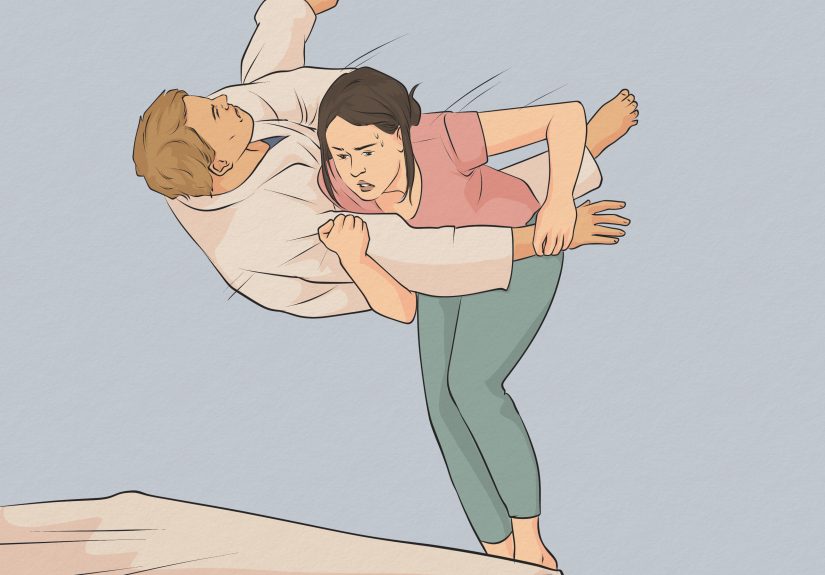
No set of tips can cover every situation, and there is no “perfect” response. Your goal is not to win a movie-style fight – it’s to survive and escape.
- Escape first, if possible. If you can run to safety, do it. There is no shame in sprinting like your life depends on it – because it might.
- Use your voice. Yell loudly and specifically: “Fire!” “Help!” “Call 911!” Drawing attention increases the attacker’s risk and may bring help.
- Target vulnerable areas if you must fight: eyes, nose, throat, groin. You’re not trying to “teach them a lesson,” just to create an opening to get away.
- Use what you have as improvised tools: keys, pens, bags, hot coffee, a flashlight. Anything that creates pain or surprise can help you break free.
- Keep moving. Once you’re free, don’t stay to argue or assess damage. Run to a safe, populated place and call for help.
There is no “wrong” reaction in survival mode. Freezing, crying, cooperating, or fighting are all human responses. If something has already happened to you, the blame is 100% on the person who chose to harm you – never on you for how you responded.
Planning Ahead: Classes, Tools, and Support
Thinking about serial killers can feel overwhelming, but channeling that energy into preparation is empowering.
- Consider a reputable self-defense class. Look for programs that focus on awareness, boundary setting, and simple physical skills you can remember under stress.
- Carry legal safety tools if allowed in your area – like a whistle, personal alarm, or pepper spray – and practice how you’d access and use them.
- Set up “safety buddies.” Share locations with trusted friends, and agree to check in when you’re going on dates, to unfamiliar areas, or traveling alone.
- Know your local resources: police non-emergency line, campus or building security numbers, and nearby safe places that are usually open late (24/7 pharmacies, hospitals, some grocery stores).
Preparation doesn’t mean you’re living in fear; it means you’re stacking the odds in your favor and refusing to be a passive character in someone else’s story.
Real-World Experiences: How People Used These Strategies
To bring all these tips down to earth, let’s walk through a few composite scenarios inspired by real experiences and common self-defense stories.
The parking lot “helpful stranger”
Alex leaves work after dark and heads to the far corner of the parking lot, where her car is parked. Halfway there, she notices a man leaning on a nearby vehicle who suddenly seems very interested in her route. Her instincts prick up. Instead of pushing through because she “doesn’t want to be rude,” she turns around, heads back toward the building entrance, and enters through the doors again.
Inside, she asks a coworker to walk her out and requests a security escort next time. Was she overreacting? Maybe. Or maybe she just interrupted someone’s plan before it escalated. Either way, she got home safely, and that’s the only outcome that matters.
The “too charming” online date
Jordan meets someone on a dating app who seems perfect: intense eye contact over video, lots of flattery, and a big rush to meet in private. Within a few days, this person is asking if Jordan lives alone, what time they usually get home, and whether there’s a back entrance to the building.
Instead of feeling flattered, Jordan notices these questions as data-gathering, not romance. They choose a first date in a busy café, share the details and a screenshot with friends, and arrange a check-in text 30 minutes into the date. When the person arrives and keeps pressing to “go somewhere more private,” Jordan decides to end the date early and leaves.
That decision might have prevented something serious, or maybe it just cut short an uncomfortable evening. Either way, Jordan used boundaries and situational awareness to stay safe.
The neighbor who “just keeps popping up”
Riley moves into a new building and meets a neighbor who seems overly helpful. At first it’s friendly small talk in the hallway. Then the neighbor starts appearing everywhere – the laundry room, the mailbox, even in front of the building when Riley usually leaves for work.
The neighbor begins asking increasingly personal questions: “Are you dating anyone?” “Do you live alone?” “What floor are you on?” When Riley deflects, the neighbor brushes it off with, “Relax, I’m just being nice.”
Rather than shrugging it off, Riley tells a friend, documents the encounters, and loops in the building manager. The manager confirms other tenants have felt uncomfortable too and reminds everyone to keep doors locked and report any further issues. If the behavior escalates, Riley is ready to contact law enforcement with a written record instead of trying to reconstruct events from memory.
The “I knew something was wrong” moment
Sam is walking home with headphones on when a strange feeling hits – that sense that someone is behind them. Instead of dismissing it, Sam pulls out one earbud, casually glances into a store window reflection, and notices a person matching their pace a little too closely.
Sam crosses the street, and the person crosses too. That’s enough. Sam walks directly into a brightly lit convenience store, tells the clerk, “I think someone’s following me, can I hang here for a minute?” and calls a friend to come pick them up. When they leave, they notice the follower is gone.
Nothing “dramatic” happened, but Sam practiced exactly what safety experts recommend: listened to instinct, moved toward people and light, and refused to prioritize politeness over safety.
These kinds of moments don’t make headlines, which is exactly the point. You want your life to be full of boring, safe stories where you took a small precaution and nothing terrible happened. If a truly high-risk person – even a serial offender – ever crossed your path, these same instincts and behaviors would still be your best protection.
Final Thoughts: You Deserve to Feel Safe and Live Fully
Protecting yourself from a serial killer isn’t really about memorizing obscure “tricks” or living in constant fear. It’s about building everyday habits that make you harder to isolate, harder to surprise, and easier to help.
Stay aware of your surroundings, set firm boundaries, upgrade basic home and online security, and don’t ignore that little voice in your head that says, “Something isn’t right here.” If you’re ever concerned that someone might be violent – toward you or others – involve people you trust and contact authorities. You’re not being paranoid. You’re choosing your life and safety over someone else’s comfort.
And remember: the goal isn’t to become a character in a true crime podcast. The goal is to keep living your very normal, very non-Netflix life – just a little more prepared, a little more confident, and a lot more committed to coming home safe.