Table of Contents >> Show >> Hide
- How Redd’s Art Works in Animal Crossing: New Horizons
- The Golden Rule: Use the “Closer Look” Option
- Common Fake Art Clues to Watch For
- Quick Cheat Sheet: Fake Art Examples in ACNH
- Artworks That Are Always Genuine
- What Happens If You Buy Fake Art?
- Best Strategy for Buying Real Art From Redd
- Why Fake Art Is So Fun in Animal Crossing
- Common Mistakes Players Make When Buying Art
- Extra Player Experiences: Lessons From Redd’s Boat
- Conclusion
Buying art in Animal Crossing: New Horizons should feel classy. You step onto Jolly Redd’s Treasure Trawler, inspect a famous painting, nod like a tiny island curator, and imagine Blathers applauding your excellent cultural taste. Then Redd smiles, calls you “cousin,” and suddenly the Mona Lisa has eyebrows that look like they were drawn on during a power outage.
Welcome to the suspiciously charming world of fake art in Animal Crossing: New Horizons. Redd sells paintings and statues for your museum, but many of them are clever forgeries. Some fakes are obvious, some are sneaky, and a few are so funny that you may want to buy them anyway for your haunted basement, spooky garden, or “definitely not cursed” art room.
This guide explains how to spot fake art in Animal Crossing: New Horizons, how Redd’s art system works, which details to check before buying, and how to avoid donating a masterpiece that Blathers rejects faster than a tarantula at a picnic.
How Redd’s Art Works in Animal Crossing: New Horizons
Jolly Redd is the shady fox who sells artwork from his ship, the Treasure Trawler, which docks at the secret beach on the north side of your island. Once your museum is ready for art donations, Redd begins appearing as a special visitor. Inside his boat, he offers a small selection of paintings, statues, and furniture.
The catch is simple: not every artwork is genuine. Some pieces are real and can be donated to Blathers for the museum’s art gallery. Others are fake and cannot be donated. Fake art also cannot be sold through Nook’s Cranny, which means your options are decoration, gifting, storage, or dramatic disposal in a trash can. In other words, Redd does not offer refunds, buyer protection, or emotional support.
Can Redd Sell Only Fake Art?
Yes. Redd can sometimes show up with no genuine pieces at all. He may also bring more than one real artwork in a single visit. Since you can normally buy only one art piece per character per day, checking carefully before purchasing matters. A rushed decision can cost you Bells, time, and the quiet dignity of realizing you bought a statue wearing a watch.
The Golden Rule: Use the “Closer Look” Option
The best way to identify fake art in ACNH is to inspect it before buying. When you speak to Redd and choose an artwork, select the option to take a closer look. This lets you zoom in and view the piece more clearly. Do not rely on Redd’s dialogue. His charming nonsense is not a clue; it is fox-flavored sales fog.
Instead, compare the artwork to its real-world version or memorize the most common in-game differences. Nintendo made most forgeries visually different, meaning you can catch them by looking at specific details: missing accessories, wrong colors, changed expressions, extra objects, strange proportions, or altered body positions.
Common Fake Art Clues to Watch For
1. Extra Items That Should Not Be There
Many fake artworks include an added object. For example, the Academic Painting, based on Leonardo da Vinci’s Vitruvian Man, is fake if it has a coffee stain in the upper-right corner. Apparently even Renaissance genius cannot survive careless island café culture.
The Gallant Statue, based on Michelangelo’s David, is fake when it holds a book. The Warrior Statue is fake if it holds a shovel. The Robust Statue is fake if it wears a wristwatch. If the statue looks like it stopped by Able Sisters for accessories, be suspicious.
2. Missing Details
Some fakes remove an important feature. The Jolly Painting, based on Arcimboldo’s Summer, is real only when the figure has a small sprout or leaf on the chest. If that leaf is missing, it is fake.
The Amazing Painting, based on Rembrandt’s The Night Watch, is fake when the central figure is missing his hat. The Scenic Painting is fake when one of the hunters is missing. In ACNH, if a historical person has vanished, do not assume they are running late. Assume Redd is up to something.
3. Wrong Facial Features
Faces are one of the easiest ways to spot forged paintings. The Famous Painting, based on the Mona Lisa, is fake when she has exaggerated eyebrows. The Scary Painting is fake when the eyebrows are different from the real version, giving the subject a less intense expression.
The Rock-Head Statue is fake if it smiles. A stone head smiling at you from Redd’s boat is not a bargain; it is a warning sign with cheekbones.
4. Wrong Colors
Color changes are another big clue. The Serene Painting, based on Leonardo da Vinci’s Lady with an Ermine, is fake when the animal is dark instead of white. The Detailed Painting is fake when the flowers appear purple rather than the correct blue tone. The Informative Statue, based on the Rosetta Stone, is fake when it is blue.
For the Wild Painting Left Half and Wild Painting Right Half, color is especially important. These two pieces are based on folding screens featuring wind and thunder gods. The fake versions swap or alter the colors, so check them carefully before buying. Redd loves this trick because it looks almost right at first glance.
5. Wrong Size or Position
The Graceful Painting is fake when the woman appears too large or faces the wrong direction. The Valiant Statue, based on the Winged Victory of Samothrace, is fake when the leg position is reversed. The Motherly Statue is fake when the wolf has its tongue sticking out.
These differences can be subtle, so do not rush. Rotate your camera, zoom in, and pretend you are the world’s most adorable museum detective.
Quick Cheat Sheet: Fake Art Examples in ACNH
| Artwork | How to Spot the Fake |
|---|---|
| Academic Painting | Fake has a coffee stain in the upper-right corner. |
| Amazing Painting | Fake is missing the man’s hat. |
| Famous Painting | Fake Mona Lisa has exaggerated eyebrows. |
| Jolly Painting | Fake is missing the small leaf or sprout on the chest. |
| Scenic Painting | Fake has only one hunter instead of two. |
| Serene Painting | Fake has a dark animal instead of a white one. |
| Wistful Painting | Fake has a star-shaped earring instead of a pearl earring. |
| Beautiful Statue | Fake wears a necklace. |
| Gallant Statue | Fake holds a book. |
| Informative Statue | Fake is blue. |
| Robust Statue | Fake wears a wristwatch. |
| Warrior Statue | Fake holds a shovel. |
Artworks That Are Always Genuine
Not every piece has a fake version. Some artworks in Animal Crossing: New Horizons are always real, which means you can buy them without squinting at the screen like Blathers grading a museum thesis.
Always-genuine paintings include the Calm Painting, Common Painting, Dynamic Painting, Flowery Painting, Glowing Painting, Moody Painting, Mysterious Painting, Nice Painting, Perfect Painting, Proper Painting, Sinking Painting, Twinkling Painting, Warm Painting, and Worthy Painting.
Always-genuine statues include the Familiar Statue and the Great Statue. If you see one of these available and you still need it for your museum, it is usually a safe purchase. The only real danger is getting too excited and accidentally buying a fake Gallant Statue because David brought a book to art class.
What Happens If You Buy Fake Art?
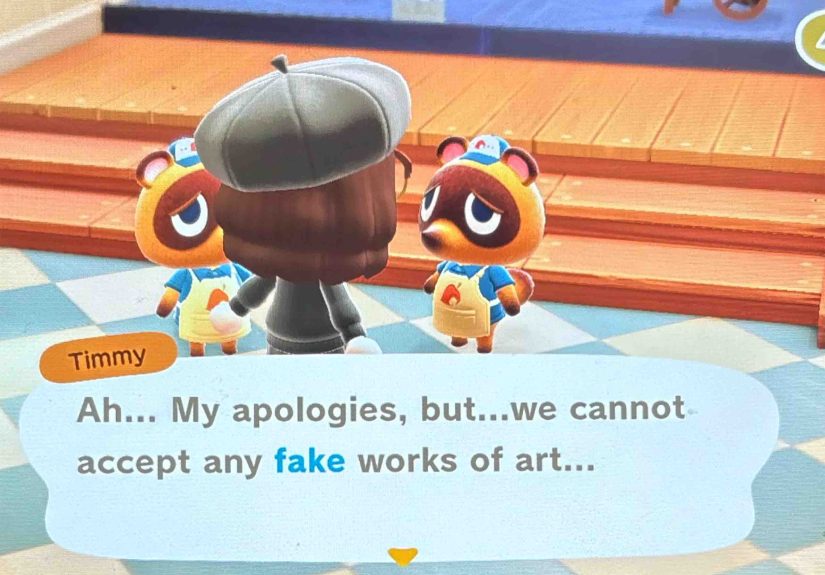
If you buy fake art, Redd mails it to your house the next day. You can try bringing it to Blathers, but he will reject it. He may be afraid of bugs, but he has absolutely no fear when it comes to crushing your counterfeit dreams.
Fake art cannot be donated to the museum. It also cannot be sold to Timmy and Tommy at Nook’s Cranny. However, that does not mean it is useless. Many players use fake statues and paintings as island decorations. A fake Ancient Statue can look great in a mysterious forest. A fake Beautiful Statue can elevate a garden. A fake Wistful Painting can add eerie personality to a haunted room.
Should You Keep Fake Art?
Absolutely, if it fits your island style. Fake art works well for spooky builds, pirate coves, abandoned museums, secret libraries, outdoor ruins, and dramatic villain lairs. Some forged pieces even have unusual “haunted” behavior, changing appearance at certain times. For players who enjoy decorating, a fake may be less of a mistake and more of a design opportunity wearing a suspicious mustache.
Best Strategy for Buying Real Art From Redd
Check Every Artwork Before Choosing
Do not buy the first item you inspect. Walk around the Treasure Trawler and examine all four art slots. Some visits may include multiple genuine pieces, and some may include none. Your goal is to choose the best real artwork you still need for your museum.
Prioritize Statues When Needed
Statues can feel rarer than paintings because of how Redd’s boat displays art. Large statues are especially worth checking carefully. If you find a genuine statue you do not already have, consider prioritizing it over a common painting you can find again later.
Keep a Museum Checklist
Use a checklist, notes app, or island journal to track what you have donated. This saves time and prevents duplicate purchases. Nothing stings quite like buying a real painting, opening your museum, and realizing the same masterpiece is already hanging there like it pays rent.
Invite Friends or Use Extra Characters
Each player character can buy one artwork per day from Redd. If you have multiple residents on the same island, each can purchase one piece. Friends visiting your island can also buy art if it has not already been purchased. This can help you collect faster, especially when Redd brings more than one genuine artwork.
Why Fake Art Is So Fun in Animal Crossing
The fake art system works because it turns museum collecting into a tiny puzzle. Instead of simply buying whatever Redd sells, you have to slow down and observe. Is the earring right? Is the animal the correct color? Is that statue holding a shovel? Why does this ancient artifact look like it might blink at midnight?
It also teaches players to notice real-world art. Many ACNH paintings and statues are based on famous works by artists such as Leonardo da Vinci, Rembrandt, Vincent van Gogh, Vermeer, Hokusai, and Michelangelo. The game sneaks art history into a cozy island sim, then wraps it in fox-based capitalism. Beautiful? Yes. Slightly alarming? Also yes.
Common Mistakes Players Make When Buying Art
Rushing the Purchase
Redd’s inventory feels exciting because he does not appear every day. That pressure can make players buy too quickly. Always inspect first. A few extra seconds can save you from owning a counterfeit that looks like it was edited by a sleepy raccoon.
Assuming Every Visit Has a Real Piece
Many players expect at least one genuine artwork per visit, but that is not guaranteed. If every piece looks fake, it is okay to leave without buying. Sometimes the best purchase is no purchase, which is also excellent life advice when someone sells suspicious statues from a boat.
Forgetting Which Pieces Are Always Real
Knowing the always-genuine artworks makes Redd visits easier. If you see the Twinkling Painting, Flowery Painting, or Great Statue, you do not need to hunt for tiny fake clues. Buy confidently, donate proudly, and let Blathers say nice things in his fancy museum voice.
Extra Player Experiences: Lessons From Redd’s Boat
One of the funniest experiences in Animal Crossing: New Horizons is walking into Redd’s Treasure Trawler with confidence and walking out emotionally humbled by a painting. At first, many players think fake art will be obvious. Surely the fake Mona Lisa will be purple, wearing sunglasses, or holding a turnip smoothie. But ACNH usually plays a subtler game. The difference may be a tiny earring, a missing hat, a changed eyebrow, or one extra accessory that you completely miss until Blathers politely destroys your hopes the next day.
A good habit is to treat every Redd visit like a mini inspection routine. First, enter the boat and look at all four art pieces without buying anything. Second, identify any always-genuine pieces. Third, inspect the suspicious works closely. Fourth, compare the detail that matters most: face, hands, accessories, color, or background. This routine turns the process from guessing into a calm checklist. It also makes you feel like a museum professional, even if your island outfit is a frog costume and rain boots.
Another useful experience is learning that fake art is not always a disaster. Early in the game, a fake purchase can feel like a waste because Bells are precious and the museum walls are painfully empty. Later, fake pieces can become some of the best decorations on your island. A fake Ancient Statue near bamboo trees creates instant mystery. A fake Beautiful Statue beside a fountain looks elegant. A fake Scary Painting in a dim room gives your house the energy of a place villagers should probably not visit after 9 p.m.
Players who enjoy themed builds often hunt for fakes on purpose. A pirate beach can use fake statues as stolen treasure. A witchy forest can display haunted paintings. A ruined temple area can mix fake sculptures with weeds, stone paths, glowing moss, and gyroids. Even though Blathers rejects forged pieces, your island design might welcome them with open arms and possibly a fog machine.
The most important lesson is patience. Completing the art gallery takes time. Redd does not always appear when you want him to, and when he does, he may bring duplicates or fakes. That slow pace is part of ACNH’s charm. The museum feels more satisfying because every new donation has a story behind it: the day you finally found the real Valiant Statue, the time you almost bought the fake Wistful Painting, or the moment you realized the Robust Statue was wearing a watch and laughed out loud.
So inspect carefully, keep a checklist, and remember that Redd is not your enemy. He is more like a tiny fox-shaped test of observation skills. Sometimes he helps you fill your museum. Sometimes he sells you cursed décor. Either way, he makes island life more interesting.
Conclusion
Learning how to spot fake art in Animal Crossing: New Horizons is one of the most useful skills for completing your museum. Redd’s art system rewards patience, observation, and a healthy distrust of suspiciously friendly boat merchants. Before buying, always use the closer look option, check for missing details, wrong colors, extra accessories, strange expressions, and altered poses.
Some artworks are always genuine, while others require careful inspection. Fake art cannot be donated, but it can still be valuable as decoration, especially for spooky, historical, or dramatic island themes. Whether you are building a perfect museum or designing a haunted sculpture garden, Redd’s questionable inventory adds humor, challenge, and a surprising amount of art appreciation to island life.
In short: zoom in, look twice, trust Blathers, and never buy a statue with a wristwatch unless you truly want one.