Table of Contents >> Show >> Hide
- What Is PVCSub?
- Why the Plumbing Aisle Makes Sense
- How PVCSub Controls Buoyancy
- Propulsion and Steering: Three Pumps, One Tiny Captain
- The Wired Remote: Old-School, Reliable, and Hard to Lose
- What PVCSub Teaches Better Than a Textbook
- Safety: The Part That Keeps the Fun From Becoming a News Story
- How PVCSub Compares With Educational ROVs
- Design Strengths of PVCSub
- Design Limits and Realistic Expectations
- Who Should Be Interested in PVCSub?
- Why This Little Submarine Matters
- Workshop Experiences: Lessons From a Plumbing-Aisle Submarine Mindset
- Conclusion
Some inventions begin in spotless laboratories with grant funding, lab coats, and whiteboards full of equations. Others begin with a person staring at PVC pipe in the plumbing aisle and thinking, “You know what? That could be a submarine.” PVCSub belongs proudly to the second category. It is a DIY PVC submarine concept that turns common drainage pipe, pumps, wiring, and patient tinkering into a working model submersible. It is not a luxury underwater drone, not a secret Navy prototype, and absolutely not something anyone should climb into. It is better than that: it is a wonderfully approachable demonstration of buoyancy, ballast, propulsion, waterproofing, and the kind of stubborn curiosity that keeps hardware hackers happily covered in glue, silicone, and regret.
The appeal of PVCSub is simple. Underwater robotics usually sounds expensive, mysterious, and reserved for research ships with cranes. This project drags the idea back to earthor technically, slightly below the waterline. By using PVC pipe as a body structure and pump-driven systems for ballast and movement, PVCSub shows how a small model submarine can teach serious engineering ideas without requiring a machine shop or a billionaire’s yacht budget. It sits in the same maker-friendly universe as SeaPerch-style educational ROVs, low-cost underwater drones, and backyard robotics experiments, but with one very important twist: instead of only driving around like a tethered underwater cart, it tries to behave like a submarine by changing its buoyancy.
What Is PVCSub?
PVCSub is a fully functional model submarine built mostly from common PVC drainage pipes and off-the-shelf components. The project was created by electronics engineer and educator Rupin Chheda as a simple, rugged platform for exploring underwater mechanics. In air, the model weighs roughly 2.4 kilograms, making it small enough to be handled by one person but large enough to demonstrate real submarine behavior. That middle ground is part of its charm. It is not a toy in the “wind it up and forget it” sense, but it is also not so complex that beginners have to mortgage their garage to understand it.
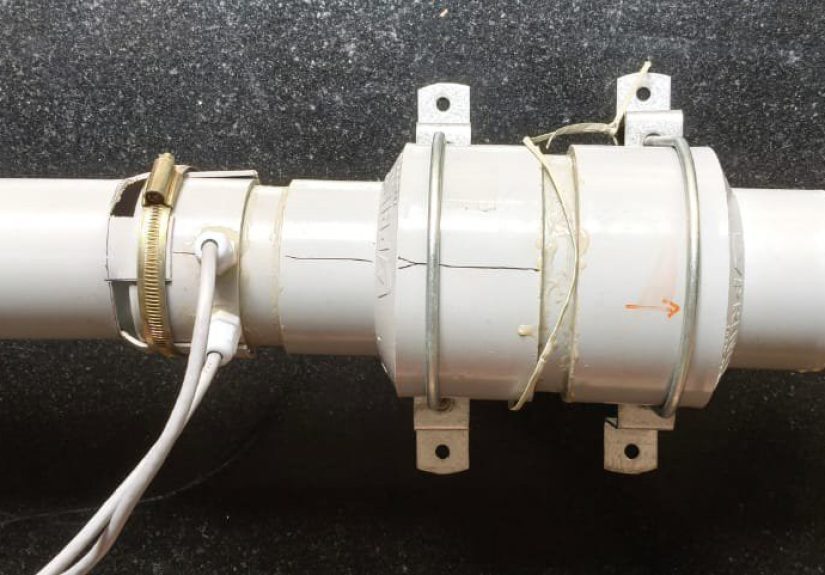
The design uses PVC pipe sections of different diameters to form a body, internal chamber, and ballast area. Its core systems include a pump-based ballast setup, three rear water pumps for propulsion and steering, and a wired controller connected by CAT6 cable. In plain English, it has a belly that can take on or push out water, a few pump-powered jets to move around, and a cable leash so the pilot can stay dry and boss it around from the surface. Like many good DIY robotics projects, PVCSub is not trying to hide its simplicity. It celebrates it.
Why the Plumbing Aisle Makes Sense
PVC pipe is one of the great building materials of the maker world. It is cheap, easy to cut, widely available, lightweight, and offered in enough fittings to make any hardware-store aisle feel like a giant construction set for adults. For educational underwater robotics, PVC has a long history because it lets students build frames, buoyant structures, and experimental shapes without specialized fabrication. A PVC pipe submarine is therefore not as strange as it first sounds. The material already has the shape a submarine wants: long, cylindrical, hollow, and ready to be capped, joined, drilled, and modified.
However, “PVC is useful” is not the same as “PVC is magic.” PVC pipe is designed for specific plumbing applications, and its pressure behavior depends on size, temperature, fittings, joints, and whether it is carrying water or gas. That distinction matters. A model submarine in a shallow tank is one thing; a human-occupied craft or deep-diving pressure vessel is another universe entirely. PVCSub is best understood as a small educational submersible or experimental model, not a blueprint for life support, deep-sea exploration, or any project involving passengers. The ocean is not impressed by enthusiasm. Neither is pressure.
How PVCSub Controls Buoyancy
The clever heart of PVCSub is its ballast control system. Real submarines dive and surface by adjusting buoyancy: they become heavier than the water they displace to sink, lighter to rise, and carefully balanced to hover. PVCSub follows the same basic principle in miniature. Instead of relying on compressed gas tanks, it uses an electric system that moves air between the sealed inner body and the outer ballast area.
Diving: Letting Water Win
To dive, one pump removes air from the ballast chamber and stores that air inside the sealed body of the model. As air leaves the ballast area, water enters. The overall density of the submarine increases, and the model begins to sink. This is a great hands-on example of a concept that can otherwise feel like a textbook trapped in a bathtub. More water in the ballast means less floaty behavior. Less air means the submarine stops acting like a pool noodle with ambition.
Surfacing: Bringing Air Back
To surface, another pump returns the stored air into the ballast chamber. The air displaces water, lowering the model’s overall density, and the submarine rises. This arrangement keeps the system electric and reversible. It also avoids the complexity of small compressed gas bottles, which can introduce safety and control problems if used casually. For a classroom, workshop, or maker project, that is a major advantage. The system is easier to explain, easier to test in short sessions, and easier to troubleshoot when the sub decides to impersonate a rock.
Propulsion and Steering: Three Pumps, One Tiny Captain
PVCSub uses three 12-volt water pumps mounted at the rear. The center pump provides forward thrust, while the two side pumps assist with directional control. By activating one side more than the other, the submarine can turn through differential thrust. This is not unlike how some tracked vehicles steer, except the “tracks” are water jets and the battlefield is probably a pool, tank, or calm pond.
The choice of water pumps is practical. Hobby propellers and brushless thrusters can be efficient, but they also demand careful mounting, sealing, guards, and motor control. Small water pumps are relatively accessible and easy to switch on and off. They fit the design philosophy: build something understandable first, then improve it. A more advanced version could add proportional speed control, a camera, a depth sensor, an inertial measurement unit, or software-assisted stabilization. But PVCSub’s basic pump layout already teaches the key idea: underwater motion is a negotiation between thrust, drag, buoyancy, and patience.
The Wired Remote: Old-School, Reliable, and Hard to Lose
Modern underwater robots often use sophisticated electronics, onboard batteries, digital control systems, and video links. PVCSub takes a simpler path by using a CAT6 cable for external power and control. The wired remote uses standard switches to control the pumps and functions. That may sound low-tech, but for an underwater vehicle, a tether is not a weakness. It is a practical lifeline.
Wireless control performs poorly underwater, especially with common radio systems. Water absorbs and scatters signals, and the deeper or murkier the environment, the more frustrating wireless control becomes. Professional ROVs commonly use tethers because a physical cable can carry power, commands, and data while giving the operator a way to recover the vehicle. PVCSub’s cable-based approach makes sense for a beginner platform. It keeps the pilot at the surface, keeps the system observable, and reduces the chance that the submarine goes on a one-way expedition to the mysterious kingdom under the pool drain.
What PVCSub Teaches Better Than a Textbook
The best STEM projects are the ones that make theory slightly wet. PVCSub does that beautifully. It turns abstract vocabulary into visible behavior. Buoyancy becomes the moment the model stops bobbing and starts sinking. Ballast becomes the water creeping into a chamber. Trim becomes the annoying discovery that a submarine can be technically floating but still leaning like a tired shopping cart. Waterproofing becomes the humbling realization that water needs only one tiny opportunity to ruin your electronics and your afternoon.
Students and hobbyists can learn mechanical design, electrical wiring, fluid movement, density, displacement, and control logic from a platform like this. They can also learn the engineering design process: test, fail, diagnose, modify, test again, and develop a deep emotional relationship with paper towels. In this sense, PVCSub is less about “building a perfect submarine” and more about creating a compact laboratory for underwater problem-solving.
Safety: The Part That Keeps the Fun From Becoming a News Story
Any article about a DIY PVC submarine needs a giant, blinking safety sign. PVCSub is a model submersible, not a human-occupied submarine. Do not scale this concept into a craft for people. Do not use PVC as a pressure hull for human life. Do not test experimental underwater devices in unsafe public waterways, near swimmers, or around boats. Keep electrical systems low-voltage, fused, protected, and supervised. Use ground-fault protection when working near mains-powered equipment. Avoid compressed air systems made from ordinary PVC pipe, and never assume a plumbing part is safe simply because it looks strong on a store shelf.
For small model testing, shallow water is your friend. Clear tanks, small pools, and controlled environments help builders see leaks, trapped air, pump behavior, and balance problems. If something fails, the vehicle can be retrieved quickly. Saltwater, currents, deep water, and muddy ponds add complications that beginners do not need. Start boring. Boring is underrated. Boring means the submarine comes home.
How PVCSub Compares With Educational ROVs
Most beginner underwater robotics programs focus on ROVs, or remotely operated vehicles. These are usually tethered frames with motors, floats, and sometimes cameras. They do not always change buoyancy like a submarine; instead, they use thrusters to move up, down, forward, backward, and sideways. SeaPerch is a famous example in education, and it often uses PVC pipe and simple tools to teach students about marine engineering. MATE ROV competitions take the idea further, asking students to design vehicles for simulated real-world missions such as sampling, inspection, and object recovery.
PVCSub overlaps with these projects but adds a submarine-style ballast system. That makes it especially interesting for anyone who wants to understand why submarines dive instead of merely swimming downward. A basic ROV can brute-force depth with vertical thrust. A submarine must manage density. That difference changes the design conversation. Suddenly, leaks, trapped air, pump timing, chamber volume, and weight distribution matter in a more delicate way. It is the difference between pushing a shopping cart and balancing a tray full of soup while riding an elevator.
Design Strengths of PVCSub
PVCSub’s biggest strength is approachability. The project uses recognizable materials and visible mechanisms. Builders can look at the hull and understand what most parts are doing. The ballast system is not hidden behind proprietary modules. The control cable is not a mystery. The pumps have jobs that can be observed directly. That makes the platform excellent for explaining underwater robotics to students, parents, teachers, and curious neighbors who were promised that the garage would be cleaned “soon.”
Another strength is modularity. A PVC-based body invites experimentation. Builders can test different ballast volumes, pump locations, nose shapes, weight placement, and control layouts. A future version could carry a small camera, LED lights, a depth sensor, or a microcontroller. It could become a simple ROV-submarine hybrid: part science fair, part weekend project, part aquatic gremlin.
Design Limits and Realistic Expectations
The same simplicity that makes PVCSub attractive also sets limits. Pump-driven propulsion is not as efficient or precise as dedicated underwater thrusters. Manual switching gives direct control, but it does not provide the smooth response of proportional control or flight-controller stabilization. PVC structures can be bulky, and waterproofing homemade penetrations is always a challenge. Ballast systems can also behave unpredictably if air pockets form, pumps ingest water unexpectedly, or the model is not trimmed carefully.
That is not a criticism; it is the point. Early prototypes are supposed to expose problems. A model submarine that dives perfectly on the first try teaches less than one that lists to port, refuses to surface, and forces the builder to ask better questions. PVCSub is valuable because it is honest. It shows that underwater engineering is not just “make it waterproof.” It is “make it waterproof, balanced, controllable, serviceable, recoverable, and preferably not possessed by a tiny sea demon.”
Who Should Be Interested in PVCSub?
PVCSub is ideal for hobbyists, educators, robotics clubs, science teachers, engineering students, and makers who want a manageable entry point into submarine mechanics. It is especially useful for people who already understand basic wiring and want to connect electronics with physical movement in water. It can also inspire curriculum around density, pressure, displacement, pumps, circuits, mechanical packaging, and iterative design.
For beginners, the project is best treated as inspiration rather than a blind recipe. Study the concept, understand why each system exists, and build within safe limits. For experienced makers, PVCSub is a springboard. Add sensors. Improve the tether. Test different pump arrangements. Explore closed-loop depth control. Add leak detection. Build a better control box. Create a removable electronics tray. The plumbing aisle can start the story, but it does not have to write the final chapter.
Why This Little Submarine Matters
PVCSub matters because it makes underwater engineering feel reachable. That is not a small thing. Oceans, lakes, rivers, tanks, and reservoirs are difficult environments for robots. Water adds drag, pressure, corrosion, buoyancy challenges, visibility problems, and a delightful habit of entering places it was not invited. Projects like PVCSub help demystify those challenges. They show that exploration technology does not always begin with elite equipment. Sometimes it begins with a length of pipe, a pump, a switch, and the willingness to learn from the splash.
In a world obsessed with polished products, PVCSub is refreshingly experimental. It is rough enough to invite improvement and smart enough to demonstrate real principles. It reminds us that engineering education thrives when students can touch the system, break the system, fix the system, and then explain why the system is now leaking slightly less than before. That is progress. Wet progress, but progress.
Workshop Experiences: Lessons From a Plumbing-Aisle Submarine Mindset
The experience of working with a project like PVCSub is equal parts science, comedy, and negotiation with gravity. The first lesson is that water reveals every lazy assumption. On the bench, a joint may look sealed. In a tank, it becomes a tiny fountain of accountability. Builders quickly learn to test one subsystem at a time: first the hull, then the ballast chamber, then the pumps, then the control cable. Skipping that order may feel efficient until the entire vehicle becomes an expensive bubble machine.
The second lesson is that balance matters more than beginners expect. A model submarine can have working ballast and still behave badly if weight is uneven. Too much weight in the nose and it dives like a lawn dart. Too much in the rear and it squats like a tired duck. Even small cable drag can pull the vehicle off course. The tether is useful, but it is also part of the hydrodynamic system. It tugs, twists, floats, sinks, and generally behaves like a wet extension cord with opinions.
The third experience is the joy of the first controlled dive. It may only sink a few inches, and it may do so with the grace of a refrigerator entering a swimming pool, but that moment feels magical. The sub stops being a pile of plumbing parts and becomes a machine interacting with physics. You can see the ballast system changing its personality. One moment it is a bobber; the next it is a submarine. That transformation is why projects like PVCSub hook people so effectively.
The fourth lesson is maintenance. Underwater builds need to be opened, dried, inspected, and repaired. Screws loosen. Seals collect grit. Pumps clog. Wires corrode. A good builder starts thinking less like a one-time inventor and more like a vehicle technician. Can the electronics be removed easily? Can wet parts dry overnight? Can a failed pump be replaced without rebuilding the entire tail? These questions sound boring until they save a weekend.
The fifth and most important experience is humility. Water is a better reviewer than any comment section. It does not care how clever the design looked in CAD or how confident the builder sounded before testing. It simply applies pressure, exposes leaks, adds drag, and waits. That is why PVCSub is such a strong learning platform. It rewards curiosity but punishes shortcuts. It invites creativity while demanding respect. And when it finally moves through the water under control, even slowly, it delivers the small but unforgettable thrill of having built a machine that can visit a world humans cannot enter without help.
Conclusion
PVCSub: A Submarine From The Plumbing Aisle is more than a quirky maker project. It is a compact lesson in buoyancy, ballast, propulsion, wiring, waterproofing, and realistic engineering trade-offs. By using common PVC pipe and simple pump-based systems, it lowers the barrier to underwater experimentation while still touching the same principles that govern larger submersibles and ROVs. Its greatest value is not that it creates the perfect model submarine. Its value is that it makes the problem understandable, testable, and fun.
For educators, PVCSub is a conversation starter. For hobbyists, it is a platform begging for upgrades. For students, it is proof that physics is not trapped in a textbook. And for anyone wandering through the plumbing aisle with suspiciously ambitious thoughts, it is a reminder that invention often begins with the phrase, “This might work.” Just remember the second phrase, too: “Let’s test it safely in shallow water first.”