Table of Contents >> Show >> Hide
- What Is Eyebombing?
- Why Bulgarian Streets Are Perfect For This Kind Of Street Art
- The Artist Behind The Eyes: Vanyu Krastev
- Why Googly Eyes Make Everything Funnier
- Street Art Without The Ego
- How Eyebombing Changes The Mood Of Public Space
- The Psychology Of Seeing Faces In Objects
- Examples Of Objects That Become Characters
- Why This Art Feels So Shareable
- Is Eyebombing Vandalism Or Public Joy?
- What Brands, Designers, And Cities Can Learn From Eyebombing
- The Charm Of Imperfection
- Experience Section: Walking Through A City Full Of Little Faces
- Conclusion
Some people walk through a city and see traffic signs, cracked pipes, rusty bollards, and abandoned corners. Bulgarian street artist Vanyu Krastev looks at the same scene and sees a nervous little creature hiding in a drain, a surprised monster stuck in a wall, or a very judgmental trash can that has clearly had enough of Monday.
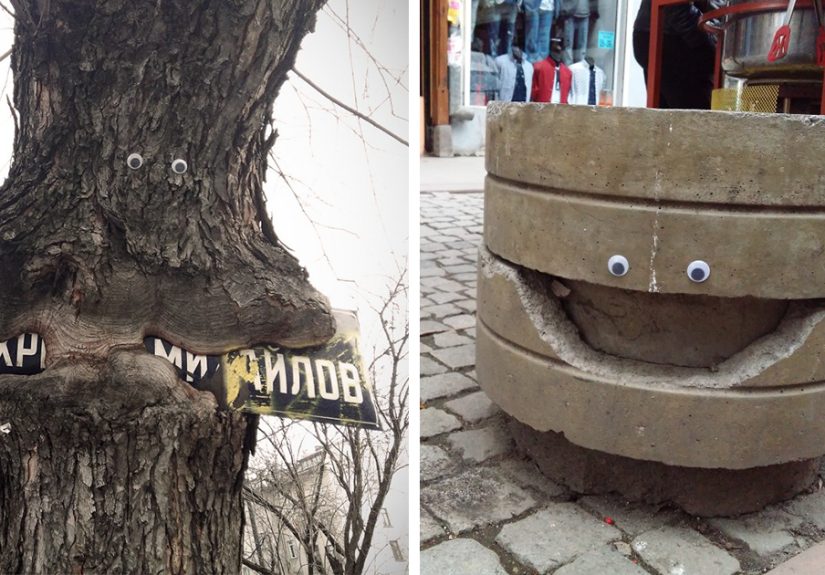
That is the strange and wonderful magic of eyebombing: the street art practice of adding small googly eyes to everyday objects so they suddenly appear alive. It is simple, cheap, funny, and surprisingly emotional. A pair of plastic eyes can turn a broken piece of pavement into a character. A cracked wall becomes a face. A bent pipe becomes a confused animal. A forgotten object gets a tiny personality upgrade, and the whole street starts to feel less gray.
In Bulgaria, especially around Sofia, Krastev’s playful project has become one of the most charming examples of how humor can reshape public space. Instead of painting huge murals or installing expensive sculptures, he uses the smallest possible intervention: two wobbly eyes, carefully placed. The result is street art that does not shout. It blinks.
What Is Eyebombing?
Eyebombing is a form of urban intervention where artists place googly eyes on inanimate objects in public spaces. The goal is not simply to decorate a surface. The real trick is to find an object that already looks halfway alive, then finish the joke. A hole becomes a mouth. A crack becomes a frown. A metal hinge becomes a nose. Suddenly, the city is full of small characters that were “there” all along, waiting for someone with a pocket full of eyes to notice them.
The beauty of googly eye street art is that it works instantly. You do not need an art degree, a gallery wall, or a 20-minute audio guide narrated by someone with a mysterious European accent. The human brain is already wired to recognize faces quickly. This phenomenon is called pareidolia, which means we often see familiar patterns, especially faces, in random shapes. It is why a power outlet can look shocked, a car can look sleepy, and a slice of toast can suddenly become suspiciously dramatic.
Eyebombing plays directly with that instinct. It takes the face your brain almost saw and gives it the final push. The result is both silly and satisfying, like the city is letting you in on a private joke.
Why Bulgarian Streets Are Perfect For This Kind Of Street Art
Sofia and other Bulgarian urban spaces offer a rich visual playground for this kind of work. Like many old European cities, Sofia mixes history, aging infrastructure, modern repairs, weathered surfaces, and the small accidents of everyday life. A dented sign, a twisted cable, a chipped wall, or a patched metal cover may seem ordinary at first glance. But for an eyebombing artist, these details are not flaws. They are invitations.
Krastev has often focused on objects that are broken, punctured, tangled, cracked, bent, or crumbling. That choice is important. A perfect object does not always make the best character. A smooth new pole is just a pole. But a rusty pipe with a split seam? That thing has been through something. Add eyes, and now it looks like it wants to tell you about its difficult childhood.
This is where the project becomes more than a visual gag. By giving attention to overlooked objects, the artist encourages people to pay closer attention to their environment. Urban life can make us move quickly and stop noticing the details around us. Eyebombing slows the eye down. It asks: What else have you been walking past without seeing?
The Artist Behind The Eyes: Vanyu Krastev
Vanyu Krastev is the Bulgarian artist most closely associated with this delightful wave of eyebombing in Bulgaria. His work gained attention online because it combines excellent timing, clever observation, and a warm sense of humor. The pictures are funny, yes, but they are also oddly tender. A damaged object does not look ugly anymore. It looks shy, grumpy, hungry, surprised, or mildly offended.
Krastev has described being inspired by the wider eyebombing movement and later developing a Bulgarian version of the idea. What makes his work stand out is not just that he puts eyes on things. Many people can do that. The skill is in choosing the exact object, the exact angle, and the exact placement. Two eyes placed slightly too high can ruin the expression. Two eyes placed at the perfect spot can turn a drainpipe into a tiny opera singer.
That is why the best examples feel discovered rather than forced. The artist is not imposing a character on the street. He is revealing one. It is like urban archaeology, except instead of digging up ancient pottery, you find a nervous bollard that looks like it just heard thunder.
Why Googly Eyes Make Everything Funnier
There is something universally funny about googly eyes. They are not elegant. They are not serious. They wobble around like they have just remembered an unpaid electricity bill. That wobble gives objects a sense of comic helplessness. A heavy metal box suddenly looks vulnerable. A cracked wall looks worried. A pipe looks like it has opinions but no mouth with which to express them.
Part of the humor comes from contrast. Cities are often designed to be practical, organized, and efficient. Street signs tell us what to do. Walls divide space. Pipes carry water. Utility covers hide systems we are not supposed to think about. When googly eyes appear on these objects, they interrupt that seriousness. The street stops being only functional and becomes theatrical.
It is a tiny rebellion against boredom. Not an angry rebellion. More like a rebellion wearing a party hat.
Street Art Without The Ego
Traditional street art often carries a strong signature. A mural may be huge, colorful, and impossible to ignore. Graffiti may shout a name, a symbol, or a message. Eyebombing is different. It is modest. It does not need to dominate the wall. It simply changes the way you see what is already there.
This makes eyebombing feel unusually friendly. It does not demand attention; it rewards attention. A person who notices one pair of eyes may start looking for more. Suddenly, a normal walk becomes a treasure hunt. The city becomes a collection of tiny surprises.
That is one reason this art form works so well online. A photo of a googly-eyed object is immediately understandable. No translation needed. A rusty surface with a shocked expression is funny in Bulgaria, the United States, Japan, Brazil, or anywhere else people have ever stared at a toaster and thought, “Why does this appliance look disappointed in me?”
How Eyebombing Changes The Mood Of Public Space
Public art can be grand and expensive, but it can also be intimate and temporary. Eyebombing belongs to the second category. It uses humor to create a moment of connection between a passerby and the city. That moment may last only a few seconds, but it can change the mood of a walk.
Imagine someone heading to work, tired and half-awake, passing the same wall they pass every morning. Today, a little cracked corner has eyes. It looks startled. The person smiles. That smile is the artwork’s real destination. The plastic eyes are just the delivery system.
This matters because city life can feel impersonal. Streets are full of objects that serve us but do not speak to us: poles, boxes, drains, signs, rails, doors, meters, wires. Eyebombing gives these silent objects a kind of cartoon voice. It makes the environment feel less mechanical and more human.
The Psychology Of Seeing Faces In Objects
Eyebombing works because humans are excellent face detectors. We are social creatures, and faces carry huge amounts of information. A face can tell us emotion, direction of attention, possible danger, friendliness, and mood. Our brains would rather accidentally see too many faces than miss one that matters.
That is why the front of a car may look angry, why a faucet may look surprised, and why a building facade can appear to be staring at you. Eyebombing takes advantage of this natural tendency and turns it into street-level comedy. The artist does not need to build an entire face. The surrounding object already provides the rest of the expression.
A round stain can become a cheek. A crack can become a smile. A hole can become an open mouth. A metal bracket can become a nose. The eyes simply activate the illusion. Once you see the “face,” it is almost impossible to unsee it. Congratulations: the wall now has feelings.
Examples Of Objects That Become Characters
Cracked Walls
A crack in a wall can look like a mouth, especially when it curves upward or downward. Add two eyes above it, and the wall becomes happy, shocked, tired, or deeply suspicious. The rough texture adds personality, like wrinkles on a cartoon face.
Pipes And Drains
Pipes are perfect for eyebombing because they already look like noses, necks, mouths, or strange little animals. A drain with a dark opening can look like it is gasping. A bent pipe can look like a creature peeking from the side of a building. The less perfect the pipe, the better the expression.
Street Bollards
Bollards are short posts used to control traffic or protect sidewalks. They are already standing around like tiny guards. Add eyes, and they become characters on duty: sleepy guards, grumpy guards, surprised guards, or guards who have absolutely seen things.
Trash Cans And Utility Boxes
These everyday objects are often ignored unless they are broken. Eyebombing gives them a second life. A trash can can become hungry. A utility box can become nervous. A dent can become a facial feature. Even urban clutter begins to feel like part of a strange outdoor cartoon.
Why This Art Feels So Shareable
Googly eye street art is perfect for the internet because it is fast to understand and easy to enjoy. Viewers do not need background knowledge. The joke arrives immediately. An object that looked dead now looks alive. That is the whole punchline, and it works beautifully.
But the best pieces also invite a second look. You notice the eyes first, then the cleverness of the placement. You realize the artist did not simply stick eyes anywhere. He recognized a hidden expression in the object. That recognition makes the viewer feel included. You are not just looking at a picture; you are sharing the artist’s discovery.
This is why Krastev’s Bulgarian eyebombing photos have traveled far beyond Sofia. They fit the modern appetite for light, clever, visual storytelling. In a world full of heavy news and endless scrolling, a startled pipe can feel like a tiny vacation.
Is Eyebombing Vandalism Or Public Joy?
Any street art that modifies public space raises questions. Is it harmless fun? Is it vandalism? Is it allowed? The answer depends on location, materials, context, and local rules. Eyebombing is usually small and temporary, but artists still need to think responsibly. Public safety, private property, historical surfaces, and cleanup matter.
The most thoughtful eyebombing does not damage important surfaces or create hazards. It works best when it is gentle, removable, and respectful. The goal is not to ruin the street. The goal is to help people see it with fresh eyesliterally.
That balance is part of what makes Krastev’s work appealing. The pieces feel lighthearted rather than destructive. They do not cover the city; they wink at it.
What Brands, Designers, And Cities Can Learn From Eyebombing
There is a useful lesson here for anyone interested in design, branding, or public space: small emotional details matter. A city does not become memorable only through monuments. It becomes memorable through moments. A funny object on a corner, a painted bench, a clever sign, a playful mural, or a surprising street detail can make people feel more connected to where they are.
Eyebombing also shows that creativity does not always require expensive tools. Observation is the main ingredient. The artist has to notice shapes, textures, and accidental expressions. That habit of noticing is valuable far beyond street art. Designers use it. Photographers use it. Writers use it. Anyone trying to make ordinary life more interesting can use it.
For cities, the lesson is clear: playfulness has civic value. People enjoy places that feel alive. A street with humor feels safer, warmer, and more memorable than a street that treats every surface as purely functional. Even a tiny intervention can change how people emotionally experience a place.
The Charm Of Imperfection
One of the most meaningful parts of this project is its love of imperfect things. Eyebombing does not search for polished beauty. It celebrates dents, cracks, stains, and awkward shapes. It finds humor in damage without mocking it. In a way, the eyes say: “You may be broken, but you are still interesting.”
That message has surprising emotional power. Cities, like people, age. They collect marks. They get patched, repaired, scratched, and weathered. Instead of hiding those marks, eyebombing turns them into expressions. The street becomes a gallery of tiny survivors.
Maybe that is why these images feel so lovable. They remind us that personality often lives in the flaw, not the perfect surface. A brand-new wall may be clean, but a cracked wall with googly eyes has a story. It may not be a fancy story, but it probably has excellent comedic timing.
Experience Section: Walking Through A City Full Of Little Faces
The experience of encountering googly eye street art is different from seeing planned public art. A mural announces itself from far away. A statue waits in a square. Eyebombing hides in plain sight. You discover it the way you discover a coin on the sidewalk or a cat watching you from a window. There is a small spark of surprise, followed by the very human pleasure of feeling like you caught a secret.
Walking through Bulgarian streets with this kind of project in mind changes your rhythm. You stop scanning only for traffic lights, shop signs, and bus stops. You begin looking at corners, pipes, cracks, locks, handles, broken tiles, and old metal plates. The city becomes less like a route and more like a puzzle. Every object starts asking, “Do I have a face?” Some do. Some almost do. Some look like they are trying very hard but need better bone structure.
That is the addictive part. Once you notice one character, you begin hunting for others. A drain cover looks like a sleepy robot. A wall stain looks like a whale. A dangling cable looks like a mustache. A battered street fixture looks like a tiny creature that has just survived a dramatic storm and would now like a cup of tea. The imagination switches on, and the city becomes collaborative. The artist placed the eyes, but your brain completes the personality.
There is also a social experience. People who spot the same little face often smile at each other. Strangers may point it out, take a photo, or laugh together for a second before continuing their day. That tiny shared reaction matters. Big cities can make people feel anonymous, but humor briefly breaks the glass. A googly-eyed pipe is not going to solve urban loneliness, of course. It is a pipe, not a therapist. Still, it can create a small moment of connection, and small moments are not nothing.
The best encounters happen when the object already seems expressive before the eyes are added. For example, a cracked surface can become a worried mouth, while two mismatched screws can suggest cheeks. When the eyes fit naturally, the result feels less like decoration and more like a discovery. It is as if the object was always alive and the artist simply gave everyone permission to see it.
There is a lesson in that experience: creativity often begins with attention. You do not always need to invent something from zero. Sometimes you only need to look more closely at what is already there. A boring walk becomes an art walk. A damaged object becomes a character. A street becomes a storybook where the illustrations are hiding between utility covers and peeling paint.
For anyone inspired by this idea, the most important takeaway is not merely “put eyes on things.” It is “notice things.” Notice the forgotten surfaces. Notice the accidental expressions. Notice how humor can soften a hard environment. Notice how a tiny creative act can make a place feel warmer. That is why Bulgarian eyebombing has such lasting appeal. It is not just cute. It is a reminder that cities are full of personality if we are willing to look down, look up, and occasionally look a rusty drain directly in the eyes.
Conclusion
I Bring Bulgarian Streets To Life By Putting Googly Eyes On Random Objects is more than a funny title. It describes a playful way of seeing the world. Through the clever work of Vanyu Krastev and the larger eyebombing movement, ordinary streets become stages for tiny urban characters. A broken pipe, a cracked wall, or a lonely bollard can suddenly make people smile.
The appeal is simple but powerful: googly eyes turn overlooked objects into emotional little beings. They encourage curiosity, reward attention, and remind us that public space does not have to be cold or boring. Sometimes, all a city needs is a pair of wobbly eyes and someone willing to notice the face hiding in the concrete.
Note: This article is written as original SEO content in standard American English and is based on publicly available information about Bulgarian eyebombing, Vanyu Krastev, googly eye street art, pareidolia, and public art.