Table of Contents >> Show >> Hide
- What Inktober Actually Is (and Why It’s So Effective)
- Why “Strong Female Role Models” Was the Best Prompt List I Could Make
- How I Planned 31 Portraits Without Losing My Mind (Completely)
- Tools and Supplies That Made the Challenge Easier
- Portrait Basics That Save You From “Why Does This Look Like My Uncle?”
- The 31 Strong Female Role Models I Drew (and Why Each One Earned a Page)
- How I Kept the Portraits From Looking Like 31 Versions of the Same Face
- My 31-Day Field Notes: The Real Experience (The Good, The Hard, The Weirdly Funny)
- Conclusion: If You Want to Get Better, Make It a Month
Inktober is basically a friendly annual dare: “Hey, do an ink drawing, every day, for a month… and try not to melt into a puddle of smudges and self-doubt.”
Naturally, I heard that and thought, Perfect. Let’s make it harder.
This year, instead of drawing random bats, potions, and vaguely haunted mushrooms (no shade to haunted mushrooms), I set one rule for myself:
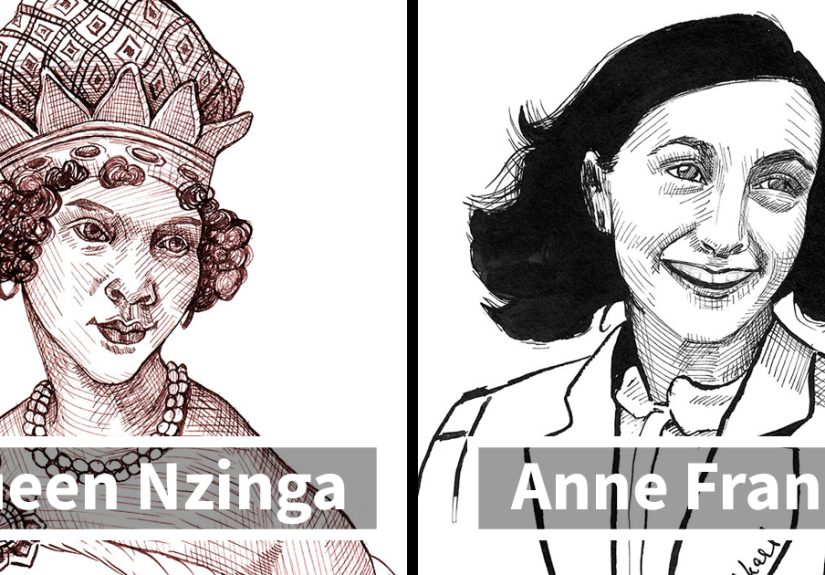
31 portraits. 31 strong female role models. One per day.
The goal wasn’t to create museum-ready masterpieces. It was to show up, practice portrait skills, and build a daily art habit that didn’t depend on inspiration showing up on time like a polite dinner guest.
What Inktober Actually Is (and Why It’s So Effective)
At its core, Inktober is a month-long ink challenge built around consistency: make an ink drawing, share it, tag it, and repeat.
Some artists follow the official daily prompts; others make their own rules. The point is growthless “be perfect,” more “be persistent.”
It works for the same reason a toothbrush works: small daily repetition beats one heroic, once-a-year burst of motivation.
You start to notice what your hand does under pressurehow you rush values, how you avoid hard edges, how you draw the same nose 31 times like it’s your signature.
And then (quietly, sneakily) you improve.
Why “Strong Female Role Models” Was the Best Prompt List I Could Make
Choosing role models gave every drawing a built-in story. I wasn’t just drawing a faceI was drawing a legacy:
a scientist who refused to be underestimated, an activist who refused to move, an artist who refused to fit into anyone else’s frame.
It also solved a classic Inktober problem: “What do I draw today?” With portraits, the answer is already therepick the person, pick the reference photo, and go.
And honestly? Turning my sketchbook into a month-long gallery of women who shaped history felt like a tiny, joyful protest against the way women’s achievements are so often summarized into a footnote.
How I Planned 31 Portraits Without Losing My Mind (Completely)
1) I picked a “mix” on purpose
If all 31 role models come from one category, your portraits start to look the same:
similar lighting, similar hairstyles, similar clothing shapes. So I mixed it upactivists, athletes, artists, scientists, writers, leaders.
Variety forces you to practice different textures and silhouettes.
2) I created a simple “portrait recipe”
A repeatable workflow keeps you moving when you’re tired:
- 2–3 minutes: tiny thumbnail (just the big shapes)
- 8–12 minutes: light pencil block-in (proportions + placement)
- 15–25 minutes: ink pass (contour, shadows, texture, accents)
- 2 minutes: final punch (darkest darks, crisp edges, highlights)
3) I batched the boring stuff
I gathered reference images in advance and kept them in one folder (or one Pinterest board, or one chaotic desktop directory named “PLEASE WORK”).
I also wrote short one-line notes for each personjust enough context to keep the portrait meaningful:
“first,” “fought for,” “invented,” “led,” “wrote,” “discovered.”
Tools and Supplies That Made the Challenge Easier
You can do Inktober with one pen and stubbornness. But a few smart choices helpespecially if you’re drawing faces, where tiny lines do big work.
My go-to setup
- Fineliners: great for eyelashes, wrinkles, and clean outlines (a classic example is Sakura Pigma Micron-style pens)
- Brush pen: perfect for bold hair shapes and “spot blacks” that add drama fast
- Smooth paper: prevents feathering and keeps details crisp (look for paper made for ink)
- Pencil + kneaded eraser: for light under-drawing before you commit in ink
Pro tip: keep scrap paper nearby. Test a pen before you touch your drawingbecause nothing says “surprise!” like a fineliner that decides today is the day it becomes a firehose.
Portrait Basics That Save You From “Why Does This Look Like My Uncle?”
Use proportion checkpoints, not guesswork
Portrait drawing gets easier when you stop trying to “draw an eye” and start placing landmarks.
A helpful beginner-friendly approach is to check the face in simple relationships:
where the eye line sits, how the nose aligns with the inner corners of the eyes, and how the mouth sits between the nose and chin.
These aren’t rigid rulesfaces varybut they’re strong training wheels when you’re sprinting through 31 drawings.
Chase the “big shapes” first
If the head shape is off, perfect eyelashes won’t save it. Start with the skull mass and jaw angle.
Then place the brow ridge and cheek planes. Once the structure feels right, details suddenly behave.
Let ink do what ink does best
Ink loves decisions. Instead of shading everything evenly, pick a light direction and commit.
Use:
- Hatching for soft value shifts (think cheek curves)
- Cross-hatching for deeper shadows (under the chin, hair mass)
- Spot blacks for instant contrast (dark hair, jacket, background shapes)
- Line weight to guide the eye (thicker on shadow edges, thinner on light edges)
The 31 Strong Female Role Models I Drew (and Why Each One Earned a Page)
Your list can (and should) be personalteachers, relatives, mentors, local organizers, teammates.
But here’s a sample lineup that balances history, culture, and STEM, with quick “why” notes to keep the portraits grounded in meaning.
- Harriet Tubman courage with a compass; freedom made practical.
- Rosa Parks strategy and resolve, not a “tired seamstress” myth.
- Ida B. Wells fearless investigative journalism and anti-lynching advocacy.
- Sojourner Truth powerful voice for abolition and women’s rights.
- Dolores Huerta labor leader and civil rights organizer who never quit.
- Shirley Chisholm barrier-breaking leadership with “unbought and unbossed” energy.
- Ruth Bader Ginsburg persistence, precision, and legal change over decades.
- Eleanor Roosevelt leadership that expanded what public service could be.
- Rachel Carson science writing that reshaped environmental awareness.
- Jane Addams community-building and social reform, done daily.
- Grace Hopper computing pioneer who made code more human.
- Katherine Johnson math that helped launch the space age.
- Sally Ride first American woman in space; a new ceiling cracked open.
- Mae Jemison astronaut, physician, engineer: proof that curiosity can be multitalented.
- Temple Grandin innovative thinker and advocate who changed conversations on neurodiversity.
- Toni Morrison storytelling with depth, beauty, and historic weight.
- Maya Angelou language that holds both pain and hope without flinching.
- Georgia O’Keeffe bold vision that refused to be minimized.
- Frida Kahlo identity, resilience, and self-portraiture as truth-telling.
- Billie Jean King athletic excellence paired with outspoken equality work.
- Serena Williams dominance, discipline, and redefining what “strong” looks like.
- Simone Biles excellence and boundary-setting in the same sentence.
- Wilma Mankiller leadership rooted in community and Native sovereignty.
- Jane Goodall patience, observation, and lifelong advocacy for animals and ecosystems.
- Amelia Earhart daring, ambition, and a legacy that still sparks wonder.
- Hedy Lamarr creativity that bridged art and invention.
- Malala Yousafzai education advocacy under pressure most of us can’t imagine.
- Greta Thunberg modern activism with relentless focus and clarity.
- Michelle Obama public leadership, mentorship, and “go do the work” energy.
- Clara Barton care in crisis; building systems that outlast emergencies.
- Susan B. Anthony relentless organizing that shaped voting rights history.
The secret sauce: I didn’t try to “sum up their whole life” in one portrait.
I just chose one ideacourage, curiosity, persistenceand tried to let that guide the expression, posture, and line weight.
How I Kept the Portraits From Looking Like 31 Versions of the Same Face
Different lighting, different mood
I alternated reference photos: some high-contrast, some soft daylight, some dramatic side light.
That forced me to practice different shadow shapes instead of defaulting to the same safe shading.
One “signature element” per portrait
I gave each drawing a tiny visual cuenothing cheesy, just a whisper:
a rocket silhouette for space pioneers, a typewriter hint for writers, a bold floral shape for artists known for botanical forms.
It made the series feel cohesive without turning it into a sticker collection.
Line weight as storytelling
Heavy lines can feel fearless. Light lines can feel tender. A sharp edge can feel stubborn in the best way.
Once I started treating line weight like a narrative toolnot just a technical choicemy portraits got more expressive fast.
My 31-Day Field Notes: The Real Experience (The Good, The Hard, The Weirdly Funny)
By day three, I learned the first truth of a 31-portrait challenge: motivation is a mythological creature.
It shows up when it wants, wearing a cape, and then disappears the moment you need it most.
So I stopped waiting for inspiration and started relying on a routine: same chair, same time window, same “tiny thumbnail first” rule.
I treated it like brushing my teethexcept with more dramatic sighing.
Around day seven, I discovered a second truth: ink is honest in a way that feels personal.
Pencil will let you negotiate. Ink is like, “Nope. That’s your line now. Congratulations.”
At first I fought it. Then I started building in “permission slips”:
pencil under-drawing for proportions, quick test strokes on scrap paper, and a rule that every portrait gets at least one bold shadow shape.
If I committed to one confident decision, the rest of the drawing got braver too.
Somewhere in the middle (days 12–18), the challenge stopped being about portraits and started being about time.
I learned how to triage: if I only had 20 minutes, I focused on the head shape, the eye placement, and the biggest shadow masses.
If I had 40 minutes, I added texturehair, fabric folds, cross-hatching.
The surprise win? My “short-time” portraits often looked more alive, because they weren’t overworked into stiffness.
The emotional part hit when I realized I was spending a full month staring at women’s facesreally looking.
Not scrolling. Not half-reading. Looking.
You start noticing how expression carries history: the firmness in a set jaw, the softness in a smile that’s seen too much, the direct gaze of someone who’s had to insist on being heard.
Even if you’re working from a photo, drawing a portrait is an act of attentionand attention is a kind of respect.
And yes, there were chaotic moments. I smudged a nearly finished portrait with my palm and had to pretend it was “atmospheric shading.”
I drew one eye that looked like it had its own zip code.
I posted a drawing and immediately saw a proportion mistake I had somehow missed for 45 straight minutes.
But the funniest part is that these disasters became my best teachers.
Every time something went wrong, I wrote one tiny note in the margin“check eye line,” “simplify shadow,” “stop outlining everything”and the next portrait improved.
Not magically. Just measurably.
By day 31, the biggest change wasn’t that I could draw perfect faces. It was that I could start a portrait without fear.
I had trained my brain to say, “We do this now,” instead of “We do this when we feel ready.”
That’s the real Inktober prize: a habit you can carry into November, December, and any random Tuesday when creativity tries to ghost you.
Conclusion: If You Want to Get Better, Make It a Month
Drawing 31 portraits of strong female role models gave me a double education: portrait skills on the page, and persistence off the page.
I practiced proportion, line confidence, and value controlsure.
But I also practiced showing up, finishing what I started, and letting “good enough today” stack into “better overall.”
If you try this challenge, keep it simple: choose role models you genuinely admire, build a repeatable workflow, and let each portrait teach you one lesson.
Your sketchbook will end October looking like a mini museumand you’ll walk out with a stronger hand, a sharper eye, and a habit that doesn’t need permission.