Table of Contents >> Show >> Hide
- Why Tarot Was the Perfect Language for Pandemic Art
- Why 22 Cards Matter
- From Panic Buying to Public Reckoning: How the Cards Reflect Pandemic Life
- What This Project Gets Right About Pandemic Memory
- Art as Coping, Commentary, and Cultural Record
- Why the Idea Still Feels Fresh
- Extended Reflections: The Experience Behind a Pandemic Tarot Deck
- Conclusion
- SEO Tags
The title sounds dramatic, but honestly, so did life during the pandemic. One minute the world was arguing about hand sanitizer, the next minute we were all learning how to mute ourselves on Zoom while pretending sourdough was a personality trait. That is exactly why a tarot-card project based on the global pandemic makes so much sense. Tarot has always been a language of symbols, archetypes, warnings, reversals, and uneasy revelations. If ever there were a moment in modern history that felt like a giant shuffled deck thrown across the kitchen table, it was COVID-era life.
A pandemic tarot series is more than a clever visual gimmick. It is a cultural snapshot. It takes the strange rituals, anxieties, power struggles, and tiny survival habits of a historic crisis and turns them into images people can instantly recognize. In one well-known online project, the 22 cards of the Major Arcana were reimagined through scenes of lockdown, public figures, fear, panic-buying, health workers, nightly scrolling, and the digital togetherness of video calls. The result was funny, biting, surreal, and unexpectedly moving. In other words, it was a pretty accurate portrait of the pandemic.
This is what makes the idea so memorable. It does not treat the pandemic like a dry timeline of restrictions and statistics. It treats it like a lived mythology. And mythology, for better or worse, tends to stick.
Why Tarot Was the Perfect Language for Pandemic Art
Tarot works because it is built on archetypes. The Major Arcana gives us the fool, the ruler, the lover, the rebel, the collapse, the hope, the reckoning, and the world. These are not just card titles. They are emotional shortcuts. They let people look at a single image and immediately feel the story inside it. Long before tarot became widely associated with divination, it already depended on striking, memorable imagery. That visual logic makes it ideal for commentary during a global crisis.
The pandemic also forced people to think symbolically. Suddenly, ordinary objects carried huge emotional weight. A face mask could mean caution, solidarity, fear, conflict, exhaustion, or basic courtesy depending on the moment. Empty grocery shelves became symbols of panic. A laptop camera became a doorway, a burden, and a stage. A delivery box on the porch felt half like convenience and half like an artifact from the outside world. Tarot thrives on exactly that kind of symbolic overload.
So when an artist builds a pandemic tarot deck, the idea lands immediately. The visual vocabulary is already there. The only thing left to do is connect daily pandemic life to the cards that best capture its mood.
Why 22 Cards Matter
The number 22 is not random. The Major Arcana traditionally contains 22 cards, and those cards carry the biggest themes in a tarot deck: upheaval, transformation, authority, vulnerability, illusion, hope, and completion. That structure matters because the pandemic was not just a series of inconveniences. It felt epic, disorienting, and moral in the way old myths do. People were not merely bored at home. They were forced to reconsider power, trust, risk, community, grief, work, and the shape of ordinary life.
Using the 22 Major Arcana cards turns pandemic experience into a complete emotional cycle. You begin with confusion and denial. You move through fear, control, isolation, absurdity, anger, endurance, and collapse. Then, if the artist is doing the job well, you end somewhere more layered than simple optimism. Not a cheesy “everything happens for a reason” ending. More like a sober recognition that people adapted, changed, connected, broke, coped, and kept going.
That is one reason the project feels smarter than a random set of illustrations. The format gives shape to chaos. Even when life felt lawless, the cards imposed order. They said, in effect, “Yes, this is a mess, but it is a mess with themes.” During lockdown, that kind of structure was not trivial. It was therapeutic.
From Panic Buying to Public Reckoning: How the Cards Reflect Pandemic Life
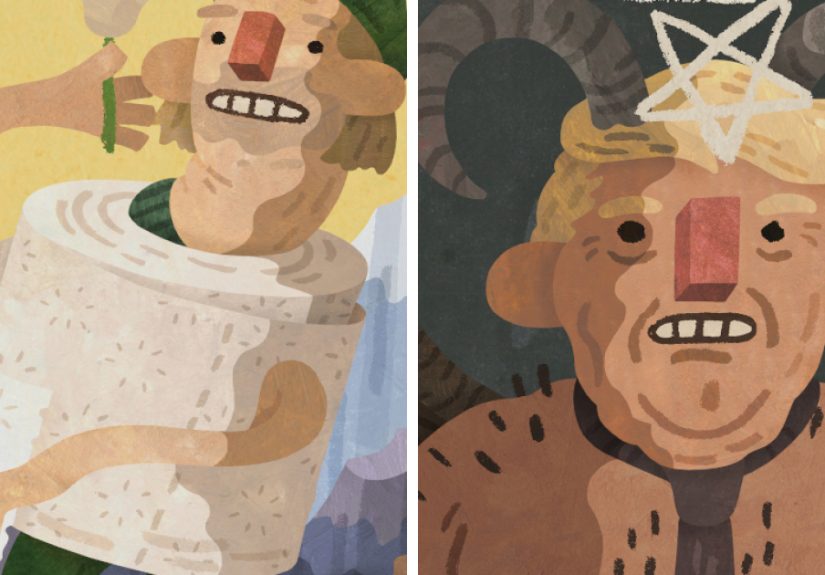
The Fool: Toilet Paper, Denial, and the Comedy of Early Panic
If one image captures the absurd opening act of the pandemic, it is someone stockpiling toilet paper like it was a sacred relic. The Fool is the perfect card for that instinct. In tarot, The Fool represents beginnings, naivety, risk, and stepping into the unknown without fully grasping the consequences. Pandemic panic-buying had exactly that energy. It was fear dressed up as preparation, with a little slapstick mixed in. People were trying to control the uncontrollable, and the results were equal parts alarming and ridiculous.
The Tower: Systems Failing in Public
The Tower has always been one of tarot’s great disaster cards. It signals collapse, rupture, and the kind of revelation that arrives by kicking down the front door. During the pandemic, The Tower could easily stand for constantly shifting alert systems, confusing guidance, canceled plans, broken routines, and institutions that looked much shakier under pressure than people had assumed. It was not only about disease. It was about the spectacle of systems failing in real time.
The Moon and The Sun: Doomscrolling by Night, Television by Day
The Moon is uncertainty, illusion, anxiety, and the strange glow of half-understood truth. That makes it ideal for doomscrolling at 1:12 a.m. while reading conflicting headlines and wondering whether wiping down groceries was rational or just an Olympic-level anxiety hobby. The Sun, by contrast, should feel warm and reassuring, yet in a pandemic deck it can become oddly ironic: the television on all day, the screen always bright, the house filled with constant updates, home renovation reruns, and news anchors delivering catastrophe with excellent lighting.
Together, those two cards capture one of the strangest features of lockdown life: we were alone, but never offline. We were overstimulated and understimulated at the same time. That takes talent. Or a pandemic.
Strength, Justice, and the New Everyday Heroes
Some of the most powerful pandemic imagery centered on people who had no choice but to keep going: nurses, doctors, grocery workers, delivery drivers, care workers, cleaners, teachers, and all the people politely described as “essential” while being asked to absorb extraordinary risk. In a tarot framework, Strength and Justice are natural homes for that experience. Strength is endurance without theatrics. Justice is the moral clarity that asks who carried the heaviest burden, who was protected, and who was treated as expendable.
These cards also correct one of the pandemic’s biggest distortions. Public memory often gravitates toward politicians, policy fights, and internet arguments. But daily life ran on people who stocked shelves, changed beds, packed orders, drove routes, and showed up exhausted anyway. A pandemic tarot deck that honors them feels grounded in reality rather than just obsessed with headlines.
The Lovers and The World: Intimacy, Distance, and Digital Togetherness
Lockdown sharpened relationships. Some couples baked bread, binged shows, argued over dishwasher loading techniques, and became either more tender or more competitive about houseplants. The Lovers card can hold all of that, because intimacy during the pandemic was never just romance. It was proximity, patience, cabin fever, teamwork, and the strange tenderness of surviving monotony together.
Then there is The World, which becomes almost hilariously literal in a pandemic tarot deck. When people could not gather physically, they gathered in grids. Family birthdays happened on screens. Work meetings happened on screens. Therapy, quizzes, weddings, workouts, and school all happened on screens. The World card traditionally implies completion, unity, and interconnectedness. During COVID, interconnectedness arrived looking like a dozen tiny rectangles and someone saying, “You’re on mute.”
What This Project Gets Right About Pandemic Memory
The most effective pandemic art does not just document events. It captures contradictions. The pandemic was boring and terrifying. Intimate and alienating. Hyper-political and deeply domestic. It made kitchens into offices, bedrooms into classrooms, and sidewalks into emotional support devices. A deck of pandemic tarot cards works because tarot is comfortable holding contradictory meanings at once.
The project also understands that memory is image-based. Years later, many people do not recall restrictions in the order they were announced. They remember scenes: masked strangers standing six feet apart, a laptop glowing in a dark room, gloved hands, taped arrows on grocery store floors, homemade banana bread, sanitizer bottles, sirens, empty streets, and that eerie sensation that time had melted into one long Wednesday.
Tarot turns those scenes into durable icons. It gives the pandemic a visual grammar. And once a historical moment has a visual grammar, it becomes easier to talk about, laugh about, critique, and remember without flattening it into clichés.
Art as Coping, Commentary, and Cultural Record
One of the most interesting things about pandemic-era creativity is that it was never only about self-expression. It was also about self-organization. Making art during lockdown gave people structure when normal routines had collapsed. A 22-card project is especially good at this because it offers boundaries. One card, one concept, one image, one symbolic problem to solve. In uncertain times, boundaries can feel like oxygen.
That is part of why this idea resonates beyond tarot enthusiasts. You do not need to read cards to understand what the deck is doing. The cards function like editorial cartoons crossed with visual journaling. They compress social commentary, emotional truth, and dark humor into a single frame. They say what many people felt but could not quite phrase: that daily life had become both more symbolic and more absurd than usual.
There is also archival value here. Libraries, museums, and cultural institutions have spent years documenting pandemic stories through photographs, posters, oral histories, design, and everyday objects. A tarot project belongs in that larger conversation. It is not just art inspired by crisis. It is evidence of how people interpreted crisis while living through it.
Why the Idea Still Feels Fresh
A lot of pandemic content aged badly because it was too eager to be inspirational or too addicted to hot takes. This concept survives because it accepts complexity. It allows for anger, mockery, gratitude, grief, confusion, and resilience in the same body of work. It refuses to pretend the pandemic was one thing.
That honesty is what gives the series staying power. It is funny without being shallow. It is symbolic without becoming vague. It is historical without sounding like a textbook. Most importantly, it captures how many people actually experienced the era: as a bizarre mixture of fear, repetition, media overload, improvised hope, and the occasional deeply emotional attachment to pantry goods.
Put simply, the project works because tarot already knows how to tell the truth sideways.
Extended Reflections: The Experience Behind a Pandemic Tarot Deck
What makes a project like I Created 22 Tarot Cards Based On The Global Pandemic so compelling is the experience behind it. Imagine sitting in lockdown and deciding to turn one of the weirdest periods in modern life into a visual deck of archetypes. That process would not feel like ordinary illustration work. It would feel like emotional sorting. Each card would become a way of asking, “What exactly was this moment doing to us?” Not in the abstract, but in the body. In the home. In the daily routine.
The experience of making the deck would probably begin with observation. Not grand theory. Observation. The pile of masks by the door. The phone screen that somehow became both companion and tormentor. The weirdly theatrical seriousness of grocery shopping. The public language of heroism sitting awkwardly next to burnout, fear, and shortages. The amount of meaning packed into simple actions like washing hands, standing apart, or hearing a cough in public. During the pandemic, tiny gestures became emotionally enormous. Tarot is built for that scale shift.
There is also something deeply honest about the repetitive nature of a 22-card project. Lockdown life was repetitive. Days blurred. News cycles repeated. Emotions looped. A long-form art project mirrors that condition while giving it shape. You wake up, work on another card, and suddenly repetition is no longer just stagnation. It becomes ritual. That matters. Ritual is one of the oldest ways human beings survive uncertainty.
Then there is the emotional range. A pandemic tarot deck cannot be all grief or all satire if it wants to feel true. The experience of the global pandemic was too mixed for that. There was panic, yes, but also silliness. Exhaustion, but also ingenuity. Loneliness, but also strange intimacy. Anger at leadership, gratitude toward workers, suspicion toward institutions, and tenderness toward people we could not physically reach. A strong deck would let those feelings coexist. It would understand that one card might need to be furious while the next one feels quiet, and the next one almost funny. That unevenness is not a flaw. It is the emotional weather of the time.
Viewing the deck would be its own experience too. People would not just see drawings. They would see themselves. They would remember the months when the television seemed permanently on, when calls replaced visits, when every headline felt like a card pulled from somewhere ominous. They would recognize the social archetypes immediately: the denier, the helper, the exhausted worker, the obsessive scroller, the public scold, the accidental philosopher in sweatpants. Good pandemic art does not just reflect events. It reflects behavior.
And maybe that is the deepest experience tied to this idea: recognition. Not comfort exactly, but recognition. The sense that someone noticed the same absurd details you noticed. The same dread, the same boredom, the same tiny acts of adaptation. That shared recognition is part of what art can offer in a crisis. It cannot fix the emergency. It cannot erase the losses. But it can say, with style and precision, “Yes, this happened. Yes, it felt bizarre. Yes, you were not imagining how symbolic everything suddenly became.”
That is why a pandemic tarot deck still matters. It is not just a creative concept. It is an emotional document of how people tried to make meaning while the world kept changing faster than language could keep up.
Conclusion
I Created 22 Tarot Cards Based On The Global Pandemic is the kind of title that initially sounds like a niche internet art project and then, the more you think about it, like one of the most sensible ideas to come out of a profoundly senseless time. Tarot gave the pandemic a structure, a face, and a set of symbols sharp enough to hold contradiction. That is why the concept still lands. It turns history into imagery, imagery into memory, and memory into something people can actually revisit without needing a spreadsheet, a press conference recap, or another loaf of sourdough for emotional support.