Table of Contents >> Show >> Hide
- What Happened: A Stolen Instagram Account, a Fake Email, and a Very Real Problem
- Why Instagram Account Theft Hurts More Than People Think
- Why Phishing Emails Still Work
- Instagram Support and the Recovery Maze
- The One Thing She Could Still Do: Change the Name and Bio
- What To Do If Your Instagram Account Is Stolen
- 1. Check your email for official Instagram security messages
- 2. Use Instagram’s hacked account recovery page
- 3. Secure your email account immediately
- 4. Warn your followers and contacts
- 5. Report the account and ask trusted people to report it too
- 6. Collect evidence
- 7. Do not pay the hacker
- 8. Avoid “account recovery” strangers
- How To Protect Your Instagram Account Before Trouble Starts
- Why “Messing With the Thief” Can Be HelpfulIf You Keep It Safe
- What Creators and Small Businesses Can Learn From This Story
- Conclusion: The Real Win Is Getting Control BackNot Becoming the Villain
- Experience Notes: What It Feels Like When Instagram Support Does Not Help
Losing an Instagram account is not like misplacing your sunglasses. Sunglasses do not suddenly message 80,000 people with scammy offers, pretend to be you, and turn your carefully built online identity into a digital flea market. A stolen Instagram account can feel personal, professional, and mildly apocalyptic all at onceespecially when the platform’s support system responds with the warm emotional range of a vending machine.
That is exactly the kind of nightmare behind the story of a creator whose verified Instagram account was stolen after a phishing email. She did what most people would do: contacted Instagram support, explained the issue, tried to prove ownership, and waited. Then waited some more. Then waited long enough to develop a close personal relationship with disappointment.
When help did not arrive, she discovered one small leftover power: her connected Facebook business page still allowed her to change the account’s name and bio. So she used it to warn followers, annoy the thief, and turn the hijacked profile into the world’s most awkward billboard for “this account has been stolen.” Was it petty? Maybe. Was it understandable? Absolutely. Was it safer than trying to hack the hacker back? Very much so.
This article explores what happened, why Instagram account theft is so common, what victims should actually do, and why the best revenge is not cyber-vigilantismit is documentation, public warning, smarter security, and occasionally a bio update with the energy of a tiny digital air horn.
What Happened: A Stolen Instagram Account, a Fake Email, and a Very Real Problem
The story begins with a familiar trap: an email that looked like it came from Instagram. It suggested there was something urgent involving the account. The account owner clicked, entered information, and the thief took control. This is the classic rhythm of phishing: create panic, imitate a trusted brand, rush the victim into clicking, and steal login credentials before the brain has time to say, “Wait a second, why does this email address look like it was assembled by a raccoon with Wi-Fi?”
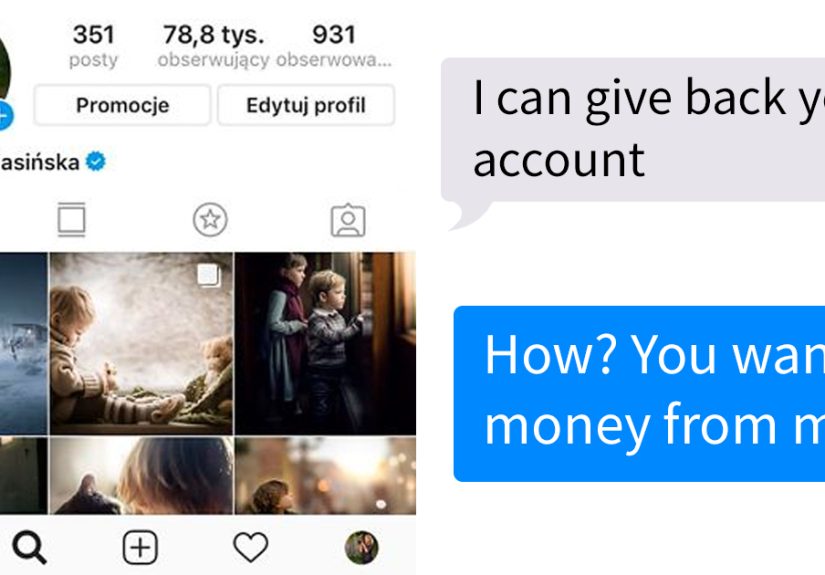
The stolen account was not just a casual profile full of brunch photos and blurry concert videos. It was a verified business account with around 80,000 followers, used by a professional photographer to share her work and connect with clients. For creators, photographers, small business owners, influencers, artists, and freelancers, Instagram is often more than entertainment. It is a portfolio, storefront, networking tool, reputation engine, and income source packed into one square-shaped universe.
After the account was taken, the thief reportedly used it to spam followers, advertise questionable offers, and pressure the rightful owner for money. That is one reason hacked Instagram accounts are so valuable to scammers. A trusted profile gives criminals instant credibility. Followers are more likely to click a link, reply to a message, or believe a fake investment pitch when it appears to come from someone they already know.
Why Instagram Account Theft Hurts More Than People Think
People who have never built a serious online presence sometimes say, “Just make a new account.” That advice sounds simple, but it misses the emotional and economic reality. A social media account can represent years of creative work, audience trust, brand partnerships, customer relationships, and personal memories. Telling someone to “just start over” after an account theft is like watching their food truck get stolen and saying, “Have you considered buying another sandwich?”
A stolen Instagram account can damage a person or business in several ways:
- Reputation damage: Followers may receive scam messages and think the owner is responsible.
- Financial loss: Creators may lose sponsorships, leads, sales, bookings, or ad opportunities.
- Privacy risk: Hackers may access private messages, contacts, archived posts, and connected accounts.
- Emotional stress: Victims often feel embarrassed, helpless, angry, and violated.
- Follower harm: Scammers may use the hijacked account to trick friends, fans, or customers.
The most painful part is that the victim may become the face of the scam. The thief hides behind the stolen identity while the real person has to explain, apologize, warn people, and somehow prove that they are themselves. It is identity theft with filters.
Why Phishing Emails Still Work
Phishing emails work because they do not need to fool everyone. They only need to catch someone at the wrong moment: tired, busy, worried, distracted, or managing too many tabs and too little coffee. Many fake Instagram emails use pressure-based language: “Your account will be disabled,” “Verify immediately,” “Suspicious activity detected,” or “Copyright violation reported.” The goal is not elegance. The goal is panic.
Modern phishing attempts can look convincing. They may include logos, official-looking formatting, copied brand language, and buttons that resemble real login pages. Some scammers even tailor messages to creators, claiming there is a brand deal, verification issue, copyright claim, or community guidelines violation.
Common warning signs of an Instagram phishing scam
- The message pressures you to act immediately.
- The sender address does not match an official Instagram or Meta domain.
- The link sends you to a strange login page.
- The email asks for your password, two-factor code, or backup codes.
- The grammar feels slightly off, overly dramatic, or robotic.
- The message promises verification, money, sponsorships, or account protection if you click quickly.
The safest habit is simple: do not log in through links inside suspicious emails. Open Instagram directly through the app or by typing the address yourself. If Instagram really needs your attention, you should be able to see alerts inside the app or official account settings.
Instagram Support and the Recovery Maze
Instagram does provide official recovery tools for hacked accounts, including help pages, identity verification flows, login links, and support options through its account recovery systems. However, many users report that the process can feel confusing, slow, or inconsistentespecially when the hacker has already changed the email address, phone number, username, password, or two-factor authentication settings.
In the case that inspired this article, the account owner said she contacted Instagram repeatedly but received only an automated response asking her to describe the situation and prove account ownership. She believed her verified status and identity documents should have been enough. From a user’s perspective, that frustration makes sense. If a platform can verify you for a blue badge, it feels reasonable to expect that it can verify you when your account is stolen.
But account recovery is complicated. Platforms have to avoid giving accounts to impostors who pretend to be victims. That means support systems often require proof, automated checks, device history, account activity, email access, selfie videos, or identity confirmation. Unfortunately, when the process fails, genuine users can get stuck in a loop while the thief continues posting, messaging, and scamming.
The One Thing She Could Still Do: Change the Name and Bio
The twist in this story is that the thief did not fully sever every connection. The stolen Instagram account was still linked to the owner’s business Facebook page. That connection allowed her to change the Instagram name and bio, even though she could not fully access the account.
So she used the only tool left: public embarrassment. She changed the name and bio to warn followers that the account had been stolen. In effect, she turned the hijacked account into a flashing caution sign. It was not a full recovery, but it helped disrupt the thief’s scam and alert people who might otherwise trust messages from the profile.
That kind of response can be effective when done safely. Warning followers is smart. Documenting the hack is smart. Reporting the account is smart. Asking friends to report impersonation or suspicious activity can help. What victims should not do is threaten the thief, publish private information, attempt to break into accounts, deploy malware, or pay “recovery experts” who promise magical results for a fee. Many of those so-called recovery services are just another scam wearing a new hat.
What To Do If Your Instagram Account Is Stolen
If your Instagram account is hacked, move quickly but calmly. Panic is useful only if you are being chased by a bear, and even then it has mixed reviews. For account recovery, you need clean steps and good records.
1. Check your email for official Instagram security messages
Instagram may send an email when your account email address is changed. Look for security messages from Instagram and check whether there is an option to reverse the change. Be careful: scammers also imitate these emails. Do not click blindly. Open your email carefully, inspect the sender, and use Instagram’s official recovery flow when possible.
2. Use Instagram’s hacked account recovery page
Go through Instagram’s official hacked account process. Depending on your situation, you may be asked to request a login link, verify your identity, submit a selfie video, or confirm account details. Use a device and location you have used before, because platforms may use familiar signals to help verify ownership.
3. Secure your email account immediately
Your Instagram account may not be the only target. If the thief got into your email, they can reset passwords across multiple services. Change your email password, enable multi-factor authentication, review forwarding rules, check recovery addresses, and remove unfamiliar devices. Your email inbox is the master key to much of your digital life. Guard it like it contains the last slice of pizza.
4. Warn your followers and contacts
Use another account, your website, your email list, or other social platforms to warn people. Tell them not to click links, send money, reply to suspicious messages, or believe sudden investment pitches from the stolen account. Keep the message short and clear: “My Instagram account has been hacked. Please do not interact with messages or links from it while I work on recovery.”
5. Report the account and ask trusted people to report it too
Report the hacked profile through Instagram’s reporting tools. If the account is impersonating you or scamming followers, ask friends, customers, and colleagues to report the suspicious activity as well. Mass reporting is not a guaranteed fix, but it can increase visibility.
6. Collect evidence
Take screenshots of suspicious emails, changed account details, scam messages, payment demands, usernames, dates, and conversations. Keep copies of support requests and automated replies. If money is involved, save transaction details. Documentation helps when reporting to platforms, banks, payment apps, law enforcement, or cybercrime complaint centers.
7. Do not pay the hacker
Paying a thief does not guarantee the account will be returned. It may only confirm that you are desperate enough to pay, which can lead to more demands. If the account is business-critical, focus on official recovery channels, documentation, public warnings, and legal reporting.
8. Avoid “account recovery” strangers
After a hack, victims often get messages from people claiming they know a hacker, specialist, agent, or “Instagram employee” who can restore the account for a fee. Treat these offers like a suspicious gas station sushi roll. Recovery scams target people who are already stressed and willing to try anything.
How To Protect Your Instagram Account Before Trouble Starts
The best time to secure your Instagram account is before someone tries to steal it. The second-best time is right after reading this sentence.
Use a strong, unique password
Do not reuse passwords across Instagram, email, banking, shopping, and business tools. If one site leaks or gets compromised, reused passwords can become a skeleton key. Use a password manager and create a long, unique password for every important account.
Enable two-factor authentication
Two-factor authentication adds another layer of protection by requiring a code or confirmation in addition to your password. An authenticator app or security key is generally safer than SMS, because phone numbers can be vulnerable to SIM-swapping and carrier-related attacks.
Save backup codes securely
When you set up two-factor authentication, Instagram may provide backup codes. Store them somewhere safe, such as a password manager. Do not keep them in an obvious screenshot labeled “Instagram backup codes” unless you would also tape your house key to the front door.
Review connected apps
Third-party apps can create risk, especially if they promise follower growth, analytics, automation, or engagement tricks. Remove tools you do not recognize or no longer use. If an app needs your Instagram login to deliver “1,000 followers overnight,” the product may be nonsense with a side of danger.
Check login activity
Review where your account is logged in. Remove unfamiliar devices and locations. If you manage a business account with a team, make sure every admin uses secure passwords and two-factor authentication too. A chain is only as strong as the person on the team still using “Summer2020!” as a password.
Why “Messing With the Thief” Can Be HelpfulIf You Keep It Safe
The phrase “mess with the thief” sounds dramatic, but in this story it mostly meant using the remaining account connection to warn followers. That is a key distinction. Safe disruption is not the same as revenge hacking. Changing a bio to say “This account was stolen” is very different from trying to break into the thief’s email, expose their address, or launch a digital counterattack.
Safe ways to disrupt a stolen account include:
- Posting warnings from your other social profiles.
- Updating any connected bio or public-facing field if you still have legitimate access.
- Asking followers not to engage with suspicious messages.
- Reporting scam posts, fake ads, and impersonation.
- Contacting clients, partners, and friends directly.
- Adding a notice to your website or email signature.
Unsafe responses include hacking back, doxxing, harassment, threats, malware, fake ads using the thief’s personal information, or paying someone to “take care of it.” Those choices can create legal trouble and may make recovery harder. In other words, do not fight a dumpster fire by throwing fireworks into it.
What Creators and Small Businesses Can Learn From This Story
For creators, a hacked Instagram account is not just a security problem. It is a business continuity problem. If Instagram is your main marketing channel, you need a backup plan before disaster arrives wearing sunglasses and a phishing link.
Build an audience you can reach outside Instagram
An email list, website, blog, YouTube channel, TikTok, Facebook page, LinkedIn profile, or customer database gives you options. If one account goes down, you can still communicate. Social platforms are rented land. Your website and email list are closer to owning the house, or at least holding a sturdier lease.
Keep proof of ownership
Save screenshots of account settings, business documents, brand assets, past usernames, ad account records, invoices, press mentions, and identity verification documents. If you ever need to prove ownership, organized records can help.
Limit admin access
Do not give account access to every intern, cousin, contractor, or enthusiastic person who once said, “I’m good at social.” Use role-based access where possible, remove former team members, and protect business manager accounts with strong security.
Create a crisis message template
Prepare a simple message you can publish quickly if an account is compromised. Include what happened, what followers should avoid, where they can find official updates, and how to contact you. When a crisis hits, you do not want to compose public statements while your nervous system is playing heavy metal.
Conclusion: The Real Win Is Getting Control BackNot Becoming the Villain
The story of a stolen Instagram account and a creator trolling the thief through the only access she had left is funny in a dark, painfully relatable way. But underneath the humor is a serious lesson: online identity is valuable, support systems can be frustrating, and scammers move fast.
If your Instagram account is stolen, act quickly. Use official recovery tools, secure your email, warn your followers, collect evidence, report the scam, and avoid anyone promising secret recovery shortcuts. If you still have a legitimate connection that lets you warn peoplesuch as a linked business pageuse it carefully and responsibly. Turning your bio into a warning sign is fair game. Turning into a cyber-vigilante is not.
The best defense is preparation: strong passwords, two-factor authentication, secure email, backup codes, careful link habits, and a communication channel outside Instagram. Because when a thief steals your account, the goal is not just to get it back. The goal is to protect your audience, your reputation, your business, and your sanitypreferably without needing to become Sherlock Holmes with a Wi-Fi router.
Experience Notes: What It Feels Like When Instagram Support Does Not Help
Anyone who has dealt with a stolen Instagram account knows the experience has a strange emotional timeline. At first, there is disbelief. You refresh the app. You try the password again. You tell yourself it must be a glitch, because surely a multi-billion-user platform would not let your account vanish behind one bad click. Then the login screen rejects you again, and your stomach drops like your phone just slipped between the elevator doors.
The second stage is frantic problem-solving. You search for “hacked Instagram account recovery,” open every official help page, check your email, inspect old messages, and try to remember whether you saved backup codes. You may send forms, upload proof, record a selfie video, or explain the situation in a tiny support box that feels far too small for the sentence, “My entire business identity has been stolen by a stranger.”
Then comes the waiting. This is the part people underestimate. Waiting for support after an account theft can feel like shouting into a canyon and receiving an automated echo. You know the thief is active. You can see changes happening. Friends may text you screenshots of scam messages. A client may ask why you are suddenly promoting suspicious crypto profits. Meanwhile, the support response says something like, “Thanks for contacting us,” which is polite, but about as comforting as a paper umbrella in a hurricane.
That helplessness is why the “messing with the thief” part of this story resonates. When someone steals your account, they take control of your voice. If you find even one small way to speak againchanging a bio, posting from another account, warning followers, updating your websiteit feels like reclaiming a tiny piece of the room. It may not solve everything, but it breaks the silence.
In real life, the safest and smartest “revenge” is not dramatic. It is practical. You warn people. You make the scam less profitable. You document everything. You refuse to pay. You report the account. You protect your email. You tell clients what happened before the thief can confuse them. You move your audience toward safer channels. You learn, painfully, that a social media account should never be the only bridge between you and your community.
There is also an emotional lesson here: being fooled by a phishing email does not make someone foolish. Scams are engineered to exploit urgency, trust, and fear. Smart people get tricked every day. The useful response is not shame; it is prevention. Slow down before clicking. Verify messages inside the app. Use two-factor authentication. Keep passwords unique. Treat every urgent email like it is auditioning for your trust, not automatically earning it.
And if support does not help right away, do not vanish quietly. Communicate clearly. Use every legitimate channel you still control. Let your followers know what is happening. The thief may have your account, but they do not have to control the story.