Table of Contents >> Show >> Hide
- What Is Winning Time About?
- Why Viewers Loved Winning Time
- Why the People Portrayed Did Not Love It
- The HBO Defense: Drama Is Not Documentary
- The Real Showtime Lakers Were Already Cinematic
- Was Winning Time Accurate?
- Why the Controversy Helped the Show’s Legacy
- The Cancellation: A Dynasty Drama Without the Full Dynasty
- What Winning Time Says About Sports, Memory, and Myth
- Experiences Related to Winning Time: Watching the Show as a Fan, a Skeptic, and a Detective
- Conclusion: Winning Time Won the Conversation, Even When It Lost the Room
- SEO Tags
Winning Time: The Rise of the Lakers Dynasty is the rare sports drama that feels like a fast break, a gossip column, a Hollywood party, and a bar fight all sprinting toward the same basket. HBO’s flashy series about the 1980s Los Angeles Lakers arrived with everything prestige television loves: a legendary subject, a monster cast, Adam McKay-style visual chaos, famous names, big hair, bigger egos, and enough dramatic license to make a DMV employee sweat.
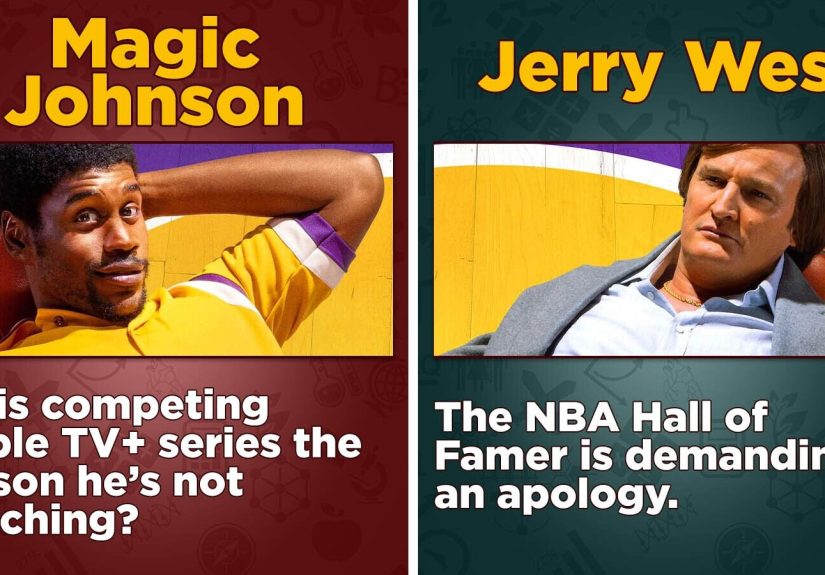
Audiences and many critics largely enjoyed the ride. The real people portrayed in it? Well, that scoreboard looked a little different. Magic Johnson said he did not watch it. Kareem Abdul-Jabbar called it dishonest and dull. Jerry West demanded a retraction and apology over his portrayal. HBO, meanwhile, reminded everyone that Winning Time is a dramatization, not a documentary. In other words, the show became exactly what modern television loves most: entertaining, controversial, highly bingeable, and followed by a second game played entirely in the press.
This article breaks down why Winning Time became such a fascinating pop culture contradiction: a series many viewers loved precisely because it was loud, stylish, and messy, while several of its real-life subjects objected because it was loud, stylish, and messy with their names attached.
What Is Winning Time About?
Winning Time: The Rise of the Lakers Dynasty is an HBO sports drama inspired by Jeff Pearlman’s book Showtime: Magic, Kareem, Riley, and the Los Angeles Lakers Dynasty of the 1980s. The series follows the transformation of the Los Angeles Lakers after Jerry Buss bought the team in 1979 and helped turn it into a glittering basketball empire.
The show begins at the edge of a cultural explosion. The NBA is changing. Los Angeles is ready for spectacle. Magic Johnson is entering the league with a smile bright enough to qualify as municipal lighting. Kareem Abdul-Jabbar is already a giant, both literally and historically. Jerry West is trying to shape a team. Pat Riley is still on the path toward becoming the slick-haired coaching icon who looks like he was assembled in a boardroom by Armani and ambition.
On paper, this is a basketball story. On screen, it is also a story about celebrity, race, money, masculinity, ego, media, and the invention of sports as premium entertainment. The Lakers did not merely win games in the 1980s. They sold a fantasy: courtside glamour, fast breaks, famous fans, Laker Girls, Forum energy, and basketball as Hollywood’s favorite nightlife accessory.
Why Viewers Loved Winning Time
For many viewers, Winning Time worked because it refused to behave like a polite biography. It did not enter the room quietly, remove its shoes, and ask where to sit. It kicked open the door wearing gold, purple, and a grin.
It Had Style for Days
The series used fourth-wall breaks, grainy footage, direct address, split screens, archival-style textures, and sudden tonal shifts. At times, watching Winning Time felt like flipping channels in 1982 while someone spilled champagne on the remote. That is not a complaint. The visual language matched the era’s excess. Showtime basketball was fast, theatrical, and unapologetically bright. The show copied that rhythm with a camera that rarely seemed interested in standing still.
It Turned Basketball History Into Drama
The 1980s Lakers were already mythic. Magic Johnson’s rookie brilliance, Kareem’s skyhook, Pat Riley’s rise, Jerry Buss’s showman instincts, and the Lakers-Celtics rivalry are not tiny footnotes in sports history. They are giant neon signs. Winning Time understood that the material was naturally dramatic and leaned into it.
Instead of presenting the Lakers dynasty as a museum exhibit, the show made it feel alive, sweaty, insecure, funny, and occasionally ridiculous. It gave viewers the emotional sensation of being behind the curtain, even when the curtain was made of dramatized fabric.
The Cast Was a Major Selling Point
John C. Reilly played Jerry Buss with charm, hunger, and a twinkle that suggested the man could sell you a basketball team, a nightclub booth, and possibly a timeshare before halftime. Quincy Isaiah brought youthful charisma to Magic Johnson. Solomon Hughes gave Kareem Abdul-Jabbar a guarded dignity. Jason Clarke’s Jerry West became one of the most talked-about performances, though also one of the most controversial. Adrien Brody’s Pat Riley slowly emerged as the future mastermind hiding in plain sight.
The ensemble helped the series feel bigger than a simple sports recap. Even when viewers disagreed with choices, the show gave them performances worth debating. In the streaming era, that alone is a victory. Half of television disappears like a missed free throw. Winning Time left fingerprints.
Why the People Portrayed Did Not Love It
The central irony of Winning Time is baked right into the title of this article: plenty of viewers enjoyed the show, but several Lakers legends were not exactly sending fruit baskets to HBO.
Magic Johnson Rejected the Series
Magic Johnson repeatedly made clear that he had no interest in watching the show. His main criticism was that the Lakers’ story could not be properly told without the people who lived it. From his point of view, the Showtime era was too personal, too specific, and too tied to the real relationships inside the organization to be captured by outsiders guessing from the sidelines.
That criticism matters because Magic was not just a player in the Showtime story. He was the engine. His personality changed the Lakers, helped reshape the NBA, and turned basketball into a more nationally marketable product. If the man at the center says, “That is not us,” viewers have to take the objection seriously, even if they still enjoy the show as drama.
Kareem Abdul-Jabbar Took Issue With the Writing
Kareem Abdul-Jabbar’s criticism was especially sharp because it was not only about personal offense. He argued that the series flattened real people into caricatures. In his view, dramatic license is acceptable when it reveals a deeper truth, but not when it replaces complexity with cheap shorthand.
That is an important distinction. A dramatization does not need to recreate every breakfast order, locker-room pause, or awkward handshake. But when a real person’s values, temperament, or relationships are simplified for easy laughs or quick conflict, the ethical ground gets slippery. Kareem’s critique landed because he framed the problem not as “they made me look bad,” but as “they made people less human.”
Jerry West Objected Strongly to His Portrayal
No controversy around Winning Time became louder than Jerry West’s response. West’s legal team argued that the series portrayed him as volatile, cruel, and out of control in ways they said did not resemble the real person. The objection was not a casual grumble from someone annoyed by bad lighting. It was a formal demand for a retraction and apology.
This created the biggest debate around the show: where is the line between heightened characterization and reputational harm? Sports fans know Jerry West as “The Logo,” a Hall of Fame player, executive, and one of basketball’s most respected minds. Winning Time presented a version designed for dramatic voltage. HBO defended the series as a fictionalized dramatization based on research and sourcing. Still, the backlash showed that disclaimers do not always settle the matter when real names and real legacies are involved.
The HBO Defense: Drama Is Not Documentary
HBO’s position was straightforward: Winning Time was never presented as a documentary. The network stated that it has a history of producing work based on actual events while fictionalizing parts for dramatic purposes. That defense is common in historical drama, and it is not unreasonable. If every scene in a biographical series had to be documented with courtroom precision, most prestige TV would collapse into a PowerPoint presentation with better lighting.
But viewers are smarter than the industry sometimes pretends. Most people understand that dramatized television rearranges events, sharpens conflict, compresses timelines, and invents private conversations. The real question is not whether Winning Time changed things. Of course it did. The question is whether those changes helped express the spirit of the story or merely made the story louder.
That tension is why the show remains interesting. It sits in the uncomfortable middle between researched history and carnival mirror. Sometimes the mirror reveals something true. Sometimes it just makes everyone’s forehead look enormous.
The Real Showtime Lakers Were Already Cinematic
Part of the debate around Winning Time is that the real Lakers story did not need much extra seasoning. Jerry Buss bought the Lakers and helped create a sports-entertainment model that now feels normal but was revolutionary at the time. The Lakers turned games into events. Celebrities became part of the scenery. The Forum became a stage. Basketball became lifestyle content before “content” was a career path.
On the court, the team was just as electric. Magic Johnson’s passing turned fast breaks into theater. Kareem Abdul-Jabbar’s skyhook was basketball’s most elegant inevitability. James Worthy, Michael Cooper, Byron Scott, Norm Nixon, Jamaal Wilkes, and others gave the franchise depth and personality. Pat Riley eventually shaped the group into a dynasty that won five championships in the 1980s.
That is why the Showtime Lakers remain such fertile ground for storytelling. The team had glamour, conflict, racial and generational dynamics, coaching upheaval, personal reinvention, and a rivalry with the Boston Celtics that practically came pre-packaged with dramatic music. The real story already had everything. Winning Time simply turned the volume up until the speakers rattled.
Was Winning Time Accurate?
The best answer is: sometimes, partly, and not always in the way the real participants preferred. The series used real events as its foundation, including the Lakers’ purchase by Jerry Buss, Magic Johnson’s arrival, Jack McKinney’s bicycle accident, Paul Westhead’s unexpected coaching role, Pat Riley’s rise, Spencer Haywood’s struggles, and the Lakers’ battles with the Celtics.
However, like many historical dramas, the show compressed timelines, invented dialogue, exaggerated personalities, and staged private moments no writer could truly verify. This does not automatically make it worthless. Dramatized history can help audiences become interested in real history. The danger comes when viewers treat every scene as fact because the actors look convincing and the soundtrack slaps.
A smart viewer can enjoy Winning Time while keeping a mental asterisk nearby. Think of the show as a flashy gateway, not the final textbook. It can send viewers toward biographies, interviews, documentaries, NBA archives, and the actual record. That is a healthy way to watch dramatized history: enjoy the popcorn, then read the box score.
Why the Controversy Helped the Show’s Legacy
Ironically, the backlash may be one reason people still talk about Winning Time. A quiet sports drama can vanish. A sports drama that annoys Magic Johnson, Kareem Abdul-Jabbar, and Jerry West becomes a cultural argument.
The controversy gave the series a second life beyond weekly recaps. It raised questions about biopics, consent, ownership of memory, and the entertainment industry’s appetite for turning living people into characters. Who gets to tell a story? Must the subjects approve? What happens when the official memory of a dynasty conflicts with the messier version found in books, reporting, and Hollywood interpretation?
Those questions are bigger than the Lakers. They apply to every dramatization of recent history, from tech founders to musicians, politicians, athletes, and true-crime subjects. The closer the real people are to the present, the more complicated the storytelling becomes. Someone is always alive to say, “Actually, that is not how it happened.” And sometimes they are right.
The Cancellation: A Dynasty Drama Without the Full Dynasty
Winning Time ran for two seasons and ended after the second season finale. That cancellation frustrated fans because the show’s subject had much more story left. The Lakers’ later 1980s championships, the full rise of Riley, the deepening Celtics rivalry, and the eventual transformation of the NBA into a global entertainment machine could have powered several more seasons.
Instead, the series ended before it could fully dramatize the dynasty promised in its own title. That gives Winning Time a strange legacy. It is a show about a team famous for finishing the job, yet the show itself left the court early. Somewhere, a metaphor is stretching its hamstring.
Still, the cancellation may also preserve the series as a fascinating unfinished object. It burned brightly, caused arguments, entertained many viewers, irritated several legends, and disappeared before becoming routine. In a crowded streaming landscape, that is not the worst fate. Better to be remembered as a wild two-season fast break than forgotten as a six-season layup drill.
What Winning Time Says About Sports, Memory, and Myth
Sports history is never just statistics. It is memory, emotion, branding, pride, resentment, and nostalgia wearing a throwback jersey. Fans do not simply remember who won. They remember how it felt, who they watched with, what the arena sounded like, and which player made them believe gravity had briefly been suspended.
Winning Time understood the mythic quality of the Lakers. Its biggest strength was not accuracy in a narrow sense. It was energy. The show captured how enormous the Showtime Lakers felt in the imagination: glamorous, chaotic, talented, flawed, and impossible to ignore.
Its biggest weakness came from the same place. When everything is heightened, subtlety gets shoved to the cheap seats. Real people become symbols. Private pain becomes public entertainment. Complex relationships become punchy scenes. For viewers, that can be thrilling. For the people portrayed, it can feel like watching a stranger borrow your face and crash your car.
Experiences Related to Winning Time: Watching the Show as a Fan, a Skeptic, and a Detective
The experience of watching Winning Time is unusual because it activates three different viewers at once. First, there is the fan, who wants the colors, the music, the games, the swagger, and the gossip. This viewer is delighted by the show’s confidence. The fan sees John C. Reilly strut through a room as Jerry Buss and thinks, “Yes, television should be this caffeinated.” The fan does not pause every five minutes to fact-check a locker-room conversation. The fan wants momentum, and Winning Time delivers momentum like Magic pushing the ball up the floor.
Then there is the skeptic. This viewer notices when a scene feels too convenient, a character too simplified, or a conflict too neatly packaged. The skeptic hears a dramatic monologue and wonders, “Did anyone actually say that, or did a writer just win an argument with a keyboard?” This does not ruin the show, but it changes the flavor. Instead of swallowing every scene whole, the skeptic chews carefully. With Winning Time, that is probably the healthiest approach.
Finally, there is the detective. This viewer finishes an episode and immediately wants to know what really happened. Did Magic actually turn down Nike stock? How did Pat Riley become head coach? What was Jerry Buss like as an owner? How did Kareem and Magic’s relationship evolve? Why did Jerry West object so strongly? The show becomes a doorway into research, and that may be its most underrated achievement. A dramatization that pushes people toward the real history has done something useful, even when it is imperfect.
The best viewing experience comes from letting all three viewers share the couch. Enjoy the show’s electricity. Question its shortcuts. Use it as motivation to learn more. That balance keeps the fun without surrendering your brain at the concession stand.
There is also a broader emotional experience tied to the series. Winning Time reminds viewers that public success often hides private turbulence. Dynasties look clean in highlight reels, but behind them are bruised egos, contract disputes, family tensions, coaching decisions, injuries, jealousies, and people trying to grow up under stadium lights. The show may exaggerate some of that turbulence, but the general idea rings true: winning is rarely peaceful. It is noisy, expensive, political, and occasionally ridiculous.
For younger viewers, the series can make the Showtime Lakers feel less like old footage and more like living culture. For older fans, it can feel like revisiting a myth through a funhouse mirror. For sportswriters and media watchers, it becomes a case study in how entertainment reshapes memory. And for anyone who has ever been part of a group project where everyone remembers the meeting differently, Winning Time offers a familiar lesson: history depends heavily on who gets the final edit.
That is why the show remains worth discussing. It is not merely a Lakers drama. It is a drama about storytelling itself. The Lakers built a dynasty. HBO built a version of that dynasty. The real figures pushed back. The audience argued. Somewhere in the middle is the messy, fascinating space where pop culture lives.
Conclusion: Winning Time Won the Conversation, Even When It Lost the Room
Winning Time: The Rise of the Lakers Dynasty may not have pleased many of the people it portrayed, but it succeeded in making the Showtime Lakers feel urgent again. It brought new attention to one of basketball’s most influential eras, introduced younger audiences to the personalities behind the purple-and-gold mythology, and sparked a necessary debate about the risks of dramatizing real lives.
The show was stylish, funny, excessive, flawed, and controversial. In a strange way, that makes it perfectly suited to its subject. The Showtime Lakers were never just a basketball team. They were a spectacle, a business revolution, a celebrity magnet, and a winning machine. Winning Time captured the spectacle beautifully, even when its version of the people inside that spectacle drew serious objections.
So yes, everybody loved itexcept, famously, several people portrayed in it. But that tension is exactly why the series still matters. It reminds us that legends are not fixed objects. They are contested stories. And when Hollywood gets hold of them, the result may be entertaining, infuriating, inaccurate, insightful, or all of the above before the first commercial break.