Table of Contents >> Show >> Hide
- What Is the Lepromin Skin Test?
- How the Test Is Performed
- What a Positive or Negative Result Means
- Why the Lepromin Skin Test Is Not Used to Diagnose Leprosy Today
- How Leprosy Is Diagnosed Now
- Symptoms That May Lead to Testing for Hansen’s Disease
- Treatment, Prognosis, and Why Early Diagnosis Matters
- Lepromin Test vs. Modern Leprosy Testing
- Common Questions About the Lepromin Skin Test
- Experiences Related to the Lepromin Skin Test and Leprosy Evaluation
- Final Thoughts
- SEO Tags
The lepromin skin test sounds like the kind of exam that should come with a clipboard, a raised eyebrow, and a mysterious Latin phrase. In reality, it is a historically important but limited test used in the study and classification of leprosy, also called Hansen’s disease. It is not the main test doctors use today to diagnose the disease, and that distinction matters a lot.
For decades, the lepromin skin test helped clinicians understand how a person’s immune system responded to Mycobacterium leprae, the bacterium that causes leprosy. That made it useful for classifying the disease and estimating prognosis. But medicine has moved on. In modern practice, doctors rely far more on clinical examination, skin or nerve biopsy, acid-fast staining, and molecular tests such as PCR. In other words, the lepromin test is still medically interesting, but it is no longer the star of the diagnostic show.
This guide explains what the lepromin skin test is, how it works, what positive and negative results may suggest, why it is not considered a primary diagnostic test, and how leprosy is evaluated today. If you want the short version, here it is: the lepromin test is best understood as a tool for classification, immune-response assessment, and historical context, not a yes-or-no answer for leprosy.
What Is the Lepromin Skin Test?
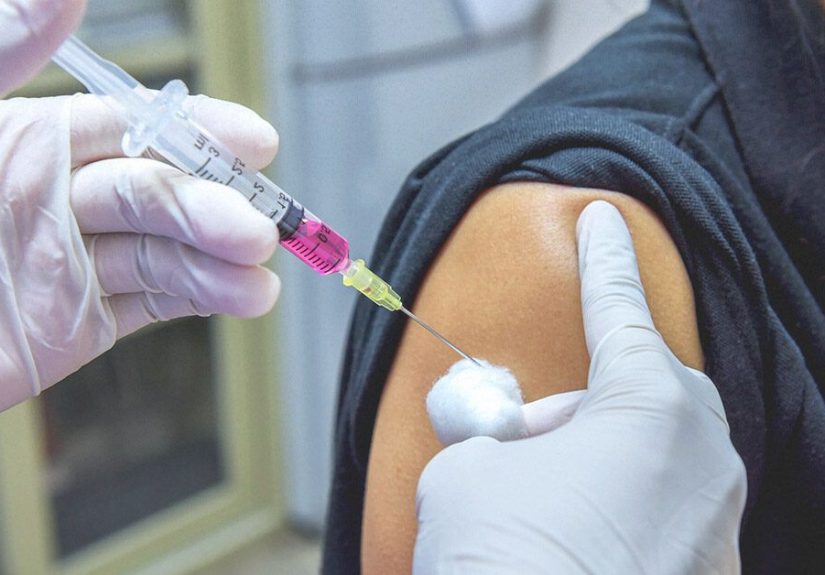
The lepromin skin test is an intradermal skin test that uses inactivated material derived from Mycobacterium leprae. A small amount of antigen is injected into the skin, usually on the forearm, and the area is checked for a delayed immune reaction. The purpose is not to detect the bacterium directly. Instead, the test helps show how strongly the body mounts a cell-mediated immune response to leprosy-related antigen.
That detail is the whole game. The lepromin skin test does not function like a modern infectious disease test that tries to prove whether the organism is present in the body right now. It behaves more like an immune-response snapshot. Because of that, it can help distinguish between different forms of Hansen’s disease, but it cannot reliably confirm or exclude disease by itself.
Leprosy exists on a clinical spectrum. On one end is tuberculoid disease, where the immune response is generally stronger and bacterial burden is lower. On the other end is lepromatous disease, where the immune response is weaker and bacterial burden is higher. The lepromin test historically helped clinicians see where a patient might fall on that spectrum.
How the Test Is Performed
The procedure itself is straightforward. A small amount of lepromin antigen is injected just under the skin. After that, the site is read at two different time points:
Fernandez Reaction
This is the early reaction, usually assessed at about 24 to 48 hours. It reflects an earlier delayed hypersensitivity response. Think of it as the immune system’s quick reply.
Mitsuda Reaction
This is the later reaction, typically read around 3 to 4 weeks after injection. It is the better-known portion of the test and has historically been more useful for classification and prognosis. A larger nodule or firm reaction at this stage has been associated with stronger cell-mediated immunity.
Patients may feel a little stinging or burning when the antigen is injected, and mild itching can happen afterward. Serious reactions are uncommon, though any skin test carries at least a small chance of local irritation or allergy. It is not exactly a roller-coaster ride, but it is also not a spa treatment.
What a Positive or Negative Result Means
This is where many readers expect a tidy “positive means yes, negative means no” explanation. Sadly, the lepromin skin test refuses to be that cooperative.
Positive Lepromin Test
A positive reaction is more commonly associated with tuberculoid and borderline tuberculoid forms of leprosy. These forms tend to occur in people whose immune systems are mounting a stronger cell-mediated response against the organism. Historically, a positive Mitsuda reaction suggested a better host defense and often a more favorable prognosis.
Negative Lepromin Test
A negative reaction is common in lepromatous leprosy, where the immune response to M. leprae is weaker. But a negative result does not rule out disease. That is one of the biggest limitations of the test. A person can have leprosy and still show little or no reaction.
Why Interpretation Gets Tricky
The result is not specific enough to serve as a stand-alone diagnostic tool. Some healthy people may have little reaction, and immune responses can vary depending on prior sensitization and host factors. In plain English, the test tells you something interesting about the immune system, but not enough to make the diagnosis all by itself.
That is why the lepromin test is better viewed as a classification aid rather than a diagnostic answer key.
Why the Lepromin Skin Test Is Not Used to Diagnose Leprosy Today
Modern experts are pretty clear on this point: the lepromin skin test is not recommended as the main method to diagnose leprosy. There are several reasons why.
It Does Not Detect Active Infection Reliably
The test measures immune response, not direct presence of the organism. That means it cannot reliably answer whether a patient currently has active Hansen’s disease.
It Cannot Reliably Distinguish Early Disease
In early or atypical cases, the immune response may not be strong or predictable enough to make the test useful. That is a major problem because early diagnosis is exactly when clinicians need precision most.
It Is Not Specific Enough
Positive and negative results do not map neatly onto “disease” and “no disease.” The overlap is one reason researchers have spent years developing newer skin-test antigens and molecular methods.
Modern Tests Are Better
Today, clinicians have better tools, especially biopsy, acid-fast staining, and PCR-based testing. These methods are much more useful in confirming the diagnosis and guiding care.
It Has Become Largely Historical in the United States
In the U.S., the National Hansen’s Disease Program has noted that the lepromin reagent is no longer available. That makes the test even more of a historical or research-era tool than a routine clinical option.
How Leprosy Is Diagnosed Now
If the lepromin skin test is not the main event, what do doctors actually use? The answer is a combination of clinical judgment and laboratory confirmation.
Clinical Examination
Doctors look for the classic warning signs of Hansen’s disease: skin lesions that may be pale, reddish, or differently pigmented; sensory loss in those lesions; thickened peripheral nerves; weakness; numbness in the hands or feet; and, in some cases, eye or nasal involvement.
Because leprosy is rare in the United States, diagnosis can be delayed when clinicians do not recognize the pattern right away. That delay matters. Untreated nerve involvement can lead to permanent disability.
Skin Biopsy
A biopsy remains one of the most important confirmatory tools. The specimen can show the characteristic pathologic pattern and may reveal acid-fast bacilli. Proper biopsy technique matters too. Samples should be taken from an active area of the lesion and be deep enough to capture the right tissue.
Acid-Fast Staining and Microscopy
Microscopic evaluation may show the organism in tissue, especially in multibacillary disease. This is one of the classic ways to confirm the diagnosis in the right clinical setting.
PCR and Molecular Testing
PCR testing can detect DNA from M. leprae or M. lepromatosis. It is especially helpful in atypical, early, or difficult cases where clinical findings and routine pathology do not tell the full story. Molecular methods have become a major upgrade over older approaches.
Specialist Referral
In the United States, the National Hansen’s Disease Program provides consultation, diagnostic support, and treatment access. That is important because leprosy can masquerade as several other neurologic or dermatologic conditions, and getting the diagnosis right makes a huge difference.
Symptoms That May Lead to Testing for Hansen’s Disease
A patient is rarely sent for evaluation because someone casually thought, “Maybe it’s time for an obscure historical skin test.” Much more often, clinicians become concerned because of a combination of symptoms such as:
- Numb or less-sensitive skin patches
- Persistent skin lesions that do not respond to standard treatment
- Peripheral nerve thickening
- Weakness in the hands or feet
- Painless injuries, ulcers, or burns due to sensory loss
- Eye symptoms or eyebrow loss in advanced disease
- A history of exposure risk, travel, or residence in areas where cases occur
Leprosy is not highly contagious, and most people are naturally not susceptible to infection. Still, when the disease is missed, the consequences can be lasting, especially for nerve function.
Treatment, Prognosis, and Why Early Diagnosis Matters
The good news is that Hansen’s disease is treatable and curable with multidrug antibiotic therapy. Regimens commonly include combinations built around rifampin, dapsone, and clofazimine, with other medications sometimes used depending on clinical needs and reaction states.
Even better, patients typically become noninfectious quickly after starting appropriate therapy. That point deserves a spotlight because old myths about leprosy still hang around like an unwanted party guest. Modern treatment works, and isolation is not the routine story people once imagined.
What does remain serious is nerve injury. If diagnosis is delayed, damage can become permanent. That is why modern leprosy care focuses so heavily on early recognition, classification, antibiotic treatment, management of inflammatory reactions, and protection of hands, feet, and eyes.
Lepromin Test vs. Modern Leprosy Testing
Here is the practical takeaway:
- Lepromin skin test: useful historically for classification and prognosis; not reliable for diagnosis
- Skin biopsy: a key modern diagnostic method
- Acid-fast staining: helpful for identifying bacilli in tissue
- PCR: increasingly important for confirming difficult cases
- Clinical evaluation: still the foundation of suspicion and decision-making
If the lepromin test is a map of immune behavior, biopsy and PCR are much closer to boots on the ground.
Common Questions About the Lepromin Skin Test
Is the lepromin skin test the same as a TB skin test?
No. Both are skin tests involving delayed immune responses, but they are used for different diseases and have very different clinical roles.
Can a positive lepromin test prove I have leprosy?
No. A positive result does not prove active disease.
Can a negative lepromin test rule out leprosy?
No. A person with lepromatous disease may have a negative result.
Is the test still commonly available?
Not in routine U.S. practice. It is largely of historical or research interest, and the reagent is not part of standard modern diagnostic workflow.
What is the better test today?
There is not a single magic button, but skin biopsy with appropriate laboratory evaluation, supported by PCR when needed, is far more useful than lepromin testing for diagnosis.
Experiences Related to the Lepromin Skin Test and Leprosy Evaluation
The following experiences are written as realistic composite scenarios based on common clinical patterns, patient concerns, and documented features of Hansen’s disease care. They are not individual patient case reports.
One common experience begins with confusion, not certainty. A person notices a pale patch on the arm or leg that does not hurt, itch, or act dramatic enough to seem urgent. Maybe it feels a little numb. Maybe it does not respond to creams. Because the lesion is painless, life keeps moving. Work happens. School happens. Laundry still judges everyone from the corner. Weeks turn into months. Eventually, the person also notices tingling in the fingers or a strange deadened feeling in one foot. That is often when the journey shifts from “weird rash” to “something is definitely off.”
Another common experience is diagnostic delay. In places where leprosy is uncommon, patients may see several clinicians before anyone seriously considers Hansen’s disease. A dermatologist may think first about eczema, fungal infection, sarcoidosis, vitiligo, neuropathy, or another inflammatory skin condition. A neurologist may focus on peripheral nerve symptoms without immediately linking them to the skin findings. This does not mean doctors are careless. It means rare diseases are sneaky, and leprosy can mimic other conditions surprisingly well.
For some patients, hearing the word “leprosy” is emotionally harder than hearing the treatment plan. The disease carries centuries of stigma, fear, and misinformation. Many people imagine exile, isolation, or inevitable disfigurement. Modern reality is very different. Once patients learn that Hansen’s disease is treatable, curable, and not easily spread through casual contact, the emotional temperature in the room often changes. Anxiety does not disappear instantly, but it becomes more manageable.
From the clinician’s side, the experience can be one of pattern recognition and humility. A patient with numb skin patches, thickened nerves, or unexplained sensory loss may trigger a moment of suspicion: this does not quite fit the usual playbook. At that point, older terms like “lepromin” may surface in discussion, especially in academic or historical conversations, but the practical next steps usually involve biopsy, pathology, and molecular testing. In modern care, the lepromin skin test is more of a historical footnote than a routine order.
There is also the experience of relief that follows a real diagnosis. Once patients finally have an answer, care becomes more focused. They can start antibiotics, learn how to protect areas with sensory loss, and receive follow-up for nerve function, skin changes, and inflammatory reactions. The diagnosis can be scary, but uncertainty is its own kind of heavy. For many people, clarity is the first real step toward recovery.
Families often go through their own learning curve. Someone hears “leprosy” and imagines immediate danger to everyone in the house. Then they learn the modern facts: the disease is not highly contagious, most people are naturally resistant, and treatment rapidly lowers infectiousness. That education matters because it helps replace fear with practical support. Instead of panic, families can focus on medication adherence, follow-up visits, and watching for injuries in numb areas.
Finally, there is the long-view experience. Even after treatment begins, patients may still need support for nerve symptoms, eye care, foot care, and the social impact of having a misunderstood disease. In that sense, the lepromin skin test represents something larger than an old diagnostic method. It reminds us how medicine has evolved: from relying on broad immune clues to using more precise pathology and molecular tools, and from fear-driven myths to evidence-based, humane care.
Final Thoughts
The lepromin skin test holds an important place in the history of leprosy care, but its role today is limited. It helped clinicians understand immune response and classify Hansen’s disease, especially along the tuberculoid-to-lepromatous spectrum. What it did not do well enough was diagnose the disease with the accuracy modern medicine requires.
That is why current leprosy evaluation focuses on clinical signs, biopsy, acid-fast staining, and PCR support rather than the old lepromin approach. So if you came here wondering whether the lepromin skin test is the modern go-to test for leprosy, the answer is no. It is medically relevant, historically interesting, and occasionally useful for understanding disease classification, but it is no longer the headline act.
In today’s world, the real message is simpler and more hopeful: Hansen’s disease is treatable, curable, and best managed through early recognition and modern diagnostic care.