Table of Contents >> Show >> Hide
- What Did Banksy Post On Instagram?
- Why The Bathroom Made The Perfect Banksy Canvas
- The Meaning Behind Banksy’s Rats
- Lockdown Humor With A Sharp Edge
- Why The Artwork Went Viral
- Banksy, Anonymity, And The Power Of The Caption
- How This Piece Fits Into Banksy’s Larger Work
- The Toilet Paper Joke That Everyone Understood
- What Artists Can Learn From Banksy’s Work-From-Home Moment
- Work-From-Home Experiences That Make Banksy’s Bathroom Feel Personal
- Conclusion: A Tiny Bathroom, A Big Cultural Moment
- SEO Tags
When most people work from home, the biggest risk is a coffee spill, a questionable Wi-Fi signal, or a pet walking across the keyboard during a video call. When Banksy works from home, apparently the bathroom becomes a crime scene run by rats.
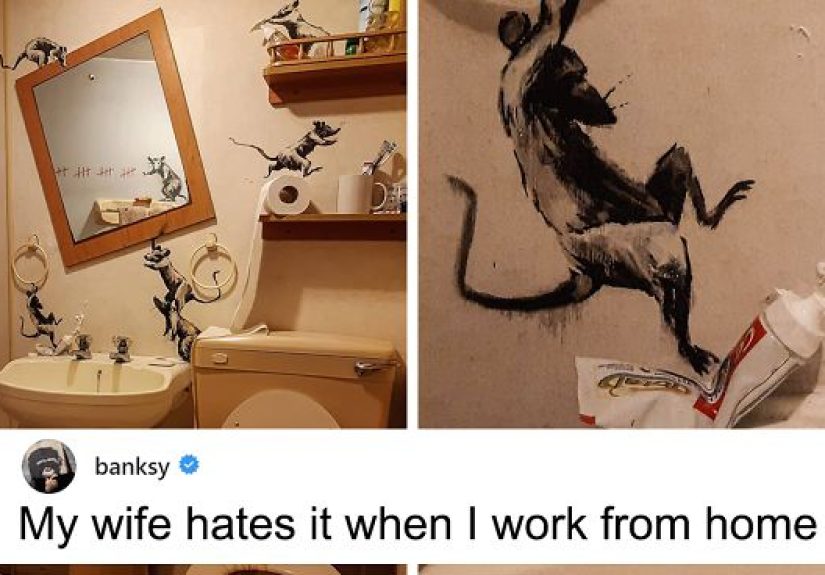
In April 2020, during the height of global COVID-19 lockdowns, the famously anonymous street artist revealed a new artwork on Instagram with the caption: “My wife hates it when I work from home.” The post showed what appeared to be Banksy’s own bathroom transformed into a chaotic miniature theater of mischief. Instead of a clean sink, orderly toilet paper, and peaceful domestic calm, viewers saw stenciled rats squeezing toothpaste, swinging from fixtures, unrolling toilet paper, knocking a mirror off balance, and generally behaving like tiny freeloading roommates with no respect for shared spaces.
The image instantly felt like the perfect quarantine joke. At a time when millions of people were trapped indoors, turning kitchen tables into offices and bedrooms into conference rooms, Banksy captured the strange comedy of domestic confinement. His “work from home” setup did not include a laptop stand or ergonomic chair. It included rats, mess, social commentary, and just enough bathroom humor to remind us that fine art can still have a wicked little grin.
What Did Banksy Post On Instagram?
Banksy shared a series of five photos showing a bathroom invaded by his signature rats. The animals were not real, of course, although anyone who has lived in an old apartment may have paused for a second. They were painted and arranged to interact with the room itself, making the piece feel less like a flat mural and more like a domestic installation.
One rat appeared to step on an open tube of toothpaste, sending a white trail of paste across the surface. Another seemed to run across a roll of toilet paper as it unraveled onto the floor. A rat in the mirror’s reflection appeared to be counting the days of lockdown on the wall. Another hung from a towel ring or light cord. One especially cheeky rodent appeared near the toilet, turning a private bathroom into the world’s least hygienic gallery.
The work had all the classic ingredients of a Banksy reveal: anonymity, humor, a familiar symbol, a sudden online appearance, and a punchline sharp enough to travel faster than a rat near a snack cabinet. Because Banksy often uses Instagram and his official channels to confirm authorship, the post quickly became a news item as well as an artwork.
Why The Bathroom Made The Perfect Banksy Canvas
Banksy is known for public art: walls, bridges, streets, train cars, shopfronts, and the occasional unexpected architectural surface. His work usually appears where people are not expecting to meet art. That is part of the point. A Banksy does not politely wait behind velvet ropes. It jumps out during the commute, interrupts a city wall, and asks whether anyone is paying attention.
During lockdown, however, the public world shrank. Streets emptied, museums closed, and the ordinary rhythms of city life went quiet. For a street artist, that presented a strange problem: what happens when the street is off-limits? Banksy’s answer was simple, funny, and oddly profound. If the city is closed, the bathroom will do.
The bathroom is also a brilliantly awkward choice. It is private, practical, and not particularly glamorous. Nobody walks into a bathroom expecting a major cultural event unless the plumbing has failed in a historically significant way. By turning this small domestic space into a scene of comic destruction, Banksy collapsed the distance between world-famous art and everyday mess. The result was relatable because it looked like lockdown felt: cramped, silly, restless, and slightly out of control.
The Meaning Behind Banksy’s Rats
Rats are one of Banksy’s most recognizable motifs. Across his career, he has used them as symbols of survival, rebellion, dirt, invisibility, and social disruption. They are small but persistent. They live in the margins. They move through cities unnoticed until suddenly they are everywhere. In Banksy’s world, that makes them perfect stand-ins for outsiders, rebels, and anyone thriving without permission.
In the “My wife hates it when I work from home” piece, the rats do not simply decorate the bathroom. They take it over. They turn hygiene into slapstick, order into chaos, and domestic routine into performance art. This is why the piece works so well: the rats behave like the collective mood of quarantine. They are stir-crazy, bored, mischievous, and apparently out of toilet paper etiquette.
The rat counting days on the wall is especially effective. It is a small visual joke, but it captures the way lockdown blurred time. Monday felt like Thursday. April felt like a year. The calendar became less a schedule and more a survival chart. Banksy’s rat was not just a pest; it was the tiny mascot of everyone asking, “How long have we been in here?”
Lockdown Humor With A Sharp Edge
At first glance, the artwork is funny because it is messy. It looks like what might happen if a rodent fraternity rented your bathroom for spring break. But Banksy’s best jokes usually have a second layer. Here, the comedy points toward the psychological pressure of isolation.
In 2020, working from home was not just a lifestyle trend. For many people, it became a sudden and stressful reality. Homes turned into offices, classrooms, gyms, restaurants, and emotional containment units. A sink was no longer just a sink. It was next to the meeting room, across from the lunchroom, and down the hall from the place where someone was trying to teach long division over a weak internet connection.
Banksy’s bathroom rats captured that collapse of boundaries. The home was supposed to be a refuge from work, but work marched right in, kicked off its shoes, and started asking where the charger was. The caption “My wife hates it when I work from home” made the piece feel like a domestic complaint, but the image hinted at something bigger: when the outside world invades the inside world, even the bathroom is not safe.
Why The Artwork Went Viral
The post spread quickly because it had perfect timing. It arrived when people were hungry for signs that creativity had not been canceled. The world was anxious, but the artwork offered a pressure valve. It did not pretend everything was fine. It said, in true Banksy fashion, that everything was weird, and maybe the best response was to stencil a rat onto the wall and let it trash the place.
The piece was also easy to understand. You did not need an art history degree to get the joke. You only needed to have spent too many days indoors, stared at the same four walls, and considered whether your household had become slightly feral. In that sense, Banksy’s bathroom became a global room. Everyone recognized the feeling.
Another reason the artwork traveled so well was its format. Banksy did not need a gallery opening, a press release, or a museum wall. Instagram became the exhibition space. The audience did not have to go anywhere, which was convenient because nobody was going anywhere anyway. The work lived exactly where lockdown culture lived: online, shareable, caption-ready, and emotionally immediate.
Banksy, Anonymity, And The Power Of The Caption
Banksy’s anonymity has always been part of his appeal. The less the public knows about the artist, the more attention shifts toward the work, the message, and the performance surrounding each reveal. That mystery also makes a caption like “My wife hates it when I work from home” unusually funny. Is it literal? Is Banksy married? Is “wife” part of the joke? Is the bathroom actually his? With Banksy, the uncertainty is not a bug. It is part of the operating system.
The caption works because it sounds ordinary. It could be a complaint from any spouse dealing with a partner who has transformed the house into a workshop. But attached to a Banksy artwork, it becomes absurd. Most work-from-home conflicts involve background noise or dishes left near the sink. Banksy’s version involves an army of painted rats destroying the bathroom.
That contrast is the joke: the domestic sentence meets the artistic stunt. The result feels casual, but the timing, staging, and symbolism are precise. Banksy has long understood that a simple phrase can tilt an image into a larger commentary. Here, the caption turns a bathroom scene into a story about marriage, work, creativity, confinement, and the strange things people do when trapped indoors.
How This Piece Fits Into Banksy’s Larger Work
Banksy’s art often uses humor to make serious ideas more accessible. He has built a career on images that look simple at first but become sharper the longer you stare. Children, police officers, balloons, soldiers, monkeys, and rats all appear in his visual language, usually carrying social or political tension beneath the joke.
The bathroom rats are lighter than some of his more overtly political works, but they still belong to the same tradition. They use a familiar character, a public mood, and a clever setting to say something about life under pressure. The piece also plays with the idea of vandalism. Banksy is known for marking public surfaces, but here he “vandalizes” a private one. The target is not a government wall or a corporate billboard. It is the family bathroom.
That shift matters. In lockdown, the home became political because public policy, public health, employment, family life, and personal space all collided there. By bringing street art indoors, Banksy made the private space feel public. The bathroom became a stage for a shared crisis.
The Toilet Paper Joke That Everyone Understood
One of the most memorable details was the rat running across or unrolling toilet paper. In early 2020, toilet paper had become a bizarre symbol of pandemic anxiety. Shelves emptied. People bought more rolls than any reasonable household could use unless they were preparing to host a very nervous marching band.
Banksy’s toilet paper rat turned that panic into a visual gag. It was not a lecture. It was a small, ridiculous image that said plenty. Scarcity, fear, boredom, consumer behavior, and domestic absurdity all gathered around one humble roll. The joke landed because everyone remembered the moment when toilet paper suddenly became a luxury item and grocery carts started looking like paper-product bunkers.
The humor also made the artwork feel humane. In a period filled with alarming headlines, Banksy did not offer a cure or a grand statement. He offered a laugh with teeth. Sometimes that is enough to make people feel briefly less alone.
What Artists Can Learn From Banksy’s Work-From-Home Moment
Banksy’s bathroom artwork is a useful reminder that creativity does not always require ideal conditions. The best studio may be unavailable. The streets may be empty. The materials may be limited. The world may be upside down. Still, a good idea can turn a tiny room into a global conversation.
The piece also shows the importance of context. A rat on a wall is one thing. A rat unrolling toilet paper during a pandemic lockdown is another. Timing gave the artwork its spark. Banksy did not simply make another rat image; he placed the rat inside a moment everyone was living through.
For writers, designers, photographers, and creators, that is the lesson: pay attention to the room you are in. Sometimes the most powerful material is not somewhere far away. It is in the inconvenience, clutter, boredom, and frustration sitting right in front of you. Banksy looked at a bathroom and saw a stage. That is the creative move.
Work-From-Home Experiences That Make Banksy’s Bathroom Feel Personal
The reason “My Wife Hates It When I Work From Home” still feels memorable is that it exaggerates something very real. Working from home can be wonderful, but it can also turn daily life into a sitcom with poor lighting. At first, the arrangement sounds dreamy: no commute, comfortable clothes, lunch five steps away, and the possibility of answering emails while wearing slippers that have seen better decades. Then reality arrives carrying a laundry basket.
A home office is rarely just an office. It might be a corner of the dining table, a desk wedged beside a bed, or a laptop balanced dangerously close to a bowl of cereal. Someone else in the house may be on a call at the same time. A child may need help. A dog may decide that the mail carrier is a national emergency. A partner may ask, with impressive restraint, why there are three coffee cups, two charging cables, and a suspicious stack of notebooks in what used to be a peaceful living room.
That is why Banksy’s rats feel so accurate. They are the mess we create when work invades home. They are the toothpaste squeezed from the wrong end, the paper trail across the floor, the mirror knocked crooked by a rushed morning, and the tiny mental tally marks we make while counting how many days we have answered emails from the same chair. The rats are funny because they are guilty, and if we are honest, so are we.
Many people discovered during lockdown that productivity is not only about discipline. It is also about boundaries. When the laptop is always nearby, work can spread like spilled paint. A quick message becomes a late-night task. A meeting runs into dinner. The home starts to feel less like a shelter and more like an office with a refrigerator. Banksy’s bathroom captures that invasion in a visual way. The rats do not politely stay on one wall. They climb, smear, swing, and spread. That is exactly how work can behave when nobody tells it to leave.
There is also the relationship side of working from home. Sharing space requires negotiation, humor, and a heroic tolerance for background noise. One person’s “creative process” may look to another person like an avoidable disaster. One person’s “temporary setup” may remain on the table for six months. In that light, Banksy’s caption is not just a joke about his wife. It is a universal domestic headline. Someone, somewhere, has hated every home office at least once.
The healthiest response may be to laugh, clean up, and create better boundaries. Put work away at the end of the day. Protect shared spaces. Respect the people who live with your deadlines. And if your job involves painting rats in the bathroom, maybe give your spouse advance notice. A little communication can prevent a lot of artistic pest control.
Conclusion: A Tiny Bathroom, A Big Cultural Moment
Banksy’s “My wife hates it when I work from home” artwork succeeded because it was simple, timely, and unmistakably human. It turned a bathroom into a lockdown stage and a pack of rats into symbols of restlessness, humor, and domestic chaos. The piece did not need a museum wall to matter. It needed only a room everyone recognized and a joke everyone understood.
Years later, the artwork remains a sharp snapshot of a strange period when the world moved indoors and ordinary homes became overloaded with work, fear, boredom, and creativity. Banksy’s rats made a mess, but they also made a point: even when public life stops, art finds a crack in the wall, a roll of toilet paper, or a bathroom mirror and gets back to work.