Table of Contents >> Show >> Hide
- What Is the Nail Psoriasis Severity Index?
- Why Doctors Need a Scoring Tool for Nail Psoriasis
- How the NAPSI Score Is Calculated
- What a NAPSI Score Tells the Doctor
- How Doctors Use NAPSI in Real Clinical Practice
- NAPSI and Psoriatic Arthritis: Why the Connection Matters
- What NAPSI Does Well
- Limitations of the NAPSI Score
- What About Modified NAPSI?
- When a Score Helps, But the Whole Patient Still Matters More
- Treatment Tracking: Why the Wait Can Feel So Long
- Common Experiences Patients and Doctors Describe With Nail Psoriasis
- Final Thoughts
Nails are tiny. Their ability to cause outsized frustration, however, is enormous. When nail psoriasis shows up, it can turn simple thingsbuttoning a shirt, typing on a keyboard, opening a soda can, or just waving at another human without feeling self-consciousinto a surprisingly big deal. That is exactly why dermatologists use a scoring tool called the Nail Psoriasis Severity Index, or NAPSI. It gives doctors a structured way to measure how badly psoriasis is affecting the nails and whether treatment is actually helping.
If the name sounds like something invented by a committee that really loves acronyms, that is because it probably was. Still, NAPSI is useful. It helps turn what looks like a random collection of pits, discoloration, crumbling, and lifting into a standardized number clinicians can follow over time. In other words, it lets a dermatologist compare today’s nails with the same nails three months from now without relying on memory and optimistic guessing.
What Is the Nail Psoriasis Severity Index?
The Nail Psoriasis Severity Index is a clinical scoring system doctors use to assess the severity of nail psoriasis. It was designed to be a numeric, reproducible, and relatively simple way to evaluate changes in the nail unit. The tool focuses on two major parts of the nail anatomy that psoriasis commonly affects: the nail matrix and the nail bed.
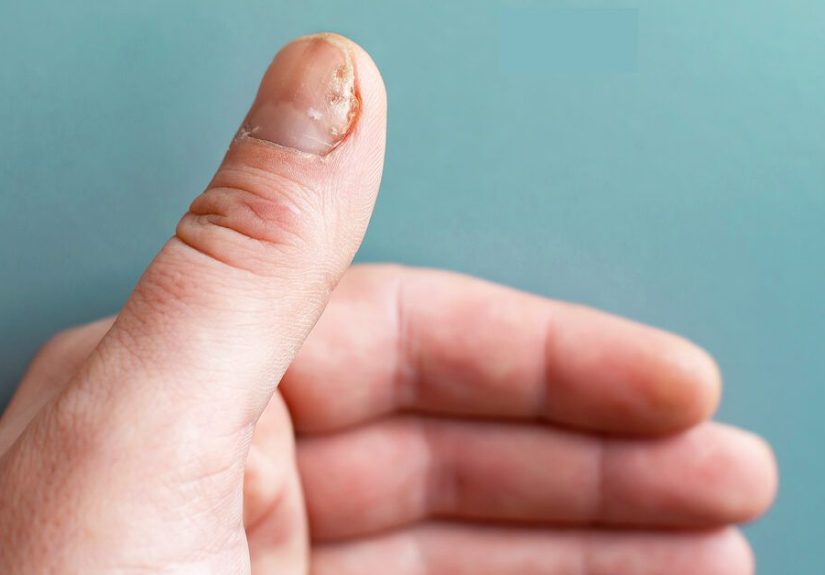
That distinction matters. The nail matrix is the area that produces the nail plate, so disease there often causes features such as pitting, white spots, red spots in the lunula, and crumbling. The nail bed, on the other hand, is the tissue under the nail plate, and problems there tend to create onycholysis (nail lifting), splinter hemorrhages, subungual hyperkeratosis (buildup under the nail), and oil-drop or salmon-patch discoloration.
Dermatologists like NAPSI because nail psoriasis can be stubborn, slow to improve, and easy to underestimate if nobody measures it carefully. Skin plaques may improve faster than nails, but nails grow slowly, so the timeline for improvement is usually longer. A formal score gives the care team a reality check.
Why Doctors Need a Scoring Tool for Nail Psoriasis
Nail psoriasis is not just a cosmetic issue. It can be painful, interfere with daily activities, and take a real bite out of quality of life. For some patients, nail involvement is also a clue that psoriatic arthritis may be present or may develop. That makes nail changes clinically important even when the affected area looks small. One damaged thumbnail may occupy very little real estate, but it can still cause a lot of irritation, embarrassment, and functional trouble.
Without a scoring tool, one appointment might sound like this: “Your nails look a little better… I think?” That is not ideal medicine. NAPSI gives doctors a baseline, a follow-up target, and a common language for charting progress. It is especially useful in specialist clinics, research studies, and treatment plans where the goal is to document whether a therapy is moving the needle.
How the NAPSI Score Is Calculated
The classic NAPSI method sounds more complicated than it really is. Each nail is divided into four imaginary quadrantslike drawing a tic-tac-toe board but stopping before you get too artistic. The doctor then checks each quadrant for signs of matrix disease and bed disease.
Step 1: Divide the Nail Into Four Quadrants
Each fingernail is mentally split into four sections using one horizontal and one vertical line.
Step 2: Score the Nail Matrix
If any matrix feature is present in a quadrant, that quadrant gets a point for matrix involvement. Matrix signs include:
- Pitting
- Leukonychia, or white discoloration
- Red spots in the lunula
- Crumbling of the nail plate
Step 3: Score the Nail Bed
The same logic is used for nail bed features. If a quadrant shows bed involvement, it gets a point. Nail bed signs include:
- Onycholysis
- Splinter hemorrhages
- Subungual hyperkeratosis
- Oil-drop or salmon-patch discoloration
Step 4: Add It Up
Each nail can score from 0 to 8: up to 4 points for matrix changes and up to 4 points for bed changes. If all ten fingernails are scored, the total NAPSI range is 0 to 80. In some settings, toenails are also assessed, which can expand the total score even further.
A higher NAPSI score means more severe nail psoriasis. A falling score over time generally means treatment is working. It is not glamorous, but it is practical, and practical wins a lot of arguments in medicine.
What a NAPSI Score Tells the Doctor
NAPSI is not a blood test, a biopsy, or a crystal ball. It does not tell a doctor everything. What it does tell them is how much visible nail involvement is present at that moment and whether it is improving, stable, or worsening over time.
For example, a patient might come in with pitting in several fingernails, onycholysis in two nails, and crumbling in one nail. At baseline, the NAPSI score may show moderate involvement. If that patient starts treatment and comes back four months later, the dermatologist can compare the new score with the old one. Even if the nails still do not look perfect, a drop in the score may show meaningful progress.
That is especially helpful because nail psoriasis often improves slowly. Patients sometimes feel discouraged when they do not see dramatic change after a few weeks. NAPSI can show that improvement is happening even when it feels more like a crawl than a sprint.
How Doctors Use NAPSI in Real Clinical Practice
In the real world, NAPSI is usually one part of a larger assessment. A dermatologist may use it to:
- Establish a baseline before treatment starts
- Track improvement after topical therapy, injections, oral treatment, or biologics
- Compare one visit to the next in a standardized way
- Document severity for research studies or insurance-related treatment justification
- Monitor target nails that are especially painful or functionally important
Doctors may also pair NAPSI with photographs, symptom history, skin examination, and questions about joint pain. If nail disease is severe or unusual, they may think about other conditions that can mimic or overlap with psoriasis, such as fungal nail infections. In some cases, testing is needed because a thick, discolored nail does not come with a tiny label saying, “Hello, I am definitely psoriasis.” That would make life easier, but dermatology has refused to become that convenient.
NAPSI and Psoriatic Arthritis: Why the Connection Matters
One reason dermatologists pay close attention to nail findings is the link between nail psoriasis and psoriatic arthritis. Nail changes are common in people with psoriasis and are particularly frequent in people with psoriatic arthritis. That does not mean every patient with nail psoriasis will develop joint disease, but it does mean nail symptoms deserve respect and follow-up.
If a patient with nail psoriasis also reports morning stiffness, swollen fingers, tender joints, heel pain, or sausage-like swelling of toes, the doctor may think about psoriatic arthritis and consider rheumatology referral or further evaluation. In other words, the nail exam is not just about appearance. Sometimes it is part of a bigger inflammatory puzzle.
What NAPSI Does Well
The biggest strength of NAPSI is standardization. It gives clinicians a repeatable system rather than a vague impression. It is also focused specifically on nail psoriasis, which matters because common skin scores do not capture nail severity well. A person can have relatively limited skin disease but still have nails that are miserable, painful, and highly disruptive.
NAPSI is also widely recognized in dermatology research. In clinical trials, outcomes such as NAPSI 50, NAPSI 75, and NAPSI 100 may be used to describe how much improvement a patient achieved. That makes the score useful not only in offices and clinics, but also in comparing how different treatments perform in studies.
Limitations of the NAPSI Score
Like most medical tools, NAPSI is helpful, but not flawless. One limitation is that it focuses on the presence of certain signs in each quadrant rather than the full intensity of every change. Two nails can end up with the same score even if one looks slightly worse to the human eye.
Another issue is interobserver variability. Different clinicians may score the same nail a little differently, especially when findings are subtle. Researchers have also pointed out that some clinically meaningful features, such as Beau’s lines or nail fold psoriasis, are not fully captured in the classic version of NAPSI.
Most importantly, NAPSI does not measure everything patients care about. It does not directly score pain, embarrassment, trouble using the hands, or the emotional toll of feeling the need to hide your nails in every photo. That is why doctors often combine NAPSI with patient-reported symptoms and quality-of-life measures.
What About Modified NAPSI?
Because the original system has limitations, researchers have proposed modified versions, often called mNAPSI. These versions try to give more gradation and improve reliability. In practice, some clinicians and studies use classic NAPSI, some use a modified version, and some focus on a few representative nails rather than every fingernail.
For patients, the exact flavor of the score matters less than the purpose behind it: measuring change over time in a consistent way. Whether the chart says NAPSI or mNAPSI, the bigger goal is still the sametrack disease severity carefully and make smarter treatment decisions.
When a Score Helps, But the Whole Patient Still Matters More
A NAPSI score is useful, but it should never replace clinical judgment. Doctors still look at the overall picture: how long the nail changes have been present, whether skin psoriasis is active, whether joints are involved, whether infection is possible, how much the nails hurt, and how much daily function is affected.
For example, a concert pianist with a modest NAPSI score may still have a major quality-of-life problem if a few nails are painful or fragile. Meanwhile, another patient with a higher score may be less bothered. Numbers help, but medicine still works best when the number and the person are read together.
Treatment Tracking: Why the Wait Can Feel So Long
One of the most important things doctors explain to patients is that nail improvement is slow. Even when treatment is working, healthy nail growth takes time. That is why dermatologists often use serial scoring and follow-up photos. A patient may feel like nothing is happening, while the measured score shows steady progress.
This is also why good nail care matters. Protecting the nails from trauma, avoiding picking and biting, keeping them trimmed, and reducing infection risk can support medical treatment. For patients with nail psoriasis, everyday habits are not a tiny side quest; they are part of the main storyline.
Common Experiences Patients and Doctors Describe With Nail Psoriasis
In real life, nail psoriasis often creates a strange mix of visible and invisible stress. Patients commonly describe the condition as annoying, painful, stubborn, and weirdly personal. A person may not be especially bothered by a plaque hidden under a sleeve, but nails are always in the public eye. You use them when you shake hands, hand over a credit card, text a friend, or point at something in a meeting. They are small billboards for whatever is going on.
Many people say the first sign is not pain but confusion. They notice tiny pits, yellow-brown spots, roughness, or a nail that seems to be lifting. Some assume it is fungus. Others blame nail polish, detergents, trauma, or “just bad luck.” By the time they reach a dermatologist, they may have tried home remedies, over-the-counter treatments, or internet advice from people who are extremely confident and not nearly as correct as they think they are.
Dermatologists often see another pattern too: the patient whose skin psoriasis is under decent control but whose nails are still misbehaving like they did not get the memo. That can be discouraging. A patient may say, “My skin is better, so why do my nails still look terrible?” The answer is usually that nails grow slowly and need more time. This is where NAPSI can be reassuring. It gives the doctor a way to say, “Yes, improvement is happening, even if it is happening at the speed of a very tired turtle.”
There is also the emotional side. Some patients hide their hands in pockets, avoid sandals because of toenails, skip manicures, or feel embarrassed in social settings. Others worry about work, especially if their job involves hands-on tasks, public interaction, grooming standards, or frequent hand use. For them, a nail score is not just a number; it becomes evidence that the problem is real and worth treating.
Doctors, meanwhile, often use NAPSI as both a map and a measuring tape. It helps them identify whether the matrix, the bed, or both are involved. It helps them decide whether a treatment is doing enough to continue, adjust, or replace. It also helps conversations feel less vague. Instead of “better-ish,” the discussion becomes more concrete: fewer affected quadrants, less lifting, less subungual buildup, a lower total score, better function.
Perhaps the most relatable experience is patience fatigue. Patients want fast results; nails refuse to cooperate. Follow-up visits can feel repetitive. Yet over several months, the trend often matters more than the moment. That is why a structured tool like NAPSI remains valuable. It keeps both doctor and patient focused on measurable progress, not just on whichever nail decided to look dramatic that week.
Final Thoughts
The Nail Psoriasis Severity Index may not have the flashiest name in medicine, but it plays an important role. It helps doctors measure nail psoriasis in a structured way, separate matrix changes from nail bed changes, follow severity over time, and evaluate how well treatment is working. It is especially useful because nail psoriasis can affect function, confidence, and quality of life far more than its small footprint might suggest.
At the same time, NAPSI is only one tool. It works best when combined with a full clinical exam, patient symptoms, joint screening, and practical concerns about daily life. When used that way, it turns nail psoriasis from a frustrating visual mystery into something more manageable: a condition that can be tracked, discussed, and treated with a little more precision and a lot less guesswork.