Table of Contents >> Show >> Hide
- What this Bored Panda-style list is really about (beyond the weird signs)
- 7 categories of house rules that make guests internally scream
- 1) The “this is not a democracy” dinner table
- 2) Food rules that quietly scream “resource control”
- 3) Cleanliness rules that treat humans like fingerprints
- 4) Privacy rules that aren’t really about privacy
- 5) Bathroom rules that create instant discomfort
- 6) Noise rules that feel like living in a library… during an earthquake drill
- 7) Hyper-specific rules that exist because someone did something truly wild once
- Why do people create extreme house rules?
- How to set house rules without making guests feel like suspects
- How to be a houseguest who gets invited back
- When a “house rule” is actually a warning sign
- The real lesson of “Nobody Feel Up My Wife”
- of Experiences Related to These Cringe-Worthy House Rules
- Conclusion
Some homes greet you with warm cookies. Others greet you with a laminated sign that reads like a courtroom transcript.
If you’ve ever stepped inside someone’s house and immediately thought, “I should’ve stayed in the car”, you already understand
why the internet can’t stop sharing stories about bizarre house rules.
A Bored Panda roundup titled “Nobody Feel Up My Wife” collects a batch of guest experiencesrules so awkward, strict, or
oddly specific that visitors didn’t just cringe… they mentally drafted an escape route. And yes, that headline-worthy rule allegedly existed
because the home displayed a very personal pregnancy belly cast in a common area, and some people apparently needed a reminder to keep their hands to themselves.
Funny? Absolutely. But also revealing. Because “house rules” aren’t just about shoes on carpetsthey’re about boundaries, control, comfort, culture,
and sometimes unresolved chaos wearing a friendly “WELCOME” font.
What this Bored Panda-style list is really about (beyond the weird signs)
The stories in “30 house rules that left guests grimacing” hit so hard because they live in a gray zone:
they’re not always illegal, but they’re definitely… a lot. Some rules are harmless quirks. Others feel like power plays.
A few are genuine safety or cleanliness boundaries that just landed with the warmth of a parking ticket.
When people share these moments online, they’re usually sharing one of three things:
- A mismatch of expectations: what feels “normal” in one household feels unhinged in another.
- A boundary that’s real but poorly communicated: “Please don’t do X” becomes “NEVER DO X OR ELSE.”
- A red flag in disguise: rules that hint at fear, control, surveillance, or neglect.
Let’s break down the kinds of rules that make guests grimaceand how to tell the difference between
“quirky but fine” and “please call me an Uber to freedom.”
7 categories of house rules that make guests internally scream
1) The “this is not a democracy” dinner table
A classic grimace-generator is the ultra-controlled meal: everyone seated at an exact time, no talking unless spoken to,
nobody leaving until the head of household is done, and the vibe of a silent monastery… except with meatloaf.
Rules like these don’t just manage mannersthey manage people. Guests feel like they’re performing,
and kids in the home may be living under a constant “don’t mess up” atmosphere. If the rule is about basic courtesy,
it can be fine. If it’s about dominance, guests can feel it instantly.
2) Food rules that quietly scream “resource control”
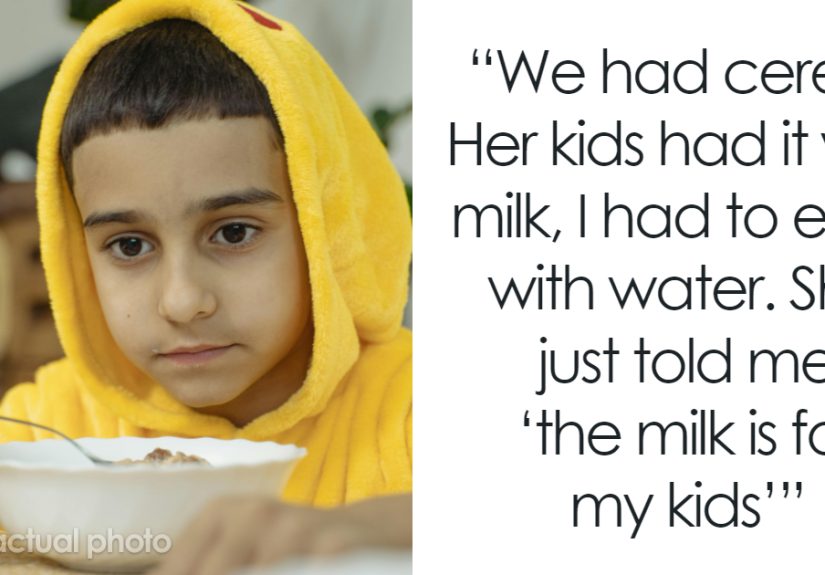
Some stories land like comedy until you realize they’re about scarcity: visitors given cereal with water while
the household saves milk “for the real family,” or kids only allowed certain drinks at specific temperatures,
or guests subtly discouraged from eating at all.
Hospitality doesn’t require a feast, but it does require basic dignity. If a host can’t offer food, that’s okayjust be honest.
What makes guests grimace is the weird hierarchy: “You can be here, but you can’t be comfortable.”
3) Cleanliness rules that treat humans like fingerprints
“Don’t step on the vacuum lines.” “Don’t use the decorative towels.” “Don’t sit on that couch.” “Don’t touch anything.”
These rules can come from anxiety, perfectionism, or prior bad experiences. But to a guest, it can feel like you’re
one sneeze away from being fined.
A reasonable version sounds like: “Shoes off, pleasewe just cleaned.” An unreasonable version feels like:
“Breathe gently and avoid existing.”
4) Privacy rules that aren’t really about privacy
Some rules are framed as “safety,” but the vibe is surveillance: an adult sitting silently in a room watching kids,
cameras that aren’t disclosed, or a household where personal space doesn’t exist. Guests may not know the backstory,
but they can sense when a “rule” is covering something unsettling.
Real privacy rules protect people (knock before entering rooms, don’t post photos without asking). The grimace rules
tend to protect control.
5) Bathroom rules that create instant discomfort
Bathrooms are where etiquette goes to panic. Guests can handle a lotuntil the rules get humiliating or confusing:
“Don’t flush if it’s ‘fresh.’” “Don’t throw period products in the trash inside.” “Don’t use the only towels you can see.”
If you want a clean bathroom, set it up for success. Put out usable towels. Provide a lined trash can with a lid.
Keep “special requests” short, kind, and explained without shaming.
6) Noise rules that feel like living in a library… during an earthquake drill
Some households keep everything quiet: whisper-level communication, strict “no laughing” expectations, or
rules where kids must stay silent unless spoken to. Quiet homes aren’t inherently badsome people are
sensitive to noise. But when “quiet” becomes “fearful,” guests pick up on it.
The difference is the tone. Calm preference: “We keep things pretty quiet after 9.” Control rule:
“You may speak only if you’ve been summoned.”
7) Hyper-specific rules that exist because someone did something truly wild once
And then there are the rules so oddly specific you can practically see the flashback behind the host’s eyes.
“Don’t touch that sculpture.” “Don’t go in that room.” “Don’t pick up the baby.” “Nobody feel up my wife.”
These rules often exist because a guest crossed a line in the past. They can be valid boundariesjust delivered
in a way that makes everyone painfully aware that history happened here.
Why do people create extreme house rules?
It’s tempting to label every strict house as “weird,” but rules usually come from somewhere. Common origins include:
- Past incidents: one guest broke a lamp, insulted Grandma, or let the dog escapenow everyone pays the price.
- Anxiety and overwhelm: some hosts rely on rules to feel safe and in control.
- Cultural norms: shoes-off homes, formal meals, and hierarchy can be deeply normal in some families.
- Sensory needs: noise, scent, clutter, and touch can genuinely distress people.
- Limited resources: food rules sometimes reflect tight budgets (though they should still be handled with care).
- Boundary issues: people who struggle to say “no” sometimes outsource it to a sign.
The best house rules protect comfort for everyone. The worst ones protect one person’s preferences at the expense of
everyone else’s humanity.
How to set house rules without making guests feel like suspects
If you’re hosting, here’s the secret: most guests want to do the right thing.
They just need clear, normal communicationpreferably without twelve exclamation points.
Keep it short, specific, and friendly
Good: “Shoes off at the doorthank you!”
Better: “Shoes off, pleasewe have a crawling baby and a light carpet.”
Grimace: “NO SHOES. NO EXCEPTIONS. VIOLATORS WILL BE JUDGED.”
Explain the “why” once (then drop it)
People cooperate more when they understand the reason. A quick “we’re trying to keep pet hair down” is enough.
Long lectures turn a boundary into a performance.
Choose systems over scolding
Want guests to use coasters? Put coasters everywhere. Want shoes off? Provide a bench or a basket.
Want quiet at night? Set up the guest room away from the living room, if possible.
Your home setup can do more than your tone ever will.
Use time boundaries like a grown-up (yes, even with family)
Many etiquette guides converge on a similar idea: visits should be planned, communicated, and not indefinite.
Whether you follow the classic “three nights” vibe or prefer the modern “weekend is ideal,” the key is clarity:
arrival date, departure date, and what the household can realistically handle.
You don’t have to be harsh. You just have to be clear. “We’d love to have you from Friday to Sunday” is kinder than
quietly resenting someone until you start vacuuming aggressively behind them.
How to be a houseguest who gets invited back
Guests also have power in this equation. In fact, the fastest way to avoid awkward rules is to
ask small questions early:
“Do you prefer shoes off?” “What time do you all usually eat?” “Where should I put my bag?”
The guest habits that reduce rule-drama
- Match the home’s routine: if the house wakes early, don’t blast videos at midnight.
- Clean your footprints: wipe counters, hang towels, keep your things contained.
- Offer help once, then be useful anyway: load dishes, take out trash, walk the dog (if invited).
- Don’t rummage: ask before opening cabinets, using appliances, or “borrowing” anything.
- Bring something: not as paymentmore as a signal that you respect the effort of hosting.
- Know when to leave: the best guests make the host miss them a little.
Also, a quiet truth: some “house rules” exist because past guests behaved like raccoons with car keys.
If you act considerate from the beginning, you may never even hear the household’s full rulebook.
When a “house rule” is actually a warning sign
Not every uncomfortable rule is dangerous, but some stories hint at bigger issuesespecially when the rule involves
humiliation, control, isolation, or inappropriate supervision.
If you feel unsafe, trust that feeling. A polite exit can be as simple as:
“I’m not feeling wellmy family’s going to pick me up.” You don’t owe a debate.
The goal is to get to safety, not to win a social argument.
The real lesson of “Nobody Feel Up My Wife”
The funniest house rules work because they’re absurdly specific. But the reason they go viral is deeper:
they expose the invisible negotiations we all make in other people’s spaces.
Great hospitality is not perfection. It’s not a museum tour. It’s comfort with consent:
guests feel welcomed, and hosts feel respected. The best “rules” are the ones you barely notice
because they’re built into a home that’s prepared for humans to be human.
And if you absolutely must post a sign? Maybe try:
“Please don’t touch personal items on displaythank you!”
It communicates the boundary without making everyone wonder what happened last Thanksgiving.
of Experiences Related to These Cringe-Worthy House Rules
If you’ve lived long enough to attend birthday parties, crash on a couch after a road trip, or babysit for a neighbor,
you’ve probably collected a few “house rule” moments of your ownor at least heard stories that felt suspiciously believable.
Here are a few true-to-life scenarios people commonly describe (the kind that make you laugh later… after your shoulders stop tensing).
One of the most common is the Thermostat Treaty. You arrive, you’re wearing a normal outfit for normal weather,
and the house is set to “penguin exhibit.” You politely ask, “Is it usually this cold?” and the host smiles like a flight attendant
and says, “Oh yes, we keep it crisp.” Translation: you will be sleeping in a hoodie, under a throw blanket the size of a dish towel,
while pretending this is totally fine. Some homes solve this kindly with an extra blanket basket. Others solve it with a rule:
“Blankets are for beds only.” That’s when you realize you’ve entered the Olympics of not complaining.
Then there’s the Kitchen Permission Maze. In one house, “Make yourself at home” means you can pour cereal, grab a mug,
and rinse your dish. In another, “Make yourself at home” means “stand in the doorway of the kitchen until I authorize your existence.”
Guests learn quickly that some homes treat the fridge like a locked safe. The awkward part isn’t the boundaryit’s the uncertainty.
Nobody wants to be the person caught holding a yogurt like it’s contraband.
Another classic: Decor That Can’t Be Touched. Decorative towels that you must not use. Decorative soap that is apparently
“for display.” A living room where every surface whispers, “We don’t sit here.” The guest experience becomes a slow-motion obstacle course:
you’re trying to be polite, but you’re also trying not to accidentally break a fragile glass object that was placed exactly where hands naturally go.
The best hosts quietly remove breakables or make space. The grimace hosts leave everything out and then act shocked when gravity behaves normally.
And finally, the most viral kind of story: the Hyper-Specific Sign Rule. The reason “Nobody feel up my wife” hits so hard
is that it’s both ridiculous and completely understandable. If something personal is displayed in a common spacewhether it’s art, a sculpture,
a family heirloom, or a belly castguests should treat it like someone’s body, not a novelty item. Most people already know that.
But the fact that a sign exists suggests someone, at some point, absolutely did not know that. Suddenly the whole room is haunted by a past choice,
and every new guest is forced to imagine it. That’s the magic of cringe: you weren’t there… but now you feel responsible anyway.