Table of Contents >> Show >> Hide
- What “Scandi + Nautical” Actually Looks Like (Without the Anchors)
- Why Nordic Knots Keeps Showing Up in Design Conversations
- The Nautical Vibe Toolkit: Color, Pattern, Texture
- Room-by-Room Styling: Where Scandi Meets Seaside
- Buying Checklist: How to Choose the Right Nordic Knots–Style Rug
- Care and Cleaning: Keep the Nautical Vibe, Lose the Grime
- How to Get the Look If You’re Not Ready to Commit (Yet)
- Conclusion: The Best Kind of Nautical Is the Kind You Feel, Not the Kind You Label
- Experiences & Real-Life Notes: Living With a Scandi-Inspired Rug That Leans Nautical
There are two kinds of “nautical” in this world: (1) tasteful, breezy, modern coastal; and (2) a living room that looks like it’s waiting for a souvenir shop to open. Nordic Knots lives firmly in category onethink Scandinavian restraint with just enough maritime energy to make your floors feel like they’ve been on vacation (without packing a single shell lamp).
In this guide, we’ll break down what makes the Nordic Knots look so sticky-in-your-brain, how “Scandi + nautical” actually works in real rooms, and how to choose, place, and care for rugs so they age like a good leather beltbetter over time, not mysteriously crunchy.
What “Scandi + Nautical” Actually Looks Like (Without the Anchors)
It starts with Scandinavian design rules
Scandinavian interiors are basically a masterclass in “calm, but not boring.” The common threads are clean geometry, practical materials, and colors that play nicely with daylight. Rugs in this universe tend to be grounded: solids, subtle patterning, tight weaves, and natural fibers that don’t scream for attention.
Then nautical sneaks in through pattern, texture, and color
A nautical vibe doesn’t have to mean literal rope or a compass rose the size of a kiddie pool. In modern homes, the coastal cue usually shows up as:
- Stripes and banding (the “Breton shirt” of textiles)
- Navy + warm neutrals (sea + sand, but grown-up)
- Texture you can feel (flatweaves, ribbing, boucle-like pile, nubby jute)
- Motifs that hint at knots/loops rather than yelling “I own a sailboat”
Nordic Knots excels here because their designs often read as architectural firstlines, blocks, grids, loopswhile still feeling soft and livable. When a rug does that, it can nod to the sea without turning your coffee table into a ship’s wheel.
Why Nordic Knots Keeps Showing Up in Design Conversations
Nordic Knots has become one of those “if you know, you know” names in rug landespecially for people who want modern Scandinavian style but also want the rug to feel substantial underfoot, not like a decorative napkin.
A few things repeatedly come up in editor picks and design coverage: a focus on natural materials, a Scandinavian design lens, and collections that feel current without being trend-bait. You’ll also see the brand pop up in lists of standout area rugs and runners, and in collaborations that push beyond basic neutrals while staying refined.[1][2][3]
Materials: the “quiet luxury” part is literal fiber
If you’re chasing that Scandi-nautical sweet spot, material matters as much as pattern. Coverage and product descriptions around the brand frequently highlight natural fibers like wool (including New Zealand wool) and options that lean flatwoven/structured for a tailored look.[4][5]
Why it works: wool brings warmth and resilience (especially in living rooms and bedrooms), while flatweaves and natural fibers can feel crisp and coastalgreat for hallways, entryways, and layered looks where you want texture but not a thick pile.
Design collaborations that feel like “coastal, but make it design-world”
Nordic Knots doesn’t just do “one more beige rug.” They’re known for collaborations that introduce fresh formscurves, cutouts, sculptural detailswhile staying visually disciplined.[3] That balance is exactly what you want if you’re aiming for nautical vibe without theme décor.
One especially on-theme example: collections inspired by ocean-liner glamour and graphic striping can read as maritime in a sophisticated, Art Deco-meets-modernist waymore “transatlantic lounge” than “bait shop.”[2]
The Nautical Vibe Toolkit: Color, Pattern, Texture
Color: navy is powerful, but neutrals do the heavy lifting
Nautical rooms look best when navy behaves like an accentanchoring (sorry) the palettewhile creamy whites, oat tones, and warm grays keep things airy. If your space already has a lot of wood, leather, or linen, a navy-and-neutral rug can sharpen the whole room without making it feel cold.
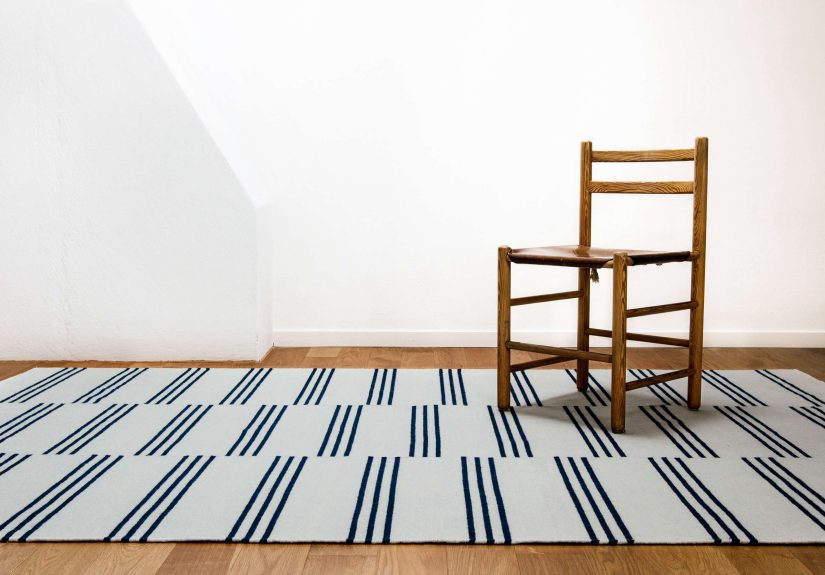
Pro move: if you’re nervous about blue, choose a rug where navy appears as thin striping or a shadowy outline rather than a giant block of color. That gives you the “sea” reference without hijacking the room.
Pattern: stripes, grids, and “knot-adjacent” curves
The most wearable nautical patterns tend to be geometric:
- Wide stripes for bold, modern coastal
- Pinstripes for subtle seaside energy
- Checks/grids for a tailored, Scandinavian feel
- Loops/arches that hint at ropework without being literal
The goal is “graphic clarity.” If your rug pattern looks good in a black-and-white photo, you’re usually safe.
Texture: the secret ingredient in Scandi-coastal rooms
Texture is where nautical and Scandinavian styles shake hands. Coastal spaces love natural fibers; Scandinavian spaces love honest materials. Put those together and you get a lot of winners: flatweaves, jute, sisal, and wool weaves with visible structure.
Many design guides recommend natural fiber rugs (like jute and sisal) as an easy, forgiving foundationespecially in casual, beachy or coastal-farmhouse spaces where a little grit from real life is part of the charm.[6]
Room-by-Room Styling: Where Scandi Meets Seaside
Entryway: go structured, durable, and un-fussy
Entryways want rugs that don’t mind shoes, sand, or the occasional dramatic umbrella situation. Flatweaves and natural fibers shine here because they’re low-profile and practical. A simple stripe or small-scale grid gives you nautical cues without turning the front door into a themed attraction.
Living room: the “Grand Rug” logicbigger, softer, calmer
In living rooms, Nordic Knots is often discussed in the context of plush-but-modern wool rugs that feel elevated while staying visually simple.[4][7] This is where you can lean into a thicker wool pile (or a more dimensional weave) to keep the space cozyespecially if your furniture is streamlined and you want warmth.
Nautical tip: pair a calm rug with subtle coastal references elsewherelike linen curtains, a navy throw, or art with ocean-adjacent tonesso the rug doesn’t have to do all the storytelling.
Bedroom: keep it quiet, but make it feel good barefoot
Bedrooms are where “soft underfoot” becomes a serious quality-of-life issue. Wool is a classic choice because it’s naturally resilient and tends to hold up well in daily use, which is why it often dominates editor-tested and editor-recommended rug roundups.[8][9]
For a nautical vibe in a bedroom, pick pattern-light designs: micro-stripes, a faint grid, or tone-on-tone shapes. It reads coastal, but you can still fall asleep without feeling like you’re in a captain’s quarters.
Kitchen + dining: flatweave earns its paycheck
Kitchens and dining zones want low pile, easy movement of chairs, and minimal trap-the-crumbs behavior. Flatwoven wool or structured natural fibers are popular here because they’re functional and still stylish in high-traffic areas.[6][10]
If you love the look of natural fiber but you’re worried about spills, consider a layered setup: a larger natural fiber base plus a smaller, more characterful rug where you actually want pattern. It’s the design version of wearing a white tee under a jacketclean foundation, controlled drama.
Hallways + stairs: stripes belong here for a reason
Runners are the easiest place to introduce stripes (aka instant nautical energy). They also visually guide the eye, which is handy in narrow spaces. Stair runner guides frequently highlight durable materials and patterns that can take wear while adding personality.[11]
Buying Checklist: How to Choose the Right Nordic Knots–Style Rug
1) Size: the rug should “hold” the furniture, not hover near it
If your rug is too small, the room looks like it’s wearing pants that don’t fittechnically functional, emotionally confusing. In living rooms, aim for front legs of major seating on the rug (at minimum). In dining rooms, ensure chairs stay on the rug even when pulled out.
2) Construction: flatweave vs pile
- Flatweave: cleaner lines, easier chair movement, great for layering, often more casual-coastal.
- Pile (especially wool): softer, warmer, cozierexcellent for bedrooms and lounging zones.
3) Fiber: match the rug to the mess potential
Wool is a workhorse with comfort benefits, which is why it’s so common in “best rug” testing and recommendations.[8][9] Natural fibers like jute/sisal bring beachy texture and are often recommended for relaxed coastal looks, especially in spaces that can handle a more rustic feel.[6]
4) Add a rug pad (yes, even if you “don’t like extra steps”)
A rug pad helps with grip, comfort, and wear. It also keeps corners from doing that thing where they curl up like they’re trying to wave hello.
Care and Cleaning: Keep the Nautical Vibe, Lose the Grime
Wool: regular vacuuming, spot-treat fast, call in help for big drama
Wool rugs generally like consistent, gentle maintenance. Many care guides emphasize frequent vacuuming (especially early on) and avoiding aggressive tools that can stress fibers or loops.[12]
Jute and other natural fibers: be gentle with water
Jute rugs are beloved for texture, but they don’t want a spa day in a bathtub. Expert cleaning guidance commonly recommends blotting spills quickly, using only small amounts of mild solution, and avoiding over-wetting to prevent damage or mildew.[13][14]
Translation: treat jute like a fancy paper bag with a great PR team. Strong in daily life, but not thrilled about being soaked.
How to Get the Look If You’re Not Ready to Commit (Yet)
If you love the Nordic Knots vibe but want to test-drive the aesthetic, build the “Scandi-nautical” foundation first:
- Start with a neutral, textured base rug (jute or a subtle flatweave).
- Add navy accents in small doses (pillows, art, throws).
- Introduce one graphic element: stripes, a grid, or a looped motif.
- Keep the rest of the room simple so the rug reads intentional, not busy.
This approach mirrors what you see across many editorial rug roundups: versatile neutrals and durable fibers as the base, then style layered on top.[9][15]
Conclusion: The Best Kind of Nautical Is the Kind You Feel, Not the Kind You Label
Nordic Knots nails a very specific sweet spot: rugs that feel Scandinavian in their clarity and modern in their confidenceyet still warm, tactile, and just a little ocean-kissed. If you stick to the big three (clean geometry, coastal-leaning color, honest texture), you can pull off nautical style that feels elevated and current.
And if anyone asks whether your rug is “nautical,” you can say: “Only emotionally.” Then walk away like the main character you are.
Experiences & Real-Life Notes: Living With a Scandi-Inspired Rug That Leans Nautical
Let’s talk about what this style is like once it’s not a concept board and you’re actually living on itspilling coffee near it, walking across it half-awake, and trying to convince a pet that it is not, in fact, their new scratching philosophy.
First, the visual calm is real. A Scandi-inspired rugespecially one that’s solid, lightly mottled, or gently patterneddoes something almost sneaky to a room: it makes everything else look more intentional. Your sofa doesn’t have to be designer. Your coffee table doesn’t have to be rare teak from a secret Danish auction. The rug quietly says, “We have a plan,” even if your plan is mostly “survive the week.”
The nautical vibe shows up in the way the room feels, not in literal imagery. People often describe the effect as crisp and freshlike opening a window. Stripes and banding (or even curved motifs that hint at loops) give you movement without chaos. A navy accent in the weave tends to behave like a good blazer: it makes casual things look more pulled together. And when the rest of your palette is warm and neutral, that blue reads coastalnot cold.
Underfoot, experience depends heavily on construction. With wool, the common reaction is some version of: “Oh. This is what ‘nice’ feels like.” That’s why editor recommendations often call out softness and comfort as part of what people love about higher-end wool rugs.[7][8] In daily life, that translates to lingering a little longer in the living room, sitting on the floor without regret, and appreciating that the rug adds warmth even when your furniture is minimal and modern.
With flatweaves or natural fibers like jute/sisal, the experience is more about texture and function. These rugs tend to feel structured and groundedgreat in entries and kitchens because they don’t get in the way, and they don’t scream when chairs scoot. In coastal-leaning spaces, that nubby texture can make everything feel more relaxed and “beach-house adjacent,” even if the nearest ocean is your laptop wallpaper. Editorial décor guidance often frames natural fiber rugs as a practical, forgiving choice in casual coastal homes for exactly this reason.[6]
Maintenance-wise, real life rewards the people who do small things consistently. Rotating a rug occasionally helps it wear evenly. Using a pad stops slippage and keeps it feeling more substantial. For jute, the “experience tip” is to treat spills like a tiny emergencyblot fast, don’t over-wet, and keep cleaning gentle, because water and natural fibers are not best friends.[13] For wool, quick spot treatment and regular vacuuming keep it looking sharp; a lot of care guidance emphasizes avoiding overly aggressive vacuum tools on certain rug types and handling snags with scissors rather than pulling.[12]
The biggest “aha” people report once they’ve lived with this look for a while is that it’s surprisingly flexible. Scandi-nautical rugs don’t trap you in a theme. You can pivot the room warmer in winter (add caramel tones, chunky knits) or brighter in summer (white linen, light wood, glass). The rug keeps doing its job: grounding the room, adding texture, and quietly reminding you that good design can be both practical and nice to look atkind of like a well-made raincoat.