Table of Contents >> Show >> Hide
- Who Was George Washington Carver, Really?
- From Art Student to Agricultural Pioneer
- Why the South Needed George Washington Carver
- Carver’s Real Genius: Making Science Useful
- So Why the Peanut Reputation?
- More Than Inventions: Carver’s Larger Legacy
- Why “Dr. Peanut” Still Works as a Title
- What George Washington Carver Still Teaches Us Today
- Experience the Legacy: What Carver’s World Still Feels Like
- Conclusion
- SEO Metadata
George Washington Carver is one of those rare historical figures who gets remembered by a nickname and misunderstood by it at the exact same time. Call him the “Peanut Man,” and most people nod. Call him an agricultural scientist, educator, conservation thinker, artist, and practical genius who helped reshape Southern farming, and suddenly the room gets much quieter. That is the funny thing about Carver: history often shrank him into a jar of peanuts when his real legacy was much bigger, richer, and frankly more useful.
If you only know Carver as the man who found countless uses for peanuts, you know the appetizer, not the meal. His real achievement was helping farmers rebuild worn-out soil, diversify crops, improve nutrition, and think about land as something to care for rather than simply squeeze until it wheezed. In other words, George Washington Carver was not just tinkering in a lab and flirting with legumes. He was trying to solve a crisis.
Who Was George Washington Carver, Really?
Born into slavery in Missouri near the end of the Civil War, Carver entered the world under brutal circumstances and grew up facing poverty, racism, and limited access to education. Even as a boy, though, he was deeply curious about plants. Neighbors noticed his unusual gift for bringing sick plants back to life, and that talent earned him the nickname “the Plant Doctor.” It sounds like the title of a charming children’s book, but for Carver it was an early sign of the life he would build.
His childhood fascination with nature never left him. While other people looked at a plant and saw lunch, livestock feed, or a weed, Carver saw chemistry, color, possibility, and maybe even a question worth chasing. That habit of looking closer became the core of his career. He did not approach science as a pile of abstractions. He approached it like a human tool kit.
From Art Student to Agricultural Pioneer
His first calling was art
Before Carver became famous for agricultural science, he studied art and music at Simpson College in Iowa. That detail matters because it helps explain why his scientific work often felt imaginative rather than mechanical. He had an artist’s eye. He noticed texture, color, variation, and detail. A teacher there recognized that his paintings of flowers and plants revealed more than artistic talent. They revealed a botanist hiding in plain sight.
Iowa State changed everything
Carver transferred to Iowa State Agricultural College, where he studied botany and agricultural science. There he became the institution’s first Black student and later its first Black faculty member. He earned both a bachelor’s degree and a master’s degree, building expertise in plant science and plant diseases. That alone would have been remarkable for anyone in the 1890s. For a Black man born into slavery, it was extraordinary.
At Iowa State, Carver gained scientific training, but he also gained credibility in a country that often tried to deny Black excellence on sight. His work drew attention not because it was flashy, but because it was rigorous. He knew plants, soils, and disease. He knew how to observe. He knew how to test. And perhaps most importantly, he knew how to explain things in plain language.
Why the South Needed George Washington Carver
When Booker T. Washington recruited Carver to Tuskegee Institute in 1896, the South had a farming problem so big it practically deserved its own weather system. Cotton had dominated agriculture for years, and repeated cotton planting had drained nutrients from the soil. Many poor farmers, especially Black farmers, were trapped in a punishing cycle: bad soil, weak yields, debt, and very little room to recover.
Carver looked at that situation and did not say, “Well, that seems unfortunate.” He got to work. At Tuskegee, where he would remain for 47 years, he focused on practical agricultural solutions that could help poor farmers survive and eventually improve their lives. He was not interested in science for applause alone. He wanted results that could travel from the classroom to the field.
Crop rotation was his quiet revolution
Carver became one of the best-known advocates for crop rotation in the South. His message was simple but powerful: stop planting cotton endlessly in exhausted ground. Rotate in crops that help rebuild the soil, especially legumes such as peanuts, soybeans, and cowpeas. Grow sweet potatoes and other crops for food and income. Make the land work with you instead of punishing you for repeating the same mistake year after year.
Today, soil health and sustainable farming sound like smart, modern phrases you might hear at a conference with reusable name badges and expensive coffee. Carver was promoting the spirit of those ideas long before they became trendy. He understood that land abuse was not just an environmental issue. It was an economic and human issue too.
Carver’s Real Genius: Making Science Useful
He wrote for people who actually needed help
One of Carver’s great strengths was communication. He produced practical bulletins for farmers and homemakers, explaining how to improve soil, preserve food, diversify crops, and make better use of available resources. These were not grand speeches floating above everyday life. They were usable documents meant for people with limited money, limited tools, and no time for scientific nonsense dressed up in fancy language.
Carver’s approach to education was democratic in the best sense. He believed knowledge should travel. If people could not come to the school, the school should go to them.
The Jesup Wagon was a classroom on wheels
That belief led to one of his smartest ideas: the Jesup Wagon, a mobile classroom designed to carry agricultural instruction into rural communities. Think of it as an early extension service with wheels, tools, demonstration materials, and a mission. The wagon helped Carver and Tuskegee bring information directly to farmers who could not leave their fields and families to sit in a lecture hall.
It was classic Carver: practical, inventive, and centered on people who were usually ignored. He did not simply hand out advice and disappear in a cloud of academic dignity. He built ways to deliver that advice where it was needed most.
So Why the Peanut Reputation?
Ah yes, the peanut. The humble legume that somehow became Carver’s permanent public sidekick.
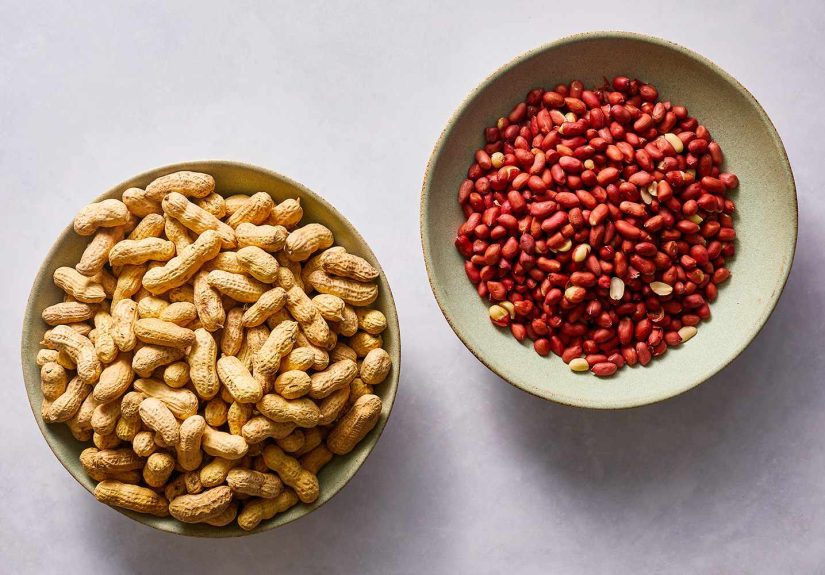
Carver encouraged farmers to grow peanuts as part of a broader strategy to restore soil and create new economic opportunities. But he also knew a hard truth: asking people to grow more peanuts only works if somebody can actually do something with those peanuts. So he explored a huge range of uses for peanut-based materials and foods, along with products made from sweet potatoes, soybeans, and other crops.
His fame exploded after he testified before Congress in 1921 about peanut products and the value of the crop. That appearance helped turn him into a national figure. From there, the public image stuck. Newspapers loved it. America loves a tidy nickname. “Agricultural chemist who transformed approaches to soil restoration and rural education” is accurate, but it does not fit on a souvenir spoon nearly as well as “Peanut Man.”
Still, one myth needs to be tossed out like stale trail mix: Carver did not invent peanut butter. He did, however, popularize peanuts as part of a much larger agricultural and economic vision, and he explored many peanut-based products. That is impressive enough without assigning him every peanut-related invention under the sun.
More Than Inventions: Carver’s Larger Legacy
It is true that Carver developed or promoted hundreds of uses for agricultural crops. It is also true that he filed patents. But if you make his legacy only about counting products, you miss the point. Carver’s deeper contribution was systems thinking before the term became fashionable. He connected soil, crops, household economy, education, nutrition, dignity, and self-reliance.
He also represented something larger in American history. At a time when the country routinely devalued Black intellect, Carver became one of the most recognized Black scientists in the United States. He taught, researched, advised, and inspired while navigating the cruel realities of segregation. His life became proof that brilliance can survive terrible conditions, though it should never have had to.
And yes, there was more to him than science. Carver was also an artist, a teacher, and a person of deep spirituality. Those dimensions matter because they help explain his unusual combination of discipline and imagination. He studied plants, but he also seemed to listen to them in a way that made his work feel almost poetic.
Why “Dr. Peanut” Still Works as a Title
The phrase “Dr. Peanut” is catchy, a little playful, and impossible to forget. That makes it useful for a headline. But the best reason to keep it is not because it perfectly describes Carver. It is because it gives us a chance to correct the record. Once readers arrive for the peanut, they discover the person.
And the person is fascinating. George Washington Carver was a scientist who cared about poor farmers. An educator who believed knowledge should travel. A researcher who understood conservation before that word became common. A public figure who used fame not just to celebrate himself, but to advocate for better farming and better living.
What George Washington Carver Still Teaches Us Today
1. Soil is not just dirt
Carver treated soil as living capital. That lesson feels especially relevant in an era shaped by climate pressure, erosion, and industrial-scale exhaustion of natural resources.
2. Innovation should solve ordinary problems
He focused on everyday needs: food, farming, preservation, income, and education. Carver reminds us that not all important innovation arrives with a dramatic launch event and a shiny logo.
3. Education works best when it meets people where they are
The Jesup Wagon remains a brilliant symbol of outreach. Great teaching is not about waiting to be discovered. It is about showing up.
4. A nickname should never become a cage
Carver’s public image was flattened into peanuts, but his legacy stretches across science, agriculture, Black history, sustainability, and American education. The nickname can open the door, but it should never close the case.
Experience the Legacy: What Carver’s World Still Feels Like
One of the best ways to understand George Washington Carver is not to memorize a list of peanut products, but to imagine the experiences his work still creates. Walk through a school garden, and suddenly Carver feels very close. A child kneels down to inspect a struggling leaf. A teacher explains why one crop helps the soil while another takes too much from it. Someone asks a practical question, not a glamorous one: “How do we make this grow better?” That is Carver territory.
Visit a historic site connected to him, and the experience grows even stronger. You begin to understand that his life was not built inside a clean museum label. It was built in worn fields, modest classrooms, and communities that needed solutions more than slogans. The emotional power of Carver’s story comes from that contrast. He became famous, but his work stayed rooted in ordinary people’s problems.
There is also something surprisingly modern about the feeling of reading his legacy now. Today we talk about sustainability, regenerative agriculture, local food systems, hands-on learning, and public-facing science. Carver would probably smile at the vocabulary, then get back to work. He was already doing versions of those things when much of the country was still committed to short-term farming habits that wrecked both soil and livelihoods.
Even in a kitchen, his influence can feel immediate. Think about the simple idea of making full use of what you grow. Think about recipes as tools for survival, not just entertainment. Think about a crop not as one thing, but as many possibilities: food, feed, color, household material, income, resilience. Carver approached agriculture with that expansive mindset. He looked at one plant and saw a whole menu of options. That kind of thinking still feels fresh.
And then there is the human experience of inspiration. Carver’s biography lands so strongly because it refuses to fit neatly into a box. He was born into slavery and became a nationally known scientist. He studied art and changed farming. He worked within harsh limits and still produced imagination, service, and beauty. For students, gardeners, teachers, historians, and anyone trying to do meaningful work with limited resources, that story hits hard.
His legacy also carries a challenge. Carver did not treat knowledge as decoration. He treated it as responsibility. If you know something that can help people, you use it. If you can improve the land, you do it. If you can teach, you should teach clearly. If you can make life better for “the man farthest down,” as Tuskegee described his mission, then you have work to do.
That is why the experience of learning about George Washington Carver often ends in a strangely motivating way. You start with peanuts and leave thinking about purpose. You start with a historical figure and end up considering your own tools, your own field, your own chances to be useful. Not bad for a man too often reduced to a snack-adjacent nickname.
Conclusion
George Washington Carver deserves to be remembered as far more than the Peanut Man. He was a pioneering agricultural scientist, an influential Tuskegee educator, a promoter of crop rotation and soil conservation, and a deeply practical thinker who wanted science to improve daily life. The title “Dr. Peanut” may get attention, but Carver’s real story keeps it. He did not just help people grow different crops. He helped them imagine a different future.