Table of Contents >> Show >> Hide
- What “Old City Small, Illusion Blue” Actually Is
- The Old City Inspiration: Jaipur, Geometry, and the Art of Not Making Crooked Stripes
- How Hand Block Printing Creates the “Small Illusion” Effect
- Why Illusion Blue Works in Real Rooms
- Design Playbook: Where to Use Old City Small, Illusion Blue
- Mixing Patterns Without Making Your Eyes File a Complaint
- Organic Linen: The Material Choice That Ages Well
- Care and Maintenance: Keep the Blue, Lose the Drama
- Buying Tips: Swatches, Lighting, and the “Is This Blue Actually Gray?” Question
- Final Thoughts
- Experiences: Living With Old City Small in Illusion Blue
Some fabrics whisper. Others shout. Old City Small, Illusion Blue does the rare third thing: it tells a storyquietlybut still gets invited to every room like it owns the place.
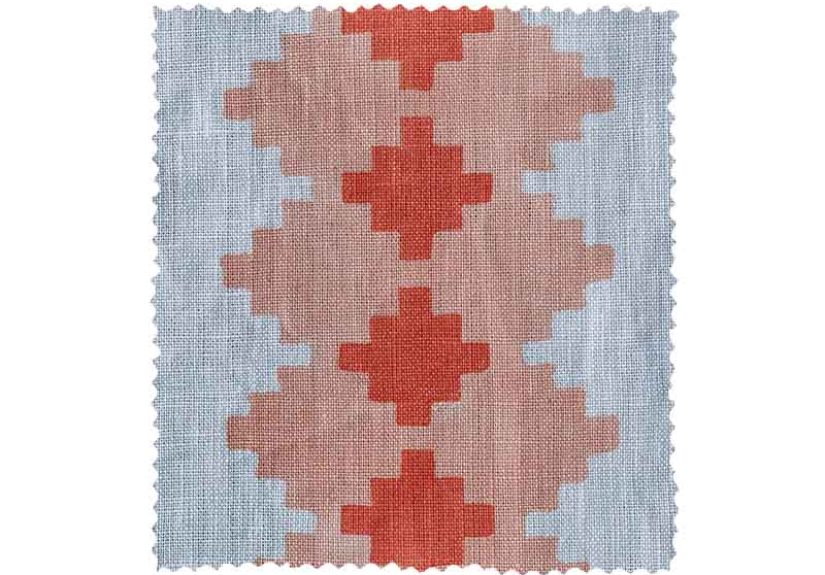
If you’ve run into this name and thought, “Is that a paint color? A novel? A secret level in a video game?”same. It’s actually a hand block–printed, small-scale striped linen inspired by architectural details from Jaipur’s Old City, printed using traditional techniques in the Jaipur region. In plain English: it’s a stripe with a passport and a personality.
What “Old City Small, Illusion Blue” Actually Is
At its core, this is a small-scale block-printed stripe on organic linen. The “small” refers to the tighter scale of the stripemore refined, less “beach cabana yelling across the pool.” The “Illusion Blue” base reads as calm and airy, while the warm printed tones (often pink/red notes) keep it from feeling chilly.
Key details that matter in real life
- Material: Linen with a natural texture that softens over time.
- Pattern: A crisp stripe created with carved wooden blocks.
- Look: Structured from a distance, lively up close (thanks to the human hand).
That combolinen + block printing + a disciplined stripeis why it works for both cozy cottage spaces and sharper, modern rooms. It’s the textile equivalent of a well-cut blazer over pajama pants: contradictory, but somehow correct.
The Old City Inspiration: Jaipur, Geometry, and the Art of Not Making Crooked Stripes
Jaipur is often called India’s Pink City, but it’s also a city of repeating patterns: latticed screens, carved stone borders, arched doorways, and endless architectural rhythm. When textile designers borrow from architecture, you get prints that feel groundedbecause buildings don’t get to be “random” the way a novelty pineapple pillow does.
Why architecture makes stripes feel more “designed”
Architectural details are built on proportion and repetition. When those ideas move onto fabric, you get patterns that play well with furniture, windows, and walls. A stripe inspired by a city’s details doesn’t just decorate a chairit organizes a room.
And yes, precision matters. In hand block printing, artisans measure and align the repeat so lines stay straight across yards of cloth. That’s the difference between “tailored” and “I printed this while holding my breath.”
How Hand Block Printing Creates the “Small Illusion” Effect
Hand block printing is old-school, human-powered printing: carved wooden blocks, dye, pressure, repetition, and an impressive amount of patience. It’s also why the fabric has a lively, slightly imperfect soullike freckles, but for textiles.
From block to bolt: a simple (but not easy) process
- Design is drawn and separated by color (because each color is typically its own block).
- Blocks are carved by skilled woodcarvers; the sharper the line, the higher the skill.
- Fabric is stretched and pinned on a padded table so it won’t shift mid-print.
- Alignment is measured for the repeat (often with string/reference points), so the stripe stays crisp.
- Color layers are stamped one at a timethen repeated down the length of the fabric.
- Drying and finishing help set the color and prepare the cloth for use.
Why “small scale” feels sophisticated
A tight stripe reads as texture, not costume. In a room, it can behave like a neutralespecially when the ground color is soft and the contrast is controlled. You get visual movement without the “I can’t focus on anything” effect.
Why Illusion Blue Works in Real Rooms
Blue is a design workhorse. It can feel coastal, classic, crisp, moody, airy, or dramatic, depending on what you put next to it. Illusion Blue tends to land in the sweet spot: calm enough to live with, but not so pale that it disappears.
Color balance: calm + warmth = the room doesn’t fall asleep
The blue ground steadies a space, while the warm printed stripe adds energy. That’s why the fabric can feel both serene and livelylike a well-behaved party guest who also knows the best jokes.
Stripes and optical “room magic”
Stripes aren’t just decoration; they’re geometry with opinions. Horizontal stripes can make a narrow space feel wider. Vertical stripes can make ceilings seem taller. Even small-scale stripes can create that “wait, is this room bigger?” illusionespecially when used on larger surfaces like curtains, a headboard panel, or a bench cushion.
Design Playbook: Where to Use Old City Small, Illusion Blue
This fabric is versatile because it’s structured. It brings order without forcing a theme. Here are smart ways to use it, from low-commitment to full “yes, I reupholstered a chair and now I’m unstoppable.”
Kitchen & breakfast nook
- Café curtains: Let light in, add pattern, keep it airy.
- Banquette cushions: Stripes look clean even when life (and syrup) happens.
- Seat pads: Small scale keeps it from feeling busy in compact spaces.
Bedroom
- Upholstered headboard: Tailored and calmideal for a sleep zone.
- Euro shams: Mix with solids, a tiny floral, or a tonal check.
- Bench at the foot of the bed: Adds pattern without competing with bedding.
Living room
- Accent chair upholstery: Structure for soft furniture.
- Throw pillows: Pair with a larger print to create contrast in scale.
- Lampshade cover: A small stripe can make lighting feel custom and quietly expensive.
Entryway, mudroom, or home office
- Bench cushion: Adds design without being precious.
- Pinboard or panel wrap: Great for a work zone that needs personality but not chaos.
Mixing Patterns Without Making Your Eyes File a Complaint
If you like pattern but fear the “my living room looks like a sock drawer” outcome, use a simple strategy: keep a throughline, vary the scale, and give the room breathing space.
A practical formula that works
- Choose a color throughline: Let Illusion Blue show up in at least two placesfabric plus a vase, art, or rug accent.
- Vary the pattern sizes: Pair this small stripe with a larger floral, a medium geometric, or a solid texture like bouclé.
- Anchor with solids: Ivory, warm white, flax, or soft gray keeps the stripe intentional.
Three combo ideas you can steal immediately
- Classic cottage: Small stripe + tiny floral + warm white walls + aged brass.
- Modern heritage: Small stripe + bold abstract art + walnut + matte black accents.
- Sunny maximalist: Small stripe + jewel-toned “hero” print + playful ceramics + one calm solid.
Organic Linen: The Material Choice That Ages Well
Linen is made from flax, and it’s known for durability, breathability, and that relaxed texture people try to fake with filters. It can feel crisp at first and soften over timelike a friendship that improves after you survive assembling furniture together.
Why “buy once, love longer” matters here
Small stripes tend to outlast trend cycles because they’re foundational. Pair that with linen’s strength, and you get a textile that can move from “new cushion covers” to “beloved family tablecloth” without feeling dated in six months. It’s not loud. It’s lasting.
Care and Maintenance: Keep the Blue, Lose the Drama
Linen is hardy, but it appreciates respectlike cast iron, but less moody. Follow these habits and your fabric will stay crisp, colorful, and ready for its close-up.
- Go gentle: Wash in cold to lukewarm water with a mild detergent.
- Avoid aggressive wringing: Squeeze water out gently; twisting can stress fibers.
- Dry smart: Air dry when possible, or use low/no heat. Pull items out while slightly damp to reduce wrinkles.
- Skip fabric softener: Linen softens naturally with use.
- Iron or steam if you want it crisp: Iron while slightly damp, or steam and smooth by hand.
Buying Tips: Swatches, Lighting, and the “Is This Blue Actually Gray?” Question
Blue is famously moody in different lighting. Before committing to yardage for upholstery or curtains, get a swatch and test it in your space.
- Check morning vs. night: Natural light reveals undertones; evening bulbs can warm or dull the blue.
- Pairing test: Hold the swatch next to your wall color and your biggest “can’t change it” item (flooring, sofa, countertop).
- Decide on contrast: If your room is already busy, use this as the structured “quiet pattern.” If your room is minimal, let it be the star.
Final Thoughts
Old City Small, Illusion Blue is proof that a stripe can be more than a stripe. It’s architectural inspiration translated into fabric, made through a hands-on craft process, and colored in a way that feels calm but not boring. If you want pattern that reads considerednever chaoticthis is the kind of textile that earns its keep.
Experiences: Living With Old City Small in Illusion Blue
Design is easiest to love when you can use it. Old City Small in Illusion Blue has that rare talent: it looks special, but it behaves like it’s here to help. Here are a few real-world “this is why it works” moments that tend to happen once it moves in.
The café-curtain glow-up. You hang a simple pair of half curtains, and suddenly your morning routine feels curated instead of chaotic. The stripe reads crisp at a distance, but the hand-printed variation keeps it from feeling stiff. In daylight, the blue base looks airy and clean; under warm bulbs it turns softer and slightly moodierlike the fabric is politely adapting to your lighting choices instead of judging them. Bonus: you didn’t remodel. You just added cloth and gained instant “considered home” energy.
The headboard that makes the room exhale. Upholster a headboard (or even a removable panel) and the small stripe acts like a visual deep breath. It’s structured enough to look tailored, but not so bold that it starts competing with art, nightstands, or your aggressively opinionated bedside lamp. The blue helps the sleeping zone feel calm, while the warm stripe adds a hint of lifeso the room feels restful, not sterile. It’s the difference between “bed” and “bedroom.”
The bench cushion that fakes organization. In an entryway or mudroom, a stripe does sneaky work: it signals order even when your life is doing the opposite. Keys pile up, shoes multiply, a tote bag appears from nowhere… and the bench still looks tidy because stripes read “intentional.” The small scale is especially forgivingwrinkles and daily wear don’t jump out the way they can on big, dramatic prints. It’s practical design therapy, no co-pay.
The pillow “translator” that makes mixed patterns behave. If you’ve ever bought a floral pillow you adored in the store and then brought it home only to discover it looks like it belongs to someone else’s couch, a small stripe can fix that. Use Old City Small as your connector pillow: it borrows the calm of the blue ground and the warmth of the stripe to bridge two other patterns that don’t naturally get along. Put it between a big-print pillow and a solid, or between a vintage rug and a modern sofa, and it reads like the room had a plan all along. (It didn’t. But the pillow doesn’t need to know that.)
The tablecloth that turns takeout into a “thing.” Linen on the table is an instant mood-setter, and Illusion Blue makes even simple meals look composed. The stripe frames plates and serving bowls like it’s quietly directing a photo shoot. Pair it with warm wood, white ceramics, and a candle (or two), and suddenly you’re hostingeven if dinner came in a bag. And because it’s linen, it gets better over time: softer, more relaxed, more “this is how we live” than “don’t touch anything.”
That’s the true “illusion” here: one pattern, a handful of projects, and your home starts feeling more layered and intentionalwithout tipping into theme-park décor. It’s calm structure with a little story baked in.