Table of Contents >> Show >> Hide
- What’s the Deal (and Why Are We Yelling in All Caps)?
- Meet the Favorite: Jackery Explorer 1000 v2 (The Goldilocks Power Station)
- Why This Model Earned “All-Time Favorite” Status
- What Can You Power? Real-World Examples (No Math PhD Required)
- Portable Power Station vs. Gas Generator: What’s the Catch?
- Safety and “Don’t Be a Legend on the Neighborhood App” Tips
- Who Should Buy This Deal (and Who Should Keep Scrolling)
- How to Shop Smart While the Discount Is Hot
- So… Is It Actually Worth It?
- Extra: of Real-Life “Portable Power Station” Experiences
- Conclusion
There are two kinds of people in a power outage: the ones calmly sipping coffee while their Wi-Fi hums along, and the ones
holding their phone up to a window like it’s a divining rod. If you’d prefer to be Person #1 (and also keep the fridge from
auditioning for a science fair), this is your sign.
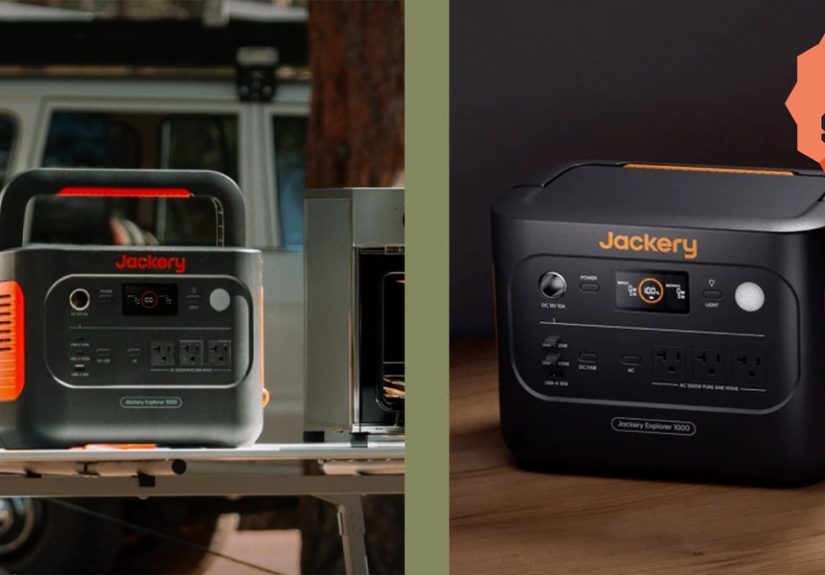
Right now, our all-time-favorite portable power stationthe Jackery Explorer 1000 v2is being advertised at
nearly 50% off. That’s not a “$7 off a $900 widget” kind of deal. It’s the kind of discount that makes you
double-check you’re not accidentally looking at a knockoff called “Jankery.” Spoiler: you’re not.
What’s the Deal (and Why Are We Yelling in All Caps)?
Portable power stations rarely get dramatically cheaper unless a major shopping event is happening or the weather forecast is
doing its best villain monologue. This time, the discount is hovering around the “almost half-off” markturning a premium,
do-it-all backup battery into something that suddenly feels… weirdly rational.
A deal like this matters because the sweet spot for most households and weekend adventurers is right around the
1,000 watt-hour class: enough capacity for real emergency power and real outdoor convenience, without the
“do we need wheels and a chiropractor?” weight of larger units.
Meet the Favorite: Jackery Explorer 1000 v2 (The Goldilocks Power Station)
The Jackery Explorer 1000 v2 hits the practical middle ground that most people actually need:
about 1,070Wh of capacity, a strong inverter, and the kind of port selection that doesn’t make you feel like
you need an engineering degree and a travel adapter collection to plug in a lamp.
Quick Specs That Actually Mean Something
- Capacity: ~1,070 watt-hours (Wh)
- AC Output: 1,500W (with higher surge capability for startup loads)
- Battery Chemistry: LiFePO4 (LFP) for long cycle life
- Weight: about 24 lbportable in a “carry it to the car” way, not a “forklift it to the campsite” way
- Charging: fast AC charging, with an “emergency fast-charge” mode available via app
- Ports: multiple AC outlets + USB-C/USB-A + 12V car-style output
Those numbers are the reason it works in real life: it can handle the boring essentials (router, phones, lamps) and the
“this is suddenly very important” essentials (refrigerator, fans, CPAP for some usersalways confirm device requirements).
Why This Model Earned “All-Time Favorite” Status
Plenty of portable power stations look great on paper. This one stands out because it matches what reviewers test for and
what regular humans complain about at 2 a.m. during a blackout.
1) It’s Powerful Enough for Real Appliances (Not Just Gadgets)
The jump from “phone battery backup” to “household backup power” is mostly about the inverter. A 1,500W inverter is the
difference between “sure, charge your laptop” and “yes, you can keep a full-size fridge running.”
In hands-on testing reported by major outlets, a 1,000Wh-class Jackery unit in this range has been shown to run a full-size
refrigerator for an impressively long stretchexact runtime depends on the fridge, ambient temperature, and how often it
cycles. Translation: your groceries have a fighting chance.
2) It Uses LiFePO4 (LFP), a Battery Chemistry Built for the Long Haul
If you’ve been shopping power stations for a while, you’ve probably noticed a theme: more and more newer models highlight
LiFePO4 batteries. The practical advantage is longevity. LFP typically offers far more charge cycles than
older lithium-ion chemistriesand tends to be more thermally stable.
In plain English: you’re more likely to still love this thing years from now, not just during the first storm season after
you buy it.
3) Fast Charging That Fits Real Emergencies (and Real Impatience)
“Charges quickly” used to mean “see you tomorrow.” Newer designs have moved into “charge during dinner” territory.
The Explorer 1000 v2 supports rapid AC charging and includes an app-based mode designed for maximum speed when you need it.
(When you don’t, slower charging modes can be gentler on long-term battery healththink of it like sprinting vs. jogging.)
4) The Port Selection Is Actually Useful
You want enough AC outlets for the essentials, plus USB-C power that can handle modern laptops without hauling out giant
bricks. The Explorer 1000 v2 checks that box with multiple AC ports plus USB-C and USB-A options.
Bonus points for “pure sine wave” AC output, which is a friendlier kind of power for many electronics than choppier
waveforms. If you’re plugging in sensitive gear (or just expensive gear), it’s a reassuring spec.
5) It’s Portable Enough to Be Used, Not Just Owned
The best portable power station is the one you’ll actually move where it’s needed: from closet to kitchen during an outage,
from garage to campsite, from trunk to tailgate. Around 24 pounds is still a lift, but it’s manageable for most adultsand
far more realistic than hauling a 60–100 lb unit every time you want power away from an outlet.
What Can You Power? Real-World Examples (No Math PhD Required)
The easiest way to estimate runtime is:
Usable watt-hours ÷ device watts ≈ hours.
Real-world usable power is usually less than the advertised capacity because of conversion losses and device behavior.
A common planning shortcut is assuming you’ll access roughly 80–90% of the rated capacity for AC use.
Example 1: “Keep the Internet Alive” Outage Kit
- Wi-Fi router: ~10W
- Modem: ~10W
- LED lamp: ~8W
- Total: ~28W
If you assume ~900Wh usable, then 900 ÷ 28 ≈ 32 hours. That’s not just “survive the outage,” that’s
“keep the group chat informed that you’re thriving.”
Example 2: Remote Work (Because the Spreadsheet Must Go On)
- Laptop: ~60W average while charging/working
- Phone top-ups: minimal additional load
900 ÷ 60 ≈ 15 hours. In practice, you’ll get a solid workday (or two, if you’re careful) depending on your laptop’s draw.
Example 3: Refrigerator Reality Check
Fridges are tricky because they cycle. They may sip power most of the time and then gulp power when the compressor kicks on.
That’s why the inverter rating (and surge handling) matters. Real-world runtimes vary widely, but third-party testing and
user reports frequently place a 1,000Wh-class station in the “many hours to around a day” range for typical refrigerators,
depending on conditions and efficiency.
Pro tip: during outages, keep the fridge closed as much as possible. Every “just checking” peek is basically inviting warm
air to a party your power station has to pay for.
Portable Power Station vs. Gas Generator: What’s the Catch?
Portable power stations are not a one-to-one replacement for every generator scenario. But they have advantages that make
them wildly appealing for most “keep essentials running” needs:
- Indoor-friendly (with proper ventilation and spacing): no exhaust fumes
- Quiet: no angry lawnmower soundtrack at midnight
- Low maintenance: no fuel stabilizers, oil changes, or pull-start drama
- Instant power: press a button, power flows
The trade-off is duration. If you need to power large appliances continuously for days, you’ll either need solar input,
multiple batteries, a much larger system, or a generator solution. But for most households, the goal is “bridge the outage”
and “protect essentials,” and this is exactly where a 1,000Wh-class station shines.
Safety and “Don’t Be a Legend on the Neighborhood App” Tips
Portable power stations are generally safer than gas generators, but they’re still serious electrical devices with serious
batteries. A few sensible guidelines go a long way:
- Give it breathing room: don’t smother vents with blankets, luggage, or “I’ll deal with it later” piles.
- Keep it dry: avoid rain, puddles, and damp garages during storms.
- Mind heavy loads: space heaters, hair dryers, and microwaves can drain capacity fast.
- Use the right cords: thick, outdoor-rated extension cords for higher loads; avoid cheap, thin cords that heat up.
- Don’t use it for risky electrical work: never power tools for cutting into walls or anything that could hide live wiring.
If you’re shopping across brands, look for reputable safety testing and compliance. Independent standards (like those used
for portable power pack evaluation) exist specifically because large battery systems deserve respect.
Who Should Buy This Deal (and Who Should Keep Scrolling)
Buy it if you want:
- Emergency backup power for essentials without fumes or noise
- Camping/overlanding/RV support for lights, cooking gadgets, laptops, and charging
- Remote work insurance (Wi-Fi + laptop + phone = sanity)
- A long-term battery investment you’ll still use years from now
Skip it (or size up) if you need:
- Whole-home backup for central AC, electric ranges, or multiple large appliances
- Multi-day continuous power without solar or additional capacity
- 240V output for specific heavy-duty equipment (some higher-end systems cover this)
How to Shop Smart While the Discount Is Hot
Deal headlines are exciting, but your future self will be happiest if you also check these boxes:
- Capacity (Wh): aim for 700–1,200Wh for “essentials,” 1,500–2,500Wh for heavier use.
- Inverter (W): match your highest expected load, plus startup surges for motor-driven appliances.
- Battery type: LiFePO4 is increasingly the go-to for long cycle life.
- Ports: enough AC outlets, plus USB-C that can charge laptops.
- Recharge options: AC wall charging, car charging, and solar input if you want off-grid flexibility.
- Warranty/support: boring now, beautiful later.
So… Is It Actually Worth It?
If you’ve been waiting for a portable power station deal that feels substantial, this is the moment. The Explorer 1000 v2
sits in the “most people, most situations” sweet spotpowerful enough to matter, portable enough to use, and built with a
battery chemistry designed for years of service.
And when a product that hits that balance drops to nearly half price? That’s not just a deal. That’s a “future you sends a
thank-you note” situation.
Extra: of Real-Life “Portable Power Station” Experiences
The first time you use a portable power station in a real outage, you learn two things immediately: (1) modern life is held
together by surprisingly small amounts of electricity, and (2) your neighbors suddenly become very interested in “how you’re
still watching TV right now.”
One of the most memorable experiences I’ve heard from frequent testers and owners is the “storm-night reset.” Power goes out,
the house gets quiet, and then the familiar panic beginsphones at 12%, kids asking why the internet is “gone,” someone
opening the fridge every five minutes like the cold air is going to escape and move in with relatives. A 1,000Wh-class
station changes the whole vibe. Instead of scrambling, you pick priorities: keep the router and modem running, charge a couple
phones, plug in a lamp, and suddenly the night feels manageable. It’s not luxury; it’s calm.
Camping is where these power stations earn their “favorite” badge in a totally different way. You don’t buy one to recreate
your house in the woodsyou buy it to make the woods feel like a choice, not a punishment. The classics: charging headlamps,
topping off phones for photos, powering a small fan when the tent turns into a toaster at sunrise, and keeping a laptop alive
long enough to download maps or edit a few photos. If you bring a small electric cooler or use a fridge-style cooler in a
vehicle setup, the power station becomes the behind-the-scenes hero that keeps the whole system reliable.
Then there’s the “tailgate and backyard” categorywhere a power station is basically a portable convenience machine. Outdoor
speakers, string lights, a small blender for smoothies (or salsano judgment), even an electric grill for short bursts. The
funny part is how quickly it goes from “nice-to-have” to “where has this been all my life?” You stop planning your day around
outlets. You stop rationing device batteries like it’s 2009. You just… do the thing, and the power follows.
The most practical experience, though, is the boring one: setting it up once, labeling a few cords, and knowing exactly what
you’ll plug in during an emergency. It’s like a fire extinguisheryou hope you never need it, but you also enjoy the quiet
confidence of having it. And if you do use it, you’ll appreciate that it doesn’t require gasoline, a prayer, and three
failed pull-starts before it does its job.
Conclusion
A portable power station won’t solve every outage problem, but the right one can erase the most annoying parts of modern
inconvenience: dead phones, dead Wi-Fi, spoiled food, and the feeling that you’re one power flicker away from chaos. The
Jackery Explorer 1000 v2 has the capacity, output, and long-life battery chemistry to be genuinely usefulespecially when it’s
nearly 50% off.