Table of Contents >> Show >> Hide
- What “Live-Fire” Cooking Really Means (and Why It Tastes Like a Weekend Trip)
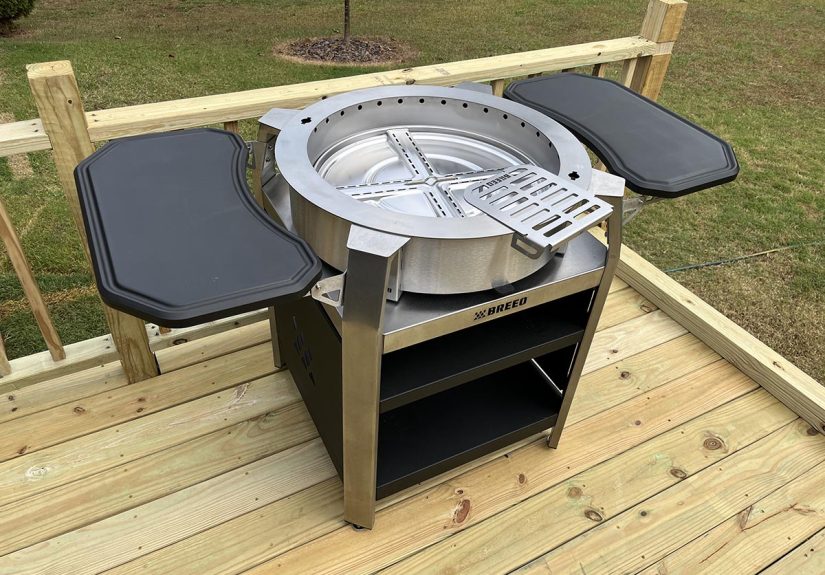
- Meet the Breeo Live-Fire Grill: Fire Pit Energy, Grill Precision
- Control Is Everything: Height, Zones, and the Outpost Advantage
- Wood-Fired Flavor: Why the Fire Matters as Much as the Food
- What You Can Cook on the Breeo Live-Fire Grill (Besides “Vibes”)
- Setup and Workflow: How to Avoid the “We’re Hungry Now” Trap
- Cleaning and Maintenance: Keep the Fire Breathing
- Is the Breeo Live-Fire Grill Worth It?
- 500-Word Experience Notes: What Live-Fire Cooking Feels Like with a Breeo-Style Setup
- Conclusion: The Best Kind of Outdoor Cooking Upgrade
Outdoor cooking has always been a little bit feralin the best way. It’s smoke in your hoodie, sizzling fat hitting flame,
and that one friend who suddenly becomes a “meat philosopher” the moment a steak hits the grate. But for years, the trade-off
was pretty clear: you could have convenience (gas), flavor (charcoal/wood), or vibes (a fire pit).
The Breeo Live-Fire Grill shows up like, “Why not all three?”
Bob Vila’s review captures the core appeal: this is a serious, heavy-duty setup designed to make wood-fire cooking feel controlled
and approachableeven in the kinds of places you’d typically reserve for a conventional grill, like a patio or deck. It’s the
difference between “Let’s cook outside” and “Let’s cook outside like we mean it.”
What “Live-Fire” Cooking Really Means (and Why It Tastes Like a Weekend Trip)
Live-fire cooking is exactly what it sounds like: you’re cooking with real flame and real wood (or charcoal), not just turning
knobs and hoping for the best. The upside is flavorsmoke, caramelization, and that primal “I made dinner using fire” satisfaction.
The downside (historically) is that wood can be unpredictable. Flames surge, hot spots appear, and suddenly your gorgeous salmon
is doing an impression of a campfire marshmallow.
The best live-fire meals aren’t cooked in flamesthey’re cooked near them, mostly over hot coals, with the ability
to shift the food in and out of intensity. That’s where design matters. A purpose-built live-fire grill can turn “rustic chaos”
into “rustic confidence.”
Meet the Breeo Live-Fire Grill: Fire Pit Energy, Grill Precision
The problem Breeo is solving
Cooking over wood is delicious, but it’s usually a logistical circus: unstable grates, awkward heights, flare-ups, and the constant
dance of “too hot / not hot enough / why is this side basically Antarctica?” Breeo’s Live-Fire Grill is built to provide the structure
and heat control that campfire-style cooking often lackswhile still letting you cook over real fuel.
In other words: it’s trying to give you the romance of an open fire with the practical control you expect from a real grill.
And it’s not alonemajor review outlets have started treating live-fire grills as a real category because people clearly want the flavor
and flexibility without the “survival challenge” vibes.
Safety by design (yes, even on a deckwithin reason)
One of the most interesting points from Bob Vila’s hands-on experience is how the grill behaved in a real home setting: set up on a deck,
the underside and nearby surfaces stayed cool to the touch even with an active fire. That’s not a license to ignore common sense, but it’s a
big deal for anyone who wants the live-fire experience without turning their backyard into a risk assessment worksheet.
The grown-up version of that sentence: keep distance from structures, respect wind, and cook with seasoned hardwood to reduce sparks.
Live-fire cooking is fun. Live-fire “oops” is not.
Control Is Everything: Height, Zones, and the Outpost Advantage
Adjustable heat without babysitting the flames
With live-fire cooking, your “temperature dial” is distance. The closer the food is to the coals, the more intense the radiant heat.
Raise the grate, and you shift toward gentler cooking. Lower it, and you’re in sear-city.
Breeo leans into this principle with adjustable components and a modular approach. One of the signature add-ons in the Breeo ecosystem is the
Outpost Grill system: it’s designed to rotate and adjust vertically, giving you precise control over how close your food sits to the heat.
That matters whether you’re trying to hard-sear a ribeye or gently cook skewers without torching the outside.
The two-zone method: your secret weapon
If you learn one live-fire trick, make it this: build a two-zone setup. One zone is your high-heat sear station over the most active coals.
The other zone is your “save the dinner” areacooler, indirect, and ideal for finishing thick cuts, holding food, or managing flare-ups.
Think of it like having a gas grill’s “high” and “medium” without the knobs.
This simple strategy is why experienced fire-cookers look so calm. They’re not fighting the firethey’re placing food intelligently.
Wood-Fired Flavor: Why the Fire Matters as Much as the Food
Seasoned hardwood: less drama, better taste
Not all firewood behaves the same. The sweet spot for cooking is well-seasoned hardwoodstable burn, solid coal bed, and fewer sparks than
resinous or wet wood. This matters for flavor, but also for comfort: fewer sparks means less “duck and cover” while you’re flipping burgers.
Want an easy mental model? Flames are for building the coal bed. Coals are for cooking. When you start cooking over a steady bed of coals,
you get more even heat and fewer “why is this corner incinerating my shrimp?” surprises.
Smoke: an ingredient, not a fog machine
A little smoke adds character. Too much smoke tastes like regret. Clean combustion and airflow are part of why dedicated live-fire systems
feel more user-friendly than a random grate over a random hole in the ground. Keep your fuel dry, don’t smother the fire, and give the fire
space to breathe.
What You Can Cook on the Breeo Live-Fire Grill (Besides “Vibes”)
1) Steakhouse sear, backyard edition
Live-fire grills shine on thick cuts. Here’s a reliable approach:
- Start in the hot zone to build a crust.
- Move to the cooler zone to finish gently.
- Rest before slicing so juices don’t sprint onto the cutting board.
If you’re cooking for safety and consistency, use a thermometer. For whole cuts like steaks, a commonly recommended benchmark is 145°F with a short rest.
(Your preferences may vary, but food safety doesn’t negotiate.)
2) Shrimp, skewers, and quick cooks
Fast-cooking foods are where height control and zones save the day. Shrimp can go from “perfect” to “rubber band collection” in about 47 seconds.
Keep them in the medium zone, and don’t be afraid to pull earlycarryover heat is real, especially over live coals.
3) Vegetables that taste like they belong at a restaurant
Live fire is a vegetable’s best friend. Try:
- Bell peppers and onions for fajita-style char
- Asparagus with lemon and grated parmesan
- Corn husked and kissed by flame
- Sweet potatoes roasted near the coals until candy-soft
If you use a flat top or searing plate accessory, treat it like a plancha: preheat thoroughly, oil lightly, and let food release naturally before flipping.
That’s how you get browning without sticking (and without launching your spatula into the neighbor’s yard).
4) Kettle cooking, cast iron, and “yes, you can bake out here”
One of the underrated joys of a live-fire setup is expanding beyond grill marks. With the right accessories and cookware, you can simmer beans, make chili,
warm sauces, or even do rustic “grill-baking” in cast ironcornbread, skillet desserts, or a pan of roasted fruit that makes people think you studied abroad.
The trick is indirect heat and a lid or cover to create a more oven-like environment. Once you get the hang of it, outdoor cooking stops being “grilling”
and starts becoming an outdoor kitchen.
Setup and Workflow: How to Avoid the “We’re Hungry Now” Trap
Plan for the fire timeline
Gas grills are instant gratification. Live fire is a short story arc: spark, flame, coal, cook. The payoff is worth it, but you need to start earlier than
you thinkespecially if you’re cooking for a group that gets “snacky” around knives.
A simple workflow:
- Light the fire and let it build a coal bed.
- Set up your tools: tongs, thermometer, heat gloves, tray for raw food, tray for cooked food.
- Prep food while the coals develop.
- Cook in stages: sear first, finish second, hold warm as needed.
Tools that make live-fire cooking smoother
- Long-handled tongs (save your eyebrows)
- Instant-read thermometer (save your dignity)
- Heat-resistant gloves (save your fingerprints)
- Metal tray system for raw vs. cooked food separation
Cleaning and Maintenance: Keep the Fire Breathing
Ash management isn’t glamorousbut it matters
Ash buildup can block airflow and make fires smokier and harder to manage. Breeo’s guidance is straightforward: clean out ash regularly (often every few uses),
let everything cool fully, and use the right tools (ash shovel or an ash-rated vacuum). Good airflow helps the fire burn cleaner and makes cooking more predictable.
Steel care without overthinking it
Breeo’s ecosystem often includes durable steel options, including Corten steel that develops a protective patina over time and stainless components designed for
low maintenance. Translation: it’s built to live outdoors and look better with age, as long as you give it basic care and occasional cleaning.
Is the Breeo Live-Fire Grill Worth It?
It’s a great fit if you…
- Crave real wood-fire flavor and don’t want to “rough it” to get it
- Like modular cookinggrilling, searing, kettle cooking, cast iron
- Host often and want an outdoor centerpiece that actually cooks
- Enjoy the process (fire-building is part of the fun, not a chore)
You might pass if you…
- Need speed (weeknight burgers in 12 minutes? gas still wins)
- Prefer set-and-forget cooking with minimal hands-on attention
- Don’t want to manage fuel (wood/charcoal takes planning and storage)
In broader grill roundups, the Breeo Live-Fire Grill is often framed as a premium, versatile systemless about replacing a basic grill and more about upgrading
outdoor cooking into an experience. That’s the right lens: it’s for people who want outdoor cooking to feel like an event, not an errand.
500-Word Experience Notes: What Live-Fire Cooking Feels Like with a Breeo-Style Setup
Below are “experience notes” drawn from common live-fire cooking best practices and the kind of scenarios people typically run into when they move from gas or
standard charcoal to a true live-fire setup. Consider it a realistic previewlike reading the trail map before you hike, except the trail ends in tacos.
Cookout #1: The Steak Night Reality Check. The first thing you notice is timing. With a live fire, you don’t start cooking when you’re hungry;
you start when you’re planning to be hungry. While the fire builds a coal bed, you prep steaks, set out salt, crack pepper, and arrange a “raw tray”
and a “cooked tray” like a responsible adult. Once you have coals, the magic happens fast: a sear in the hot zone gives you that steakhouse crust, then you
slide the steak to a cooler area to finish. The big lesson? The two-zone method is your best friend. It keeps you calm, and calm cooks make better food.
Cookout #2: Shrimp and Veggiesaka The Speed Round. Live fire isn’t only for big cuts. But quick cooks demand attention.
Shrimp go on, sizzle, and suddenly they’re doneespecially if you’re close to the coals. You learn to stage everything: skewers assembled, veggies oiled,
lemon wedges ready, serving platter waiting. Height adjustment (or simply moving to a cooler zone) becomes the difference between “tender and sweet” and
“chewy and sad.” You also discover that vegetables over live fire are the easiest way to impress people who claim they “don’t really like vegetables.”
Funny how that changes when zucchini tastes like it belongs on a $28 menu.
Cookout #3: The Unexpected StarOutdoor Cast Iron. This is where the live-fire setup starts to feel like an outdoor kitchen.
A cast iron skillet becomes a sauce station, a warming pan, or the base for skillet cornbread. A kettle or pot can handle beans, chili, or mulled cider.
You learn to treat the fire like a heat source with multiple personalities: high heat for searing, medium for sautéing, low for holding and simmering.
The big “aha” moment is realizing that live fire rewards patience and organization. When your workspace is tidy and your heat zones are intentional,
you stop reacting and start cooking with confidence.
The overall experience is less “push-button convenience” and more “hands-on craft.” And that’s the point. The Breeo Live-Fire Grill isn’t trying to replace
every grill; it’s trying to make outdoor cooking feel bigger, richer, and more memorablelike the campfire energy you love, upgraded with real control.
Conclusion: The Best Kind of Outdoor Cooking Upgrade
If you love the flavor and ritual of cooking over wood, the Breeo Live-Fire Grill is the kind of upgrade that makes the whole experience easier to repeatmore
controlled, more versatile, and more “I can do this on purpose” than typical open-fire improvisation. Bob Vila’s take highlights a key promise: live-fire cooking
that’s designed for real homes, not just campsites. Pair that with smart technique (two zones, coal-first cooking, safe setup), and outdoor cooking really can feel
better than ever.