Table of Contents >> Show >> Hide
- Who Was Reed Dewey?
- What Happened in the Mirror Accident?
- Why This Story Hit Parents So Hard
- The Hidden Danger of Unsecured Mirrors and Furniture
- What Parents Can Learn Without Turning the Story Into Blame
- A Practical Home Safety Checklist After Reed’s Story
- The Role of Social Media in Turning Grief Into Awareness
- Why Tip-Over Prevention Needs to Be Part of Everyday Parenting
- When Accidents Happen Even to Careful Parents
- Parenting Experience: What Reed’s Story Teaches Us at Home
- Conclusion
Note: This article discusses the accidental death of a child and includes child safety information that may be difficult for some readers.
Every parent knows the strange magic of toddlerhood. One minute, your child is stacking blocks with the seriousness of a tiny architect. The next, they have discovered that a spoon, a cardboard box, or a suction cup bowl is now the most fascinating object in the known universe. Toddlers explore before they understand danger. That is part of what makes them wonderful, funny, exhausting, and terrifyingly vulnerable.
The death of 22-month-old Reed Dewey, the young son of parenting influencer Lindsay Dewey and her husband, Eric Dewey, has struck families online because it happened in a place most parents consider safe: home. According to public reports based on Lindsay’s own account, Reed died after an unsecured mirror fell on him at the family’s Idaho home. The tragedy has become more than a heartbreaking headline. It has become a painful reminder that common household itemsmirrors, dressers, bookshelves, cabinets, televisionscan become dangerous when they are not anchored.
This is not a story about blame. It is a story about awareness. It is about looking around the rooms we live in every day and asking a hard but necessary question: “What could fall if a curious toddler pulled, pushed, climbed, or tugged?”
Who Was Reed Dewey?
Reed Michael Dewey was the youngest child of Lindsay and Eric Dewey. Lindsay, known online for sharing pieces of family life and motherhood, had posted milestones, memories, and the ordinary sweetness of raising children. Reed was described through family posts and reporting as joyful, loved, and deeply cherished by his parents and siblings.
He was only 22 months old when the accident happened in February 2025. At that age, children are in one of the busiest stages of development. They are mobile, curious, determined, and not yet able to understand cause and effect in the way older children can. A toddler may know that pulling on something makes it move, but not that the movement could bring down something heavy. A toddler may see a mirror as a shiny wall, a game, or a place to stick a suction cup. Adults see risk; toddlers see possibilities.
That gap between adult understanding and toddler curiosity is exactly why Reed’s story has resonated so widely with parents.
What Happened in the Mirror Accident?
According to Lindsay Dewey’s account, Reed had been playing near a large mirror in the family home. His mother said she believed he had been using a suction cup bowl, sticking it to the mirror and pulling it back and forth. The mirror, which was unsecured, fell on him.
Lindsay was reportedly nearby, about 10 feet away, cooking dinner when she heard the crash. She rushed to Reed and lifted the heavy mirror off him within seconds. At first, the situation may not have looked as catastrophic as it truly was. Public reports say Reed was found with his eyes open, and the full severity of his injuries became clear only after the accident unfolded.
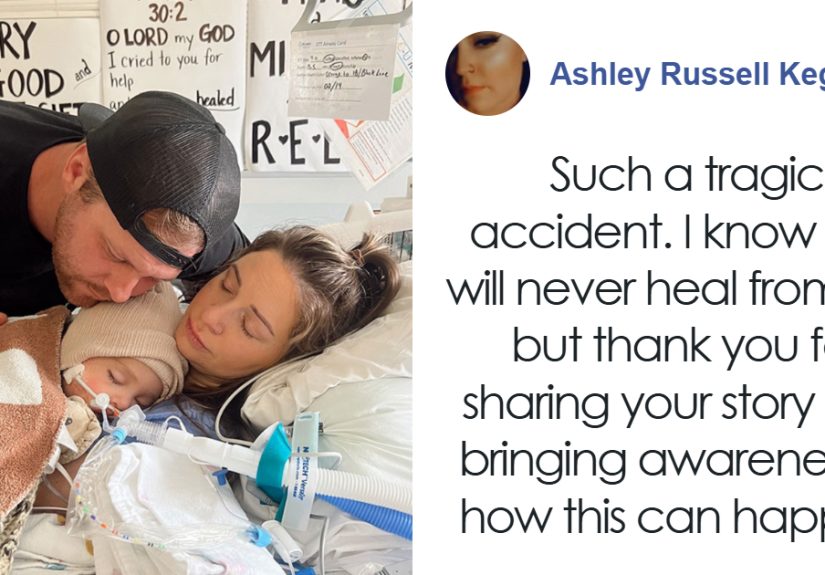
Reed was rushed to the hospital, where he fell into a coma. He had suffered severe head trauma. Days later, doctors determined that he was brain dead. His parents chose organ donation, and Reed’s organs were donated to five recipients. In the middle of unbearable grief, his family shared that he had become a miracle for other children.
That part of the story is almost impossible to read without pausing. It is devastating, but it is also a picture of extraordinary love: parents facing the worst moment of their lives and still allowing their child’s life to help others.
Why This Story Hit Parents So Hard
Many parenting stories online trigger debate. This one triggered something quieter and heavier: recognition. Parents understood how fast it happened. They understood the dinner-hour chaos. They understood being close but not close enough to stop the impossible. They understood that a home can be full of safety gates, outlet covers, locks, and carefully chosen furnitureand still contain one overlooked hazard.
Lindsay said she considered herself a protective mother. Reports noted that her home included childproofing measures such as locks, gates, and anchors on some furniture. The mirror, however, had not been anchored because it seemed too heavy and stable to fall easily. That detail matters because it reflects how many families think. We often secure what looks obviously risky. A tall dresser? Yes. A wobbly bookshelf? Of course. A heavy mirror leaning calmly against a wall? Maybe later. Maybe never. It looks solid. It feels permanent. It seems harmless.
But toddlers do not interact with a home the way adults do. They test surfaces. They pull. They lean. They climb. They turn ordinary objects into experiments. In Reed’s case, the suspected suction cup bowl created a force his family had not anticipated. That is the cruel nature of household accidents: they often happen through a chain of small, ordinary details that no one could fully predict.
The Hidden Danger of Unsecured Mirrors and Furniture
When parents hear “tip-over,” many immediately think of dressers and televisions. Those are major hazards, but mirrors deserve the same attention. A large leaning mirror can be heavy, smooth, and easy to underestimate. Some mirrors are designed to stand on the floor for decorative purposes, while others are placed temporarily during cleaning, moving, decorating, or daily life. The problem is that “temporarily” has a way of becoming “for now,” and “for now” often becomes “we forgot.”
Child safety experts emphasize that furniture and TV tip-overs happen quickly, sometimes even when a parent is in the same room. The U.S. Consumer Product Safety Commission has warned that thousands of people are injured each year in furniture, TV, and appliance tip-over incidents. Children make up a significant portion of these injuries and fatalities. Nationwide Children’s Hospital has also reported that children under age 6 are especially at risk, with injuries peaking around age 2.
That age range is important. Reed was nearly 2. He was exactly in the developmental window where mobility, curiosity, and limited judgment collide. Toddlers are strong enough to interact with furniture but not strong enough to escape if something heavy falls. They are quick enough to reach danger but not quick enough to avoid it. It is the parenting equivalent of living with a tiny raccoon who has no survival instincts and very strong opinions about snacks.
What Parents Can Learn Without Turning the Story Into Blame
Public tragedies often attract public judgment. But judgment rarely makes children safer. Practical action does. Reed’s story should not become another internet courtroom where strangers decide what a grieving parent should have done. Instead, it should become a household checklist.
Start with mirrors. Any large mirror that leans against a wall should be treated as a tip-over risk. If it is not mounted, anchored, or secured according to manufacturer guidance, it should not be accessible to young children. If a mirror cannot be safely anchored, it may need to be moved to a room children cannot enter.
Then move to furniture. Dressers, bookshelves, wardrobes, cabinets, entertainment centers, and tall storage units should be secured to wall studs with anti-tip devices. Experts often recommend metal brackets or strong wall straps installed correctly. Plastic parts can degrade or fail, and cheap hardware may create a false sense of security. Anchoring is not glamorous home decor, but neither are outlet covers, cabinet locks, or finding a raisin in a couch cushion from three weeks ago. Parenting is not always elegant. Safety wins.
Finally, think like a toddler. Could a child climb the drawers? Could they pull down a basket? Could a toy, remote, snack, or shiny object tempt them to reach? Could a chair, stool, toy bin, or laundry basket become a ladder? The best childproofing happens when adults stop looking at a room from adult height and start examining it from toddler level.
A Practical Home Safety Checklist After Reed’s Story
1. Anchor Large Mirrors Immediately
Floor mirrors, leaning mirrors, and decorative mirrors should be mounted or anchored securely. If the product was not designed to be anchored, consult the manufacturer or remove it from child-accessible spaces.
2. Secure Dressers, Bookshelves, and Cabinets
Use anti-tip brackets, braces, or wall straps. Whenever possible, attach furniture to wall studs rather than relying only on drywall anchors. If you rent, ask your landlord for written permission. Many landlords will allow safety anchoring, especially when children live in the home.
3. Keep Heavy Items Low
Books, appliances, storage bins, and decor should be placed on lower shelves. Heavy items on top of furniture can increase the danger if the furniture tips.
4. Remove Temptation From High Places
Do not place toys, snacks, tablets, remote controls, or favorite objects on top of dressers or shelves. If a child can see something irresistible, they may try to climb for it.
5. Check Anchors Regularly
Anchoring is not a one-and-done task. Check hardware after moving furniture, deep cleaning, rearranging rooms, or replacing flooring. If something feels loose, fix it before the room becomes child-accessible again.
6. Do Not Assume Heavy Means Safe
One of the most important lessons from Reed’s accident is that weight alone does not equal stability. A heavy mirror or dresser can still fall if force is applied in the wrong way.
The Role of Social Media in Turning Grief Into Awareness
Lindsay Dewey shared Reed’s story publicly to warn other parents. That decision could not have been easy. Grief is already heavy; public grief comes with comments, opinions, sympathy, criticism, and the strange pressure of being watched while your world has collapsed.
Yet her posts reached parents who may never have thought twice about a mirror leaning in a bedroom or hallway. That is the complicated power of social media. It can be noisy, shallow, and full of people arguing over beige playrooms and lunchbox cucumbers. But it can also spread life-saving warnings faster than a pamphlet ever could.
In the months after Reed’s death, public reporting noted that Lindsay continued to honor him. A memorial clothing collection was created by a local brand to support the family, and Lindsay later announced a children’s book project titled Reed’s Roar, intended to celebrate bravery, sacrifice, and kindness. Those efforts show how families often try to carry love forward after lossnot because grief disappears, but because love needs somewhere to go.
Why Tip-Over Prevention Needs to Be Part of Everyday Parenting
Parents are constantly told to watch for danger: choking hazards, water safety, car seats, sleep safety, stairs, medicine cabinets, hot stoves, cords, batteries, dogs, pools, driveways, and somehow also whether the toddler is eating enough vegetables. It is a lot. No parent can live in a state of constant alarm without eventually burning out.
That is why tip-over prevention should become routine rather than panic-based. We buckle car seats without debating every drive. We lock medicine because we know curiosity is faster than caution. Anchoring mirrors and furniture should sit in that same mental category: not a dramatic reaction, just a normal part of preparing a home for children.
The good news is that prevention is usually simple. It may require a drill, a stud finder, the right hardware, and 20 minutes of effort. It may involve moving a mirror, rearranging a room, or finally dealing with the bookshelf that has been “temporary” since the baby shower. But compared with the possible consequences, the inconvenience is small.
When Accidents Happen Even to Careful Parents
One of the hardest truths of parenting is that careful does not mean invincible. A parent can do a hundred things right and still miss one danger. That does not make the parent careless; it makes them human.
Reed’s story is especially painful because Lindsay was nearby. She responded quickly. She had safety measures in the home. She did not ignore her child. And still, the accident happened. That reality frightens parents because it removes the comforting illusion that only “other people” experience tragedy. It reminds us that prevention matters precisely because love and attention, while essential, are not always enough on their own.
Safety systems exist to support parents, not shame them. Anchors, locks, gates, and brackets are not signs that a parent is paranoid. They are backup plans for the unpredictable behavior of children who believe gravity is merely a suggestion.
Parenting Experience: What Reed’s Story Teaches Us at Home
After reading about a tragedy like this, many parents walk through their homes differently. A mirror is no longer just a mirror. A dresser is not simply a place for pajamas. A bookshelf is not only a cozy reading corner. Everything suddenly has weight, angle, balance, and possibility. That can feel overwhelming, but it can also become useful.
A practical experience many parents share is the “crawl-through test.” Get down to your child’s height and move through the room slowly. From the floor, the house looks different. Drawer handles look like climbing grips. Cords look like toys. A low shelf looks like a step. A mirror reflects movement and invites touch. A laundry basket becomes transportation. A dining chair becomes a mountain. This exercise may feel silly, but it often reveals risks adults miss because adults do not experience the room from 30 inches off the ground.
Another helpful experience is doing a “reset after rearranging.” Many accidents happen when the normal setup changes. A chair that usually blocks access gets moved. A mirror that was once wedged behind furniture becomes exposed. A dresser is shifted for cleaning, but the anchor is not reattached. Parents are tired, dogs make messes, guests come over, rooms get reorganized, and life happens. After any room change, take five minutes to ask: “Did this make anything easier for a child to pull, climb, or tip?”
Families can also make safety a shared routine instead of one parent’s invisible burden. One parent checks bedrooms, another checks living spaces. Grandparents check their homes too, because children do not stop being curious at someone else’s house. Babysitters should know which rooms are off-limits. Older siblings can be taught not to climb furniture or hang on drawers, though adults should never rely on a child’s memory as the only safety measure.
Parents who rent often worry about wall damage. That concern is real, but it should not stop the conversation. Many landlords allow child safety anchoring when asked. Some hardware leaves only small holes that can be patched. In a choice between a repairable wall and an unsecured heavy object, the wall should lose every time.
It is also wise to schedule seasonal safety checks. Put it on the calendar every few months: test anchors, tighten straps, inspect brackets, check cribs, review cords, and look for new climbing opportunities. Children develop quickly. The baby who could not roll last month may be pulling up today. The toddler who ignored the bookshelf yesterday may decide tomorrow that it is Mount Everest with board books.
The experience parents should take from Reed’s story is not terror. It is attention. Walk through the house. Anchor the mirror. Secure the furniture. Move the tempting objects. Ask for help if installation feels confusing. Then hug the kids, make dinner, and keep living. Safety is not about creating a perfect home. It is about giving ordinary love a stronger safety net.
Conclusion
The tragic death of Reed Dewey after a mirror accident is heartbreaking because it was sudden, ordinary, and almost unimaginable until it happened. His mother’s decision to share the details has turned private grief into public awareness, urging families to secure mirrors, anchor furniture, and rethink the everyday objects children can reach.
No article can soften the loss his family carries. But it can help carry the warning forward. A mirror that seems stable may not be safe. A heavy object may still fall. A toddler’s curiosity can turn a normal moment into an emergency. Reed’s story asks every parent and caregiver to pause, look around, and act todaynot out of fear, but out of love.