Table of Contents >> Show >> Hide
- The printer was compact, but the message was huge
- Why Prusa wanted a line between official firmware and your brilliant bad ideas
- The genius of making modders pause for one awkward second
- This was never just about one MINI
- Why Prusa’s reputation makes this policy work
- What this says about the future of consumer 3D printing
- The real takeaway: this is not a dare, it is a contract
- Extended Experience Section: What this feels like in the real world
- Conclusion
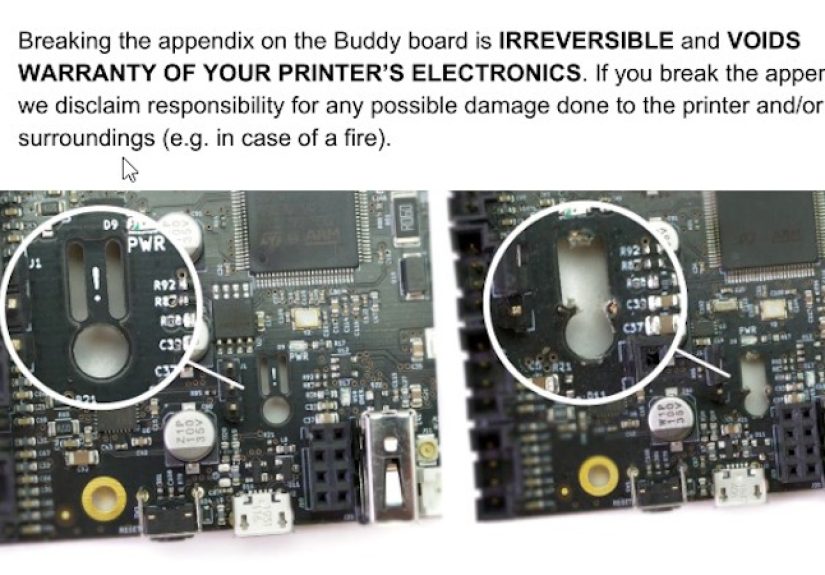
Most 3D printer companies want you to stay inside the lines. Print the cute little boat, use the approved firmware, smile politely, and please do not poke the electronics with a screwdriver. Prusa, in one of the strangest and most honest moves in desktop 3D printing, took a different approach: if you want to install unofficial firmware, you can do it, but you need to physically break a small “appendix” seal on the board first. That is not a metaphor. It is not a dramatic figure of speech. It is actual, literal, hardware-level commitment.
That is why the phrase “Prusa dares you to break their latest printer” landed with so much force in the maker world. It sounded reckless, funny, and slightly unhinged. In reality, it was something smarter: a very Prusa-style compromise between open-source ideals, product safety, warranty sanity, and the unstoppable human urge to tinker with things that already work fine.
The printer at the center of the original uproar was the Original Prusa MINI, the compact machine Prusa launched as an affordable, feature-packed entry point into its ecosystem. It arrived with a 32-bit board, a color screen, automatic mesh bed leveling, a removable spring steel sheet, network connectivity, and the kind of “small printer, big ambitions” attitude that tends to make hobbyists open their wallets faster than they open a fresh spool of PLA. It also arrived with signed firmware and a deliberate barrier between official support and custom software.
That barrier is what made the MINI memorable far beyond its print volume. Instead of simply blocking unsigned firmware, Prusa created a system that said, in effect, “You are allowed to experiment, but you must knowingly cross the line.” In a market where some brands slide quietly toward closed ecosystems while still talking like open-hardware champions, that move felt blunt, weird, and refreshingly transparent.
The printer was compact, but the message was huge
On paper, the Prusa MINI looked like a sensible machine for newcomers. It had a roughly 7 x 7 x 7-inch build volume, a modern control board, user-friendly calibration features, and the polished setup experience Prusa had built its reputation on. Reviews over the following years consistently framed the MINI and MINI+ as beginner-friendly machines that still delivered professional-looking prints. That matters because it explains why the firmware story hit such a nerve: this was not some obscure hacker board for five people on a forum. This was a mainstream hobby printer from one of the most trusted names in desktop fabrication.
Prusa had already built a loyal audience by being the grown-up in a room full of half-finished kits, vague documentation, and “good luck, brave traveler” customer support. Its machines were known for strong documentation, repeatable results, and a repair-friendly culture. When people bought a Prusa, they were often paying for the whole package: hardware, software, support, print profiles, parts availability, community knowledge, and the comforting sense that someone in Prague had thought this through before your nozzle jammed on a Sunday afternoon.
So when that same company said, “Yes, you can go off-road, but first you must snap this bit off,” makers did a double take. Was this anti-modding theater? Was it a legal shield? Was it a safety feature wearing a costume made of drama? The answer, oddly enough, was a little of all three.
Why Prusa wanted a line between official firmware and your brilliant bad ideas
Let’s be fair to the engineers for a second. A desktop 3D printer is not a harmless toy. Even a modest FDM machine deals with high temperatures, moving mechanical parts, heated beds, hot nozzles, fans, power supplies, thermistors, and long, unsupervised print jobs that can stretch late into the night while you are asleep and dreaming about perfect first layers. That is not the sort of device where “YOLO firmware build from a random corner of the internet” should automatically qualify as a sound lifestyle choice.
Prusa’s stated reasoning has long centered on safety. Official documentation around custom firmware makes the company’s position very clear: printers accept official signed firmware by default, and users who want to flash unofficial firmware must break the appendix seal. Prusa also says that breaking the seal does not automatically void the warranty, but the company disclaims liability for damage caused by a machine running custom firmware. In plain American English, that means this: you still own your printer, you still have freedom to modify it, but if your homebrew firmware turns your machine into a bad idea with stepper motors, Prusa does not want to be held responsible.
That concern is not theoretical. Fire, electrical, and mechanical risks in 3D printing are well documented. Safety literature from the U.S. Consumer Product Safety Commission has flagged hazards such as thermal runaway errors, cooling fan failure, unsupervised printing, and other conditions that can raise the risk of damage or ignition. More recent recall history in the wider 3D-printing market has reinforced the point: these machines are amazing, but they are not magic boxes exempt from ordinary electrical reality.
So no, the appendix seal was not Prusa being precious about its code. It was Prusa saying that firmware is part of the safety story. If a user replaces validated firmware with an unsigned alternative, that changes the risk profile. The company did not ban the behavior outright. It simply required a conscious, physical act that says, “I understand I am leaving the supported path now.”
The genius of making modders pause for one awkward second
Here is the part that made the whole thing so fascinating: Prusa did not choose the fully locked-down route. If the company had wanted to wage total war on custom firmware, it likely could have made the process far more hostile. Instead, it created friction without creating a prison.
That distinction matters. The appendix seal is less like a brick wall and more like one of those final warning signs before a mountain trail gets serious. Once you break it, you have made an informed choice. You are not “accidentally” installing unsigned firmware. You are not stumbling into advanced territory because you clicked the wrong menu. You are making a deliberate move, one that tells both you and the manufacturer that you are now operating in tinkerer mode.
And honestly, there is something almost theatrical about that. It turns a software decision into a ritual. You do not merely flash community firmware. You commit. You cross the Rubicon with a flathead screwdriver. You perform a tiny act of mechanical rebellion. Somewhere, a maker heard that and immediately said, “Well, now I kind of have to.”
From a product strategy perspective, it is a clever middle ground. It preserves the existence of an official, supportable baseline for the majority of customers. It keeps the door open for advanced users. It discourages casual tampering. And it gives customer support a clearer line when troubleshooting goes sideways. In other words, it is not just drama for drama’s sake. It is a practical design for managing expectations in a machine category where users range from first-time hobbyists to people who have opinions about nozzle metallurgy that should probably require adult supervision.
This was never just about one MINI
If the appendix seal had been a one-off curiosity, it would have faded into trivia. Instead, the bigger story is that Prusa’s custom-firmware policy evolved into a broader pattern. Current documentation for newer Prusa machines built around xBuddy electronics, including models in the MK4 and CORE One family, shows the same basic philosophy: official signed firmware by default, custom firmware allowed after breaking an appendix seal, warranty not automatically voided, but liability for problems caused by unofficial firmware pushed back to the modifier.
That tells us something important. The MINI was not an accident. It was the early, high-profile expression of a position Prusa still believes in. The company wants openness, but not ambiguity. It wants modding, but not pretend innocence about the risks. It wants users to repair, maintain, and understand their machines, but it also wants a supported baseline that does not collapse into chaos every time someone installs a spicy fork from GitHub.
That is especially relevant now because the broader 3D-printer market has changed. The industry has become faster, slicker, more appliance-like, and more competitive. Newer machines are often marketed as near-magical consumer products rather than semi-industrial fabrication tools for obsessive hobbyists. In that environment, Prusa’s position looks almost old-school: freedom remains on the table, but freedom has consequences, and the machine should say so out loud.
Why Prusa’s reputation makes this policy work
A less trusted company might have turned the same move into a public relations disaster. Prusa got away with it because the brand had already earned credibility in areas that matter to makers: documentation, repeatability, parts support, repairability, and long-term usability. Reviews and industry commentary have repeatedly described Prusa printers as reliable, well-supported, and unusually maintainable compared with many rivals.
That brand context changes the way people read the appendix seal. Instead of feeling purely hostile, it feels like a company drawing a realistic support boundary. Many users may not love the symbolism, but they can see the logic. If you buy a Prusa because you want a dependable machine that just works, official signed firmware is a feature, not a bug. If you buy a Prusa because you want a hackable platform with a real ecosystem and parts availability, the door is still open. It just comes with a very specific kind of “abandon all innocence, ye who enter here” sticker.
There is also an irony here that makes the story even better. Prusa remains strongly associated with open-source culture, maintainability, and user agency. The company publishes firmware source for its 32-bit printer family, and its broader ecosystem still signals accessibility in ways many competitors do not. At the same time, Prusa has also been navigating the business reality of openness, including newer licensing moves meant to address cloning and commercial abuse. So the appendix seal lives right at the center of a modern maker dilemma: how do you stay open without becoming naive?
What this says about the future of consumer 3D printing
In some ways, the Prusa firmware seal is a preview of where desktop manufacturing has been heading for years. Consumers want appliances. Makers want platforms. Businesses want reliability. Lawyers want boundaries. Engineers want nobody to disable safety protections and then act shocked when the machine behaves like a tiny factory instead of a cheerful kitchen gadget.
That tension is not going away. As 3D printers become more capable, more enclosed, more networked, and more polished, the tradeoff between openness and managed safety will only get sharper. The average buyer wants less tinkering. The power user still wants root access to everything. The manufacturer has to live somewhere in the middle.
Prusa’s solution may not be elegant in the poetic sense, but it is elegant in the industrial sense. It acknowledges reality. Firmware matters. Safety matters. Support boundaries matter. User freedom matters too. So instead of pretending these values never clash, Prusa built the clash right into the hardware and asked the customer to make a choice.
That choice is why the story still sticks. “Prusa dares you to break their latest printer” sounds like a headline written after too much coffee. But beneath the wink is a serious question about what we expect from the machines on our desks. Should a 3D printer be a sealed appliance? A hacker playground? A repairable tool? A managed platform? Prusa’s answer is oddly mature: it can be several of those things, just not all under the exact same promise.
The real takeaway: this is not a dare, it is a contract
That is the trick. The whole episode looked like a dare, but it functioned like a contract. Prusa was not taunting users because it wanted broken boards. It was asking them to acknowledge the line between “supported machine” and “modified machine.” That line used to be fuzzy in the hobby world. Prusa made it visible.
And maybe that is why so many people found the move annoying, funny, and admirable all at once. It forced honesty into a part of consumer technology that usually hides behind vague language. Plenty of companies quietly limit what users can do. Prusa said, right there on the hardware, “You can do it. But own it.”
For makers, that is irritating in the best possible way. It respects capability. It demands responsibility. It also creates one of the most memorable user experiences in modern 3D printing: the moment when modding your printer stops being a menu option and becomes a tiny rite of passage.
Extended Experience Section: What this feels like in the real world
For many users, the most interesting part of the Prusa story is not the seal itself, but the feeling it creates around the machine. A lot of desktop 3D printers promise openness until the first time you want to step outside the approved lane. Then the tone changes. Suddenly you are unsupported, undocumented, and treated like a suspicious goblin who dared to ask whether the machine they bought can be truly theirs. Prusa’s approach is different because it keeps the relationship honest from the start.
That honesty changes the ownership experience. If you are a beginner, the default path is wonderfully comforting. You get a printer that is designed to be stable, predictable, and well documented. You are not forced into firmware experiments. You are not expected to become a midnight electronics surgeon just to produce a clean bracket or a decent spool holder. You can stay in the official ecosystem, use the recommended profiles, follow the guides, and get on with printing useful parts. For classrooms, labs, small businesses, and ordinary hobbyists, that is a major advantage.
If you are an advanced user, though, the same machine sends a very different signal. It tells you that the manufacturer knows you exist. It knows you may want custom firmware, alternative workflows, deeper control, or a broader experimental sandbox. But it also asks you to stop pretending that these changes are risk-free. That physical seal becomes a psychological checkpoint. It asks, “Are you just curious, or are you committed?” That sounds theatrical, but it actually improves decision-making. Plenty of people should not flash random firmware on a heated machine they barely understand. The seal makes that point without banning anything outright.
There is also a surprisingly strong emotional side to this. Makers tend to bond with tools that feel understandable and repairable. That is one reason Prusa has kept such a strong reputation. A machine that can be maintained, upgraded, diagnosed, and supported over time feels less disposable. It feels like equipment, not decor. So when a company with that reputation says, “Yes, go ahead and modify it, but do so knowingly,” many users read that as respect rather than insult. It is frustrating, sure. But it is a grown-up frustration.
In practical terms, that experience often translates into confidence. Users are more likely to trust a printer that works well in stock form and still leaves the door open for deeper tinkering later. You can learn on it, print for months without drama, and only then decide whether you want to cross into experimental territory. That gradual path matters. It supports both kinds of owners: the person who wants a dependable desktop workhorse and the person who eventually wants to poke the firmware with a stick and see what happens.
So the long-term experience of this “dare” is not really chaos. It is clarity. You know what the official promise is. You know what the unsupported zone is. You know that the machine is built for real use, not just for flashy marketing videos. And that may be the biggest compliment you can pay a modern 3D printer: it treats the owner like an adult, even when the owner is one screwdriver away from doing something gloriously unnecessary.
Conclusion
The genius of Prusa’s firmware seal is that it turns an industry tension into a visible choice. Instead of pretending desktop 3D printers can be fully open, perfectly safe, endlessly supportable, and consequence-free all at once, Prusa draws a line and lets the user decide whether to cross it. That makes the MINI story more than a quirky hardware anecdote. It makes it a case study in how modern 3D printing is growing up.
So, did Prusa really dare people to break its latest printer? In the clickbait sense, yes. In the meaningful sense, not exactly. What it really did was far more interesting: it dared users to take responsibility for the freedom they say they want. In the maker world, that may be the boldest feature of all.