Table of Contents >> Show >> Hide
- What the MK4S Actually Changes (And Why It Matters)
- So… How Much Faster Is “Faster”?
- MK4 vs MK4S: The Practical Differences You’ll Feel
- Pricing, Options, and the Upgrade Path (Classic Prusa Move)
- Where the MK4S Fits in Today’s 3D Printer Market
- Who Should Buy the MK4S?
- How to Get the Best Results: Small Tips That Make a Big Difference
- Examples: Where the MK4S Speed + Cooling Combo Really Shines
- Conclusion: A Faster Prusa, Not a Different Prusa
- Hands-On Experiences: What Living With the MK4S Feels Like (Maker Perspective)
If you’ve been anywhere near the 3D printing world lately, you already know the vibe: everybody wants speed.
“How fast can it print a Benchy?” has basically become the “0–60” of desktop manufacturing, except with more
tiny boats and fewer speeding tickets.
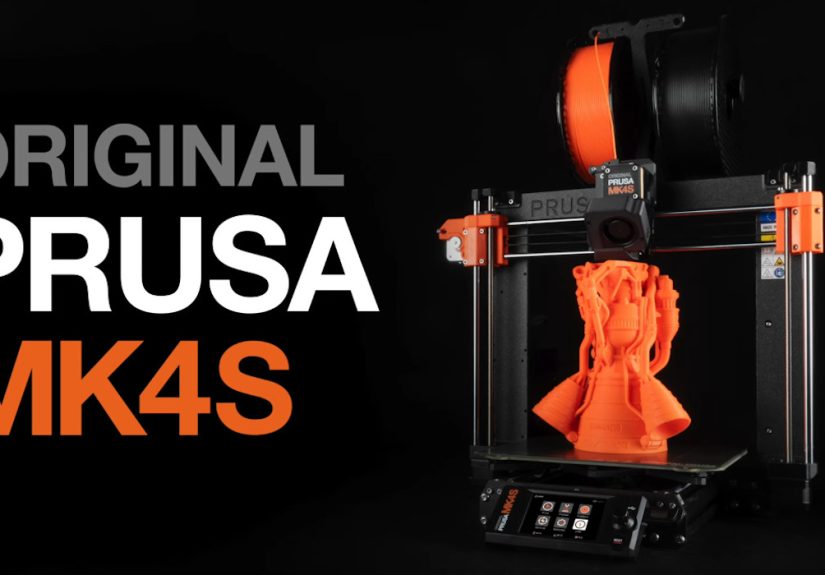
Prusa’s response is the Original Prusa MK4Sa printer that doesn’t try to reinvent the entire
i3 “bed-slinger” formula, but does try to make it hustle. And it does it in a very Prusa way: thoughtful,
upgrade-friendly, and focused on real-world print quality instead of just flexing numbers on a spec sheet.
In other words, it’s not here to win a drag race. It’s here to finish your prints faster and make them look better.
What the MK4S Actually Changes (And Why It Matters)
The MK4S isn’t a cosmetic refresh. It’s Prusa taking the MK4 foundation and attacking the two things that
most directly limit “faster but still pretty” printing: cooling and melt capacity.
Add a few quality-of-life upgrades, and you’ve got a printer that feels noticeably more modern without
abandoning what made Prusa popular in the first place.
1) 360° Cooling That’s More Than a Buzzword
Cooling is the unglamorous secret behind clean bridges, crisp overhangs, and not turning your print into modern art.
The MK4S introduces a redesigned 360° cooling system built around a front-mounted turbine and a wraparound shroud.
Practically speaking, the airflow is more consistent around the nozzle, which means the printer can push higher speeds
while still freezing detail where it counts.
This shows up most in the places you actually notice: overhangs, small parts, and “why does this corner always droop?”
geometry. Better cooling also reduces your dependence on supportsso you spend less time printing scaffolding and more
time printing the thing you actually wanted.
2) A High-Flow Nozzle That Lets the Printer “Eat” Faster
Speed isn’t only about how quickly the printer moves. You can fling the toolhead around like it drank three espresso shots,
but if your hotend can’t melt plastic fast enough, you’re just doing cardio.
The MK4S ships with a high-flow nozzle based on CHT-style design, which improves volumetric flow by helping the filament
melt more efficiently. The takeaway: the MK4S can lay down plastic faster without immediately face-planting into under-extrusion.
That’s how you get faster prints while keeping strength and surface quality in a respectable place.
3) Stronger Parts, Smarter Manufacturing Choices
Prusa also tightened up the physical platform. Some structural components that were previously printed in PETG are moved to
tougher, more temperature-resistant materials (including carbon fiber–reinforced blends), and certain parts have transitioned
to injection molding. That’s not as flashy as “NEW 12,000 mm/s!!!” but it’s the kind of detail that helps a printer stay stable,
consistent, and less finicky over a long life.
4) A Real “Nice to Have” Feature: Mobile App + NFC Wi-Fi Setup
Prusa added a native Prusa mobile app and an NFC-based Wi-Fi setup workflow. In plain English: instead of typing
your Wi-Fi password on a printer knob like it’s 2009, you can use your phone to pass credentials via NFC.
Importantly, the MK4S still respects the “offline printer” crowd. You can run it without cloud features and keep it as air-gapped as
your paranoia requires. (No judgment. Some of us have seen firmware updates.)
So… How Much Faster Is “Faster”?
The MK4S speed story isn’t “it’s now a totally different class of machine.” It’s more like: it takes the MK4’s already strong baseline
and makes it quicker in the places that matterespecially shorter prints, high-detail prints, and parts that need aggressive cooling.
The headline demo everybody loves is the Benchy: reports around the MK4S launch put it in the neighborhood of
about 14 minutes for a high-quality speed run, and even faster for “draft mode” prints if you’re willing to trade some polish.
Is that the only print that matters? No. Is it the print the internet will judge you by? Unfortunately, yes.
The more meaningful win is consistency at higher throughput. Better cooling plus higher flow makes it easier to run profiles that
finish sooner without turning your overhangs into melted candle wax. And in day-to-day use, that tends to feel like:
“I can print this today instead of tomorrow,” which is the most magical kind of speed.
MK4 vs MK4S: The Practical Differences You’ll Feel
On paper, the MK4S looks like an iteration. In practice, it behaves like a refinement pass aimed directly at speed printing
and print quality under pressure.
- Overhang performance: The upgraded cooling improves steep overhangs and reduces support needs on many models.
- Shorter print times without drama: The high-flow nozzle helps avoid the “faster profile = under-extrusion” trap.
- Setup convenience: NFC Wi-Fi setup and app integration reduce the friction for remote monitoring and file management.
- Durability mindset: Material and manufacturing tweaks point toward long-term stability, not just a flashy launch.
Pricing, Options, and the Upgrade Path (Classic Prusa Move)
One of Prusa’s strongest cards has always been: “You’re not buying a dead-end box.” The MK4S continues that tradition with multiple
purchase routes:
- Fully assembled MK4S: positioned at a premium price point for people who want it working now, not after a weekend of assembly.
- MK4S kit: cheaper, and beloved by makers who enjoy building as much as printing.
- MK4 → MK4S upgrade kit: the value option for existing MK4 owners who want the improvements without buying a whole new machine.
The upgrade kit is especially on-brand for Prusa: it rewards existing users, reduces e-waste, and lets the company move the platform
forward without forcing a full replacement cycle. If you already own an MK4, this is the “why wouldn’t you?” route for a lot of people.
Where the MK4S Fits in Today’s 3D Printer Market
Here’s the awkward truth: the market has changed. Fast CoreXY machines and highly automated competitors have raised expectations.
Prusa didn’t ignore that realityif anything, the MK4S reads like a strategic move to keep the i3 platform relevant while Prusa expands
into newer designs.
The MK4S is still a bed-slinger. That matters because moving the bed in Y introduces physics problems at extreme speeds.
But Prusa’s bet is that most people don’t need maximum theoretical speed; they need a printer that’s fast enough,
prints beautifully, and doesn’t require a graduate degree in troubleshooting to stay consistent.
Reliability and Repeatability Are Still the MK4S “Superpower”
For makers running small businesses, educators, or anyone printing functional parts regularly, reliability isn’t a boring featureit’s the feature.
Failed prints are expensive in time, material, and morale. The MK4S leans into that reputation: stable mechanics, mature profiles, and a support ecosystem
that’s built around long-term ownership rather than disposable upgrades.
What About the Competition?
If your main priority is raw speed-per-dollar, you’ll find strong options across the market. Some competitors are faster on paper and can feel more automated.
The MK4S argument is different: it’s about predictable quality, repairability, and an upgrade path, with “fast” as a serious improvement rather than the only identity.
In fact, comparisons often show the MK4S can look slower by certain headline metricsyet still win hearts in print quality, consistency,
and the kind of user experience that doesn’t make you want to launch your printer into the sun.
Who Should Buy the MK4S?
The MK4S is a great fit if you…
- Want a premium 3D printer that prioritizes print quality and repeatability.
- Print lots of functional parts and value dimensional accuracy and predictable strength.
- Like open ecosystems, repairable hardware, and long-term support.
- Care about speed, but not at the expense of babysitting every print.
You might skip it (or wait) if you…
- Only care about maximum speed-per-dollar and want a machine optimized for that one goal.
- Need an enclosed printer for high-temp materials as a daily requirement (unless you’re pairing the MK4S with an enclosure).
- Already have an MK4 and are perfectly happythough the upgrade kit makes that stance harder to defend.
How to Get the Best Results: Small Tips That Make a Big Difference
The MK4S is designed to be approachable, but “fast and clean” still depends on a few real-world habits:
- Use the right profile: Start with official PrusaSlicer profiles before experimenting. Speed is easiest when the slicer and firmware agree on reality.
- Let cooling do its job: For PLA and similar materials, good cooling is a cheat code for detail. For warp-prone materials, balance cooling with adhesion.
- Don’t rush calibration: A few extra minutes on first-layer tuning saves hours of regret later.
- Pick the right sheet: Different build sheets behave differently. Matching surface type to material can eliminate a lot of “why is this peeling?” drama.
Examples: Where the MK4S Speed + Cooling Combo Really Shines
Support-light prototypes
If you’re iterating brackets, mounts, enclosures, or “I swear this hinge will work this time” prototypes, better overhang handling means fewer supports.
Less support means less post-processing and faster design cyclesexactly what speed printing is supposed to enable.
Clean cosmetic parts
Decorative prints benefit from consistent cooling and smoother surfaces. Think display models, desk gadgets, organizers, and those “why does this look injection-molded?”
moments that make makers insufferable at dinner parties.
Flexible filaments (without suffering)
TPU printing is where a lot of printers go from confident to timid. The MK4S platform is built to handle flexibles well, and the improved airflow
helps keep smaller TPU features from turning into gummy blobs.
Conclusion: A Faster Prusa, Not a Different Prusa
The MK4S doesn’t feel like Prusa chasing trends for the sake of it. It feels like Prusa doing what it’s always doneiterating carefullywhile acknowledging
that speed is now a baseline expectation. The 360° cooling and high-flow nozzle are meaningful upgrades because they improve the two things makers actually notice:
print quality at higher throughput and fewer “why did it fail at hour seven?” headaches.
If you want a printer that prints fast enough, looks great, and is designed to be owned for years (not replaced the moment the next model drops),
the MK4S makes a strong case. And if you already have an MK4, the upgrade path is the kind of practical, pro-user move that keeps Prusa fans loyal.
Hands-On Experiences: What Living With the MK4S Feels Like (Maker Perspective)
Let’s talk about the part that never shows up in clean spec tables: what it feels like to actually run the MK4S in a real workspacewhere you’re juggling
projects, switching filaments mid-week, and occasionally asking the universe why you decided to print something that needs 9,000 tiny support trees.
The first “experience win” is that the MK4S feels like it wants you to succeed. You’re not greeted by a maze of obscure menus or a calibration ritual that
requires chanting. The setup flow is guided, the printer checks itself like a cautious pilot, and you quickly get the sense that Prusa expects this machine
to be used by humansnot just the type of person who reads firmware changelogs recreationally.
The NFC Wi-Fi setup is a small thing that becomes a big thing the moment you don’t have to peck a password into a knob-driven interface. In a busy shop,
shaving five minutes off setup isn’t about lazinessit’s about momentum. When your printer is online quickly, you can jump into remote monitoring, manage
print queues, and keep the workflow moving. It’s not glamorous, but it’s the difference between “I’ll set it up later” and “it’s printing already.”
Then you hit the first prints, and the MK4S’ personality shows up: it’s fast, but it’s not chaotic. A lot of “speed” printers feel like they’re constantly
one bad setting away from sounding like a washing machine full of socket wrenches. The MK4S is more controlled. You can push prints quicker and still get
results that look intentionalespecially on models with overhangs that would normally demand supports. The upgraded cooling is the kind of improvement you
notice when you pick up the finished part and realize you’re not spending the next 20 minutes sanding off support scars.
Over time, the biggest day-to-day advantage is simply fewer surprises. Printing functional parts becomes more predictable: brackets fit, holes land where you expect,
and you don’t need a second print “just to be safe” nearly as often. That matters whether you’re prototyping a product, printing classroom tools, or selling small-batch parts.
Reliability is an underrated money saver.
Filament changes and material experiments also feel less intimidating. PLA is the easy mode, of course, but PETG and TPU are where many people live. The MK4S handles
these in a way that encourages experimentation rather than punishing it. You still have to use good practicesdry filament, sane temperatures, and realistic expectations
about what “fast” means for each materialbut the machine doesn’t fight you. It feels like a partner, not a puzzle box.
Finally, the upgrade path is a uniquely satisfying experience. If you’re coming from an MK4, the idea that you can “level up” your printer instead of replacing it
feels both economically smart and emotionally correct. There’s something deeply maker-brained about upgrading a machine with your own hands and then watching it perform better
because of your effort. It’s like giving your printer a gym membership and actually seeing results.
In short: living with the MK4S feels like having a printer that respects your time. It helps you get from idea → part faster, without requiring you to become a full-time
3D printing therapist. And honestly, that’s the best kind of “speed upgrade” there is.