Table of Contents >> Show >> Hide
- The Shirt That Triggered the Hallway Meltdown
- Bartmania Wasn’t Just a Trend, It Was a Merch Explosion
- Adults Were Not Exactly Chill About Bart
- So Could Schools Actually Ban Bart Simpson Shirts?
- Why the Bart T-Shirt Panic Still Matters
- Experiences From the Era and Why People Still Remember It
- Conclusion
There was a glorious, chaotic moment in American pop culture when a cartoon fourth-grader with a slingshot caused a full-blown school panic. Not over grades. Not over test scores. Over T-shirts.
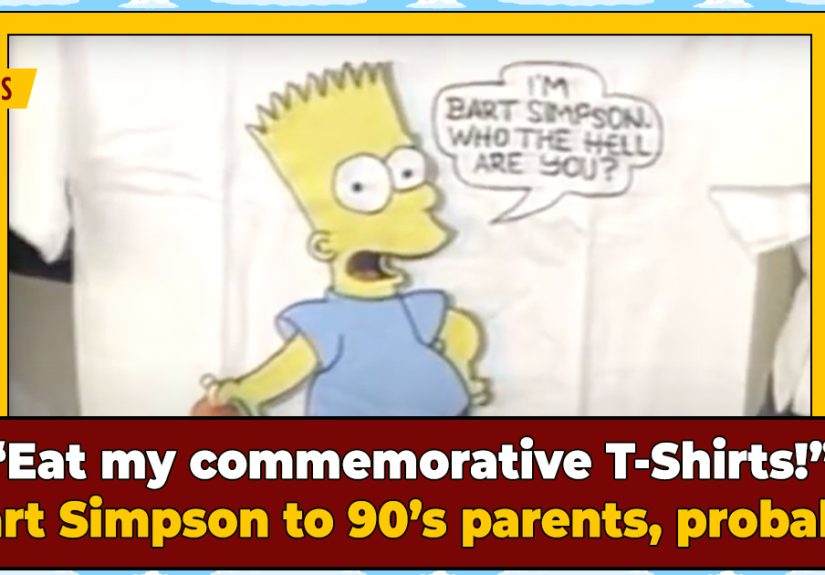
Yes, really. In the peak Bartmania era of the early 1990s, schools across the United States started banning Bart Simpson shirts because adults were convinced they were corrupting kids, undermining classroom values, and basically launching civilization into a detention slip spiral. The slogans were the issue: “Underachiever (and proud of it, man!),” “Eat my shorts,” and the famously spicy “I’m Bart Simpson, who the hell are you?” were funny to students and deeply not funny to many principals.
If you were around then, you probably remember the vibe: one side saw harmless humor, the other saw cultural collapse in a white cotton tee. And the wild part? Both sides thought they were the reasonable ones.
This story is more than a nostalgia trip. It’s a snapshot of how schools, parents, media, and politicians react when youth culture moves faster than adult comfort. And if that sounds familiar in 2026… well, congratulations, you’ve met history’s favorite hobby: repeating itself with different fonts.
The Shirt That Triggered the Hallway Meltdown
The most controversial shirt in the bunch was the now-iconic “Underachiever and proud of it, man!” design. It showed Bart, the spiky-haired anti-authority mascot of the era, looking exactly like the kind of kid a school assembly speaker would call “a challenge.” To kids, the shirt was funny. To many school administrators, it was a walking poster for bad attitudes.
One Ohio elementary principal became one of the best-known examples after banning the shirt in 1990, arguing that being “proud” of underachieving clashed with the school’s mission. Other schools followed. Reports at the time described bans spreading across multiple states, with administrators saying the slogans sent the wrong message about academics, behavior, and respect for adults.
And schools didn’t stop at the “Underachiever” shirt. Some also targeted other Bart slogans, especially the ones with profanity or insults. In other words, the issue wasn’t just The Simpsons. It was the collision between school image management and a character whose brand was basically “I dare you.”
Why This Specific Shirt Hit a Nerve
Plenty of pop-culture shirts were loud in that era, but Bart’s shirts were different because they touched a school’s softest pressure points: achievement, discipline, and language. A shirt that joked about being an underachiever did not land like a harmless cartoon gag when your job title is literally “principal.”
To administrators, it looked like a public statement worn in classrooms, hallways, and school photos. To students, it was a joke and a status symbol. To retailers, it was a rocket ship. To cable news and newspaper columnists, it was a gift from the content gods.
That combination created a perfect storm: easy visuals, clear slogans, anxious adults, and millions of kids who instantly wanted whatever adults hated.
Bartmania Wasn’t Just a Trend, It Was a Merch Explosion
Let’s talk scale, because this is where the story gets even better. Bart Simpson wasn’t just a TV character in 1990. He was a merchandising event. A giant one.
By the height of Bartmania, reports described Bart shirts selling at a ridiculous pace, and the broader Simpsons merchandising machine was pulling in massive revenue. That explains why the school bans felt so visible: the shirts were everywhere. Department stores carried them. Kids wore them to class. Parents saw them at checkout. Local principals suddenly found themselves in the middle of a national culture debate without asking for the assignment.
There was also a classic irony here. Once schools banned a Bart shirt, the shirt became even more desirable. Nothing boosts playground demand like a principal saying, “Absolutely not.” Before the internet made every controversy go viral in 12 minutes, schools were already running a very analog version of the same machine.
Even Museums Took Notice
This wasn’t just a fleeting retail fad either. The Smithsonian’s National Museum of American History now holds an “Underachiever” Bart shirt in its collection, which tells you everything you need to know about its cultural footprint. When a T-shirt goes from the school dress-code office to a museum archive, it’s no longer just merchandise. It’s evidence.
That museum treatment also confirms what many people felt at the time: the shirt represented a bigger moment in American life, where TV, consumer culture, and school politics all crashed into each other in one highly washable cotton object.
Adults Were Not Exactly Chill About Bart
School bans didn’t happen in a vacuum. The broader culture was already arguing over The Simpsons. Adults in politics, media, and family-values circles were debating whether the show was smart satire or a bad influence wrapped in yellow skin.
Barbara Bush famously criticized the show, calling it the “dumbest thing” she had ever seen, which might have been the most 1990 sentence ever spoken. But in one of the strangest and most charming twists in pop-culture history, the show’s team responded with a letter from Marge Simpson. Barbara Bush later softened, even replying with humor and warmth. If the internet had existed in its modern form, that exchange would have broken every timeline.
Meanwhile, criticism from other public figures helped keep the anti-Bart fire burning. The result was a familiar media pattern: the louder adults complained, the more culturally powerful Bart became. For a while, Bart wasn’t just a cartoon kid. He was a national argument with sneakers.
The “Family Values” TV Fight
The timing mattered. The Simpsons arrived as a primetime hit when American TV comedy still leaned heavily on cleaner, more traditional family sitcoms. Bart’s sarcasm, backtalk, and chaos felt disruptive to many viewers precisely because the character was so different from what a “good TV kid” was supposed to sound like.
By 1992, the show had become such a political symbol that President George H. W. Bush used it as a contrast point in a speech, calling for an America “closer to ‘The Waltons’ than ‘The Simpsons.’” That line was not really about one cartoon. It was about who gets to define decency in American culture.
And yes, that debate eventually filtered right back into schools, where principals had to decide whether a T-shirt was harmless humor, disruptive speech, or a threat to school values. That’s a heavy legal and cultural question for something worn with jeans and Velcro sneakers.
So Could Schools Actually Ban Bart Simpson Shirts?
This is where the history gets interesting for anyone who loves free speech debates (or just enjoys a good “principal vs. T-shirt” showdown).
In U.S. public schools, student expression is protected, but not unlimited. Courts have long said students do not lose their speech rights at school, but schools can act when they can show a real risk of disruption. They also have more power to restrict vulgar or plainly offensive speech in school settings.
That legal gray zone is exactly why Bart shirts caused so much friction. A shirt saying “Underachiever and proud of it” isn’t the same as a threat. But it’s also not a math club logo. Administrators argued the message undermined education. Students and parents often saw it as humor or personal expression. Depending on the slogan and the school, either side might feel legally confident.
And that tension never really went away. Even recent student-shirt cases in U.S. courts still circle around the same question: when does a slogan become disruptive enough for a school to ban it? The names and messages change, but the legal balancing act looks very familiar.
Why Bart Was a Perfect Test Case
Bart’s slogans sat right on the line between comedy and confrontation. “Don’t have a cow, man” is harmless. “Eat my shorts” pushes it. “Who the hell are you?” is a direct challenge in many school settings. “Underachiever and proud of it” pokes at the core mission of school itself.
That’s why Bart became such a lightning rod. He wasn’t just rebellious. He was commercially successful rebellious. And once a rebellious message starts selling in malls, the adult panic gets louder because it no longer feels like one kid acting out. It feels like a trend.
Why the Bart T-Shirt Panic Still Matters
It’s easy to laugh at this now (and honestly, you should a little), but the Bart shirt controversy reveals something real about schools and culture. Schools are not just places where students learn algebra. They’re also where communities negotiate values, boundaries, and identity.
When a pop-culture symbol shows up at school, it forces a decision: do you treat it as expression, distraction, disrespect, or all three? Bart Simpson happened to arrive at exactly the right momentwhen television was changing, merchandising was exploding, and public debates about kids and media were everywhere.
The result was one of the strangest mini culture wars in modern American school history: a war over cartoon shirts that somehow involved department stores, principals, national politicians, and eventually a museum collection.
And if you’ve ever wondered whether adults overreact to youth culture, the answer is yes. Consistently. Across decades. With remarkable energy.
Experiences From the Era and Why People Still Remember It
This section expands on lived experiences and common memories tied to the Bart-shirt panic, based on contemporaneous reporting, school examples, and later cultural retrospectives.
For a lot of people who were in school around 1990, the Bart Simpson shirt drama wasn’t an abstract media storyit was a real hallway event. A student would show up in a fresh white Bart shirt, teachers would notice by first period, and by lunch everyone knew whether the office had “said something.” That’s one reason the memory sticks so well: it played out in public, in front of classmates, with all the tension and comedy of school social life.
Students often experienced the shirts as a badge of personality more than a political statement. Wearing Bart said you were funny, a little defiant, and plugged into what was current. Even kids who weren’t trying to start trouble knew the shirt had power. It could make your friends laugh. It could annoy a strict teacher. It could get a reaction. In school culture, that’s basically the whole economy.
Parents’ experiences were all over the place. Some thought the shirts were harmless and remembered similar “grown-ups hate this” trends from their own childhoods. Others looked at slogans like “Underachiever and proud of it” and saw a direct shot at the values they were trying to teach at home. What made the issue so combustible was that both readings were plausible. One family saw a joke. Another saw a message. Schools got stuck in the middle and had to write policy for both versions at once.
Teachers, meanwhile, often had a more complicated experience than the headlines suggested. Many weren’t outraged by Bart himself. They were worn out by the ripple effect. If one shirt caused classroom giggling, imitation catchphrases, or a dress-code confrontation, the problem wasn’t the cartoon in theoryit was the disruption in practice. A shirt that feels minor in a store can become a bigger issue in a room of 28 students at 8:10 a.m. on a Tuesday.
Administrators probably had the least fun of anyone. They were expected to defend standards, calm parents, be consistent, and avoid legal troublewhile standing in an office arguing about whether a cartoon kid’s speech bubble violated school rules. That’s a ridiculous sentence, but it was real work. In many schools, the Bart shirt debate became less about Bart and more about where the line should be for any slogan tee that mocked school, used profanity, or taunted adults.
One reason people still talk about this moment is that it feels like an early preview of today’s culture battles. The mechanism is the same: a youth-driven trend spreads fast, adults interpret it through different moral lenses, schools become the frontline, and the media amplifies every conflict. The only difference now is speed. In 1990, the controversy moved through newspapers, TV, and parent conversations. Today it would spread through group chats before second period.
There’s also a nostalgia factor that makes the Bart-shirt panic oddly lovable in hindsight. It captures a pre-social-media America where a T-shirt could become national news, where local principals became accidental culture critics, and where a cartoon family could trigger White House-level commentary. It was messy, funny, sincere, and very American.
Most of all, the memory lasts because it asks a timeless question with a very silly costume: when kids wear something adults don’t like, is that misbehavior, expression, or just a phase? In the Bart era, the answer depended on who you asked, what school you attended, and which slogan was printed across your chest. That ambiguity is exactly why the story refuses to dieand why, decades later, it still makes people smile and say, “Wow, we really lost our minds over a cartoon T-shirt.”
Conclusion
The Bart Simpson T-shirt panic wasn’t just a quirky footnote from the early ’90s. It was a perfect storm of TV fame, school policy, merch economics, and adult anxiety about what kids were laughing at. Bart became the face of a bigger argument: who controls the messages children carry into public spaces like school?
In hindsight, the controversy feels funnyand it was. But it was also a serious test of how American schools handle student expression, especially when that expression comes wrapped in pop culture. The shirts may be vintage now, but the debate is not. Swap Bart for any modern slogan tee, and the same questions come roaring back.
So yes, schools really did have a cow over Bart Simpson T-shirts. And somehow, that overreaction helped make the shirts even more legendary. Classic Bart. Classic America.