Table of Contents >> Show >> Hide
- What Podcast #400 Gets Right (And Why It Still Matters)
- The New Event Tech Stack: Events Collide with Collaboration Software
- Designing Digital Events That Don’t Feel Like Homework
- Sponsorship and ROI: The Future Is Intent, Not “Lead Lists”
- A Practical Playbook for Digital Events in 2026
- Five Predictions for the Future of Digital Events
- 1) Digital events become “always-on” programs, not occasional campaigns
- 2) AI will personalize the experience (or at least the content routing)
- 3) Event tech will be judged by data quality, not just features
- 4) “Perpendicular” becomes the default event architecture
- 5) Community and collaboration will blur even more
- Field Notes: of Real-World “Experience” From the Digital Event Trenches
- Conclusion: The Future Is Not “More Virtual.” It’s More Intentional.
Digital events have had a weird adolescence. In 2020, they grew up overnight, borrowed your laptop charger, and moved into your living room.
In 2021, they discovered breakout rooms (and overused them).
By 2024, they calmed down, got a job, and started paying rent in the form of measurable pipeline.
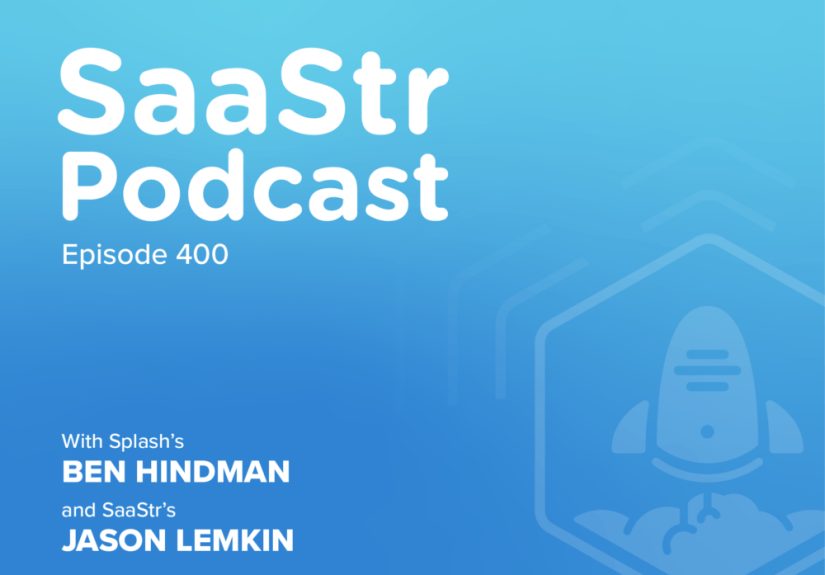
That’s why SaaStr Podcast #400 still lands. In this episode, Ben Hindman (CEO and co-founder of Splash)
and Jason Lemkin (founder and CEO of SaaStr) talk through a practical question with a not-so-practical-sized impact:
what does the future of digital events actually look likefor organizers, marketers, sponsors, and the people just trying to attend without
downloading seventeen new apps?
The short version: digital doesn’t “replace” in-person. It extends it. It becomes a product. It merges with collaboration software.
And if you treat it like “a camera pointed at a stage,” your attendees will quietly leave… while staying logged in. (The modern version of ghosting.)
What Podcast #400 Gets Right (And Why It Still Matters)
1) Big conferences won’t be replaced by digitaldigital makes them bigger
Lemkin’s stance is refreshingly blunt: flagship events like SaaStr Annual or Dreamforce aren’t going away just because your Wi-Fi improved.
But digital events enable a different kind of scalecustomer and prospect gatherings that would be too expensive or logistically impossible
in the physical world.
That’s the first “future” point: digital expands the addressable audience. If you can only fit 15,000 humans into a venue,
digital can serve the other 85,000 who still want the content, the community, and the credibilityjust not the hotel invoice.
2) The “perpendicular event” idea is the cheat code
Podcast #400 introduces a concept that deserves to escape the episode and start a small cult following:
“perpendicular events.”
The idea is simple: don’t do “hybrid” as in “the same event, livestreamed.”
That version usually fails because it creates two unhappy audiences:
the in-person crowd feels like they’re being recorded, and the virtual crowd feels like they’re watching a security camera feed of a ballroom.
A perpendicular event is different. It’s a parallel product designed for the digital audiencebuilt for how people behave online:
shorter attention windows, asynchronous viewing, chat-based interaction, and intentional networking moments. It’s not a “lesser version.”
It’s a different version.
3) “Digital events” are really “gatherings” (and gatherings can be bigger online)
Lemkin also pokes at the terminology: maybe these aren’t “events” yet. Maybe they’re gatheringsand that framing matters.
A gathering is about community dynamics, not just stage programming. Online, gatherings can be larger, more frequent, more global,
and more personalizedif you build them that way.
Translation: the future of digital events isn’t a better livestream. It’s a better digital place for your audience to show up.
The New Event Tech Stack: Events Collide with Collaboration Software
Events are becoming a feature of the collaboration suite
One of the strongest observations in the episode is that events software and collaboration software started merging after 2020.
When meeting tools added registration, session structure, chat, Q&A, and analytics, they accidentally wandered into “event land.”
When event platforms added live streaming integrations and community-style engagement, they wandered into “collaboration land.”
That collision explains why so many teams now evaluate event tools the same way they evaluate workplace tools:
reliability, security, integrations, admin controls, and data.
Why “event marketing platforms” win: data, integrations, and intent
Here’s the business reality: in B2B, the event isn’t the product. The event is a pipeline engine.
That’s why the modern event stack increasingly behaves like a marketing stack:
- Registration that captures more than “name, email, company”
- Integration with CRM and marketing automation so leads aren’t orphaned
- Engagement data that shows intent (not just attendance)
- Attribution that ties event activity to revenue outcomes
This is where platforms like Splash position themselves: not simply as “event pages,” but as an event marketing system designed to
handle in-person, virtual, and hybrid programs with brand consistency and measurable outcomes.
All-in-one vs. best-of-breed: the real question is operational sanity
Most teams don’t choose their event stack the way a developer chooses a code editor. They choose it the way a parent chooses a minivan:
“Will this get everyone where they need to go without breaking down or making me cry?”
With budgets under pressure and ROI scrutiny rising, many organizations are consolidating tools to reduce complexity.
But best-of-breed still works when you have strong ops support and a clear integration strategy.
The future isn’t “one perfect platform.” It’s a connected system where the event is fully measurable inside your go-to-market workflow.
Designing Digital Events That Don’t Feel Like Homework
Stop livestreaming your conference. Start producing a digital experience.
The “perpendicular” approach forces a better design question: what is the digital audience here to do?
Learn? Network? Evaluate vendors? Get certified? Feel part of a community? Kill time between meetings?
Digital events work when you design for one or two core jobs-to-be-doneand make those jobs frictionless.
Program for attention, not endurance
Multi-day, multi-track virtual conferences can workbut most audiences now prefer simpler formats:
shorter sessions, fewer tracks, and clearer value per minute. The best digital programs often look like:
- High-signal keynotes with crisp production
- Breakout sessions that are intentionally interactive
- “Office hours” with experts or product leaders
- On-demand libraries with real navigation (not a “wall of videos”)
Networking is not optionaljust different
People don’t attend conferences only for content. They attend for the “collision”the hallway conversations, introductions, and serendipity.
Digital can’t perfectly replicate hallway magic, but it can build new forms of connection:
- Small-group matchmaking based on role, industry, or goals
- Facilitated roundtables with clear prompts
- Structured networking (short intros, rotating pairs, guided follow-ups)
- Community continuity after the event ends
If your networking plan is “we have a chat,” that’s not networking. That’s a comment section with better lighting.
Content becomes an asset, not a moment
A digital event can create a long tail: session clips, quote graphics, transcripts, topic hubs, and nurture sequences.
The future of digital events is partly media strategybecause content doesn’t have to disappear when the doors close.
Sponsorship and ROI: The Future Is Intent, Not “Lead Lists”
Why sponsors sponsor (and why digital forced everyone to admit it)
One of the most candid parts of the episode is Lemkin’s point that sponsors invest because it workseven when they complain about it.
Events drive meaningful chunks of field-driven pipeline in many B2B categories, not because the leads are cheap,
but because the conversations are high-context.
“Intent” is the currency of digital sponsorship
Digital events created a bad habit: “Here’s a spreadsheet of everyone who registeredenjoy!”
That’s not value. That’s a compliance nightmare wrapped in false optimism.
The episode makes a critical distinction: sponsors don’t want a list of humans. They want a list of humans who want their product.
That means sponsorship packages need to revolve around intent signals such as:
- Requests to speak with a sponsor
- Demo bookings
- Session attendance tied to a sponsor’s topic
- Resource downloads and repeat engagement
- High-quality Q&A participation
Two sponsor strategies: “go deep” or “be everywhere”
Lemkin describes two event investment plays that apply in both physical and digital worlds:
- Go deep: bet big on a few major gatherings and dominate mindshare.
- Be everywhere: show up consistently across smaller, targeted events where your buyers already are.
The future favors teams that pick a strategy intentionallyand operationalize it with consistent creative, consistent measurement,
and tight sales alignment.
A Practical Playbook for Digital Events in 2026
Before the event: build the value proposition like a product marketer
- Write a one-sentence promise (what attendees get that they can’t get by watching YouTube).
- Segment invitations by persona: execs, practitioners, customers, prospects, partners.
- Design one “hero path” through the event so attendees aren’t forced to self-navigate chaos.
- Rehearse like a TV show: tech run-throughs, speaker coaching, backup plans.
During the event: orchestrate engagement on purpose
- Assign a moderator for every major session (chat, Q&A, pacing, and energy).
- Use interactive moments every 5–8 minutes: polls, questions, quick prompts.
- Create “choose your own adventure” networking with clear tracks and small groups.
- Make the experience skimmable: session summaries, timestamps, highlights.
After the event: treat follow-up as the second half of the event
- Build follow-up by behavior (attended live vs. watched on-demand vs. registered/no-show).
- Send content in small bites with a clear next step (book a demo, join a community, attend a roundtable).
- Report outcomes using engagement signals, not vanity metrics.
- Run a retro: what created intent, what created drop-off, what created deals.
Five Predictions for the Future of Digital Events
1) Digital events become “always-on” programs, not occasional campaigns
Instead of one huge annual virtual moment, more teams will run consistent “gatherings”:
monthly executive circles, quarterly product showcases, and weekly micro-webinars that feed the pipeline continuously.
2) AI will personalize the experience (or at least the content routing)
Personalization is the next battleground: recommended sessions, tailored agendas, content hubs by persona,
and automated recap emails that reflect what someone actually engaged with.
3) Event tech will be judged by data quality, not just features
If engagement data can’t be trusted, sponsors won’t renew and sales won’t follow up.
The winners will be platforms that connect cleanly to CRM, enforce governance, and make measurement credible.
4) “Perpendicular” becomes the default event architecture
In-person events will keep their magic, but digital won’t be an afterthought. It will be a parallel product:
its own programming, its own networking model, its own sponsor packages, and its own success metrics.
5) Community and collaboration will blur even more
The line between “event,” “community,” and “collaboration” will keep fading.
The best events will feel less like a broadcast and more like a well-hosted room where the right people meet at the right time.
Field Notes: of Real-World “Experience” From the Digital Event Trenches
Here’s what teams often discover the hard way when they try to apply the Podcast #400 ideas in the real world.
Consider this a compilation of the most common “we learned this at 11:47 PM the night before launch” momentsminus the panic snacks.
First: the biggest lie digital events tell you is that they’re easier. They’re not. They’re different.
A physical event is operations-heavy: venue, signage, food, staffing, travel.
A digital event is production-heavy: programming, audience flow, moderation, data capture, and the constant fight against distraction.
In-person attendees give you their full day because they flew somewhere.
Digital attendees give you a slice of attention while Slack pings them like a needy housecat.
Second: “hybrid” fails when it’s treated as a camera angle, not a product.
Teams plan an amazing in-person agenda, then bolt on a livestream and hope it counts.
The virtual audience becomes a second-class citizen who can’t network, can’t ask questions comfortably,
and can’t access the context in the room. Engagement drops, sponsors complain, and someone concludes, “Virtual doesn’t work.”
What actually happened is simpler: the digital audience never got an experience designed for them.
When teams shift to a perpendicular modelseparate hosts, separate digital networking, separate on-demand navigation
virtual satisfaction rises fast because people finally feel included.
Third: sponsorship is saved by intent signals. Sponsors don’t want more leads; they want more sales-ready conversations.
Digital events make it possible to create clearer intent moments“book a meeting,” “join an expert roundtable,”
“ask for a follow-up,” “request a demo”and to measure those actions cleanly.
When teams package sponsorship around those moments, sponsors stop asking for “all registrant emails”
and start asking for “how do we get more of those conversations?”
Fourth: the real ROI unlock comes after the event, not during it.
The best teams treat the event as the beginning of a relationship sequence:
clips sent by persona, recaps by track, follow-ups by engagement, and community invitations that extend the gathering.
If your post-event plan is “send the recording,” you’re leaving 70% of the value on the table.
Finally: digital events reward teams that behave like media companies.
Strong audio, strong visuals, confident pacing, clear transitions, and a host who can carry energy across a screen.
The future belongs to teams who stop treating digital events like a PowerPoint meeting and start treating them like a production
because your audience is comparing you not to the conference down the street, but to the best content they’ve ever watched online.
Conclusion: The Future Is Not “More Virtual.” It’s More Intentional.
SaaStr Podcast #400 doesn’t predict a world where digital replaces in-person. It predicts a world where digital becomes its own craft:
a parallel product, a measurable channel, and a gathering format built for scale.
If you remember one thing, make it this: don’t livestream your eventdesign a digital gathering.
That’s the difference between “attendance” and “impact,” between “leads” and “intent,” and between “we ran a webinar”
and “we built a community that buyers actually show up for.”