Table of Contents >> Show >> Hide
- Why This Retro Internet Story Actually Matters
- How Satellite Internet Meets a Machine From the Reagan Era
- Why Text-Only Browsing Is the Secret Weapon
- The Real Bottlenecks Are Not What Most People Think
- What This Says About the Modern Internet
- Could Old Hardware Still Be Useful Online?
- The Joy of Doing Something Wildly Impractical
- Experience: What Using Satellite Internet on 80s Hardware Actually Feels Like
- Conclusion
There are normal ways to get online, and then there are ways that make your Wi-Fi router question your life choices. Hooking satellite internet to 1980s hardware belongs firmly in the second category. It is unnecessary, impractical, gloriously nerdy, and somehow deeply logical all at once.
That is exactly why the idea is so fascinating. A retro machine like the Commodore SX-64 was born in an era when “portable computer” meant “strongly consider stretching first.” Yet with the right adapters, modem emulation, and a heroic amount of patience, this kind of machine can still reach the internet through a satellite link. Not the modern, glossy, autoplaying, cookie-banner-infested internet in all its bloated chaos, of course. More like the lean, stripped-down, text-first version that politely knocks instead of kicking down the door.
And honestly? That makes this story more than a novelty. It reveals something important about old computers, modern networks, and the weirdly elegant power of restraint.
Why This Retro Internet Story Actually Matters
The recent buzz around “satellite internet on 80s hardware” came from a project built around the Commodore SX-64, a portable variant of the Commodore 64 line. The machine packed 64K of memory, a built-in disk drive, and a 5-inch color monitor into something that looked like a business machine from a sci-fi movie where everyone still used floppy disks and shoulder pads. By the standards of its day, it was ambitious. By today’s standards, it is about as overmatched by the modern web as a tricycle at a Formula 1 race.
And yet it can still get online.
That is the hook. A modern satellite terminal can provide the network connection, but the old computer cannot simply plug in and start scrolling news sites. It needs translation layers. It needs hardware that can pretend to be the sort of modem or networking accessory the old machine understands. It needs software that can tolerate text, limited bandwidth, and minimal graphics. In other words, it needs modern technology to act like it has manners.
This is where the project becomes more than a stunt. It is a practical demonstration that the internet is not one thing. It is a stack of protocols, interfaces, and compromises. If you strip enough away, surprisingly old hardware can still participate.
How Satellite Internet Meets a Machine From the Reagan Era
The basic concept sounds simple until you look closely and realize it is made of several layers of “well, that shouldn’t work, but maybe.” A satellite terminal provides internet access through a geostationary service. A geostationary satellite sits far above Earth and stays fixed over one region, which is great for coverage and less great for snappy response times. The signal path is long, the latency is real, and no one would confuse it with fiber.
Now add an SX-64. This computer was not designed for Ethernet, secure web sessions, or modern browser rendering. It was designed for a computing world where disks clicked, cartridges ruled, and waiting was simply part of the emotional contract. To bridge that gap, the setup uses modern helper hardware that emulates a modem-style connection the Commodore can understand.
A big piece of that puzzle is hardware like the TeensyROM, which can provide internet connectivity to Commodore 64 and 128 systems and emulate classic-style modem behavior. That matters because the old machine does not need to understand the satellite terminal directly. It only needs to talk to something that behaves like the networking gear it expects. Think of it as giving your retro computer a very patient interpreter who is fluent in both 1983 and now.
Once that bridge is in place, the real limitation becomes obvious: the internet connection may be modern, but the user experience is delightfully ancient. Terminal-style sessions, BBS access, text browsing, and lightweight information retrieval are realistic. Full-fat modern websites packed with JavaScript, autoplay media, and enough tracking scripts to make a privacy lawyer faint are not.
Why Text-Only Browsing Is the Secret Weapon
This is the part that turns the project from “cute retro party trick” into “wait, that is kind of smart.” Text-only browsing is not just a limitation. It is an advantage.
Satellite connections, especially traditional geostationary ones, are sensitive to latency and can be expensive enough to make you suddenly care about every unnecessary byte on the page. Meanwhile, the modern web has developed an astonishing talent for sending a truckload of code when all you wanted was three paragraphs about weather, history, or whether lasagna freezes well. On old hardware, that excess is not merely annoying. It is catastrophic.
A text-focused workflow flips the problem on its head. No autoplay video. No giant ad stack. No retina-friendly image carousel featuring seventeen nearly identical product photos. Just words, links, and results. Suddenly the ancient machine starts to look efficient rather than underpowered. It is not failing to load the modern web; it is refusing to carry all that unnecessary furniture up the stairs.
Projects and tools in the Commodore ecosystem already lean into this logic. Networking guides for modern C64-based software environments explain that proxy services and translation layers can fetch internet content, convert it into formats the machine can actually handle, and send back something useful rather than overwhelming. Even browser tools built around Commodore networking emphasize text-based access, filtered pages, and simplified delivery.
The Real Bottlenecks Are Not What Most People Think
When people hear “satellite internet on 80s hardware,” they often assume the satellite is the main bottleneck. That is only partly true.
Yes, geostationary satellite latency is significant. There is no getting around the physics. The satellite sits tens of thousands of kilometers above Earth, and the round trip adds delay that users can absolutely feel. Interactive tasks become slower, and responsiveness turns into a personality trait rather than a technical spec.
But the satellite is only one piece of the slowdown. The old computer itself also imposes hard limits: serial-style communication speeds, tiny memory, modest processing power, and software designed for a simpler networked world. Even bridging hardware that supports much faster networking still has to present the connection in a way old software can use. That means the experience is often shaped as much by compatibility as by raw bandwidth.
So the impressive part is not that an SX-64 becomes “fast.” It does not. The impressive part is that the whole system becomes usable at all. BBS chat, lightweight information lookup, and simple browsing are enough to prove the point. The machine is not pretending to be modern. It is finding a lane where it can still contribute.
What This Says About the Modern Internet
Retro projects tend to expose modern excess with the subtlety of a marching band. When you watch a decades-old computer reach online services through a satellite terminal, one truth becomes hard to ignore: a lot of today’s web is bloated because modern hardware allows it, not because users actually need it.
The internet of the 1980s and early personal computing era was constrained, but those constraints often produced clarity. Data had to be small. Interfaces had to be readable. Programs had to justify their existence. Meanwhile, today’s average webpage can show up dressed like it is attending an awards ceremony when all you wanted was a recipe, a news update, or the answer to one extremely normal question.
That is why retro networking projects feel oddly fresh. They remind us that fast access is not the same thing as efficient design. A satellite-fed SX-64 cannot brute-force its way through bad web design. It forces a more disciplined approach. And once you see that, it becomes hard not to wonder whether modern computing could use a little less bloat and a little more humility.
Could Old Hardware Still Be Useful Online?
In a narrow, practical sense, yes. No one should pretend a Commodore SX-64 is about to replace a modern laptop for work, school, or streaming. That would be adorable, but no. Still, there are real use cases hiding inside the absurdity.
For low-bandwidth text communication, old hardware can still shine. Terminal access, BBS systems, simple status dashboards, compact information retrieval, and hobbyist networking all fit surprisingly well. In environments where bandwidth is limited or costly, text-heavy interfaces become attractive again. That does not mean everyone is about to toss their tablets into a recycling bin and reach for a luggable Commodore. It just means the design lessons are still valid.
There is also educational value here. A setup like this makes networking visible. You can feel every layer: the physical link, the protocol bridge, the modem emulation, the terminal software, the content filtering, the remote service. Modern devices hide all of that behind glossy apps and frictionless interfaces. Retro hardware puts the plumbing back on stage, where it can be studied, appreciated, and occasionally blamed.
The Joy of Doing Something Wildly Impractical
Part of the appeal is simple fun. The internet has always had a tinkering spirit, and this project belongs to that tradition. It is the same impulse that makes people build cyberdecks, revive old terminals, restore strange laptops, and connect machines to networks they were never supposed to meet. It is engineering mixed with performance art.
There is also a kind of philosophical mischief in it. We live in a time when computing is increasingly sealed, streamlined, and hidden behind polished ecosystems. A retro satellite setup says the opposite. It says computers are still things you can understand, modify, and persuade. Sometimes with elegance. Sometimes with jumper wires and muttered swearing. But still.
That is why “satellite internet on 80s hardware” lands so well as a story. It is funny, yes. But it is also a love letter to interoperability, curiosity, and the idea that old machines are not dead when they stop being convenient. Sometimes they just need a weird new job.
Experience: What Using Satellite Internet on 80s Hardware Actually Feels Like
Using satellite internet on 80s hardware feels less like “browsing the web” and more like negotiating a peace treaty between centuries. You do not sit down expecting speed. You sit down expecting a process. There is a ritual to it, and that ritual is half the fun.
First, there is the machine itself. A computer like the SX-64 does not quietly blend into the room the way a modern laptop does. It announces itself. It has presence. It looks like it could either help you file taxes in 1984 or launch a side quest in an alternate-history detective movie. The keyboard, the tiny display, the disk drive, the shape of the caseeverything reminds you that computing used to be physical in a way that modern slabs of aluminum and glass simply are not.
Then there is the connection process. On a modern device, internet access is assumed. You open the lid, and the machine behaves as though global networking is a law of nature. On retro hardware, every successful connection feels earned. You become aware of each layer doing its part. The satellite terminal acquires service. The bridge hardware emulates what the old computer expects. The terminal software wakes up. The commands work. The text begins to move. It is not instant gratification. It is mechanical suspense.
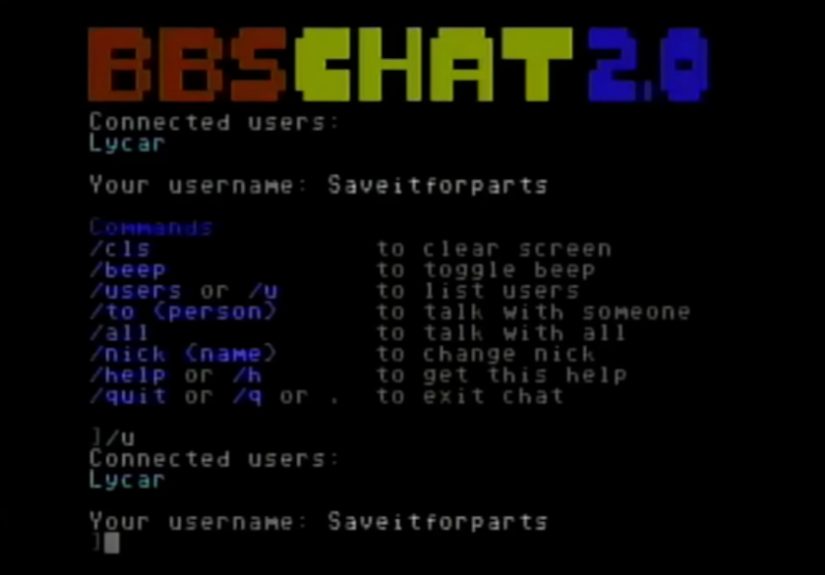
And when data finally starts appearing, it feels weirdly dramatic. A BBS menu is not impressive in the cinematic sense, but on old hardware over satellite it feels like a moon landing for punctuation marks. Every line that appears has traveled through a chain of technologies separated by decades of design assumptions. The result is humble on screen, yet astonishing in context.
The slowness changes your behavior, too. You stop multitasking like a caffeinated squirrel. You become deliberate. You think before opening a page. You appreciate text. You notice how pleasant it is when information arrives without ten banners, seven pop-ups, and a newsletter form attacking your ankles. Satellite internet on 80s hardware turns patience from a bug into a feature.
There is also a surprisingly cozy quality to the experience. Because the interface is stripped down, the network feels smaller and more human. A text page or a BBS chat session feels intimate compared with the algorithmic carnival of the modern web. It is computing with fewer layers of noise. You are not fighting for attention. You are just communicating.
Of course, the limitations are ever-present. You feel the latency. You feel the narrowness of the interface. You feel the age of the machine every time a task must be translated, filtered, or simplified before it becomes usable. If you try to approach it with modern expectations, the setup will humble you immediately and without apology.
But that is exactly why it sticks in your memory. It is not efficient in the usual sense. It is memorable because it makes the invisible parts of networking visible again. It lets you feel the cost of distance, the value of concise data, and the elegance of systems built to do one thing well. It reminds you that the internet is not magic. It is engineering, layered one piece at a time, and sometimes those layers can stretch farther across time than anyone expected.
In the end, the experience is not really about proving that 80s hardware can keep up with the modern world. It cannot, at least not on modern terms. The real thrill is proving that it does not have to. With the right bridge, the right expectations, and a sense of humor, it can still join the conversation. Slowly. Gloriously. One text line from space at a time.
Conclusion
Satellite internet on 80s hardware is the kind of idea that starts as a joke and ends as a lesson. Yes, it is funny to imagine a Commodore-era portable computer chatting through a satellite link while modern devices complain about one missing Wi-Fi bar. But beneath the comedy is a serious point: old machines can still do meaningful work when the network, software, and expectations are designed intelligently.
The SX-64 does not conquer the modern web. It sidesteps it. It uses translation, text, and discipline to access just enough of the internet to matter. In doing so, it highlights both the resilience of classic hardware and the absurd heft of many modern online experiences.
So no, this is not the future of mainstream computing. But it is a brilliant reminder that useful technology does not always need more power, more graphics, and more noise. Sometimes it just needs a smart bridge, a clean text stream, and a stubborn refusal to retire quietly.