Table of Contents >> Show >> Hide
- The Core Idea: Sales Scale Is a People System, Not a Hiring Spree
- Lesson One: Recruitment Sets the Ceiling
- Lesson Two: Enablement Is How You Turn New Hires into Real Reps
- Lesson Three: Culture Is the Force Multiplier
- Why This Matters More in Modern SaaS
- A Practical Playbook for SaaS Leaders
- Experience Section: What Scaling a SaaS Sales Team Actually Feels Like
- Conclusion
Scaling a SaaS sales team sounds glamorous until you are living it. One week, you are celebrating a breakout quarter. The next, you are staring at a hiring plan, three open territories, a ramping manager, and a Slack channel that somehow feels both very busy and slightly panicked. Growth is fun right up until it starts testing whether your team actually knows how to grow together.
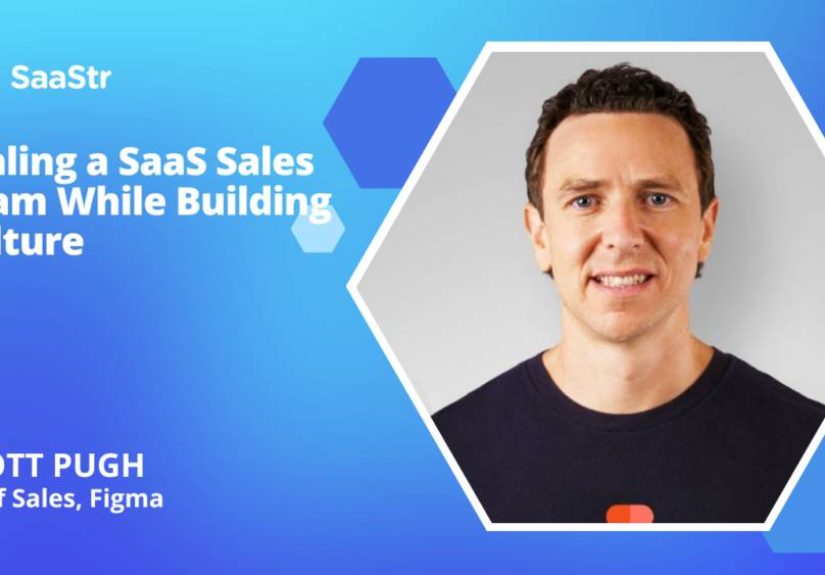
That is what makes Scott Pugh’s SaaStr conversation so useful. In Pod 639 + Video, the then-VP of Sales at Figma broke the problem down into three refreshingly practical buckets: recruitment, enablement, and culture. No smoke machine. No “just hire great people and let them cook” nonsense. Just a clear argument that sales scale is not built by headcount alone. It is built by the systems, habits, and values that help more people perform without turning the company into a quota-themed escape room.
For SaaS leaders, especially those balancing product-led growth with an increasingly enterprise motion, that message lands. Figma’s own story makes the point. The company grew from a beloved design tool into a broader platform for teams, with enterprise offerings designed to help large organizations stay connected, govern access, and scale design systems without losing control. In other words: as the product scaled, the go-to-market motion had to mature too.
This article unpacks the biggest lessons from Scott Pugh’s talk, adds context from broader SaaS sales and leadership research, and turns those ideas into a practical playbook for leaders who want more revenue without accidentally setting fire to morale.
The Core Idea: Sales Scale Is a People System, Not a Hiring Spree
Pugh’s framework works because it rejects one of the most common SaaS mistakes: assuming that growth problems can be solved by throwing more reps at the pipeline. That can work for a quarter. Sometimes even two. Then the cracks show. New reps ramp unevenly. Managers become bottlenecks. Standards drift. Culture gets vague. Suddenly the team is larger, but not stronger.
The smarter view is this: scaling a sales team means building a repeatable environment where good people can succeed faster and where great people make the whole team better. That is why recruitment comes first, enablement comes second, and culture surrounds both. You are not just adding bodies to a sales floor. You are designing a performance ecosystem.
It is also why modern SaaS sales teams need more than hustle. Buyers are more informed, customer expansion matters more, and cross-functional alignment is no longer optional. Sales is not a solo sport. It is product knowledge, deal judgment, internal communication, customer empathy, and manager quality all rolled into one beautiful, mildly chaotic revenue burrito.
Lesson One: Recruitment Sets the Ceiling
Define the hiring profile before you define the headcount target
One of the strongest ideas from Pugh’s talk is that hiring should begin with a profile, not a panic. Too many SaaS companies decide they need ten reps, then reverse-engineer a recruiting process around urgency. That is how you end up hiring people who look good on paper but do not fit the actual work.
A real hiring profile goes deeper. It asks: What traits make someone succeed here? Is this a startup seller who thrives in ambiguity? A process-driven enterprise rep who can navigate multiple stakeholders? A builder who can create pipeline from scratch? Or a closer who performs best inside an already-functioning machine?
Pugh emphasizes softer skills like grit and resilience, and that matters. SaaS sales is full of changeterritory shifts, pricing changes, moving targets, product launches, new competitors, longer cycles, shorter patience. The best reps are rarely the flashiest. They are usually the ones who can handle uncertainty without becoming contagious about their frustration.
Diversity makes the team smarter, not just more presentable
Pugh also makes a point that too many leaders still treat as optional: diversity matters when you scale. That is not just a moral statement. It is an operating advantage. A sales team that better reflects the customers it serves tends to ask better questions, surface better objections, and avoid the groupthink that makes teams stale. In global SaaS, monoculture is not a shortcut. It is a blindfold.
Just as importantly, Pugh warns against a form of “diversity” nobody needs: negativity. That line sticks because it is true. One persistently cynical high performer can do more cultural damage than a weak quarter. Talent matters, but tone spreads faster than a comp plan.
Hire talent magnets, then resist overhiring
Another gem from the episode is the idea of hiring talent magnetspeople whose presence attracts more strong candidates. Great hires raise the batting average of future hires. They refer peers, model standards, and make your company more credible in the market.
But Pugh pairs that advice with a useful warning: do not overhire. This is where many SaaS companies get cocky. They confuse ambition with timing. Bringing in too many people at once can break onboarding, create internal competition before the pipeline exists, and force managers to supervise chaos instead of coaching performance.
The better move is often staggered growth. Add people in waves. Test assumptions. See what the business is actually ready to support. Hypergrowth sounds sexy in board decks, but disciplined growth is what keeps your sales org from becoming an expensive group project.
Lesson Two: Enablement Is How You Turn New Hires into Real Reps
Enablement should remove friction, not just deliver training
Pugh’s enablement advice is especially strong because it is not limited to classroom training. He frames enablement as the infrastructure that helps people succeed at scale. That means onboarding, tools, knowledge access, coaching, feedback loops, and realistic expectations. In other words, enablement is not a welcome packet with a logo on it. It is the system that shortens the distance between “first day” and “trusted seller.”
This aligns with broader SaaS sales research. High-performing teams do not simply tell reps what good looks like; they show them, measure it, and reinforce it. The smartest onboarding programs let new hires see full sales cycles, learn on demand, practice with peers, and get role-specific guidance rather than generic motivational wallpaper.
The buddy system is underrated because it works
One of Pugh’s most practical ideas is pairing new hires with tenured teammates. It sounds simple because it is simple. It also works because scale creates distance. Managers cannot be everywhere, especially when they are also forecasting, firefighting, interviewing, and pretending to enjoy pipeline reviews at 7:30 a.m.
A strong buddy system closes that gap. It gives new reps a human shortcut into the culture, the workflows, the unwritten rules, and the “here is how we actually do things around here” moments that no slide deck captures. It also helps more experienced reps develop leadership muscles before they formally become managers.
Set the right ramp, or prepare for fake underperformance
Pugh’s comments on ramp time deserve a giant red circle. He points out that enterprise reps often need around five months to ramp, while SMB and mid-market sellers may ramp in roughly two to three months. That is not soft management. That is reality.
When leaders ignore ramp realities, they create fake performance problems. New reps get judged by mature-team expectations. Managers start overcorrecting. Confidence dips. Attrition risk rises. Everyone wastes time acting surprised that a person in month two is not performing like someone in quarter six.
The healthiest sales organizations understand that quota design is cultural. Unrealistic ramp plans tell reps, “We do not understand your work.” Realistic ramp plans say, “We hired you carefully, and we expect you to grow into success.” One message builds trust. The other builds LinkedIn updates.
Lesson Three: Culture Is the Force Multiplier
Culture is not swag, slogans, or suspiciously upbeat posters
Pugh’s strongest line may be the most timeless one: culture gives people a framework for decision-making. That matters because true scale depends on distributed judgment. Once a company grows past a certain point, leaders cannot approve every choice, bless every message, or solve every internal wobble. The team needs shared instincts.
That is what culture does when it is healthy. It helps people act without waiting to be rescued by hierarchy. It is less about “vibes” and more about operational clarity. The best cultures answer questions like: How do we treat customers? How do we handle disagreement? What kind of teammate gets promoted here? What kind of behavior gets corrected, even if the person is hitting number?
At Figma, even the interview process reportedly reflects this consistency. Pugh noted that leaders are held to similar standards as sellers. That matters. Nothing kills culture faster than executive exceptionalismwhen leadership says, “These are the standards,” and then quietly strolls around them in nicer shoes.
Values should evolve, but ownership matters more than wording
Pugh also argues that culture and values should be iterated on as the company grows. That is smart. A company at 50 employees and a company at 500 do not need identical language for every season of growth. But there is a catch: values only matter if the team feels ownership over them.
Founders and executives can announce values from a stage. That does not mean anyone will use them in a decision. Culture sticks when values show up in hiring rubrics, coaching conversations, recognition, promotion criteria, and how teams recover from mistakes.
Create safety, recognition, and accountability together
Pugh’s discussion of safety is especially relevant for SaaS teams operating in uncertain markets. A strong internal environment helps people handle external pressure. When the market is noisy, customers are hesitant, and plans keep shifting, the company should feel like the place where reps regain claritynot where they lose it.
That means psychological safety, yes, but not a soft-focus version of it. The winning formula is safety plus accountability. People should feel safe enough to ask questions, test ideas, and admit mistakes. They should also know the standard is real. Pugh’s advice to lead from the front and pair constructive feedback with public recognition strikes that balance well. Praise in public. Coach with care. Hold the line on standards. Repeat until the culture gets boringin the best possible way.
Why This Matters More in Modern SaaS
Pugh’s framework lands even harder today because SaaS sales is no longer just about acquiring new logos at all costs. Expansion, retention, product adoption, and cross-functional trust matter more than ever. Large customers expect more value, more alignment, and more proof. Sales teams must be sharper, not just larger.
That is especially true for companies like Figma, where enterprise growth depends on helping organizations standardize collaboration, govern access, and scale product development across teams. When the product itself is about reducing complexity and improving coordination, the sales team cannot afford to be internally chaotic. The go-to-market engine must mirror the value proposition.
The lesson for other SaaS companies is obvious: your sales culture is not separate from your product story. It either reinforces the trust customers feel when they buy from you, or it undermines it. Buyers notice when a sales team is aligned, informed, and calm. They also notice when reps sound confused, managers contradict each other, and onboarding appears to have been designed during a caffeine emergency.
A Practical Playbook for SaaS Leaders
If you want to scale a SaaS sales team without flattening culture, start here. Build a hiring profile before recruiting. Hire for resilience and contribution, not just résumé shine. Add people in controlled waves instead of treating headcount like a competitive sport. Create structured onboarding that is role-specific, measurable, and manager-supported. Use buddies to transfer context faster. Set ramp expectations that reflect the real motion. Codify values in daily operations, not town-hall poetry. Reward the behaviors you want repeated. Remove destructive negativity early. And make sure leaders live the same standards they ask others to meet.
That may not sound flashy. Good. The best scaling systems rarely do. They are usually built out of consistency, judgment, and repetition. The companies that win are not always the loudest. They are often the ones that figured out how to grow without making work feel random.
Experience Section: What Scaling a SaaS Sales Team Actually Feels Like
Here is the part leaders do not always say out loud: scaling a SaaS sales team is emotional work disguised as operational work. On paper, it is territories, quotas, enablement calendars, manager ratios, and forecast categories. In practice, it is a daily test of whether people still feel seen, supported, and confident while the company keeps changing around them.
In the earliest stage, the experience feels scrappy and electric. Everyone knows the product stories. Wins travel fast. Reps finish each other’s sentences. The founder jumps into deals. Managers are close enough to the work to hear tone changes in a prospect call and know exactly which objection just surfaced. Culture is less documented, but it is everywhere.
Then growth kicks in. Hiring accelerates. New managers appear. Segments split. The enterprise motion becomes more serious. Suddenly the team is not one shared conversation anymore. It is multiple subcultures forming in real time. That is the moment when leadership either becomes intentional or starts hoping that momentum will do the culture work for free. Spoiler alert: it will not.
For many leaders, the hardest experience is realizing that what worked with ten reps does not scale neatly to fifty. Heroics stop working. Memory stops working. Informal coaching stops working. You cannot tell yourself, “We are still a close-knit team,” while new hires are quietly wondering who to ask for help and whether missing a number in month two means they are already behind forever.
The best leaders respond by making the invisible visible. They articulate what great looks like. They explain the ramp. They make one-on-ones useful. They create language for values that can survive pressure. They notice when a high performer is poisoning the room. They celebrate the reps who raise standards for others, not just the ones who closed the biggest deal on Friday and then vanished like a sales-themed magician.
There is also a very real experience on the rep side. New hires do not just need product knowledge. They need emotional orientation. They need to know whether this is a place where questions are welcome, whether managers coach or merely inspect, whether peers share ideas or guard them like family recipes. When that experience is good, confidence compounds. When it is bad, even talented reps start sounding cautious in customer conversations.
That is why Scott Pugh’s message resonates. It reflects what sales leaders learn the hard way: scale without culture creates noise, and culture without enablement creates nice people who still miss number. Real progress happens when both grow together. When recruitment is careful, enablement is structured, and culture is lived, the team starts to feel bigger without feeling colder. And that is the dream, reallynot just a larger sales org, but one that still feels coherent, ambitious, and human.
Conclusion
Scott Pugh’s SaaStr session is valuable because it strips away the fantasy version of sales growth. Scaling a SaaS sales team is not just about adding more closers and hoping the graph keeps going up and to the right. It is about hiring intentionally, enabling consistently, and building a culture strong enough to survive success.
If recruitment sets the ceiling, enablement builds the floor, and culture determines whether people want to stay in the building long enough to do their best work. SaaS leaders who understand that will not just build bigger teams. They will build better ones.