Table of Contents >> Show >> Hide
- What Is the 195 Gigapixel Shanghai Panorama?
- Why the Photo Went Viral
- How a Gigapixel Panorama Works
- The Funny Things People Found in the Shanghai Photo
- Why Shanghai Is the Perfect City for This Kind of Photo
- The Technology Is Amazing, But It Also Raises Privacy Questions
- Why People Love Hunting for Details
- What the Panorama Teaches About Modern Photography
- How to Explore a Gigapixel Image Without Losing Your Entire Day
- Experience: What It Feels Like to Fall Into the Shanghai Panorama
- Conclusion
Every once in a while, the internet discovers something so huge, so strangely addictive, and so wildly unnecessary that everyone collectively says, “Well, there goes my afternoon.” The 195 gigapixel panorama photo of Shanghai is exactly that kind of digital rabbit hole. It is not just a city photo. It is a zoomable universe, a high-resolution playground, and depending on how long you stare at it, possibly a test of your eyesight, patience, and willingness to become a part-time detective.
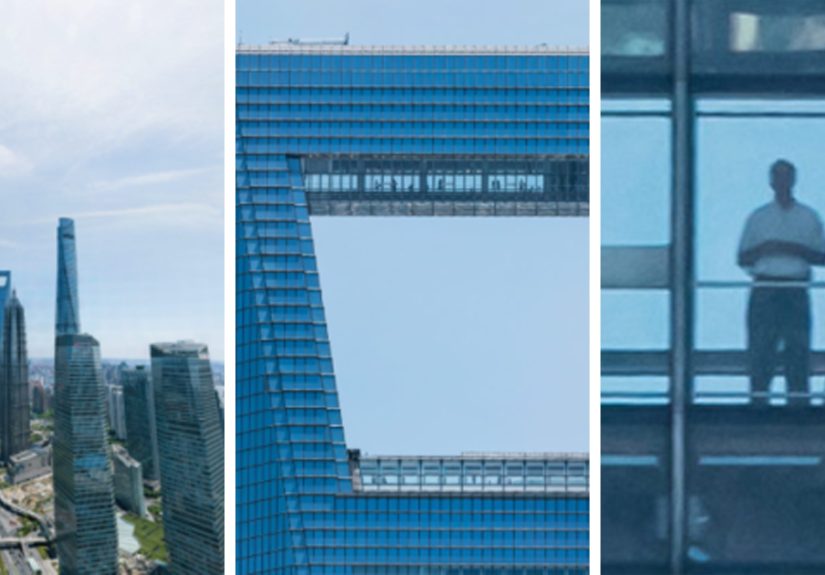
The image, created by Chinese imaging company BigPixel, captures Shanghai from the Oriental Pearl Tower with such extreme detail that viewers can glide from a sweeping skyline view down to tiny street-level scenes. At first glance, it looks like a dramatic city panorama: skyscrapers, river traffic, roads, rooftops, bridges, and the grand curve of the Huangpu River. Then you zoom in. And zoom in again. And again. Suddenly, the city stops being a postcard and becomes a giant game of “Where’s the Weird Thing?”
People online began exploring the image like digital treasure hunters, finding funny poses, odd timing, visual glitches, tiny human moments, and accidental comedy hidden across the city. It is part photography, part technology demo, part social experiment, and part extremely advanced procrastination device.
What Is the 195 Gigapixel Shanghai Panorama?
The 195 gigapixel Shanghai panorama is an ultra-high-resolution, interactive image made from thousands of separate photographs stitched together into one massive panoramic view. A gigapixel equals one billion pixels, so 195 gigapixels means the image contains roughly 195 billion pixels. For comparison, a typical smartphone photo may be around 12 to 48 megapixels. This Shanghai image is not playing in the same league. It brought its own stadium.
BigPixel reportedly captured the panorama from around 230 meters up the Oriental Pearl Tower, one of Shanghai’s most recognizable landmarks. The team used more than 8,700 photographs, spent hours shooting, and then took weeks or months processing the final result. The finished image lets viewers move around the scene, zoom into buildings, scan the streets, and inspect details that would normally disappear into a blurry gray smear in a regular photo.
This is why the image became famous. It does not merely show Shanghai; it lets you explore Shanghai. You can begin with the cinematic skyline, then drift toward the Bund, follow boats on the Huangpu River, inspect traffic, examine rooftops, peek at balconies, and discover small details that were never meant to become internet celebrities.
Why the Photo Went Viral
The Shanghai panorama went viral because it scratches several internet itches at once. First, it is technically impressive. A 195 billion-pixel cityscape sounds like something from a spy movie where someone says “enhance” and the computer politely breaks the laws of physics. Second, it is interactive. People do not just look at the image; they participate in it. Third, it turns an enormous city into a searchable puzzle.
Instead of passively admiring a skyline, viewers started hunting for moments: someone looking up, someone posing, strange vehicle alignments, unexpected signs, odd reflections, people caught mid-step, and the occasional visual artifact caused by stitching many photographs together. That last part is especially important. Since a gigapixel panorama is built from multiple images taken over time, moving objects can appear duplicated, chopped, stretched, or slightly out of sync. Cars move. People walk. Boats drift. The camera captures reality in slices, and then software tries to sew those slices into one smooth blanket. Sometimes the blanket has funny wrinkles.
How a Gigapixel Panorama Works
It Starts With Many Photos
A normal panorama on your phone might combine a few frames while you slowly rotate and pray your hand does not wiggle like a caffeinated squirrel. A professional gigapixel panorama is far more controlled. Photographers use specialized equipment, long lenses, stable mounts, and careful planning. The camera captures one section of the scene, then moves to another, then another, eventually covering the entire visual field.
In the Shanghai project, thousands of images were captured from a high vantage point. Each image contained a small piece of the city in sharp detail. Software then aligned and merged those images into a single navigable panorama. The result is a layered visual experience: wide enough to show the city’s scale, sharp enough to reveal tiny details far below.
Stitching Creates the Magicand Sometimes the Comedy
Image stitching is the process of matching overlapping areas between photographs and blending them together. When the subject is a mountain range or empty skyline, this is relatively straightforward. When the subject is a living city, things get spicy. Cars do not wait politely for the algorithm. People do not freeze in place. Rivers have boats, roads have traffic, and pedestrians have schedules.
That is how gigapixel images can produce funny little accidents. A bus might look slightly warped. A vehicle may appear to shift between frames. A person may seem to vanish behind an invisible seam. These are not necessarily errors in the traditional sense; they are the side effects of compressing time into one giant still image. The panorama captures not one instant, but many nearby moments disguised as one.
The Funny Things People Found in the Shanghai Photo
The viral appeal of the Shanghai panorama came from the tiny, unexpected scenes viewers uncovered. Some people found individuals who seemed to be looking straight back at the camera. Others noticed strange juxtapositions, awkward poses, and street-level details that felt almost too specific for such a massive city view. In some cases, people found artifacts that looked like something out of a glitchy video game.
One popular type of discovery involved people with cameras or phones, creating a funny “I see you seeing me” moment. In a photo this detailed, the observer becomes observed. Someone zooming in from a laptop at home might suddenly find a person in Shanghai who appears to be staring right back. That is both hilarious and slightly eerie, like losing a staring contest to a stranger from 2018.
Another category involved stitching quirks. Because the panorama was assembled from many frames, some moving objects looked unusual. A car might appear in a position that does not quite make sense. A road scene may look normal at first, then reveal a tiny mismatch when inspected closely. These little imperfections are part of the fun. They remind viewers that even extremely advanced technology still has to wrestle with the simple fact that cities move.
There were also everyday details that became funny simply because of context. A person standing alone on a rooftop. A tiny figure on a balcony. A worker in a high place. A pedestrian caught in a dramatic posture. A shadow that looks suspiciously theatrical. None of these moments may be extraordinary in real life, but in a 195 gigapixel image, they become Easter eggs. The joke is not always the thing itself; sometimes the joke is that someone spent 20 minutes zooming across Shanghai to find it.
Why Shanghai Is the Perfect City for This Kind of Photo
Shanghai is almost unfairly suited for a gigapixel panorama. The city has one of the most dramatic skylines in the world, blending futuristic towers, historic waterfront architecture, dense neighborhoods, elevated roads, and the busy Huangpu River. From the Oriental Pearl Tower, viewers can see the contrast between Pudong and Puxi, modern finance and older urban texture, glass towers and traditional street patterns.
The Bund offers classic architecture and riverfront elegance. Lujiazui delivers the skyscraper spectacle, including Shanghai Tower, Shanghai World Financial Center, and Jin Mao Tower. Roads twist through dense urban blocks. Boats move along the river. Rooftops form geometric patterns. Even before you zoom in, the city is visually rich. After you zoom in, it becomes almost overwhelming.
That is the secret sauce. A gigapixel panorama needs detail, but it also needs variety. Shanghai provides both. There are grand landmarks for casual viewers and tiny urban mysteries for people who like to hunt for the digital equivalent of a sock wearing sunglasses.
The Technology Is Amazing, But It Also Raises Privacy Questions
The Shanghai panorama is entertaining, but it also makes people uncomfortable for understandable reasons. When an image allows viewers to zoom in close enough to see individuals in public spaces, it raises questions about privacy, surveillance, and consent. Public photography has always involved a balance between documenting shared spaces and respecting personal boundaries. Gigapixel technology makes that balance feel much more intense.
A traditional city photo shows crowds as dots. A gigapixel panorama can turn those dots back into people. That is powerful for tourism, urban planning, education, architecture, and digital preservation. It is also the kind of power that deserves careful discussion. The same technology that lets someone admire a skyline can also let someone inspect private details from a distance. That does not make the technology bad, but it does mean the “wow” should come with a thoughtful pause.
The Shanghai image became famous partly because it felt like science fiction. But it also reminded viewers that camera technology has reached a point where distance no longer guarantees anonymity. In a world of drones, smart cameras, satellite imagery, street-view mapping, and AI-enhanced media, the big question is no longer just “Can we capture this?” It is also “How should we use it?”
Why People Love Hunting for Details
The popularity of the 195 gigapixel Shanghai photo says something interesting about human curiosity. People love scale, but they also love detail. A huge number is impressive for five seconds; a tiny funny discovery keeps people engaged for hours. The panorama works because it offers both. It gives viewers the grand view and then rewards their curiosity with small surprises.
This is the same reason people enjoy hidden-object books, satellite maps, street-view exploration, and detailed illustrations. The brain likes scanning patterns and finding anomalies. When something does not fit, we notice. When we notice it before anyone else, we feel like a genius, even if the discovery is just a weirdly positioned taxi.
There is also a playful sense of control. In real life, Shanghai is massive, loud, fast, and impossible to fully absorb in one glance. In the panorama, users can slow it down. They can hover over the city like a curious bird with unlimited zoom. They can choose a building, follow a road, inspect a plaza, or look for people doing unintentionally funny things. The city becomes both enormous and manageable.
What the Panorama Teaches About Modern Photography
The Shanghai image shows that photography is no longer limited to single frames. Modern photography can be computational, interactive, and built from data. The final image is not just the result of one click; it is the result of capture strategy, optics, software, stitching algorithms, hosting infrastructure, and user interface design.
That matters because the future of visual media will increasingly involve experiences rather than static images. Instead of looking at a photo, users may navigate it. Instead of seeing one angle, they may explore multiple layers. Instead of consuming an image in seconds, they may spend an hour inside it. The 195 gigapixel Shanghai panorama is a preview of that future: part photograph, part map, part archive, part game.
For photographers, it is a reminder that resolution is only one ingredient. The image went viral not only because it was huge, but because it was fun. It gave people something to do. It encouraged discovery. It turned viewers into participants. That is a powerful lesson for anyone creating visual content online.
How to Explore a Gigapixel Image Without Losing Your Entire Day
If you ever explore a gigapixel panorama like this, start wide. Take in the whole scene first. Notice the skyline, the river, the roads, and the major landmarks. Then choose one zone and move slowly. Random zooming is fun, but it can also turn your brain into a bowl of overcooked noodles. Pick a bridge, a rooftop, a ferry, or a street corner and examine it like a detective with a comfortable chair.
Look for motion-related oddities. Moving objects often create the funniest results in stitched panoramas. Scan roads for duplicated vehicles, pedestrians in strange positions, and seams where time seems to hiccup. Check windows and balconies, but do so respectfully. The goal is curiosity, not creepiness. Think “urban Easter egg hunt,” not “digital binocular goblin.”
Also, take breaks. Gigapixel images can make you feel like there is always one more thing to find. There probably is. That is the trap. The photo is big enough to make your lunch break disappear and your coffee go cold. Consider setting a timer unless you want to look up and realize your houseplants have filed a missing-person report.
Experience: What It Feels Like to Fall Into the Shanghai Panorama
Exploring the 195 gigapixel Shanghai panorama feels a little like being handed a magic telescope and told, “Try not to become obsessed.” At first, the experience is elegant. You look across the skyline and admire the sweep of Shanghai, the river cutting through the city, the towers standing like futuristic chess pieces, and the streets packed with movement. It feels cinematic, almost peaceful.
Then curiosity takes over. You zoom toward one building because a rooftop shape catches your eye. Then you notice a road. Then a tiny car. Then a person. Then something that might be a sign, or a sculpture, or a completely normal object your brain has decided is suspicious. Suddenly, you are no longer viewing a panorama. You are investigating Shanghai like a detective whose only case is “What is that little thing over there?”
The funniest part is how quickly your standards change. In a regular photo, you might admire lighting or composition. In this image, you celebrate finding a person standing in a weird pose. You become proud of spotting a tiny detail nobody asked you to find. You may even want to show someone else, only to realize that explaining it sounds ridiculous: “Look, zoom into this building, then move left, then down, then see that little guy by the railing?” It is the digital version of pointing at clouds and insisting one looks like a raccoon wearing a business suit.
There is also a strange emotional effect. The panorama makes Shanghai feel both huge and intimate. One second you are looking at a global metropolis; the next, you are observing a small human moment inside it. That shift is powerful. It reminds you that cities are not just skylines and statistics. They are made of errands, workers, tourists, drivers, lunch breaks, balconies, reflections, shadows, and thousands of tiny scenes happening at the same time.
At the same time, the experience can feel slightly unsettling. The zoom is so strong that you become aware of the thin line between wonder and intrusion. It is fun to find funny details, but it also makes you think about how much can be seen from far away. That tension is part of what makes the image memorable. It is beautiful, hilarious, impressive, and a little spooky all at once.
In the end, the best way to enjoy the Shanghai panorama is with a sense of humor and a sense of responsibility. Laugh at the stitching glitches. Appreciate the engineering. Admire the city. Notice the small stories. But remember that behind every pixel may be a real place, a real person, or a real moment that was simply passing through when the camera blinked. That is what makes the image more than a technical stunt. It is a snapshot of modern urban life at an almost absurd scale, and yes, it is absolutely capable of stealing your afternoon.
Conclusion
The 195 gigapixel panorama photo of Shanghai became an internet favorite because it combines jaw-dropping technology with the simple joy of finding weird little things. BigPixel’s ultra-detailed image turns one of the world’s most recognizable skylines into an interactive treasure hunt, allowing viewers to explore the city from grand landmarks down to tiny street-level surprises.
Its appeal is easy to understand. The photo is massive, beautiful, funny, and slightly unnerving. It shows what modern imaging can do, while also raising important questions about privacy and public observation. Most of all, it proves that people will always love a good visual mysteryespecially when it comes with 195 billion pixels and enough hidden details to make productivity vanish without a trace.
Note: This article is based on publicly reported information about BigPixel’s 195-billion-pixel Shanghai panorama, its Oriental Pearl Tower viewpoint, its image-stitching process, and the viral online discoveries people made while exploring it.