Table of Contents >> Show >> Hide
- What Was the SpaceX Starship SN5 Hop?
- When Did the Starship SN5 Hop Happen?
- Why the SN5 Hop Was a Big Deal
- How to Watch Starship Hop Test Live
- What Happened During the SN5 Hop?
- How SN5 Fit Into the Starship Timeline
- Why People Loved Watching the SN5 Hop Live
- Tips for Watching Future Starship Tests Live
- What Viewers Should Look For During a Starship Test
- The Bigger Meaning of Starship SN5
- Experience Section: Watching the SN5 Hop as a Space Fan
- Conclusion
If rocket tests had personalities, the SpaceX Starship SN5 hop would be the scrappy underdog who showed up wearing a stainless-steel barrel costume and somehow stole the whole show. On August 4, 2020, SpaceX’s Starship SN5 prototype lifted off from Boca Chica, Texas, rose to about 150 meters, shifted sideways like it had a tiny appointment across the pad, and landed in one piece. For a vehicle that looked suspiciously like a grain silo with ambitions, it was a huge moment.
This article explains what the SpaceX Starship SN5 hop was, why it mattered, how viewers watched the Starship hop test live, and what fans should know when following future Starship live streams. The SN5 hop itself is no longer a live event, of course, unless you have a time machine parked behind the garage. But the viewing lessons still matter because SpaceX’s Starship program remains one of the most closely watched rocket-development campaigns in the world.
What Was the SpaceX Starship SN5 Hop?
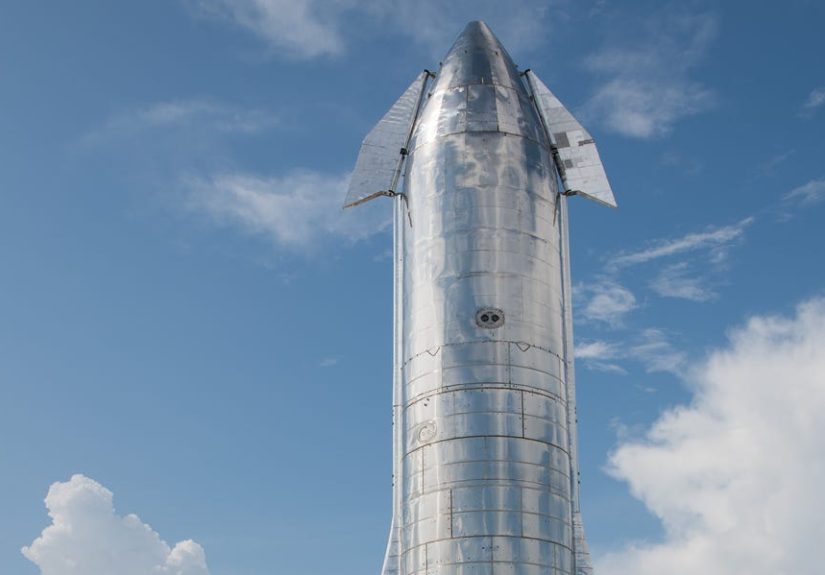
The Starship SN5 hop was a short, low-altitude test flight of a full-scale SpaceX Starship prototype. “SN” stood for “serial number,” and SN5 was one of the early test vehicles in the Starship development line. Unlike the sleek, fully stacked Starship designs seen later, SN5 had no nose cone, no aerodynamic flaps, and no glamorous spaceship silhouette. It was mostly a tank section, a single Raptor engine, landing legs, and a mass simulator on top.
That awkward look was exactly the point. SpaceX was not trying to win a beauty pageant. The company was testing whether a large stainless-steel Starship prototype could ignite, lift off, control itself, translate over the test site, and land safely. In rocket development, that is not a small checklist. That is the engineering equivalent of asking a newborn giraffe to perform ballet while breathing fire.
When Did the Starship SN5 Hop Happen?
The successful SN5 hop happened on August 4, 2020, at SpaceX’s Boca Chica test site near Brownsville, Texas. It followed a series of ground tests, including a static fire test, and came after earlier Starship prototypes suffered very public failures. SN1, SN3, and SN4 all taught SpaceX painful lessons on the ground. SN5 finally turned those lessons into flight data.
The flight lasted less than a minute, but it carried more significance than its short duration suggested. It was the first flight of a full-scale Starship prototype, moving the program from pressure tests and static fires into actual controlled flight. The vehicle climbed to roughly 150 meters, or about 500 feet, and touched down on a nearby landing pad.
Why the SN5 Hop Was a Big Deal
To casual viewers, the SN5 hop may have looked like a large metal cylinder doing a careful bunny hop. To aerospace engineers and spaceflight fans, it was a major step in proving the basics of Starship’s architecture. SpaceX needed to show that the Raptor engine, propellant system, tank structure, software, landing guidance, and ground operations could work together outside a PowerPoint presentation.
The test mattered because Starship is not just another rocket. SpaceX designed Starship as a fully reusable transportation system intended for large payloads, lunar missions, Mars exploration, satellite deployment, and possibly point-to-point Earth transport. That is a very large shopping list. Before any of that could happen, Starship had to prove it could leave the ground and come back politely.
The Single Raptor Engine
SN5 used one Raptor engine, SpaceX’s methane-fueled, liquid-oxygen rocket engine. Raptor is central to the Starship program because it is designed for high performance, reuse, and operation with methane and oxygen propellants. Methane is especially interesting for long-term Mars ambitions because it could theoretically be produced using local Martian resources, assuming future engineers enjoy extremely difficult chemistry homework.
The Stainless-Steel Design
Starship’s stainless-steel construction also made SN5 visually unforgettable. Instead of carbon fiber or painted aluminum, the vehicle looked bright, industrial, and almost homemade. That was not an accident. Stainless steel can handle extreme temperatures, is relatively inexpensive, and is easier to manufacture at scale. It also gives Starship that “retro science fiction meets Texas machine shop” energy.
How to Watch Starship Hop Test Live
Because the SN5 hop already happened, you can no longer watch it live in real time. However, the way viewers followed the SN5 test offers a useful guide for watching future Starship live tests. Starship test windows often shift, scrub, pause, resume, and generally behave like a cat deciding whether to jump onto a shelf. Patience is part of the hobby.
1. Start With SpaceX’s Official Channels
The best place to confirm a Starship live stream is SpaceX’s official launch or mission page, along with SpaceX’s official social media accounts and video channels. For major Starship flight tests, SpaceX usually posts the target launch window, mission overview, and webcast timing. Official streams are useful because they provide mission graphics, host commentary, flight milestones, and direct updates from the company.
For smaller prototype tests like SN5, official coverage can be less predictable. In 2020, SpaceX’s Boca Chica testing moved quickly, and fans often relied on road closures, notices, local observation, and camera feeds from spaceflight media outlets. That made the SN5 hop feel less like a scheduled TV special and more like a neighborhood rumor with rocket exhaust.
2. Follow Road Closures and Test Windows
Starship testing at Boca Chica often requires temporary road closures, beach closures, maritime notices, and airspace restrictions. During the SN5 era, road closure announcements were a major clue that a test might be coming. If the road was closed, the countdown mood intensified. If the closure lifted, everyone sighed, stretched, and opened another browser tab.
For future tests, closure windows do not guarantee a launch or hop. They simply indicate that SpaceX may conduct hazardous operations during that time. Weather, technical issues, engine checks, propellant loading, and regulatory approvals can all change the schedule. The golden rule of watching Starship is simple: never believe a rocket has launched until you see it moving upward.
3. Use Trusted Spaceflight Media Streams
Independent spaceflight media outlets became essential during the Boca Chica prototype era. Channels with long-range cameras often provided continuous views of the pad, tank farm, and launch area. These streams helped fans spot venting, frost lines, ground activity, and other signs that a test was getting serious.
For the SN5 hop, many viewers watched through community-driven spaceflight coverage. These streams were valuable because they stayed live for long stretches, even when nothing dramatic was happening. That may sound boring, but in Starship culture, watching a silver cylinder sit still while venting vapor can become strangely addictive. It is like birdwatching, except the bird is full of cryogenic propellant.
4. Expect Scrubs, Delays, and Last-Minute Drama
The SN5 hop did not happen without suspense. The test was delayed before its successful flight, including an automatic abort related to the Raptor engine system. That is normal in rocket testing. Scrubs are not failures; they are the system saying, “Let’s not turn today into confetti.”
Anyone watching a Starship hop test live should prepare for delays. Keep your expectations flexible. A test window may open, close, reopen, and end with nothing more than a venting event and a thousand disappointed comments. That is part of experimental aerospace. Rockets do not care about your snack schedule.
What Happened During the SN5 Hop?
The SN5 flight was short, simple, and unforgettable. After ignition, the single Raptor engine lifted the vehicle from the test stand. SN5 rose slowly compared with an orbital rocket, climbed to about 150 meters, translated sideways, and descended under controlled power. The landing was not perfectly elegant, but it worked. The prototype remained upright and intact.
That outcome was exactly what SpaceX needed. SN5 did not need to reach space. It did not need to perform a belly-flop maneuver. It did not need to deploy satellites, carry astronauts, or make Mars jealous. It simply needed to prove that a full-scale Starship prototype could fly and land. It did.
How SN5 Fit Into the Starship Timeline
Before SN5, SpaceX had already flown Starhopper, a smaller test vehicle that reached a similar altitude in 2019. Starhopper proved early Raptor-powered flight, but it was not a full-scale Starship tank section. SN5 moved the program closer to the real vehicle architecture.
After SN5, SpaceX quickly continued with SN6, which also performed a 150-meter hop. Later prototypes, including SN8, SN9, SN10, SN11, and beyond, attempted much higher-altitude flights and more complex maneuvers. Those later tests brought spectacular successes, spectacular explosions, and spectacular internet arguments. SN5 was the quiet but crucial bridge between “can this thing fly?” and “can this thing fly like a spaceship?”
Why People Loved Watching the SN5 Hop Live
The appeal of watching SN5 was not just technical. It was emotional. Viewers were watching an experimental machine being developed in public, almost in real time. SpaceX’s Boca Chica site became a strange theater where welding tents, test tanks, cranes, road closures, and livestream cameras formed a new kind of space-age reality show.
People watched because the process felt unusually transparent. Traditional aerospace development often happens behind fences, inside clean rooms, and inside documents with acronyms that require their own dictionaries. Starship development was different. Fans could see prototypes appear, change, test, fail, and improve. It made the engineering process feel alive.
Tips for Watching Future Starship Tests Live
Check the Time Zone
Starship tests from South Texas are usually listed in Central Time. If you are watching from another part of the United States or from overseas, convert the time before setting reminders. Many fans have learned this lesson the hard way after showing up three hours early and staring at an empty pad like it owed them money.
Watch for Official Updates
Before a major Starship flight test, SpaceX typically posts updates about the launch window, weather, and webcast timing. Keep an eye on official statements rather than relying only on rumors. Fan communities are excellent, but speculation can multiply faster than rabbits wearing booster nozzles.
Have Multiple Streams Ready
Official streams provide the cleanest mission presentation, while independent streams often show pad activity earlier. Having both available can improve the experience. Use the official feed for mission commentary and a trusted long-range camera feed for build-up.
Do Not Travel Too Close to the Test Site
Rocket tests are hazardous operations. Road closures and exclusion zones exist for safety. If you ever visit South Texas during a Starship test campaign, respect all local rules, closure notices, and law enforcement instructions. The best view is never worth getting into danger or interfering with operations.
What Viewers Should Look For During a Starship Test
During a Starship hop or flight test, several visual cues can signal progress. Frost forming on the vehicle may indicate cryogenic propellant loading. Venting can show pressure management in the tanks. Engine chill and ground system activity may occur before ignition. A sudden quiet moment can be meaningful, too, because launch operations often become highly controlled near the final countdown.
For SN5, the main event was ignition, liftoff, translation, descent, and landing. For later Starship tests, viewers may also track stage separation, booster boostback, ship engine cutoff, reentry, flap control, splashdown, or catch attempts. The complexity has grown dramatically since SN5, but the same basic thrill remains: a huge machine tries something difficult, and everyone watching collectively forgets how to breathe.
The Bigger Meaning of Starship SN5
SN5 mattered because it showed SpaceX’s rapid prototyping method in action. Instead of waiting years to perfect a design on paper, SpaceX built hardware, tested it, broke some of it, changed the design, and tried again. That approach can look chaotic from the outside, but it can also accelerate learning.
The hop also helped build public confidence in the Starship program after several earlier failures. It showed that the stainless-steel prototypes were not just dramatic test articles waiting to explode. They could fly. They could land. They could produce useful data. In development programs, data is treasure. Sometimes the treasure arrives wrapped in smoke and flame.
Experience Section: Watching the SN5 Hop as a Space Fan
Watching the SpaceX Starship SN5 hop live felt different from watching a polished orbital launch. A Falcon 9 mission often has a familiar rhythm: countdown, liftoff, staging, landing burn, satellite deployment, applause, done. SN5 was not like that. SN5 felt like watching an experiment sneak out of the workshop and say, “Okay, let’s see what these legs can do.”
The first experience many fans remember is the waiting. Lots and lots of waiting. You would open a livestream and see Boca Chica shimmering in the Texas heat. The prototype stood there silently, bright and strange, while commentators and viewers tried to interpret every puff of vapor. Was that venting normal? Was that a sign of fueling? Did a truck just move? Why is everyone suddenly excited about frost? Starship watching turned tiny details into breaking news.
Then came the tension of possible scrubs. With SN5, as with many Starship tests, the schedule was flexible in the way a noodle is flexible. A test might appear close, then pause. A road closure might suggest action, then nothing would happen. Viewers learned to keep snacks nearby and expectations low. That made the successful hop even sweeter. After all the uncertainty, seeing SN5 rise from the pad felt like a reward for collective patience.
The liftoff itself was almost comically slow compared with a normal rocket launch. Instead of blasting away into the sky, SN5 rose carefully, like an elevator that had recently discovered ambition. The single Raptor engine produced a cloud of dust and exhaust, and the vehicle climbed with deliberate confidence. It was not sleek. It was not fast. It was beautiful in the way experimental machines are beautiful: awkward, loud, purposeful, and slightly ridiculous.
The sideways translation was another unforgettable moment. SN5 did not simply go up and down. It moved across the site toward another landing area, proving that the vehicle could steer under power. For viewers, that little sideways move carried huge meaning. It showed control. It showed guidance. It showed that the giant stainless-steel cylinder was not just surviving the flight; it was following commands.
The landing was the emotional payoff. When SN5 touched down and stayed upright, the internet space community erupted. It was not the biggest flight in history, but it felt like a door opening. People understood that future Starship prototypes would fly higher, test harder maneuvers, and eventually attempt orbital-class missions. SN5 was the moment when the program’s wild ambition became easier to believe.
Another lasting experience was how shared the event felt. Viewers were scattered across time zones, countries, and comment sections, yet everyone was focused on the same silver machine in South Texas. Some watched for engineering. Some watched for Mars dreams. Some watched because explosions were possible and honesty is healthy. But when the hop succeeded, the reaction was widely joyful. A short flight created a long memory.
For anyone watching future Starship tests, the SN5 experience offers a simple lesson: enjoy the process, not just the outcome. A scrub can be useful. A static fire can be exciting. A pressure test can be meaningful. Rocket development is not a straight highway; it is a dusty road full of detours, warning signs, and the occasional giant vehicle hopping like a caffeinated water tower. SN5 taught fans to appreciate every step, even the small ones, because in spaceflight, small hops can lead to giant leaps.
Conclusion
The SpaceX Starship SN5 hop was a brief test with a long shadow. In about 150 meters of altitude and less than a minute of flight, SN5 proved that a full-scale Starship prototype could lift off, maneuver, and land under Raptor power. It gave SpaceX valuable data, gave fans a memorable show, and helped move the Starship program toward higher, harder, and more ambitious tests.
For anyone searching for how to watch the Starship hop test live, the key point is that the original SN5 event is now historical. You can watch replays and archived coverage, while future Starship tests should be followed through SpaceX’s official channels and trusted spaceflight media. Expect delays, respect safety zones, and bring patience. In the world of experimental rockets, patience is not just a virtue; it is practically a launch requirement.
Note: This article discusses the completed 2020 SpaceX Starship SN5 hop and provides general viewing guidance for archived coverage and future Starship live tests. Always rely on current official notices for launch timing, safety zones, and viewing rules.