Table of Contents >> Show >> Hide
- Why Thank-You Notes Still Matter
- Email or Handwritten Note: Which Should You Choose?
- How to Write a Great Thank-You Message
- Professional Thank-You Email Examples
- Workplace Thank-You Message Examples
- Personal Thank-You Note Examples
- Business and Client Thank-You Email Examples
- Thank-You Message Templates You Can Customize
- Common Thank-You Note Mistakes to Avoid
- Best Subject Lines for Thank-You Emails
- How Long Should a Thank-You Note Be?
- Real-World Experiences With Thank-You Notes and Emails
- Conclusion
- SEO Tags
A good thank-you note is tiny but mighty. It can smooth over awkwardness, strengthen a relationship, help you stand out after an interview, or simply tell someone, “Hey, I noticed your effort, and I’m not a gratitude goblin.” Whether you are writing a handwritten card, a professional thank-you email, or a quick appreciation message after someone saved your day, the goal is the same: be sincere, specific, and timely.
The tricky part is that thank-you messages can feel strangely hard to write. You know what you mean, but the blank screen stares back like it wants a five-paragraph essay on human kindness. Relax. A thank-you note does not need to be dramatic, poetic, or sprinkled with glitter. It needs to sound like you, while making the recipient feel seen.
This guide offers practical thank-you note and email message examples for job interviews, networking, gifts, workplace help, client relationships, referrals, and everyday kindness. You will also learn how to choose between an email and a handwritten note, what to include, what to avoid, and how to write in a way that feels polished without sounding like a corporate robot wearing a tie.
Why Thank-You Notes Still Matter
In a world full of instant messages, calendar alerts, and inboxes that reproduce like rabbits, a thoughtful thank-you message still stands out. It tells the recipient that their time, effort, gift, advice, or support mattered. That is powerful because most people are busy, distracted, and secretly hoping their good deeds did not disappear into the void.
In professional settings, a thank-you email can reinforce your interest, remind someone of your strengths, and keep a conversation warm. After a job interview, for example, a short and specific message can help you stay top-of-mind. In personal life, a thank-you note can turn a gift into a connection and a favor into a lasting relationship.
The best thank-you messages do three things well: they name what the person did, explain why it mattered, and close with warmth. That structure works whether you are thanking a hiring manager, a mentor, a boss, a client, a neighbor, or the heroic friend who helped you move a couch up three flights of stairs.
Email or Handwritten Note: Which Should You Choose?
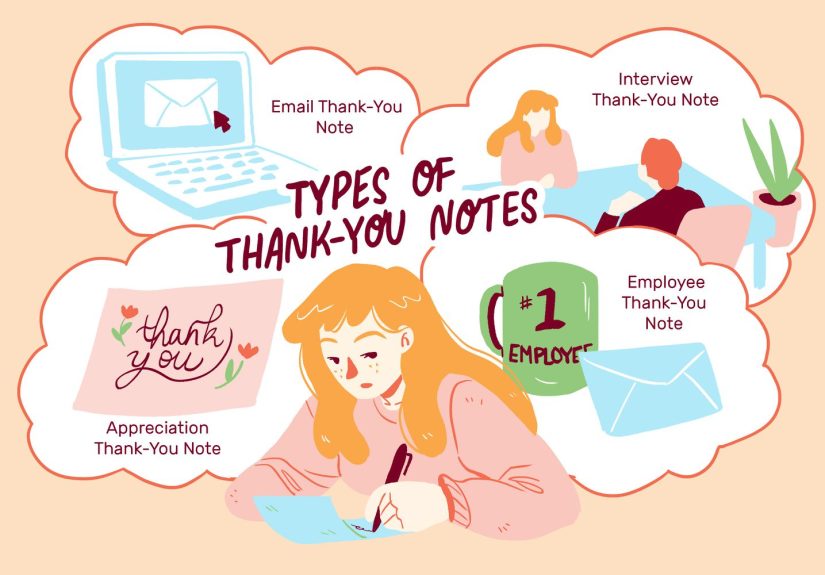
Both email and handwritten notes can be appropriate, but context matters. Email is best when speed is important, especially after a job interview, business meeting, networking conversation, or client call. It is fast, searchable, and practical. A handwritten thank-you note feels more personal and memorable, making it a strong choice for gifts, hospitality, weddings, graduations, personal favors, and meaningful gestures.
Choose a thank-you email when:
- You need to respond quickly.
- The relationship is professional or time-sensitive.
- You are following up after an interview, meeting, or networking event.
- You do not have the person’s mailing address.
Choose a handwritten thank-you note when:
- You received a physical gift or personal favor.
- You want the message to feel more intimate or memorable.
- The recipient values tradition or personal touches.
- You are thanking someone for hosting, mentoring, celebrating, or supporting you.
When in doubt, email first for speed and send a handwritten note later for extra warmth. It is the communication equivalent of wearing both a belt and suspendersmaybe unnecessary, but admirably prepared.
How to Write a Great Thank-You Message
A strong thank-you note does not need to be long. In fact, the best ones are usually short, direct, and personal. Think of it as a small bridge between appreciation and relationship-building.
Use this simple formula:
- Greeting: Address the person by name.
- Thank them clearly: Mention exactly what you are grateful for.
- Add a specific detail: Explain how their help, gift, time, or advice mattered.
- Look ahead: Mention next steps, future contact, or continued appreciation.
- Close warmly: Use a professional or personal sign-off.
Specificity is the secret sauce. “Thanks for your help” is fine, but “Thank you for reviewing my resume and helping me make the project management section clearer” is much stronger. It proves that your gratitude is not a copy-and-paste coupon.
Professional Thank-You Email Examples
Professional thank-you emails should be clear, concise, and respectful. The tone can be warm, but it should not wander into “we are now best friends forever” territory unless the relationship truly supports that level of familiarity.
1. Thank-You Email After a Job Interview
Subject: Thank You for the Interview
Dear Ms. Carter,
Thank you for taking the time to speak with me today about the Marketing Coordinator position. I enjoyed learning more about your team’s upcoming product launch and the way the role combines campaign planning, content creation, and performance tracking.
Our conversation made me even more excited about the opportunity. My experience managing email campaigns and coordinating social media calendars would allow me to contribute quickly, especially as your team prepares for a busy quarter.
Thank you again for your time and consideration. I would be happy to provide any additional information you may need.
Sincerely,
Jordan Lee
2. Short Thank-You Email After an Interview
Subject: Thank You
Hello Mr. Nguyen,
Thank you for meeting with me today to discuss the Sales Analyst role. I appreciated hearing more about your team’s approach to customer insights and revenue forecasting.
I remain very interested in the position and believe my background in data reporting and client communication would be a strong match. Thanks again for your time.
Best regards,
Alex Morgan
3. Thank-You Email After a Networking Conversation
Subject: Thank You for Your Advice
Hi Taylor,
Thank you for taking the time to speak with me about your career path in UX design. I especially appreciated your advice about building a portfolio around problem-solving rather than just finished visuals.
Your suggestions gave me a clearer direction for updating my case studies, and I’m excited to put them into practice. I appreciate your generosity and hope we can stay in touch.
Warmly,
Casey
4. Thank-You Email for a Referral
Subject: Thank You for the Referral
Dear Priya,
Thank you so much for referring me to the open account manager role at your company. I know putting your name behind someone is a generous gesture, and I truly appreciate your confidence in me.
I submitted my application this morning and mentioned your referral as requested. I’ll keep you updated, and I’m grateful for your support.
Best,
Michael
5. Thank-You Email to a Mentor
Subject: Thank You for Your Guidance
Dear Dr. Harris,
Thank you for meeting with me and sharing your perspective on graduate school applications. Your advice about narrowing my research interests helped me understand how to present my goals more clearly.
I appreciate both your honesty and encouragement. Your guidance has made the process feel much less overwhelming, which is no small miracle considering application portals appear to be designed by puzzle-loving raccoons.
With gratitude,
Emily
Workplace Thank-You Message Examples
At work, appreciation builds trust. You do not need a grand speech every time someone helps you. A brief and thoughtful message can make collaboration feel less transactional and more human.
6. Thank-You Message to a Coworker
Hi Sam,
Thank you for jumping in to help with the client presentation yesterday. Your edits made the financial summary much clearer, and I really appreciated how quickly you turned it around.
I’m lucky to work with someone so generous with their time and expertise.
Thanks again,
Riley
7. Thank-You Note to a Boss
Dear Monica,
Thank you for supporting my attendance at the leadership workshop. I came away with practical ideas for improving team communication, and I appreciate your investment in my professional growth.
I’m looking forward to applying what I learned to our upcoming projects.
Sincerely,
Daniel
8. Thank-You Email to a Team
Subject: Thank You for a Great Launch
Hi Team,
Thank you all for your hard work on this week’s product launch. From testing and design to customer support and final approvals, every part mattered.
I especially appreciate the calm problem-solving when last-minute issues came up. The launch succeeded because everyone stayed focused, flexible, and generous with their expertise.
Great work, and thank you again.
Best,
Marina
Personal Thank-You Note Examples
Personal thank-you notes can be warmer and more conversational than professional emails. They should still be specific, but they can include humor, affection, and little details that reflect the relationship.
9. Thank-You Note for a Gift
Dear Aunt Linda,
Thank you so much for the beautiful cookbook. I already bookmarked three recipes, which is very optimistic of me considering my oven and I are currently in a “trust-building phase.”
I love that you chose something connected to my interest in cooking. It was thoughtful, useful, and perfectly timed. Thank you again for thinking of me.
Love,
Maya
10. Thank-You Note for Hospitality
Dear Mark and Jenna,
Thank you for hosting us last weekend. Dinner was delicious, the guest room was so comfortable, and your coffee deserves its own fan club.
We truly appreciated your warmth and generosity. It was wonderful to spend time together, and we hope to return the favor soon.
With thanks,
Olivia and Ben
11. Thank-You Message for Help During a Difficult Time
Dear Rachel,
Thank you for bringing dinner and checking in on us this week. Your kindness made a hard few days feel more manageable.
I may not have had the energy to say it properly in the moment, but your support meant a great deal. Thank you for showing up in such a thoughtful way.
With love,
Anna
Business and Client Thank-You Email Examples
Business thank-you emails should feel polished but not stiff. The best ones show appreciation while also reinforcing trust, partnership, and next steps.
12. Thank-You Email to a Client
Subject: Thank You for Your Partnership
Dear Mr. Wilson,
Thank you for choosing our team for your website redesign project. We appreciate the trust you placed in us and enjoyed collaborating with you throughout the planning process.
Your clear feedback helped us move efficiently, and we’re excited to begin the next phase. Please feel free to reach out with any questions before our kickoff meeting next week.
Best regards,
Lauren Mitchell
13. Thank-You Email After a Business Meeting
Subject: Thank You for Today’s Meeting
Hello Dana,
Thank you for meeting with me today to discuss your company’s training needs. I appreciated learning more about your goals for onboarding new managers and improving team communication.
I’ll send the proposal by Friday, including the workshop options we discussed. Thank you again for your time and thoughtful questions.
Best,
Nathan
Thank-You Message Templates You Can Customize
Templates are helpful as long as you do not let them do all the emotional heavy lifting. Use these as starting points, then add one specific detail so the message feels personal.
General Thank-You Template
Dear [Name],
Thank you for [specific action, gift, advice, or support]. I really appreciated [specific detail about why it mattered]. Your thoughtfulness made a difference, and I’m grateful for your kindness.
Thank you again,
[Your Name]
Professional Thank-You Email Template
Subject: Thank You
Hello [Name],
Thank you for taking the time to [meet with me/speak with me/help with the project]. I appreciated learning more about [specific topic] and especially valued your insight on [specific detail].
I look forward to [next step/staying in touch/continuing the conversation]. Thanks again for your time and support.
Best regards,
[Your Name]
Interview Thank-You Email Template
Subject: Thank You for the Interview
Dear [Interviewer’s Name],
Thank you for speaking with me about the [Job Title] position. I enjoyed learning more about [company/team/project], and our conversation strengthened my interest in the role.
My experience with [relevant skill or achievement] aligns well with [specific company need or role responsibility]. I appreciate your time and would be glad to provide any additional information.
Sincerely,
[Your Name]
Common Thank-You Note Mistakes to Avoid
A thank-you note should leave the recipient feeling appreciated, not confused, obligated, or trapped in a paragraph maze. Avoid these common mistakes:
- Being too vague: “Thanks for everything” is kind, but it does not say much. Name the specific thing.
- Writing too much: A thank-you note is not a memoir. Keep it focused.
- Making it about yourself only: Mention how the person’s action helped you, but keep the spotlight on their kindness.
- Waiting too long: Prompt is best, but late is still better than never.
- Using a generic template without editing: Personalize at least one sentence.
- Forgetting proofreading: A typo is not fatal, but spelling someone’s name wrong is a tiny etiquette pothole.
Best Subject Lines for Thank-You Emails
The subject line should be clear, not clever for the sake of clever. Save “Gratitude Explosion Incoming” for your group chat.
- Thank You for Your Time
- Thank You for the Interview
- Appreciate Your Guidance
- Thank You for Meeting With Me
- Grateful for Your Support
- Thank You for the Opportunity
- Appreciation for Your Help
How Long Should a Thank-You Note Be?
Most thank-you emails should be between three and six short sentences. Interview thank-you emails can be a little longer if you are reinforcing your qualifications, but they should still be easy to scan. Handwritten notes can be brief, often one small card. The key is not length; it is sincerity.
A strong thank-you message should answer three questions: What are you thanking the person for? Why did it matter? What warm closing thought do you want to leave behind? If you answer those clearly, you have done the job.
Real-World Experiences With Thank-You Notes and Emails
One of the most useful lessons about thank-you notes is that people remember how you made them feel long after they forget the exact words. A hiring manager may not reread your post-interview email every morning while drinking coffee, but they may remember that you followed up quickly, mentioned a specific project, and sounded genuinely interested. That small action can support the impression you already made in the conversation.
In workplace settings, thank-you messages often work like quiet relationship glue. Imagine a coworker staying late to help you finish a report. You could say “thanks” in passing, and that is nice. But sending a short message the next morning that says, “Your help with the final data checks kept the report on schedule, and I really appreciate it,” lands differently. It tells the person their effort was not invisible. That matters, especially in busy teams where everyone is juggling deadlines, meetings, and suspiciously urgent messages marked “quick question.”
Personal thank-you notes can be even more meaningful because they often become keepsakes. Many people save cards from weddings, graduations, baby showers, birthdays, and major life events. A thoughtful note does not have to be fancy. In fact, the most memorable ones usually sound natural. A sentence like “The blanket has already become my official Sunday reading blanket” feels warmer than “Thank you for the item received.” Unless you are a warehouse inventory system, please do not write like one.
There is also an emotional benefit for the writer. Writing a thank-you note forces you to pause and notice the good. That pause can be surprisingly grounding. When you write, “Thank you for listening when I needed advice,” you are not only informing the other person; you are reminding yourself that support exists. Gratitude may be small, but it has a way of making ordinary moments feel less ordinary.
Of course, not every thank-you message needs to be perfect. People often delay sending notes because they are worried about wording, timing, handwriting, or whether email is “good enough.” The better approach is simple: send the message. A sincere thank-you sent a little late is usually better than a perfect thank-you trapped forever in your drafts folder, aging like digital cheese.
The best experience-based advice is this: write like a thoughtful human. Mention the exact gift, favor, meeting, introduction, advice, or opportunity. Add one detail that only you could add. Keep the tone appropriate to the relationship. Then send it before your inner perfectionist starts requesting revisions, footnotes, and a committee review.
Conclusion
Thank-you notes and emails are not old-fashioned leftovers from a world of fountain pens and formal calling cards. They are practical tools for connection. They help you express appreciation, strengthen relationships, and show professionalism without needing a grand gesture. Whether you are writing a thank-you email after an interview, a note for a gift, a message to a mentor, or a quick appreciation email to a coworker, the recipe is simple: be timely, be specific, be sincere, and sound like yourself.
A good thank-you message does not need to win a literary award. It just needs to make someone feel appreciated. And honestly, in a busy world, that is already a pretty impressive achievement.
SEO Tags
Note: This article synthesizes widely accepted U.S. guidance on etiquette, career communication, professional writing, interview follow-up, workplace appreciation, and personal thank-you notes. It is written as original, web-ready content without unnecessary source-code references.