Table of Contents >> Show >> Hide
- What’s Really Happening With Mortgage Credit Scores?
- Why the Average Can Decline Without the Market Going Off the Rails
- Affordability Pressure Is Reshaping the Mortgage Pool
- Loan Type Makes a Huge Difference
- What Lenders Still Care About Besides Credit Score
- So, Is the Decline Good News?
- How Borrowers Can Improve Their Chances
- The Bottom Line
- Experience and Real-World Situations Buyers Are Actually Having
- SEO Tags
If the phrase approved mortgage makes you picture a lender in a dark suit dramatically stamping a file while thunder rolls outside, welcome to the club. Mortgage underwriting can feel theatrical. But behind the drama, one question matters a lot in today’s housing market: are lenders still requiring sky-high credit scores, or is the bar starting to come down?
The honest answer is a little more interesting than a simple yes or no. The average credit score attached to approved mortgages is not collapsing into chaos. This is not a sequel to the reckless lending era, and nobody sensible is bringing back the “sure, buy three houses before lunch” energy. But there are real signs that the market is opening a bit at the edges. Lower-score borrowers are finding more pathways into mortgage approval, especially through government-backed programs and newer underwriting approaches. At the same time, top-tier borrowers still dominate many approved loans, particularly in the conventional market.
That means the headline is true in spirit, but it needs context. In plain English: the mortgage market may be broadening, but it is still very picky about who gets invited to the dance.
What’s Really Happening With Mortgage Credit Scores?
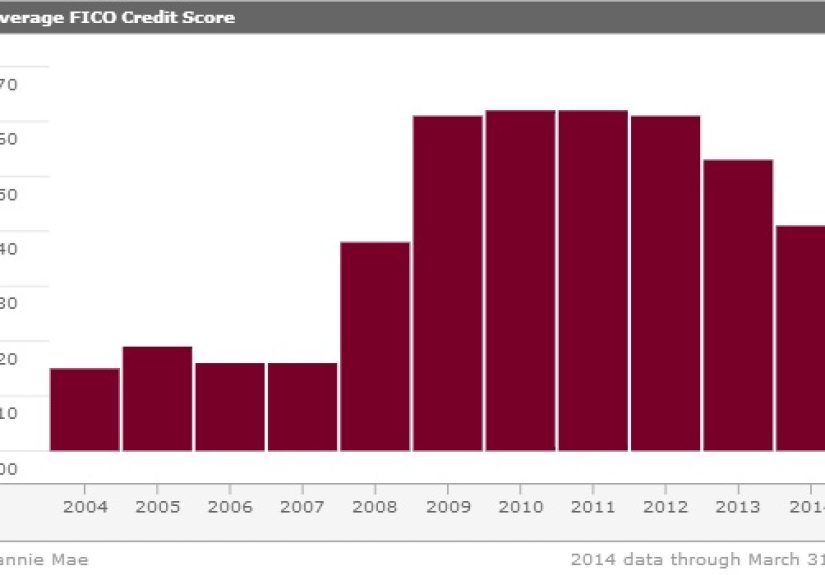
If you only look at headlines, you might think lenders have suddenly gotten generous. Not quite. Recent mortgage data show that approved borrowers still tend to have solid credit. Median credit scores for new mortgage originations remain high, and many homebuyers in the conventional market still show strong financial profiles. In fact, typical homebuyer credit scores have stayed elevated in a housing market where affordability is rough, down payments are heavy, and monthly payments still feel like they were calculated by an enemy.
Still, the details matter. Even when the median score remains high, the lower end of the approved borrower pool can widen. That means lenders may not be lowering the drawbridge for everyone, but they are letting in more borrowers who are below the ultra-prime tier. When that happens, the average credit score for approved mortgages can decline even if the market overall remains disciplined.
This is why averages can be tricky little creatures. A decline does not automatically mean lenders are taking wild risks. It can simply mean more approvals are reaching borrowers with fair-to-good credit instead of mostly very-good-to-excellent credit. That is a meaningful shift, especially for first-time buyers who do not show up with perfect credit, a giant down payment, and parents who casually say, “We can help with the closing costs.”
Why the Average Can Decline Without the Market Going Off the Rails
There are several reasons approved mortgage scores can drift lower without signaling a dangerous lending boom.
1. The market is broadening at the margins
When mortgage credit availability improves, more borrowers with decent but not dazzling credit can qualify. That does not mean lenders stop caring about risk. It means they may be more willing to approve applicants who are otherwise strong in areas like income, debt-to-income ratio, cash reserves, or payment history.
2. Loan mix matters
Not all mortgages are conventional loans. FHA, VA, and USDA loans can serve borrowers with lower credit scores or thinner credit files than many conventional products. If those loans make up a larger slice of approved originations, the average approved score can move down. That is not a warning siren. It is often a sign that the market is doing what it is supposed to do: offering different on-ramps for different borrowers.
3. Underwriting is getting more nuanced
Mortgage approval has never been only about one number, and that is becoming more obvious. Lenders still care about credit score, obviously. But they also care about income stability, monthly debt load, loan-to-value ratio, documentation quality, and whether the borrower looks likely to keep making payments when life gets annoying. A slightly lower score can be tolerated when the rest of the file is strong.
4. New scoring and underwriting policies may widen access
Mortgage underwriting is changing slowly, but it is changing. New credit-scoring options, automated underwriting updates, and more attention to fuller borrower profiles can all make the system less dependent on one blunt cutoff. That matters because plenty of borrowers are not risky in real life even if their credit report has a few wrinkles.
Affordability Pressure Is Reshaping the Mortgage Pool
Housing affordability has done something remarkable in the last few years: it has filtered the buyer pool down to people who are either financially sturdy, highly motivated, or too optimistic to be stopped by math. Probably all three.
High home prices and elevated mortgage rates have pushed many first-time buyers to the sidelines. That has helped keep approved mortgage credit profiles relatively strong. But it has also created pressure on policymakers, lenders, and the broader housing finance system to find ways to responsibly expand access.
As rates eased somewhat and credit availability improved, some buyers who had been locked out started to re-enter the market. That is where the average credit score can begin to soften. Not because the market suddenly loves risk, but because small improvements in rates, underwriting flexibility, and loan options give more borderline-qualified borrowers a real chance.
There is another wrinkle here: average consumer credit scores have slipped in the broader market. Rising student loan delinquencies, persistent debt burdens, and higher living costs have weighed on many households. So even if lenders wanted the same exact borrower profile as before, the population they are lending into is shifting. A lower average approved score may partly reflect a softer national credit backdrop rather than a major change in lender standards alone.
Loan Type Makes a Huge Difference
Anyone talking about mortgage credit scores without talking about loan type is basically telling half the story and hoping nobody notices.
Conventional loans
Conventional mortgages usually demand the strongest credit profiles. A score around 620 is often treated as the practical floor, but borrowers with scores in the mid-700s and above tend to get the best pricing and the smoothest approvals. This is one reason the conventional market still skews toward borrowers with stronger balance sheets.
FHA loans
FHA loans are often the most realistic option for borrowers who are creditworthy but not pristine. They can allow lower credit scores and lower down payments, which makes them especially important for first-time buyers. If FHA activity rises, the average credit score on approved mortgages can decline simply because more borrowers are entering through that lane.
VA loans
VA loans are a powerful reminder that a mortgage file is about more than one three-digit score. The VA itself does not set a universal minimum credit score, though lenders may impose their own standards. For eligible borrowers, that flexibility can open doors that conventional loans keep closed.
USDA loans
USDA-backed loans also provide another path for borrowers who meet program requirements. While many lenders use score benchmarks, the program can accommodate applicants whose credit profiles need a closer look. Again, that can help pull the average approved score lower while still staying within a responsible framework.
What Lenders Still Care About Besides Credit Score
Credit score gets the spotlight, but underwriters are nosy in a much more comprehensive way.
Debt-to-income ratio
If your monthly debts already eat a huge share of your income, your credit score alone will not save the deal. A lender wants to know whether your future mortgage payment fits into real life, not fantasy life.
Down payment
A larger down payment reduces lender risk, improves loan-to-value ratio, and can help offset a less-than-perfect score. In a tough affordability environment, this is one reason buyers with savings tend to outperform buyers with merely decent credit.
Cash reserves
Money left over after closing matters. Lenders like seeing that you will not spend every last dollar getting the keys and then immediately begin a passionate relationship with your credit cards.
Payment history and documentation
Underwriting still rewards consistency. Stable income, documented assets, and on-time payments can make a file more compelling even if the score is not glamorous.
So, Is the Decline Good News?
For buyers, a modest decline in the average credit score for approved mortgages can be encouraging. It suggests the market may be becoming a little less exclusive. That matters for renters trying to buy their first home, young households rebuilding credit, and borrowers who are financially stable but do not fit the picture-perfect mold.
For the market, the best version of this trend is a controlled widening of access. That means more approvals through sound underwriting, not weaker discipline. In other words, lenders are not supposed to ignore risk. They are supposed to get better at measuring it.
For sellers and real estate professionals, this shift could broaden the buyer pool a bit. More eligible borrowers usually means more transaction activity, especially if rates continue easing and inventory improves.
But there is a catch. A lower average approved score does not mean buyers should assume approval will be easy. Mortgage standards are still serious. Plenty of applicants are denied, and many would-be buyers overestimate how much flexibility lenders really have. Today’s market can be more open than the ultra-tight periods after the financial crisis while still being far from forgiving.
How Borrowers Can Improve Their Chances
If you are trying to buy a home and your score is not exactly red-carpet material, you are not doomed. You just need strategy, patience, and a mild allergy to avoidable debt.
- Pay everything on time. Mortgage underwriting loves boring reliability.
- Lower credit card balances. Utilization matters more than many borrowers realize.
- Review your credit reports for errors. Incorrect data can hurt you at exactly the wrong moment.
- Avoid opening new debt before closing. Yes, even if the furniture store says the sectional is destiny.
- Shop loan types, not just lenders. FHA, VA, USDA, and conventional loans play by different rules.
- Ask what score model is being used. Mortgage credit scoring is not always identical to the score you see in a consumer app.
The Bottom Line
The phrase “the average credit score for approved mortgages is declining” should not be read as a horror story or a victory parade. It is better understood as a sign of a mortgage market that may be loosening a bit around the edges while still favoring financially strong borrowers.
That distinction matters. Recent data suggest that prime borrowers still dominate much of the approved mortgage universe, especially in conventional lending. But lower-score borrowers are not entirely shut out. Government-backed loans, improved credit availability, evolving score policies, and more flexible automated underwriting are creating more room for borrowers who are solid, even if they are not perfect.
So no, you do not need a mythical 800 score and a suitcase full of cash to buy a house. But you do need a credible financial story. In today’s mortgage market, that story can be told in more ways than it could during the tightest credit periods. And that, for a lot of would-be homebuyers, is a very big deal.
Experience and Real-World Situations Buyers Are Actually Having
Talk to enough buyers, loan officers, and real estate agents and a pattern starts to emerge. The people getting approved are not always the ones with flawless credit. More often, they are the ones whose financial lives make sense on paper.
Take the renter who has a 679 score because of old credit card utilization, but also has two years of stable income, a solid rent-payment history, and enough savings for a down payment plus reserves. A few years ago, that borrower may have felt shut out, especially if they assumed only conventional financing counted. Today, with the right lender and the right loan program, that borrower may have a real shot.
Then there is the buyer whose score dropped because student loan delinquencies suddenly hit the credit report after a long pandemic-era pause. That person may still have a strong salary, a manageable debt-to-income ratio, and a clear explanation for the score decline. The mortgage experience for that borrower is frustrating, but not necessarily fatal. In some cases, a lender can still work through the file if the rest of the application is strong.
Another common experience is the “great score, impossible payment” problem. Someone can have a 760-plus score and still struggle to qualify because home prices, taxes, insurance, and other debts make the monthly payment too large. This is the part buyers hate hearing: a strong score opens doors, but income and affordability still decide whether you can walk through them.
There are also plenty of buyers discovering that different lenders see them differently. One lender says no. Another says maybe. A third says yes, but through FHA instead of conventional. That can feel inconsistent, but it reflects how mortgage approval works in the real world. Lenders have overlays, pricing differences, and program specialties. A rejected application is not always the final word.
First-time buyers especially are learning that mortgage approval is less about being perfect and more about being prepared. The borrowers who succeed tend to ask better questions early. They check their reports. They avoid opening new accounts before closing. They build cash reserves. They compare programs. They do not assume the score shown on a credit card app is the exact score a mortgage lender will use. In short, they stop treating homebuying like a romantic leap and start treating it like a project plan.
That is why the declining average score on approved mortgages, when it happens, feels meaningful on the ground. It suggests the market is making room for more realistic borrowers: people with decent credit, stable jobs, imperfect histories, and a financial profile that works even if it does not sparkle. And honestly, that sounds a lot more like real America than a market reserved only for people with elite scores and superhero-sized down payments.