Table of Contents >> Show >> Hide
- What You’ll Learn
- The Giveaway That Started the Conversation
- So What Is a “Do-It-All” Dining Table, Exactly?
- How the Transformer Table Works (Without the Dramatic Movie Trailer Voice)
- Why Do-It-All Dining Tables Feel So Right for 2025 Living
- Measure Like a Pro (So Your Table Doesn’t Become a Roommate)
- Buying Guide: What Actually Matters in a Do-It-All Table
- Make It Look Like a “Real” Dining Table (Even When It’s in Disguise)
- Everyday Scenarios Where a Transformer-Style Table Shines
- The Honest Pros & Cons (Because You Deserve the Whole Story)
- Conclusion: The Real Win Is the Flexibility
- of Real-Life “Do-It-All Dining Table” Experiences (The Relatable Edition)
Some dining tables are born to do one job: sit there politely, hold a bowl of lemons, and quietly judge your takeout containers.
And then there are do-it-all dining tablesthe ones that show up to your tiny apartment like, “Relax. I brought extra seats, a desk mode,
and a dinner-party glow-up. I also fold down into something the size of a console so you can still open your fridge.”
Remodelista spotlighted that exact vibe with a Transformer Table giveaway$1,000 toward modular, space-saving furnitureand used it as a jumping-off point
for a bigger idea: in modern homes (especially small ones), furniture has to earn its keep.
Today, we’re unpacking what makes the Transformer Table concept so compelling, what to look for in a truly adaptable dining table,
and how to make the “transformer” part feel more “design-forward” and less “robot in disguise.”
Quick note: the Remodelista sweepstakes referenced in the original post is closed, but the design lesson is still wide open:
the right table can turn one room into five.
What You’ll Learn
- What Remodelista’s Transformer Table giveaway revealed about how we live now
- How a console-style dining table expands into a legit 10-foot hosting setup
- Measurement rules that prevent “my knees live here now” dining rooms
- Features that matter: storage, locking, durability, and day-to-day ease
- Real-life experiences and scenarios (including the unglamorous parts)
The Giveaway That Started the Conversation
Remodelista’s post framed the Transformer Table as the answer to a very specific modern problem:
a home that has to be a dining room, office, homework station, holiday hosting HQ, and “place where packages go to be ignored.”
Their collaboration with Transformer Table offered a $1,000 prize credit toward the brand’s modular furniture, and it came with the usual sweepstakes
fine print that actually matters if you’ve ever clicked “enter” at 11:58 p.m.
The official rules laid out key details: eligibility was limited to people who had reached the age of majority where they live, and to legal residents
of the 50 U.S. states plus D.C., and Canada (excluding Quebec). The entry window ran from the morning of August 16, 2022 through late night August 28, 2022,
with one entry per person and a winner selected by random drawing around August 30, 2022. No purchase was required, and buying something wouldn’t improve
your oddsbecause that’s the whole point of a sweepstakes.
The prize itself was especially practical: a $1,000 credit to use on products from the brand’s website, and the rules noted the credit didn’t expire and
could be used toward product cost and also shipping, taxes, and delivery fees if the winner wanted. That’s a refreshingly real-world detail, because nothing
kills the thrill of “I won!” like “Surprise! Shipping costs more than your first car payment.”
So What Is a “Do-It-All” Dining Table, Exactly?
A do-it-all dining table is less a piece of furniture and more a strategy. It’s designed to change size, function, or bothwithout requiring an engineering degree,
a toolbox, or a friend you owe pizza to. In the best versions, it handles everyday life at a compact size, then expands for guests, projects, or work.
In the truly great versions, it also solves the unsexy question: “Where do the extra parts go when I’m not using them?”
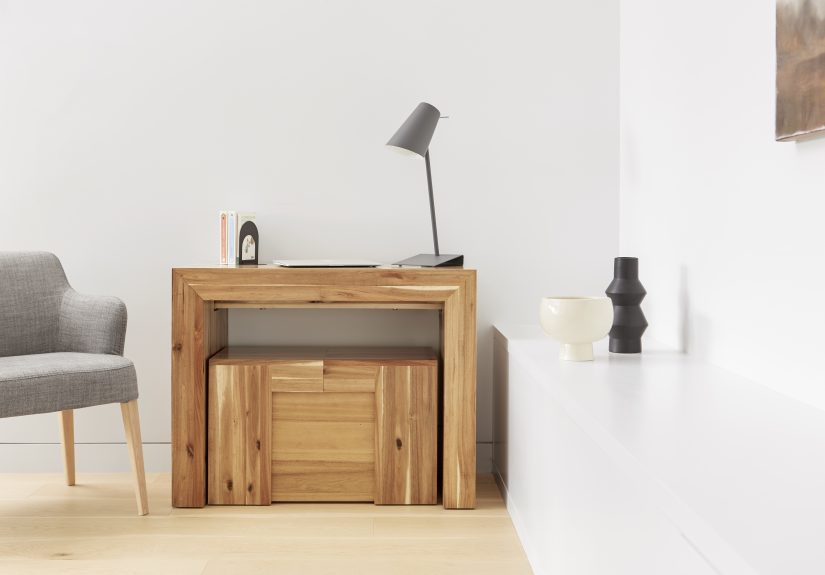
Transformer Table’s signature approach is essentially a “console-to-feast” transformation. The table starts as a compact console and expands with removable panels
to create a full-size dining surface. Remodelista described it as a six-in-one concept: down to a small side table/console, up to a big dinner-party setup, plus
configurations in between. In other words: it’s a table with range.
This category is booming for a reason. Apartment Therapy has highlighted how small-space tables now come in smarter formsdrop-leaf designs, extendable tops,
foldable frames, and “tucks away when you’re done” features that make apartments feel less like furniture Tetris. And mainstream shelter publications keep reinforcing
the same point: the best dining tables aren’t just pretty; they pull double (or triple) duty as work surfaces, gathering hubs, and day-to-day utility zones.
How the Transformer Table Works (Without the Dramatic Movie Trailer Voice)
From console to 12-seater
The Transformer Table system is built around a compact base that expands in length using panels. The company describes a size range that starts at about 18 inches
(console mode) and extends out to roughly 118 inches (nearly 10 feet), seating up to 12 people at full extension. Each added panel increases the table’s length
in fixed increments, which makes the table feel predictableno weird “half-leaf limbo” where the table is neither here nor there.
No-tools setup and simple mechanics
A big selling point is convenience: much of the core dining set is designed to arrive ready to use, with minimal or no assembly for the primary pieces.
Reviews have echoed that the table and bench are meant to expand and shrink quickly, using rails and locking mechanisms underneath to secure the panels.
Translation: you’re not supposed to treat hosting like an IKEA escape room.
The panel storage problem (and the solutions)
Expandable tables live or die by their storage story. Some tables hide leaves inside the tabletop. Others expect you to store a giant slab in a closet you do not have.
Transformer Table offers a dedicated storage solution: a lift-top coffee table designed to hold all five table panels inside. It’s the rare storage feature that feels
like it was designed by someone who has actually lived in an apartment where the “extra closet” is called “the area behind the couch.”
Matching extendable bench
Seating is the other half of the hosting equation. Transformer Table’s extendable bench is built to expand with panels, too, reaching a length that can accommodate
larger groups. Some sets store bench panels inside the bench itself, which is convenientthough it can also make the bench heavier and harder to move. (In other words:
fantastic for stability, less fantastic when you’re rearranging alone.)
Why Do-It-All Dining Tables Feel So Right for 2025 Living
We’re living in the era of the multi-purpose room. Kitchens blend into living rooms. Dining spaces morph into work zones. And “guest room” is often code for
“room where I store my aspirations.” That’s why the best small-space tables get so much attention: they help you claim a real dining moment without giving up your
real-life square footage.
Better Homes & Gardens has even called out Transformer Table specifically in roundups of small dining tables, emphasizing the appeal of adaptable seating capacity.
Architectural Digest’s shopping guides also treat dining tables as more than furniture: they frame them as everyday hubs that need to function for casual meals,
work sessions, and entertaining. When multiple outlets converge on the same theme, it’s usually because people are searching for the same solution:
“I want a dining table, but I also want to walk through my home.”
Remodelista’s original framing nailed the emotional logic: in a tiny space, each piece has to do double or triple duty. A table that can be a console on Monday,
a desk on Tuesday, and a full dinner-party stage on Saturday isn’t a luxury. It’s a survival skill with a nice wood finish.
Measure Like a Pro (So Your Table Doesn’t Become a Roommate)
Rule #1: Respect the clearance
The biggest dining-table mistake is buying for the fantasy version of your roomthe one where nobody needs to pull out a chair or walk behind someone who’s seated.
Multiple space-planning guides recommend around 36 inches of clearance from the table edge to a wall or other furniture for comfortable movement.
If your dining area is also a main walkway, more space is better.
Rule #2: Plan for elbows and real plates
Seating capacity isn’t just about how many chairs you can physically jam around the table. It’s about comfort.
Many size guides use a rule of thumb of roughly two feet of edge space per person. That’s the difference between “cozy dinner” and “competitive utensil sport.”
Rule #3: Know your everyday mode
An expandable table should be sized for the way you live most days, not just the once-a-year holiday.
Ask yourself: What size will it be Tuesday night? Where will it sit when it’s small? What else needs to happen in the room at the same time?
The magic of a console-style expanding table is that your everyday mode can be legitimately compactthen you expand only when you need to.
Buying Guide: What Actually Matters in a Do-It-All Table
1) The expansion system should feel “boringly easy”
You want a mechanism that’s smooth, stable, and repeatable. “Repeatable” matters because you’re going to do this a lot:
weeknight dinners, weekend friends, birthdays, game nights, and the occasional “Why are we doing a 1,000-piece puzzle?” crisis.
If expanding the table feels like a project, you’ll avoid using the featureand then you’ve just bought an expensive console.
2) Storage is not optional
Leaves and panels need a designated home. If the table doesn’t store its own pieces, you need a plan that doesn’t involve leaning boards behind a door
like you’re hiding evidence. A coffee-table storage unit designed for panels is one of the cleaner solutions because it turns “extra parts” into
“an actual piece of furniture you use every day.”
3) Durability features you’ll appreciate later
The best tables accept that life happens: hot plates, spilled drinks, keys tossed on the surface, and work-from-home days that include at least one angry pen scribble.
Reviews of the Transformer Table have noted finishes described as easy to clean and resistant to typical dining-room wear. Still, your best defense is basic care:
coasters, placemats, and not dragging heavy items like you’re auditioning for a home-reno show.
4) Delivery and weight: the unglamorous reality check
Solid wood and sturdy hardware can mean a heavier piece. That’s great for stability, but it can complicate delivery, unboxing, and moving the table into place.
One detailed review mentioned that while assembly wasn’t the issue, unboxing and handling the packaging could be a painespecially without white-glove service.
This is the stuff nobody puts in the dreamy product photos, but it matters.
Make It Look Like a “Real” Dining Table (Even When It’s in Disguise)
Choose chairs like you’re styling an outfit
A do-it-all table doesn’t have to look like a transformer mid-morph. The styling trick is to treat it like a permanent dining table even if it changes shape.
Mixed seating helps: a bench on one side, chairs on the other, maybe a pair of end chairs that add personality. (Bonus: benches can tuck in neatly when you’re in compact mode.)
Anchor the zone
If your dining area floats in an open-plan space, anchor it visually. A rug that’s large enough for chairs to slide in and out without snagging helps define the area.
A pendant light or a pair of wall sconces can also signal “this is the dining zone,” even if the table is currently living its best console life.
Use “console mode” on purpose
A console table doesn’t have to scream “I used to be a giant dining table.” Style it like a console: a lamp, a tray for keys, a plant, maybe a stack of books.
Then when you expand it, swap in placemats and a centerpiece. The transformation feels intentional, not chaotic.
Everyday Scenarios Where a Transformer-Style Table Shines
The weeknight dinner that turns into “friends dropped by”
Two people eating? Keep it compact. Suddenly four people? Add panels, pull in a bench, and pretend you totally planned this.
This is exactly the kind of flexibility small-space editors rave about: a table that adapts to your life instead of forcing your life to adapt to it.
Work-from-home desk mode
Remodelista even pointed out the table’s “desk during non-dinner hours” appeal. If you don’t have a dedicated office, a stable table with enough surface area
can become a workstationthen flip back into dining mode when you’re done. The best part is psychological:
you can close the laptop, shrink the table, and reclaim your room.
Holiday hosting without permanent sprawl
The dream is a long table for the big meal without a long table dominating your room 365 days a year.
A console-to-10-foot expansion makes that possible, especially for renters or anyone who doesn’t want a formal dining room to rule their floor plan.
The Honest Pros & Cons (Because You Deserve the Whole Story)
Pros
- Huge range of sizes: compact daily footprint with real hosting capacity when expanded.
- Convenience: designed to be quick to expand/shrink; the core pieces may require little to no assembly.
- Built-in strategy for small spaces: panel storage options reduce clutter and “where do I put this?” stress.
- Design versatility: available in multiple finishes and pairing options, so it can lean modern, rustic, or somewhere in between.
Cons
- Weight and handling: sturdier materials can mean heavier boxes and a tougher unboxing experience.
- Storage still requires planning: if you don’t buy a storage unit, you need another smart place for panels.
- Benches can get heavy: especially if they store panels inside; great for convenience, less great for frequent rearranging.
Conclusion: The Real Win Is the Flexibility
Remodelista’s $1,000 Transformer Table giveaway may be over, but it highlighted something that’s only become more true:
our homes are doing more jobs than ever, and the best furniture is the kind that can keep up without looking like it’s trying too hard.
A do-it-all dining table isn’t about having the biggest table. It’s about having the right tableone that can be small when your life is small,
and expansive when your life gets loud, social, and extra-chair-needy. If you measure carefully, prioritize easy mechanics and smart storage, and style it with intention,
you can get the kind of dining setup that feels calm on a Tuesday and celebration-ready on a Saturday.
And if nothing else, you’ll finally have a surface worthy of both a weeknight burrito and a full-blown dinner partysometimes in the same week.
of Real-Life “Do-It-All Dining Table” Experiences (The Relatable Edition)
If you’ve ever lived with a dining table in a small or multi-use space, you know the truth: the table becomes a character in your life story.
Not a background propa main character. It witnesses everything. It hosts meals, sure, but also becomes the temporary landing pad for mail, the stage for
science projects, the “why is there glitter here?” mystery zone, and the place you promise yourself you’ll keep clean next week.
The first big experience people tend to have with a transformer-style table is the “Wait… that’s it?” moment. The best systems expand in a way that feels almost anticlimactic:
you slide, place panels, lock, done. No screwdriver cameo. No wobble anxiety. That matters because real life doesn’t give you a three-hour window to assemble
your hosting confidence. Friends show up early. Kids get hungry now. Your neighbor appears holding a pie like it’s a surprise audition for a sitcom.
A table that shifts quickly lets you say yes to the moment instead of saying, “Give me 45 minutes and an Allen key.”
Then there’s the storage reality. Expandable tables are fantastic until you realize the extra leaves have no homeso they end up behind a sofa, under a bed,
or in that one closet you were saving for “organized living.” Dedicated storage (like a coffee table built to hold panels) turns the experience from “I love this table”
to “I love this table and I am not constantly tripping over its accessories.” It also reduces the mental load: you always know where the pieces are,
which means you’ll actually use the expanding feature instead of treating it like an emergency-only option.
Another common experience: the table becomes a symbol of “my home can change.” People move. Roommates change. A tiny apartment becomes a bigger placeor the other way around.
A transformer-style table feels like a practical hedge against the unknown. You can keep it small in a studio, then let it stretch out in a dining room later.
One reviewer even described wanting the table not just for the current space, but for a future home where hosting would be easier. That’s a very real mindset:
buying furniture that grows with you is a kind of optimism you can sit on.
Of course, the unglamorous side shows up, too. Heavier, sturdier pieces can mean harder unboxing and more packaging to deal with.
And if a bench stores panels inside it, it can become a “two-person lift” situation when you’re rearranging. But many people find that these trade-offs feel worth it:
stability and longevity usually come from materials and construction that aren’t weightless.
The final experience is the best one: the first time you host and realize you didn’t compromise. The room still works when the table is small.
And when it’s big, it feels like a real gathering spacebecause it is. You didn’t buy a “small-space table.” You bought a table that fits your actual life,
including the parts where you invite people in and feed them.