Table of Contents >> Show >> Hide
- The headline was catchy because it was only partly wrong
- Why lightning matters to aircraft in the first place
- The real culprit: OBIGGS and the art of making fuel tanks boring
- How the problem developed over time
- What the restriction meant in the real world
- So, can the F-35 Lightning II fly near lightning now?
- What this says about the F-35 as a program
- Final thoughts
- Operational experiences: what the lightning issue felt like on the ground and in the air
For years, one of the internet’s favorite military-aviation punchlines wrote itself: the F-35 Lightning II could not, in fact, fly near lightning. That is the kind of irony copy editors dream about and program managers probably do not. But like most jokes that go viral, this one flattened a much more technical story into a tidy one-liner. The truth is more interesting, more mechanical, and much more revealing about how modern stealth fighters actually work.
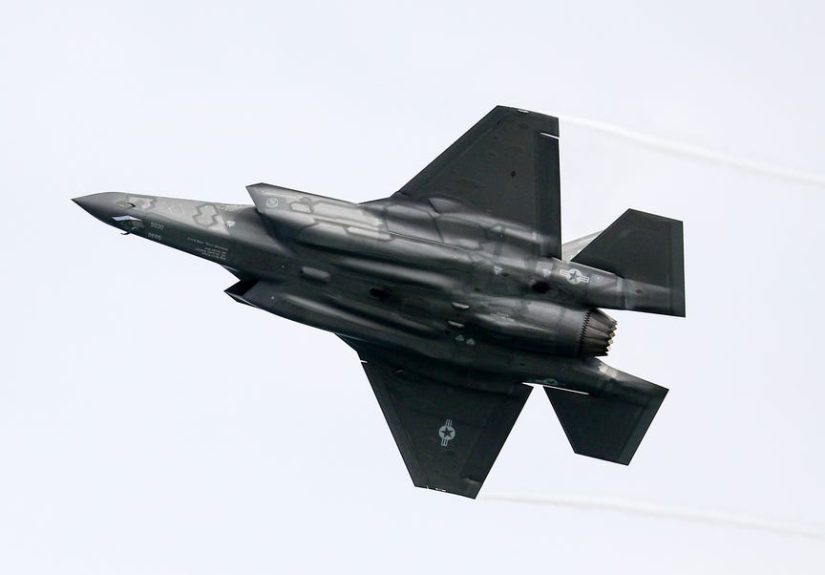
The F-35 is not a flimsy jet that turns dramatic at the first clap of thunder. It is one of the most advanced fifth-generation fighters ever built, a stealth-heavy, sensor-fused, software-dependent aircraft designed to survive in ugly places. Still, for a significant stretch of its life, the Air Force’s F-35A variant faced a real stand-off restriction that kept it away from lightning and thunderstorms because of concerns tied to its fuel-tank inerting system. Yes, the nickname was unintentionally hilarious. No, the underlying issue was not.
To understand why the “can’t fly near lightning” line stuck so hard, you have to look at what lightning can do to aircraft, why the F-35’s fuel system mattered so much, and how a high-end combat jet can be both extraordinary and annoyingly vulnerable in one very specific way. Welcome to the glamorous world of nitrogen-enriched air, fuel-tank ullage, and the cruel comedy of branding.
The headline was catchy because it was only partly wrong
The viral version of the story made it sound as if the F-35 was allergic to weather, like a very expensive house cat. In reality, aviation has always treated thunderstorms with respect. Civil and military pilots avoid them for reasons that go well beyond lightning: turbulence, hail, microbursts, erratic winds, heavy precipitation, and poor visibility can all make a bad day worse in a hurry. In other words, even aircraft without a highly publicized lightning issue usually do not volunteer to thread the needle through a thunderstorm just to prove they are brave.
That context matters because some defenders of the F-35 are quick to say, “Well, most training flights avoid storms anyway.” Fair enough. But that does not erase the significance of a formal restriction. A jet that is officially barred from operating within a set distance of lightning loses flexibility. Route planning changes. Recovery options tighten. Mission commanders think twice. Maintenance and operations staffs carry extra constraints. And in a combat aircraft, flexibility is not a cute bonus feature; it is the whole point.
So yes, the line was exaggerated. But it was built on a real operational limitation, and that limitation became especially embarrassing because the aircraft’s full name practically begged for late-night monologue treatment.
Why lightning matters to aircraft in the first place
Airplanes get struck by lightning more often than most people realize, and the industry has spent decades designing protection into airframes, electronics, and fuel systems. A well-designed aircraft can typically handle a strike without turning into a cinematic fireball. That said, “can survive lightning” is not the same thing as “lightning is no big deal.” Engineers care deeply about where current travels, how structure conducts or dissipates it, and whether any vulnerable system is left exposed at precisely the wrong moment.
The fuel system is one of the places where caution becomes non-negotiable. If a lightning strike or lightning-induced current finds an ignition path in a flammable fuel-tank atmosphere, the consequences can be catastrophic. That is why aircraft designers spend so much time trying to keep fuel-tank vapor spaces from becoming easy ignition candidates. For the F-35, that safety effort centered on the On-Board Inert Gas Generation System, better known by its acronym, OBIGGS.
The real culprit: OBIGGS and the art of making fuel tanks boring
OBIGGS is not a glamorous system. It does not help the F-35 dogfight, vanish from radar, or look cinematic in recruiting footage. What it does is arguably more important for day-to-day survivability: it pumps nitrogen-enriched air into the fuel tanks to reduce oxygen levels and make the tank environment less flammable. In plain English, it tries to make the fuel tank atmosphere too dull to explode.
That is where the F-35’s lightning drama began. Earlier test findings showed deficiencies in maintaining the lower oxygen levels required to prevent fuel-tank explosions across parts of the mission profile. Later reviews continued to focus on whether the system could provide proper inerting and whether the aircraft could maintain residual inerting after flight for the required period. Those are not tiny paperwork nits. They go to the heart of whether the aircraft can safely handle a lightning event without unacceptable risk.
Modern fighter programs are full of spectacularly complicated subsystems, and the F-35 may be the poster child for that reality. A stealth fighter is not just an airframe with a cool profile. It is a flying network of thermal management, fuel management, software logic, mission systems, coatings, structures, and safety mechanisms. When one “boring” support system underperforms, the consequences can ripple outward in very public ways.
How the problem developed over time
Early warnings: the issue was not born yesterday
The “F-35 versus lightning” story did not appear out of nowhere in 2020. Government testing and oversight documents had been flagging fuel-tank inerting concerns for years. In the late 2000s and early 2010s, official reports identified shortcomings in keeping oxygen levels low enough during critical mission phases. By 2013, the program was reviewing improved designs intended to prevent fuel-tank ullage explosions from ballistic threats or lightning strikes. By 2014, officials were still discussing residual inerting requirements and alternative protection measures if the system could not maintain the needed post-flight condition.
Translation: this was a stubborn engineering problem, not a one-week hiccup. The program kept iterating, redesigning, testing, and trying to close the gap between what the aircraft needed on paper and what the system reliably delivered in practice.
The 2014 fix was not the final chapter
At one point, the program office cleared the F-35 to fly near lightning after earlier redesign work. That should have been the tidy ending. Roll credits, cue triumphant music, and let the “Lightning” jokes die quietly. Instead, the story came back for a sequel nobody ordered.
In 2020, maintainers found damaged tubing associated with the F-35A’s OBIGGS during depot maintenance. More inspections followed, and the discovery raised fresh concern that the system might not perform as intended if the aircraft encountered lightning. The result was a renewed restriction: F-35As were prohibited from flying within 25 miles of lightning or thunderstorms. That was the version of the story most people remember, because it was both recent and spectacularly meme-friendly.
Not every F-35 variant was hit the same way
Another nuance often lost online is that the 2020 stand-off restriction applied to the F-35A, the conventional takeoff and landing version used by the U.S. Air Force and many international operators. The F-35B and F-35C were not affected in the same way by that specific restriction. So if you imagine the entire global F-35 fleet cowering indoors every time clouds gathered, that picture is funnier than it is accurate.
What the restriction meant in the real world
Critics treated the lightning restriction as proof that the whole aircraft was a flying boondoggle. Supporters waved it off as operationally minor because pilots already avoid storms. The more honest answer lives in the uncomfortable middle.
On a routine training day, a 25-mile stand-off requirement might not break the mission. Flight planners can route around weather, delay launches, or scrub sorties. But military aviation is not built around perfect blue skies and unlimited schedule slack. Weather shifts. Diversions happen. Recovery airfields matter. Exercises are timed around multiple moving parts. In combat or crisis scenarios, a restriction that narrows decision space is still a real penalty, even if it does not ground the fleet entirely.
It also created a perception problem. The F-35 program has spent years battling criticism over cost, concurrency, delays, and sustainment headaches. In that environment, every technically specific flaw becomes a symbol. The lightning restriction was not just a safety measure; it was a communications disaster. It made an already controversial aircraft look absurdly vulnerable in a way the public could understand instantly.
So, can the F-35 Lightning II fly near lightning now?
Here is the up-to-date answer: the Air Force’s F-35A was cleared in March 2024 to fly in lightning and thunderstorms again after the government lifted the four-year restriction. Officials said the solution included a more robust OBIGGS hardware design plus software updates, backed by lab and flight testing. That is a meaningful development because it changes the article’s title from a current statement into a historically accurate-but-time-limited one.
In other words, “The F-35 Lightning II Can’t Fly Near Lightning” works as a sharp headline because it captures a notorious chapter in the aircraft’s history. But in current form, it needs an asterisk the size of a hangar. A more precise line would be: for years, the F-35A carried a lightning-related operating restriction because of fuel-tank inerting concerns, and that became one of the jet’s most famous embarrassments. Less snappy, sure. Also far more correct.
What this says about the F-35 as a program
The lightning saga says less about the F-35 being uniquely fragile and more about the burden placed on cutting-edge systems. The jet combines stealth, sensor fusion, advanced mission systems, software-driven upgrades, thermal-management demands, and multiple variants with different operating environments. That complexity creates more opportunities for highly specific problems to emerge, especially in a program that has been scrutinized by Congress, watchdogs, media outlets, partner nations, and basically anyone with a browser and a strong opinion.
The lesson is not that advanced aircraft are bad. It is that advanced aircraft are ecosystems. A glamorous capability like low observability may get the headlines, but a support system buried in the design can still decide whether the aircraft gets a clean bill of health for real-world operations. The F-35’s lightning issue became famous precisely because it exposed that contrast. The world saw a stealth marvel; engineers saw brackets, tubes, inert gas, software logic, and a safety case that had to be proven, not assumed.
That is the price of building a fighter that is as much a flying computer network as it is a jet. The battlefield wants magic. Physics wants documentation.
Final thoughts
The F-35 Lightning II and lightning made for a brutal joke because the mismatch between name and reality felt too perfect to resist. But once the punchline lands, the deeper story is worth keeping. This was not an example of pilots trembling at clouds. It was a long-running engineering and safety problem centered on fuel-tank inerting, aircraft survivability, and the unforgiving standards required for military flight operations.
The restriction became a symbol because the F-35 program is already a magnet for scrutiny. Still, the history also shows something less meme-worthy and more useful: modern aircraft programs find flaws, redesign systems, test fixes, and keep grinding until the aircraft becomes more capable than it was before. That process is messy, expensive, and deeply unfunny to the people paying the bills. It is also how serious aviation works.
So yes, the F-35 Lightning II once had an astonishingly awkward relationship with lightning. But the real headline is not that the joke existed. It is that a tiny, technical safety issue inside one of the world’s most advanced fighters became a public lesson in how military aviation, engineering discipline, and operational reality collide. Sometimes with thunder.
Operational experiences: what the lightning issue felt like on the ground and in the air
If you want to understand why the lightning restriction mattered, imagine the experience from the people who actually had to live with it. For maintainers, the problem was not a clever headline. It was another item in a long chain of inspections, documentation, troubleshooting, and coordination. The F-35A already demands a high level of technical discipline, and any issue touching the fuel system or survivability equipment instantly raises the stakes. A damaged tube or degraded inerting performance is not the kind of thing anyone shrugs at with a cup of coffee and a brave face.
For operations planners, the restriction added friction to a world that already has plenty of it. Weather planning in military aviation is never just a glance out the window and a hopeful thumbs-up. Planners have to consider launch times, routes, divert fields, tanker support, training windows, deconfliction with other aircraft, and the simple fact that the atmosphere enjoys improvising. Add a 25-mile stand-off from lightning, and suddenly a routine forecast can start rearranging the day like an overcaffeinated stage manager.
Pilots probably did not see the restriction as some daily existential crisis, because military aviators are used to operating within limitations. Every aircraft has them. Some are structural. Some are software-related. Some are weather-driven. A pilot’s life is basically one long relationship with checklists and caveats. But there is a difference between respecting weather generally and carrying a formal restriction that becomes part of mission planning every time convective weather creeps into the forecast.
There is also the human side of reputation. Fighter communities are full of professionals, but professionals are still human, and humans are not immune to sarcasm. When your aircraft is named the Lightning II and outsiders keep asking whether it is scared of thunderstorms, the joke gets old fast. It may be funny on social media, but inside a squadron the reaction is more likely to be a tired sigh followed by, “That’s not actually how this works.” The punchline lands hardest on the people doing the unglamorous work of proving the aircraft safe.
The experience for program officials and engineers was probably the most frustrating of all. They were not solving a cartoon problem. They were dealing with a real safety issue that required test data, redesign work, analysis, production changes, retrofit decisions, and careful validation. Every attempted fix had to do more than sound convincing in a briefing. It had to survive scrutiny. That is the maddening truth of aerospace engineering: the public sees a simple contradiction, while the engineers see years of subsystem behavior, failure modes, and certification logic.
In that sense, the lightning story captures the lived reality of the F-35 better than many glossy brochures do. It is a remarkable aircraft, but it is also a program where tiny technical details can shape global headlines. One cracked or damaged component, one underperforming subsystem, one safety margin that is not good enough, and suddenly the most advanced fighter in the room is being discussed like it forgot its umbrella. That is embarrassing, sure. It is also honest. Modern airpower is not just speed, stealth, and swagger. It is maintenance, testing, redesign, and the relentless pursuit of margins that keep crews alive.